rifanmuazin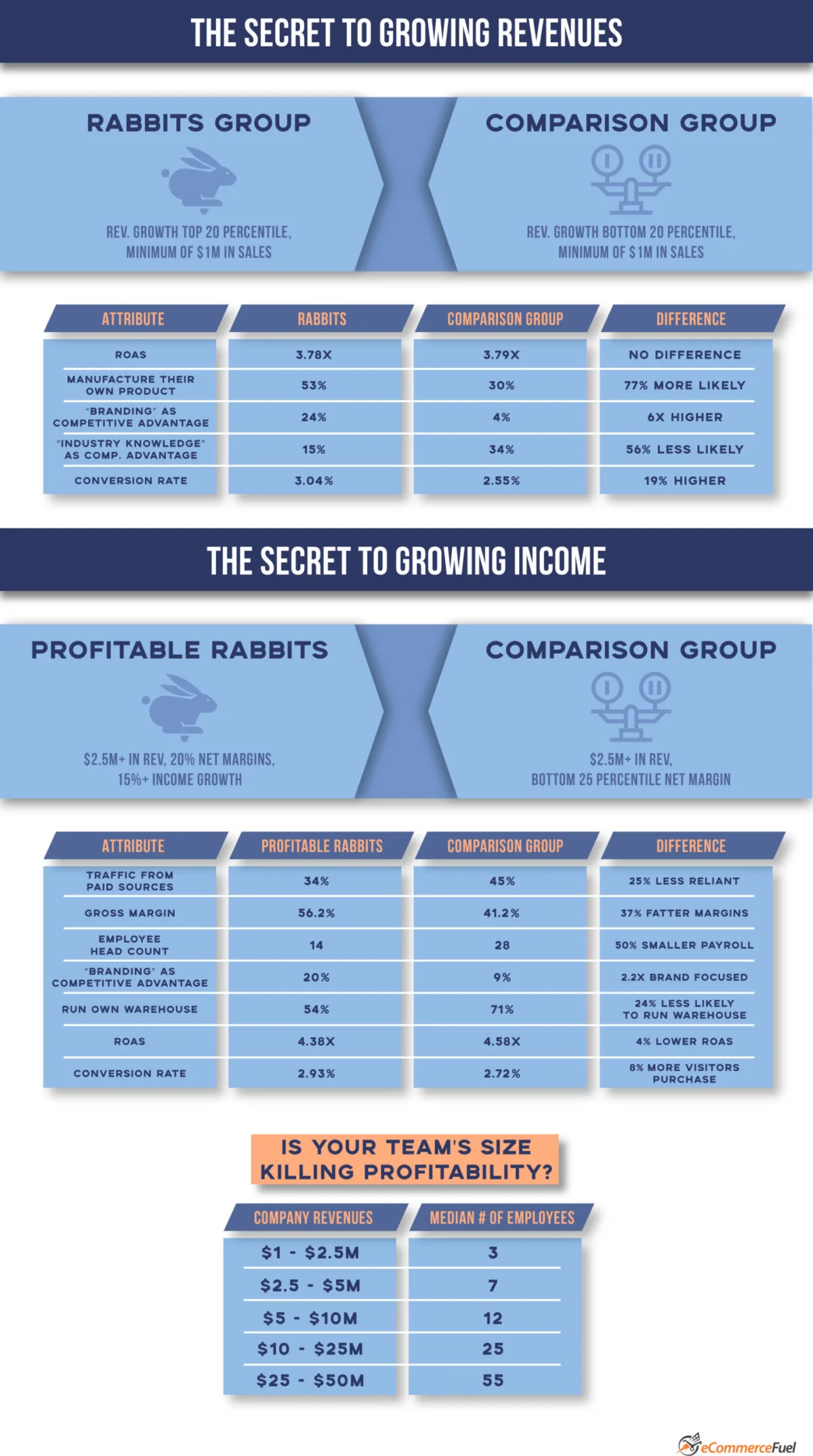
A prominent e-commerce entrepreneur, known for his acumen in scaling online businesses, recently shared a compelling case study that challenges conventional wisdom regarding business growth. This narrative, originating from insights gathered within a community of seven- and eight-figure online store owners, highlights how strategic operational streamlining and astute tax planning can yield significantly higher profitability and reduced stress, often surpassing the impact of aggressive marketing initiatives. The entrepreneur’s own experiences and extensive research indicate that while marketing metrics like Return on Ad Spend (ROAS) and Customer Acquisition Cost (CAC) dominate industry discourse, the true drivers of sustained profitability often lie in less glamorous, yet highly effective, operational and financial strategies.
The anecdote that anchors this discussion involves a store owner who, until recently, managed a team of 35 employees. While his business enjoyed solid revenue streams, profitability remained stubbornly constrained, a persistent source of stress for the owner. The demands of managing a sizable workforce, in addition to the core responsibilities of running an e-commerce operation, proved to be an overwhelming dual burden. In response to this persistent challenge, the entrepreneur made a series of decisive, albeit difficult, strategic shifts. He transitioned his business to a remote operational model, outsourced warehousing and fulfillment to a third-party logistics (3PL) provider, and significantly restructured his workforce. The bulk of his full-time employees were replaced by freelancers and independent contractors, a move that dramatically altered his operational overhead. Today, the business operates with a single full-time employee supported by a team of eight contractors. The results have been transformative: unprecedented profit margins and a marked decrease in operational stress.
This transformation stands in stark contrast to the widely held belief that business expansion inherently necessitates a commensurate increase in headcount. The prevailing narrative often equates scaling with larger teams and more personnel, assuming that increased revenue directly correlates with amplified payroll. However, the e-commerce landscape is increasingly demonstrating that this assumption is not universally true. The entrepreneur’s research, which analyzed hundreds of e-commerce businesses, sought to identify the key differentiators between highly profitable enterprises and those struggling to achieve consistent financial success.

Research Findings: Operational Efficiency as the Profitability Engine
The findings of this extensive research study, slated for further elaboration in an upcoming eComFuel Trends Report, revealed a surprising correlation: top-performing e-commerce businesses did not necessarily excel in marketing prowess. The study found negligible differences in ROAS between top and bottom performers, indicating that superior Facebook ad campaigns or SEO strategies were not the primary determinants of exceptional profitability. Instead, the critical differentiator emerged in operational structure and financial management.
Specifically, the research indicated that highly profitable e-commerce stores, on average, maintained payrolls that were half the size of their less profitable counterparts. Furthermore, these successful businesses were 25% more likely to outsource their warehouse operations and demonstrated a 25% reduced reliance on paid traffic. This data underscores a fundamental principle: operational leanness consistently outperforms marketing cleverness in driving sustained profitability. The implication is that a significant portion of the e-commerce industry’s focus on marketing may be misdirected, or at least, unbalanced, when compared to the impact of streamlined operations.
Beyond Headcount: A Holistic Approach to Lean Operations

The concept of "staying lean" in business often conjures images of immediate layoffs and drastic cost-cutting measures. However, the entrepreneur argues that true operational leanness extends far beyond mere headcount reduction. Overhead can manifest in numerous forms, many of which are less visible but equally impactful on the bottom line. This includes maintaining expensive office spaces that are underutilized in a post-pandemic remote work environment, or continuing to pay for dedicated warehouse facilities when a 3PL can offer more cost-effective and efficient fulfillment solutions. Moreover, the proliferation of Software as a Service (SaaS) subscriptions, often auto-renewing and easily forgotten, can quietly siphon profits, with individual monthly charges of $50 or $200 accumulating into substantial, unnecessary expenses over time.
A critical framework for evaluating operational overhead involves identifying core business functions that truly define a brand’s unique value proposition. For instance, if product design is the company’s competitive advantage, retaining an in-house designer might be a strategic imperative. Conversely, if the act of packing boxes and managing inventory is not a core differentiator, outsourcing fulfillment to a specialized provider becomes a logical and potentially profitable decision. The most successful store owners, according to the analysis, are not engaging in indiscriminate cost-cutting but are making intentional decisions about resource allocation, focusing investment on areas that directly contribute to their brand’s competitive edge and divesting from non-core functions.
The Courage of Difficult Conversations: Proactive Restructuring
A recurring theme in discussions about business success is the willingness to engage in difficult conversations. The entrepreneur emphasizes that avoiding these conversations until circumstances force them—such as an economic downturn, cash flow crisis, or an existential threat to profitability—is a common pitfall. Businesses that are winning in terms of profitability are proactively initiating these challenging discussions. They are critically evaluating the necessity of existing roles, questioning whether hires were made out of genuine need or simply due to a perception of busyness. They are assessing the ongoing value and necessity of software tools, moving beyond habitual renewals to strategic utilization. Crucially, they are simulating worst-case scenarios, asking themselves what they would cut if forced to reduce expenses by 25% overnight, and then implementing those cuts strategically, not out of crisis, but out of foresight and intentionality.

The Overlooked Lever: Strategic Tax Optimization
Beyond operational efficiency, the research highlights another frequently ignored yet powerful lever for enhancing profitability: strategic tax optimization. While many business owners perceive taxes as a fixed cost, a predetermined percentage of their earnings, a segment of highly profitable entrepreneurs are paying significantly less in taxes on comparable income. This is not achieved through illicit means or complex offshore schemes but through a deliberate and informed approach to tax planning.
Consider a comparative scenario involving two e-commerce store owners, each reporting $2.5 million in revenue and $250,000 in profit, with identical salaries and family situations (married with three children). Owner A, operating without a proactive tax strategy, pays approximately $75,000 in annual taxes. Owner B, however, through intentional tax planning, reduces their tax liability to roughly $21,000, saving over $54,000 annually. This substantial difference can be attributed to several well-established tax-saving strategies:
- Profit Sharing Contributions: Owner B maximizes contributions to retirement accounts through profit-sharing plans, exceeding standard 401(k) limits. A hypothetical contribution of $45,000 could result in tax savings of approximately $13,500, assuming a 30% marginal tax rate.
- Appreciated Stock Donations: Instead of donating cash, Owner B donates stocks that have appreciated in value to charitable organizations. This strategy allows them to avoid capital gains tax on the appreciation while still receiving a full tax deduction for the fair market value of the stock. This can yield savings of around $3,500.
- Maximized Health Savings Account (HSA): By contributing the maximum family limit of $8,500 to an HSA, Owner B utilizes a triple-tax-advantaged savings vehicle, leading to tax savings of approximately $2,550.
- Paying Children for Work: Owner B employs their three children for genuine work within the business, paying each $7,000 annually. These payments are deductible for the business and allow the children to invest in Roth IRAs, benefiting from tax-free growth for decades. This strategy can generate tax savings of around $6,300.
- Inventory Donations: A particularly impactful strategy involves donating slow-moving inventory to charities. If Owner B has $60,000 worth of outdated inventory, donating it at fair market value instead of liquidating at a loss can provide a deduction of $18,000. This is a massively underutilized strategy in the e-commerce sector.
The cumulative effect of these deliberate tax-saving measures can significantly alter an owner’s net after-tax income, demonstrating that what appears as a fixed cost is, in fact, a variable that can be strategically managed.

The Invisible Nature of Tax Opportunities and the Role of CPAs
The reason many store owners overlook these tax optimization opportunities is the fragmented nature of tax documentation. Personal returns, business filings, brokerage statements, and payroll tax reports are often managed separately, preventing a holistic view of the total tax burden. Consequently, business owners may not fully comprehend their actual tax liabilities and fail to inquire about potential reductions. Owner A in the example is not necessarily negligent; they simply haven’t consolidated their financial information to identify these opportunities. Standard accountants, while proficient at accurate filing, often do not proactively suggest such strategies; they process information provided to them.
A simple test to gauge the proactivity of one’s Certified Public Accountant (CPA) is to recall the last time they initiated contact with a novel tax-saving idea, rather than merely responding to direct inquiries or accurately processing filings. If such proactive engagement is infrequent, it suggests the CPA is providing adequate service but is not actively identifying missed opportunities. These missed opportunities, as illustrated by the $54,000 difference between Owner A and Owner B, are not due to complex financial maneuvers but to a lack of intentionality and proactive strategic advice. This underscores the importance of selecting a CPA who acts as a strategic partner, actively seeking ways to enhance the client’s financial outcomes.
Revisiting the Core Levers of Profitability

In the fast-paced world of e-commerce, marketing metrics like ROAS, CAC, and Lifetime Value (LTV) often dominate discussions and strategic planning. These are the metrics that capture headlines and fuel industry conferences. However, the entrepreneurs who consistently achieve exceptional profitability are focusing on two less glamorous, yet profoundly impactful, levers: operational leanness and strategic tax management. By building leaner teams, outsourcing non-core functions, and meticulously planning their tax obligations, these business owners retain a significantly larger portion of the revenue they generate. While optimizing marketing efforts is undoubtedly valuable, the principle that "keeping more of what you already earn is often the smarter place to start" holds significant weight for sustainable and stress-free business growth.
For e-commerce entrepreneurs seeking to deepen their understanding of building leaner, more profitable operations, ongoing engagement with communities of experienced business owners and staying abreast of evolving industry data and strategic insights is paramount. These insights, often gleaned from the trenches of successful businesses, offer a crucial counterpoint to conventional growth narratives and illuminate the path to more robust and sustainable financial success.