rifanmuazin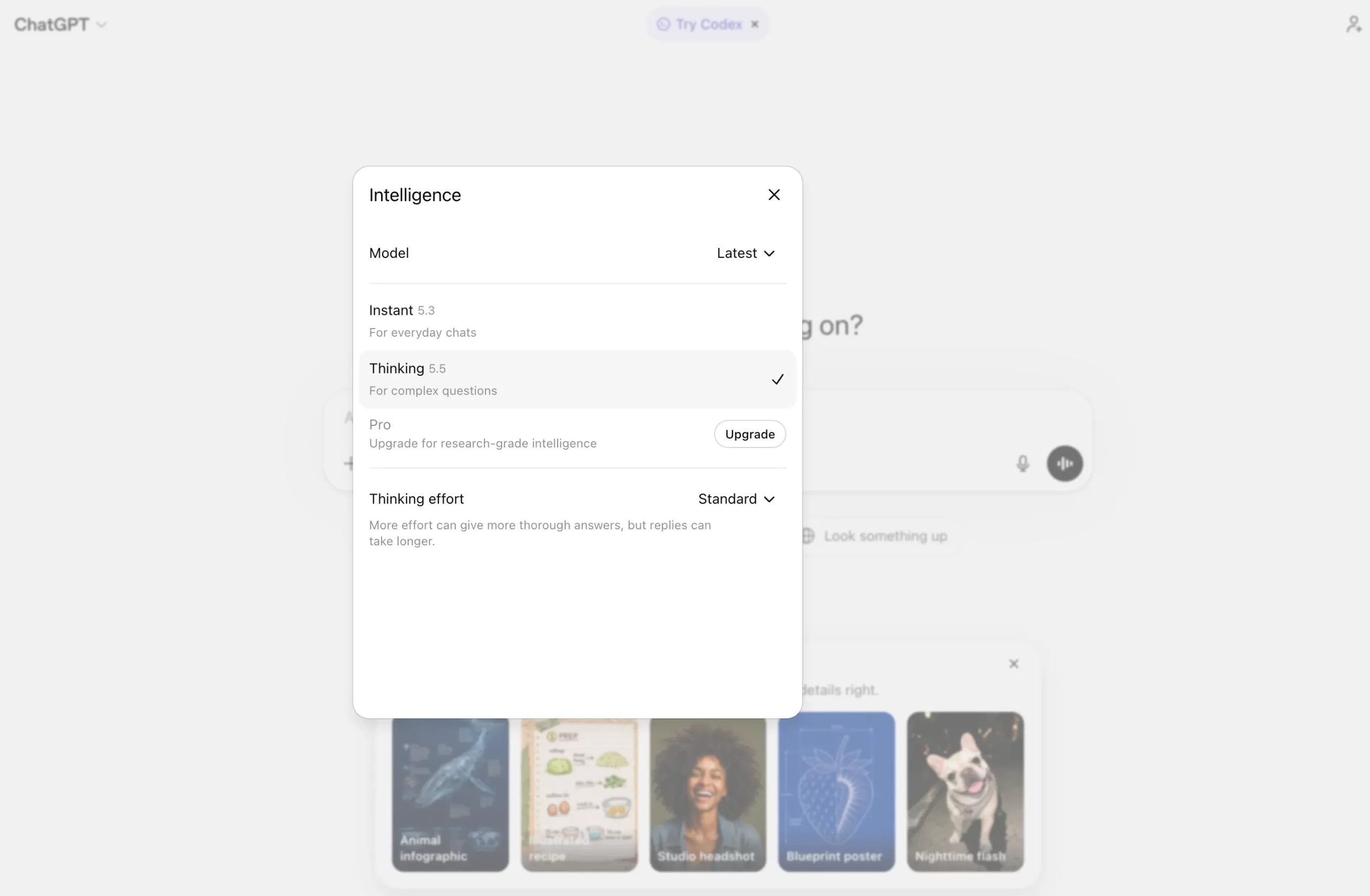
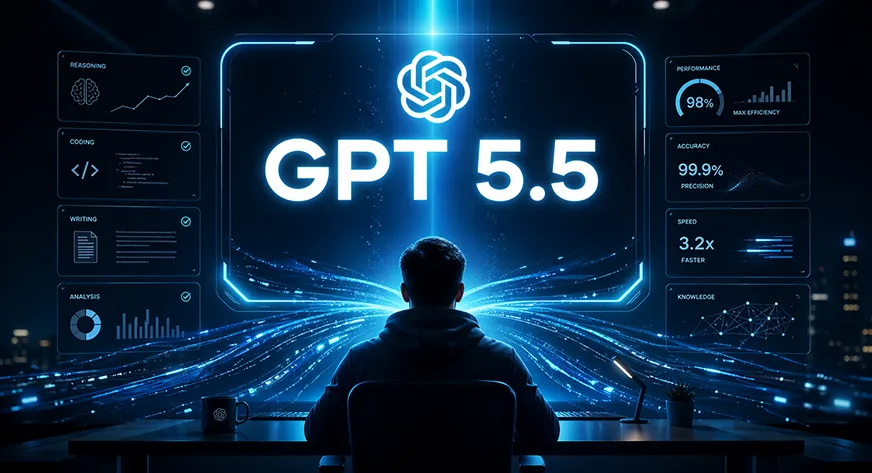
OpenAI has officially announced the release of GPT-5.5, a significant evolution in its generative pre-trained transformer series that shifts the focus from conversational interaction toward autonomous task execution. Coming on the heels of the recent launch of ChatGPT Images 2.0, the new model represents a strategic pivot for the organization, prioritizing "agentic" capabilities—the ability for an AI to act as an agent that performs multi-step workflows—over simple query-and-response mechanics. This release marks a milestone in the AI industry’s transition from chatbots to "action-bots," designed to integrate more deeply into professional and technical environments.
The Evolution of the GPT Series: Context and Background
The trajectory of OpenAI’s model development has moved through distinct phases. While GPT-3 introduced the world to the possibilities of large-scale language modeling and GPT-4 established benchmarks for reasoning and accuracy, GPT-5.5 is being positioned as the first "intuitive" model designed for the practicalities of the modern workplace. Historically, users had to provide highly structured prompts to achieve complex results. GPT-5.5 aims to minimize this friction by better interpreting user intent, allowing for more natural, less rigid instructions.
The timing of this release in April 2026 follows a period of intense competition within the artificial intelligence sector. Competitors such as Anthropic, with its Claude 4 series, and Google, with the Gemini 3.1 iteration, have pushed for higher context windows and better coding capabilities. OpenAI’s response with GPT-5.5 focuses on the "agentic" nature of the model—its ability to not just plan a task but to use external tools, navigate software interfaces, and refine its own output through iterative self-correction.
Key Technical Innovations and Agentic Capabilities
OpenAI has highlighted several core features that distinguish GPT-5.5 from previous iterations, particularly its ability to function across different software environments and technical domains.
1. Advanced Agentic Coding
GPT-5.5 is described as the company’s most capable model for engineering workflows. Rather than merely generating code snippets or providing syntax corrections, the model is designed to handle "longer-form" engineering tasks. This includes autonomous debugging, refactoring large codebases, and managing testing and validation cycles. For developers, this represents a shift from using AI as an "autocomplete" tool to using it as a "junior engineer" capable of resolving complex issues across distributed systems.
2. Computer Use and Software Navigation
One of the most anticipated features of GPT-5.5 is its enhanced ability to operate computer interfaces. The model can navigate software, interact with web browsers, and manage documents and spreadsheets. This capability allows the model to carry out administrative and operational tasks, such as populating a CRM, generating financial reports from raw data, or coordinating information across multiple legacy software platforms that do not have native API integrations.
3. Scientific and Technical Research
OpenAI has demonstrated significant gains in the model’s ability to assist with scientific research. GPT-5.5 can manage multi-step research workflows, which include synthesizing information from hundreds of academic sources, testing hypotheses through data analysis, and suggesting the next logical steps in a technical investigation. In testing, the model has shown the ability to process over 100 sources in seconds, providing a level of depth that was previously time-prohibitive for human researchers.
Performance Benchmarks and Comparative Data
The performance of GPT-5.5 has been validated across several industry-standard benchmarks, where it has consistently outperformed both its predecessors and its primary market competitors. The model shows its greatest strength in "agentic" work, where reasoning must be applied to real-world tools.
In the Terminal-Bench 2.0 assessment, which measures a model’s ability to use a command-line interface to solve problems, GPT-5.5 scored 82.7%. This is a notable increase from GPT-5.4’s 75.1% and places it significantly ahead of Claude Opus 4.7 (69.4%) and Gemini 3.1 Pro (68.5%).
Other key benchmark results include:
- Expert-SWE: 73.1% (measuring software engineering proficiency).
- GDPval: 84.9% (measuring data processing and validation).
- OSWorld-Verified: 78.7% (measuring operating system navigation).
- Toolathlon: 55.6% (a complex multi-tool orchestration test).
- CyberGym: 81.8% (measuring cybersecurity-related task performance).
In terms of complex mathematical reasoning, GPT-5.5 reached 51.7% on FrontierMath Tier 1–3. The "Pro" version of the model pushed these boundaries further, achieving 90.1% on BrowseComp, a benchmark for web-based task completion, compared to 89.3% for GPT-5.4 Pro and 79.3% for Claude Opus 4.7.
Operational Efficiency and Pricing Structure
A critical component of the GPT-5.5 announcement is the emphasis on token efficiency. While the model is more powerful, OpenAI claims it is more efficient in its "Codex" implementation. The model matches the per-token latency of GPT-5.4 but requires fewer tokens to complete the same tasks, effectively lowering the "intelligence-per-dollar" cost for high-volume enterprise users. This move is seen as a strategic response to market feedback regarding the high token consumption rates of competing high-end models.
Availability and Tiers:
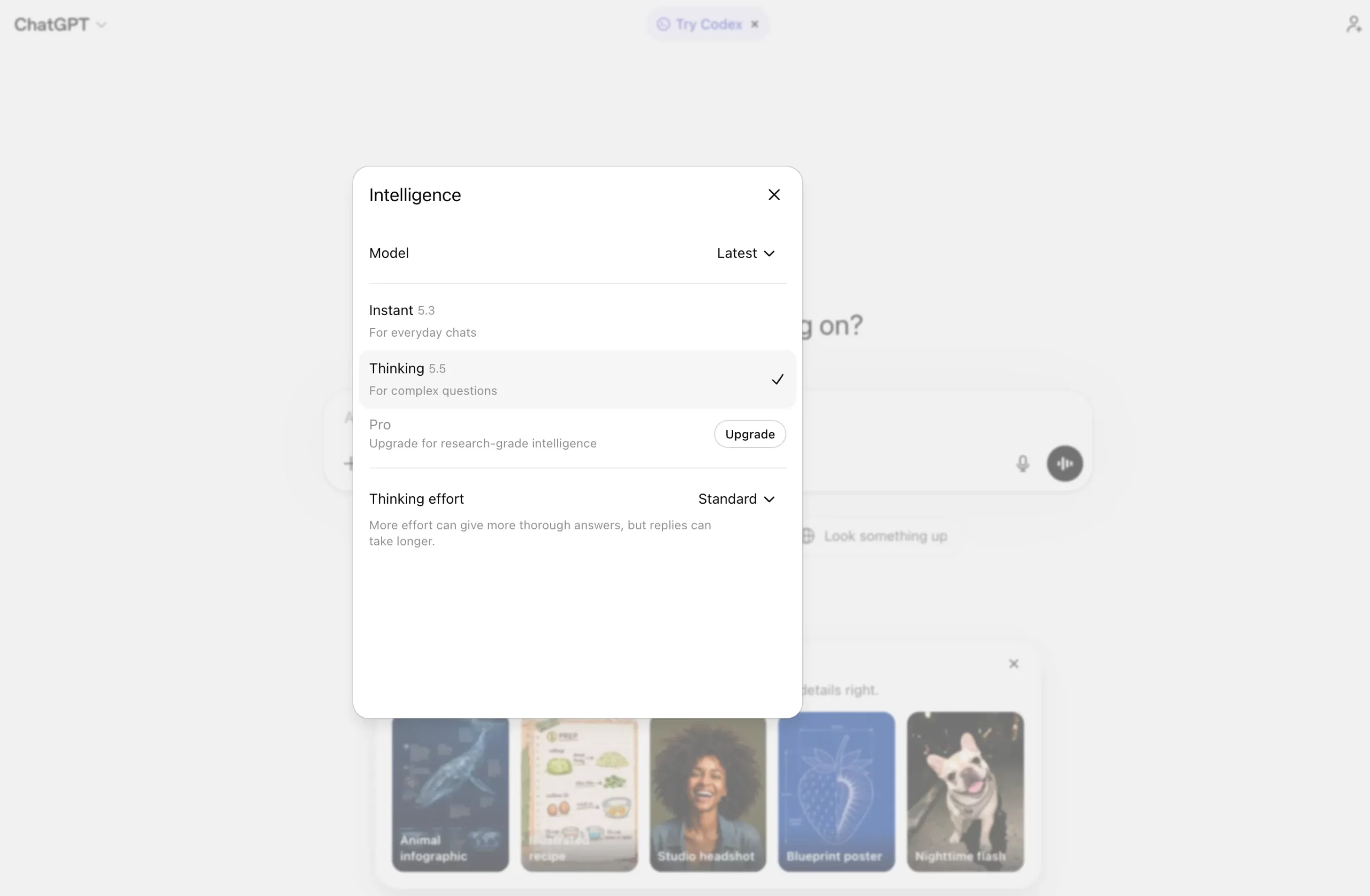
- ChatGPT Plus & Pro: GPT-5.5 "Thinking" is available to Plus users, while the full "Pro" model is reserved for Pro, Business, and Enterprise tiers.
- Codex Integration: The model is available across all professional plans with a 400,000-token context window, allowing for the analysis of massive documents or entire code repositories in a single session.
- Fast Mode: A new "Fast Mode" has been introduced for developers, offering token generation speeds 1.5 times faster than standard mode, albeit at a 2.5 times cost premium.
Safety, Ethics, and Safeguards
As AI models gain the ability to operate software and perform cybersecurity-related tasks, the risks associated with autonomous behavior increase. OpenAI has stated that GPT-5.5 was released with its most rigorous safety protocols to date. This includes extensive "red-teaming"—a process where internal and external experts attempt to find vulnerabilities or induce harmful behavior in the model.
The company collaborated with nearly 200 early-access partners to test the model’s safeguards in sensitive areas like biology, chemistry, and cybersecurity. These safeguards are designed to prevent the model from being used to create malicious software or assist in the development of hazardous materials, while still allowing it to perform legitimate defensive cybersecurity and scientific research tasks.
Industry Implications and Market Analysis
The launch of GPT-5.5 is likely to accelerate the adoption of "AI Agents" within the corporate sector. By moving beyond text generation into the realm of task execution, OpenAI is positioning ChatGPT as a central operating layer for business productivity.
Industry analysts suggest that the model’s ability to handle "messy" business tasks—such as creating a 90-day improvement plan for a struggling brand or managing an interior design studio’s project management system—will bridge the gap between AI as a novelty and AI as a core utility. The model’s success in these areas depends on its "nuance-retention," or its ability to follow complex, multi-layered instructions without overlooking minor details.
Furthermore, the competition between OpenAI, Anthropic, and Google is shifting from "who has the largest model" to "who has the most useful agent." GPT-5.5’s performance in "computer use" and "agentic coding" benchmarks suggests that the next frontier of AI development will be the seamless integration of these models into existing human workflows, where the AI can act with a degree of autonomy to reduce the cognitive load on human workers.
Conclusion: A New Standard for AI Assistance
GPT-5.5 represents a clear statement of intent from OpenAI. By focusing on real-world task execution, the model addresses the primary criticism of previous LLMs: that they were excellent at talking but limited in doing. With its high scores in tool-based benchmarks, expanded context window, and improved efficiency, GPT-5.5 is set to become a foundational tool for developers, researchers, and business professionals.
As the model rolls out to Plus, Business, and Enterprise users, the focus will turn to how these agentic capabilities perform at scale. If GPT-5.5 can consistently deliver on its promise of autonomous task completion with minimal supervision, it may redefine the standard for what users expect from artificial intelligence in the professional era.