rifanmuazin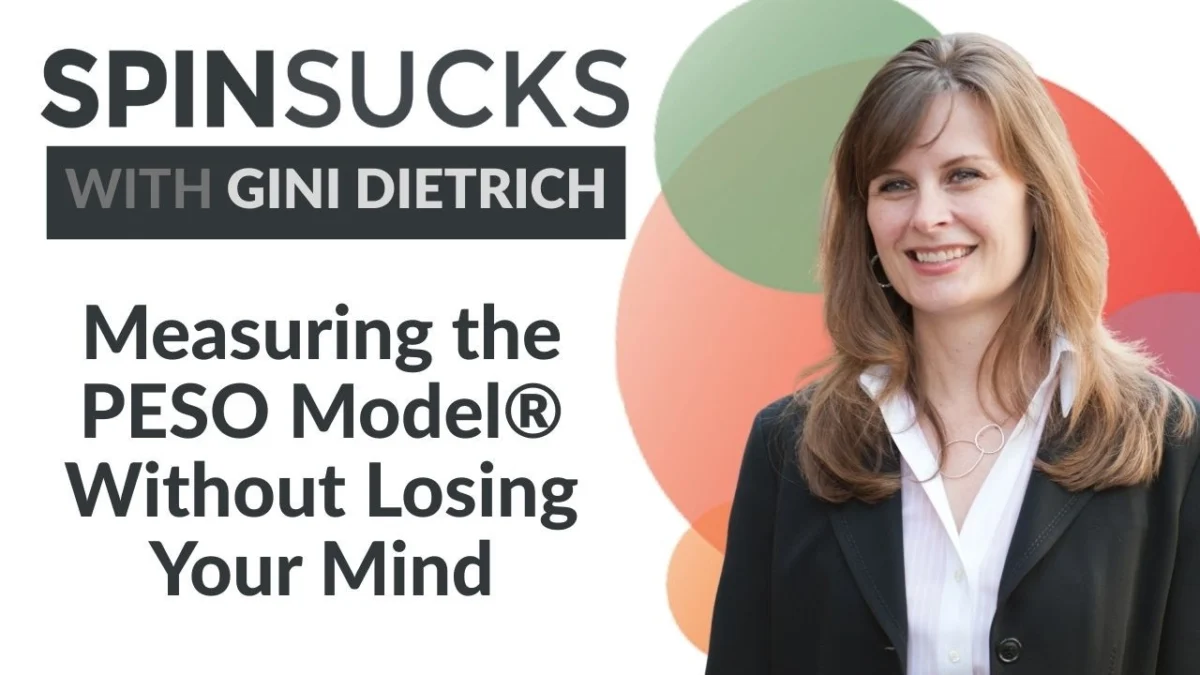
In the rapidly evolving landscape of digital communications, the traditional metrics used to evaluate public relations and marketing efficacy are undergoing a fundamental transformation. As organizations grapple with AI-driven discovery, zero-click visibility, and a fragmented media environment, the focus of measurement is shifting from a tally of activities to a narrative of outcomes. This evolution is central to the modern application of the PESO Model®—an integrated framework comprising Paid, Earned, Shared, and Owned media—which now functions less as a series of siloed channels and more as a cohesive operating system designed to drive specific business behaviors.
The Evolution of the PESO Model in an AI-First Era
The PESO Model, originally developed by Gini Dietrich, has served for over a decade as the industry standard for integrated communications. However, the rise of Large Language Models (LLMs) and generative AI has necessitated a significant update to the framework. Today, visibility is no longer a simple matter of driving clicks to a website; it is a systemic challenge involving how information is synthesized by AI agents and surfaced in non-traditional search environments.
Industry analysts note that as search engines transition toward "answer engines," the volume of referral traffic may decrease even as brand influence grows. In this environment, the PESO Model acts as a "visibility engine" where owned and earned media provide the credibility and substance that AI models require to validate a brand’s authority. Consequently, measurement must move beyond "math homework"—the tedious tracking of impressions and post counts—and toward "storytelling with numbers," answering the singular, critical question: What changed for the business?
The Hierarchy of Measurement: Activities, Outputs, and Outcomes
To effectively measure an integrated communications strategy, practitioners must distinguish between three distinct layers of data. Failure to do so often results in "vanity metrics" that do not resonate with executive leadership or reflect true business growth.
Activities and Outputs: The Internal Baseline
Activities represent the work performed by the communications team, such as writing a press release or designing a social media graphic. Outputs are the immediate results of those activities—the published article, the live webinar, or the LinkedIn post. While these are necessary to track for operational efficiency, they do not constitute proof of success. Reporting that a team "posted 17 times" provides evidence of labor but not evidence of impact.
Outcomes: The Business Driver
Outcomes are the shifts in behavior or business performance that occur as a direct result of the PESO system. This might include an 18% increase in qualified demo requests, a reduction in the sales cycle by ten days, or a measurable increase in high-intent organic search queries. According to recent marketing benchmarks, organizations that align their communications metrics with sales and operational goals are 2.3 times more likely to secure budget increases for the following fiscal year.
The 90-Day Outcome Framework: A Chronological Approach to Implementation
The transition to outcome-based measurement is best managed through a structured, 90-day cycle. This timeframe is long enough to allow for the compounding effects of integrated media to take hold, yet short enough to remain agile and responsive to market changes.
Phase 1: Establishing the Baseline (Days 1–15)
Before launching a new campaign or adjusting the PESO mix, organizations must identify a clear, findable baseline. This involves auditing current performance data—not just in terms of traffic, but in terms of current conversion rates, customer sentiment, and the frequency of common sales objections.
Phase 2: Defining the Primary Outcome (Days 16–30)
Rather than attempting to move multiple KPIs simultaneously, the most successful programs focus on a single primary outcome for the quarter. This outcome must be directly tied to the organization’s overarching goals. For a B2B SaaS company, this might be "reducing trial-to-active conversion friction." For a non-profit, it might be "increasing recurring donor retention."
Phase 3: Execution and Mid-Point Adjustment (Days 31–60)
As the PESO system runs, data is gathered to see how the channels are interacting. In a functional system, earned media mentions should drive traffic to owned content, which is then amplified by paid spend and validated by shared social proof. If the data shows that a specific channel is not contributing to the primary outcome, practitioners are encouraged to exercise "leadership over failure" by stopping or adjusting that tactic mid-cycle.
Phase 4: Final Assessment and Storytelling (Days 61–90)
At the end of the 90-day window, the team evaluates the shift from the baseline to the target. The resulting report is not a spreadsheet of disconnected channel data but a narrative: "We changed [behavior] by [direction] because [the PESO system provided the necessary proof and distribution]."
Supporting Data and Industry Trends in Communication ROI
The shift toward outcome-based measurement is supported by broader trends in the marketing and PR industries. A 2024 study on digital influence revealed that 71% of B2B buyers consume three or more pieces of earned media before engaging with a sales representative. Furthermore, Gartner research indicates that by 2026, traditional search engine volume is expected to drop by 25% as consumers turn to AI chatbots and social media for discovery.
These statistics underscore the importance of measuring the system rather than the channel. When paid, earned, shared, and owned media work in concert, they create a "trust signal" that is picked up by both human prospects and AI scrapers. Measurement, therefore, must track how these signals repeat and compound across the web.
Stakeholder Perspectives and "The Boardroom Language"
For communications professionals, the greatest challenge of measurement is often translating technical data into a language that C-suite executives understand. Chief Financial Officers (CFOs) and Chief Marketing Officers (CMOs) are rarely interested in click-through rates (CTR) or cost-per-click (CPC) in isolation. Instead, they seek evidence of:
- Sales Velocity: How much faster are leads moving through the funnel?
- Cost of Acquisition (CAC): Is the integrated PESO approach lowering the cost of acquiring a new customer compared to paid-only strategies?
- Brand Salience: Is the brand being mentioned in the same breath as competitors in AI-generated summaries and industry reports?
By focusing on "What changed?", practitioners align themselves with the business’s bottom line, transforming the communications department from a "cost center" into a "revenue driver."
The Outcome Quality Check: A Filter for Strategic Alignment
To ensure that chosen metrics are robust enough to withstand executive scrutiny, the PESO Model framework suggests a four-point quality check:
- Attribution: Can the change be reasonably linked to the communications work performed?
- Business Impact: If this number moves, does it actually matter to the CEO?
- Clarity: Can the success be explained in a single sentence without jargon?
- Actionability: Does the data tell the team what to do next (double down, adjust, or stop)?
Broader Impact and Future Implications
As AI continues to reshape the digital ecosystem, the ability to measure and prove the value of integrated communications will become a defining competitive advantage. Organizations that remain tethered to vanity metrics like impressions and "likes" will find it increasingly difficult to justify budgets as traditional tracking mechanisms (such as third-party cookies) continue to disappear.
Conversely, those who adopt the PESO Model as a systemic operating engine will be better positioned to navigate the complexities of modern discovery. The PESO Model Certification® and similar professional development programs are increasingly focusing on these measurement standards to prepare the next generation of communicators for a world where "visibility" is invisible but "influence" is measurable.
In summary, measurement in the modern era is no longer a post-mortem activity performed at the end of a campaign. It is a steering mechanism that allows organizations to navigate a volatile market with confidence. By prioritizing outcomes over outputs and treating the PESO Model as a unified system, communicators can provide the one thing every executive wants: proof of progress.