rifanmuazin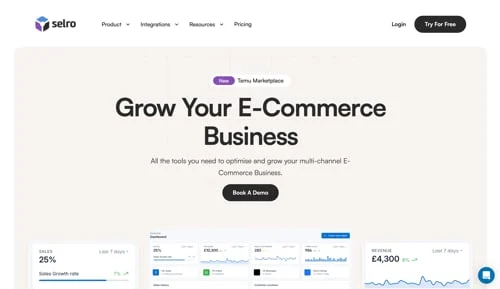
This week’s landscape of e-commerce innovation is marked by a significant surge in new services and platform enhancements designed to empower merchants across a diverse range of operational needs. From sophisticated AI-driven marketing and customer support to streamlined B2B commerce and enhanced cross-channel capabilities, the latest offerings signal a strategic pivot towards more intelligent, integrated, and efficient retail operations. Key areas of advancement include agentic marketing, shoppable media, advanced payment solutions, AI-powered product descriptions, and predictive behavioral intelligence, all aimed at optimizing the customer journey and boosting merchant profitability in an increasingly competitive digital marketplace.
The rapid evolution of consumer behavior and technological capabilities is compelling businesses to adopt more dynamic and responsive strategies. The integration of artificial intelligence is no longer a futuristic concept but a foundational element for businesses seeking to personalize customer experiences, automate complex tasks, and gain deeper insights into market trends. This wave of new services reflects a concerted effort by technology providers to equip merchants with the tools necessary to navigate these evolving demands and capitalize on emerging opportunities.
Revolutionizing B2B Commerce and Wholesale Procurement
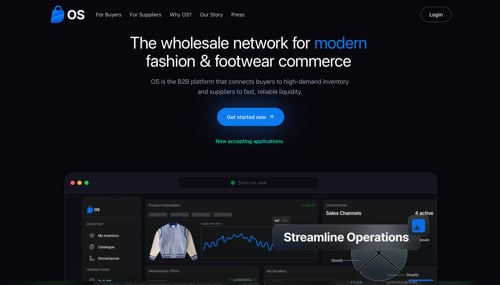
The business-to-business (B2B) sector within e-commerce is experiencing a notable transformation with the launch of specialized platforms designed to streamline wholesale transactions. OS Group has introduced what it claims to be an industry-first B2B commerce platform tailored for secondary consumer markets, specifically focusing on the fashion and footwear industry. This proprietary marketplace offers qualified retailers and business buyers centralized access to high-demand sneakers and streetwear, facilitating immediate wholesale purchases and fulfillment. By aggregating globally recognized brands such as Nike, Adidas, and ASICS, OS Group aims to simplify the sourcing process for businesses, providing a single point of entry for a diverse and sought-after inventory.
The implications of such platforms are significant for the wholesale fashion industry. Historically, B2B procurement has often involved complex negotiations, fragmented supplier relationships, and lengthy lead times. Dedicated B2B e-commerce marketplaces like OS Group’s can dramatically reduce these friction points. By offering immediate access to authenticated, in-demand products, these platforms can help retailers manage inventory more effectively, respond faster to market trends, and ultimately improve their own sales cycles. The ability to source directly from a curated network of brands also potentially offers greater transparency and control over product authenticity and pricing.

The Rise of Agentic Marketing and Shoppable Media
A prominent theme emerging from this latest batch of service releases is the advent of "agentic" technologies, particularly in marketing and media. Ampd has launched what it terms "agentic shoppable media," a groundbreaking solution designed to create a frictionless shopper journey by directly connecting brand media to commerce. This technology aims to link shoppers seamlessly to their preferred retailers, ensuring they are fully logged in and ready to purchase. A key innovation highlighted by Ampd is the ability for brands to input and maintain fair-share gross merchandise allocations across their retail partners, such as Amazon, Walmart, and Target, from a single link. This simplifies campaign management and maximizes the likelihood of directing consumers to their preferred purchasing ecosystem.
The concept of agentic marketing suggests a shift from passive advertising to proactive, AI-driven engagement. In this context, an "agent" could be an AI entity that understands a consumer’s intent and facilitates a purchase on their behalf, or at least guides them through the most efficient path to purchase. For brands, this translates to greater control over where their products are sold and how their marketing investments are allocated. The ability to manage these allocations across multiple retail channels through a single point of control is a significant operational advantage, potentially leading to more efficient marketing spend and improved return on investment.
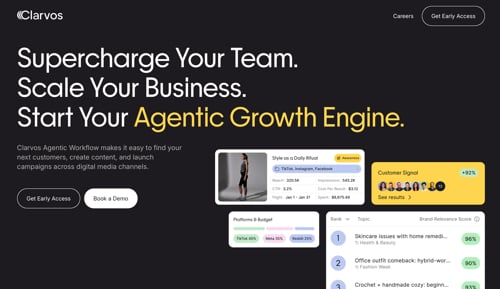
Clarvos is also venturing into agentic marketing with its new platform designed to assist small and medium-sized businesses (SMBs) in planning, creating, and executing marketing campaigns. The Clarvos Agentic Workflow orchestrates campaign strategy, creative generation, and activation across major platforms like Google, Meta, and TikTok. By leveraging AI to simulate customer responses and compare campaign options, Clarvos aims to guide SMBs through the complex process of campaign setup and optimization, democratizing access to sophisticated marketing strategies. This is particularly relevant for SMBs that often lack the dedicated resources and expertise to compete effectively in the digital advertising landscape. The platform’s ability to simulate campaign outcomes before activation can help mitigate risks and improve the efficiency of marketing budgets, a critical factor for businesses operating with tighter financial constraints.
Enhancing Cross-Channel Experiences with AI
Customer experience platforms are increasingly integrating AI to manage and enhance cross-channel interactions. Airship has announced an expansion of its AI Agent Fleet, introducing conversational interfaces for its AI agents. These agents are designed for campaign automation and acceleration, building native app and web experiences from text descriptions or image uploads, and creating and refining complex, multichannel customer journeys. This enhancement signifies a move towards more intelligent automation of customer engagement across various touchpoints, from marketing campaigns to in-app experiences.
The ability to generate app and web experiences from simple text descriptions or image uploads is a significant development for content creation and personalization. It suggests that marketers will be able to iterate on user interfaces and marketing materials much faster, responding dynamically to campaign performance or market shifts. For customer journeys, AI agents that can create and refine complex, multichannel paths mean that businesses can offer more personalized and context-aware experiences, guiding customers through their lifecycle with greater precision and effectiveness. This could lead to improved customer retention, higher engagement rates, and a more consistent brand experience across all channels.
AI-Powered E-commerce and Product Optimization
The application of artificial intelligence in e-commerce operations is expanding beyond marketing and customer support, reaching into core functions like product management and global operations. DropsyneX has debuted a new AI-powered e-commerce system designed for cross-border transactions. This comprehensive solution integrates live commerce, merchant services, and global logistics, featuring a global warehouse network, smart inventory and warehouse management, and virtual livestream commerce. The AI-powered livestream commerce tool is particularly noteworthy, promising automated product promotion, increased conversion rates, and reduced reliance on manual operational teams.
The integration of AI into livestream commerce addresses a growing trend in online retail, particularly in Asian markets, where live selling has become a significant revenue driver. By automating product promotion and potentially personalizing recommendations during live streams, DropsyneX aims to enhance the effectiveness of this format. For cross-border e-commerce, the inclusion of smart inventory and warehouse management, coupled with global logistics, addresses some of the most complex challenges faced by online retailers operating internationally. This can lead to reduced shipping times, lower logistical costs, and a more reliable customer experience for international buyers.
Selro has launched an AI-powered product description generator, a tool aimed at transforming e-commerce listings. This feature integrates directly into the Selro platform, allowing users to generate product titles, descriptions, and summaries using existing product data, images, or title snippets. The generator’s ability to function across large catalogs and multiple sales channels is crucial for businesses managing extensive product portfolios. High-quality, engaging product descriptions are vital for SEO and conversion rates, and automating this process can save significant time and resources for merchants. The AI can potentially identify key selling points and craft compelling narratives that resonate with target audiences, thereby improving product visibility and desirability.
Predictive Behavioral Intelligence and Enterprise AI
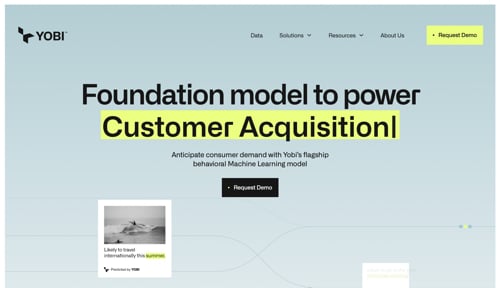
Understanding and predicting consumer behavior is a critical objective for modern businesses. Yobi, a behavioral AI company, has partnered with Microsoft to enhance predictive consumer intelligence for enterprises. Their solution, built on the Microsoft Azure platform, utilizes a consented consumer database to provide ethical access to behavioral datasets for predictive AI models. By analyzing real-world data such as purchases, store visits, and marketing conversions, Yobi’s model aims to understand and predict consumer intent. This allows businesses to personalize outcome modeling based on their specific priorities, leading to more targeted marketing and product development strategies.
The implications of this partnership are substantial for enterprise-level decision-making. Ethical access to behavioral data is paramount, and Yobi’s approach, emphasizing consent, addresses growing privacy concerns. By leveraging Microsoft’s robust Azure infrastructure, Yobi can offer scalable and secure solutions for predictive analytics. The ability to accurately predict consumer intent allows businesses to anticipate demand, tailor product offerings, and optimize marketing campaigns with unprecedented precision. This can lead to increased customer loyalty, reduced marketing waste, and a more proactive approach to market engagement.
Streamlining Payments and Collections
The financial aspect of e-commerce is also seeing significant innovation, with a focus on making payments more accessible and collections more efficient. PayPal has extended its payment link functionality to Canva creators, enabling them to embed PayPal checkout options directly into their designs. This integration allows Canva users to transform digital or printed designs into a direct checkout experience, accepting payments via PayPal, Venmo, and PayPal Pay Later across various platforms, including social media, email, messaging apps, and in-person.
This collaboration democratizes the ability for creators and small businesses to monetize their designs. By integrating payment solutions directly into design platforms, PayPal is reducing the technical barriers to online sales. For businesses and individuals who rely on visual content for marketing and sales, this feature simplifies the path from design to revenue, making it easier to accept payments for products, services, or digital assets. The inclusion of multiple payment options, including buy-now-pay-later services, caters to a wider range of customer preferences and purchasing power.
Blytz has launched as an intelligent payments and collections platform, encompassing BlytzPay, BlytzCollect, and BlytzCash. BlytzPay focuses on text-first, bankless payments, while BlytzCollect employs AI-driven voice and text payment links to automate outreach and improve on-time payments. BlytzCash expands payment options by allowing customers to pay in cash at a network of retailers. This multi-faceted approach addresses various payment challenges. Text-first payments can be particularly effective in regions with high mobile penetration but lower traditional banking access. AI-driven collections can significantly improve the efficiency and success rate of recovering overdue payments, reducing financial strain on businesses. The cash payment option through BlytzCash caters to a segment of the population that still prefers or relies on cash transactions, broadening market reach.
AI-Powered Customer Support and Operational Efficiency
Customer support remains a critical area for e-commerce operations, and AI is proving to be a powerful tool for enhancement. Yuma AI has launched "Ask Yuma," a conversational AI interface designed to manage e-commerce customer support operations through natural language. Integrated directly into the Yuma dashboard, Ask Yuma provides merchants with access to their tickets, automations, knowledge base, performance metrics, and integrations. Customer experience teams can now build, investigate, and optimize their support automations in real-time simply by interacting with Yuma.
The ability to manage complex support operations through natural language commands represents a significant leap in user experience for support management platforms. It lowers the barrier to entry for optimizing automation, allowing non-technical users to fine-tune their customer service strategies. This can lead to faster resolution times for customer queries, improved agent productivity, and a more consistent brand voice in customer interactions. By providing real-time insights and control over automation, Ask Yuma empowers businesses to proactively address customer needs and improve overall customer satisfaction.
Unified Platforms for Multi-Channel Commerce
As e-commerce continues to expand across various channels, the need for unified management platforms has become paramount. Katana has launched a new platform designed as a unified operating system for brands selling across multiple channels. This launch coincides with the introduction of Katana’s native Amazon FBA integration, enabling seamless synchronization between FBA stock and Katana inventory. The platform also supports multi-marketplace integration and a product mapping system, alongside native connections to popular platforms like Shopify, WooCommerce, QuickBooks, and Xero.
The introduction of a truly unified platform addresses a long-standing pain point for e-commerce businesses: managing disparate systems and data sources. By integrating inventory management with sales channels like Amazon FBA, Shopify, and WooCommerce, Katana aims to provide a single source of truth for inventory levels, sales orders, and financial data. This can lead to significant operational efficiencies, reduced errors, and improved decision-making. The ability to manage inventory across multiple channels in real-time is crucial for preventing stockouts and overselling, ensuring a consistent and reliable customer experience.
AI-Powered Commerce and Intelligent Payment Systems
Visa has unveiled Intelligent Commerce Connect, a solution aimed at enabling businesses to participate in AI-powered commerce. Through a single integration via the Visa Acceptance Platform, this service facilitates secure payment initiation, tokenization, spend controls, and authentication. The tool integrates Visa Intelligent Commerce APIs with those of other networks, allowing AI agents to process purchases using both Visa and non-Visa cards.
The development of Intelligent Commerce Connect signals a strategic move by Visa to adapt to the evolving landscape of AI-driven transactions. As AI agents become more sophisticated, they will require secure and streamlined payment mechanisms. Visa’s solution provides a robust framework for these transactions, ensuring security and compliance. The ability for AI agents to utilize multiple card networks broadens the applicability of this technology, paving the way for more widespread adoption of agent-based commerce. This could lead to a future where many routine purchasing decisions are automated, managed by AI agents acting on behalf of consumers or businesses, with Visa providing the underlying payment infrastructure.
Looking Ahead
The continuous stream of new services and platform enhancements highlights a dynamic period of innovation in the e-commerce and retail technology sectors. The overarching trend is towards leveraging artificial intelligence and advanced data analytics to create more intelligent, automated, and personalized experiences for both businesses and consumers. As these technologies mature and become more accessible, they are poised to reshape the way businesses operate, interact with customers, and drive growth in the digital economy. The focus on seamless integration across channels, efficient payment processing, and sophisticated data utilization suggests a future where e-commerce is more intuitive, responsive, and ultimately, more effective.