rifanmuazin
The e-commerce landscape is in constant flux, driven by rapid technological advancements and evolving consumer expectations. This week, a wave of new product and service launches underscores a significant shift towards artificial intelligence, streamlined operations, and more immersive shopping experiences. From AI-powered store builders and sophisticated marketing tools to enhanced shipping solutions and token-based checkouts, merchants are being equipped with unprecedented capabilities to optimize their online businesses. This comprehensive overview details the latest innovations, providing insights into how these developments are poised to reshape the future of digital commerce.
AI-Powered Storefronts and Enhanced Brand Visibility
The integration of artificial intelligence into e-commerce creation and management tools is accelerating, promising to democratize online business ownership and enhance brand presence.
Shoplazza Launches AI Store Builder for Rapid E-commerce Deployment
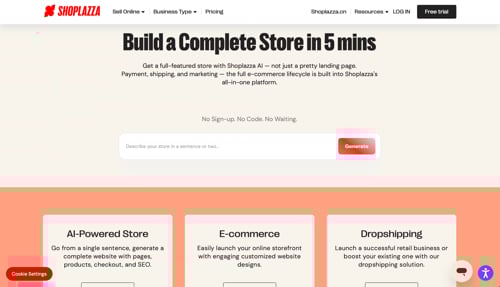
Shoplazza, a prominent platform catering to direct-to-consumer brands, has unveiled its AI Store Builder, a groundbreaking tool designed to significantly simplify the process of creating, launching, and operating online stores. This innovative solution empowers merchants to generate a complete, ready-to-sell storefront by simply describing their products, brand positioning, and target markets in natural language. The AI then autonomously constructs essential components, including homepage layouts, product pages complete with descriptions and imagery, collection structures, and necessary policy content. This automation drastically reduces the reliance on manual configuration and specialized technical expertise, enabling businesses to go live with a professional online presence much faster. Historically, establishing an e-commerce presence involved substantial time investment in design, content creation, and technical setup. Shoplazza’s AI Store Builder represents a paradigm shift, potentially cutting down the initial setup phase from weeks or months to mere hours.

Stable Commerce Emerges as a Conversational AI E-commerce Platform
Adding to the wave of AI-driven e-commerce solutions, Stable Commerce, a new player in the market, offers an AI-powered platform that allows merchants to create and manage their online stores through a chat-based interface. This intuitive approach allows users to articulate their business needs in plain language, prompting the AI to generate a fully functional storefront. This includes not only the visual design and product pages with descriptions and images but also seamless checkout integration and shipping setup. The conversational nature extends to ongoing management, allowing merchants to modify layouts, products, or content using the same chat interface. This represents a significant evolution from traditional e-commerce platforms, where changes often require navigating complex dashboards or engaging developers.
Adobe Expands AI Capabilities for Brand Visibility and Customer Lifecycle Management
Adobe has introduced a new tool focused on enhancing brand visibility on generative AI platforms, recognizing the growing importance of discoverability in the emerging AI-driven search ecosystem. The company also announced significant expansions to its Experience Manager, incorporating a contextual layer for AI agents. This integration aims to provide more personalized and dynamic content delivery. Furthermore, Adobe has launched CX Enterprise, an agentic AI system designed to streamline the entire customer lifecycle. This comprehensive solution assists businesses from prospect acquisition through conversion and long-term loyalty, promising to unify customer interactions and drive engagement across multiple touchpoints. The move by Adobe signals a strategic focus on leveraging AI to create more intelligent and integrated customer experiences, a critical factor for brands seeking to maintain relevance in an increasingly automated world.
Streamlining Operations: Shipping, Payments, and Composable Commerce
Beyond AI-driven creation, significant innovations are also emerging in the operational aspects of e-commerce, focusing on efficiency, security, and flexibility.

Australia Post Enhances E-commerce Logistics with In-Store Label Printing
Australia Post has introduced a "Print in Store" capability, a significant convenience for eBay sellers. This new service allows eBay sellers to generate shipping labels directly at participating post offices by simply scanning a QR code provided by eBay. This initiative aims to reduce the friction associated with shipping preparation, eliminating the need for sellers to print labels at home or rely on external printing services. The service follows Australia Post’s recent introduction of a new small parcel option for items under 250 grams, developed in collaboration with eBay. This dual focus on cost-effective shipping for small items and convenient label printing underscores a commitment to supporting small and medium-sized e-commerce businesses. The implication is a potential boost in shipping efficiency and seller satisfaction, particularly for those operating with lower volumes or with limited access to printing facilities.
Payabl. Launches Click to Pay with Visa to Combat Fraud and Boost Conversion
In a move to enhance payment security and improve checkout conversion rates, financial technology provider Payabl. has launched "Click to Pay" in conjunction with Visa. This new service replaces the traditional manual entry of card details with a more streamlined, token-based checkout process. Once a customer’s card is enrolled, purchases can be completed with just a few clicks. This adoption of Visa Click to Pay through Payabl.checkout simplifies the payment experience across various devices and leverages existing robust security protocols. By minimizing manual data entry, the risk of card data interception during the checkout process is significantly reduced, directly addressing merchant concerns about fraud. Increased checkout speed and reduced friction are also strongly correlated with higher conversion rates, as fewer customers abandon their carts due to complex payment procedures.
Vaimo Launches Nexus: A Smarter Frontend for Composable Commerce

E-commerce developer Vaimo has introduced Nexus, a frontend orchestration platform designed to optimize composable commerce architectures. Nexus positions itself between frontend and backend systems, enabling businesses to adopt a composable approach without requiring extensive rebuilds or incurring prohibitive overhead costs. The platform features an orchestration layer for aggregating data from various systems, a high-performance frontend layer, and connectors for popular platforms like Commercetools, Adobe Commerce, Contentful, and Sanity. Nexus is part of Vaimo’s Accelerator program, suggesting a focus on rapid deployment and implementation for businesses looking to leverage composable commerce. Composable commerce, which allows businesses to assemble best-of-breed solutions for different aspects of their e-commerce operations, has gained traction for its flexibility and scalability. Nexus aims to simplify the implementation and management of these complex architectures, making them more accessible to a wider range of merchants.
Enhancing Marketing and Customer Engagement
Beyond core operations, new tools are emerging to help e-commerce businesses connect with their customers more effectively and drive engagement.
Klaviyo and Canva Expand Integration for More Creative Marketing Campaigns
Klaviyo, a prominent platform for email, text, and marketing automation, has announced an expanded integration with Canva, the popular graphic design tool. This enhanced partnership allows marketers to seamlessly import their Canva designs into Klaviyo. Once imported, these designs can be further refined and personalized using Klaviyo’s advanced segmentation, automation, and customer data capabilities. This integration streamlines the creation of visually appealing and highly targeted marketing campaigns. By bridging the gap between design and marketing execution, businesses can produce more engaging content faster, leading to improved open rates, click-through rates, and ultimately, conversions. The synergy between a powerful design platform and a sophisticated marketing automation tool empowers businesses to create a more cohesive and impactful brand message across their customer communications.
Wayvia Launches Shoppable Next Generation for Immersive Marketing Touchpoints
Wayvia, an omnicommerce platform, has launched Shoppable Next Generation, an AI-powered update to its shoppable media tool. This new iteration enables brands to transform virtually any marketing touchpoint—including display ads, social media posts, and email campaigns—into shoppable experiences within minutes. The platform offers customizable landing page templates designed to optimize for conversion, facilitate basket building, and enhance brand awareness. Each template is mapped to specific campaign objectives within Meta Ads Manager, providing a direct link between marketing efforts and measurable sales outcomes. This evolution in shoppable media moves beyond static product links, allowing for more interactive and engaging content that mirrors the seamlessness of in-store browsing, thereby shortening the path to purchase and increasing the likelihood of impulse buys.
Evolving Payment and Search Technologies
The way customers pay and discover products is also undergoing a transformation, with AI and advanced sensing technologies playing key roles.
Gr4vy Launches Toolkit for AI-Native Payments and Storefronts
Gr4vy, a payment orchestration platform, has announced support for agentic transactions, enabling merchants to manage and process payments within AI-driven environments. Complementing this, Gr4vy is releasing its Agentic Development Kit. This kit is designed to equip and guide merchants in building and launching AI-native storefronts on platforms like ChatGPT and other generative AI environments. The offering promises merchants the ability to launch AI-native storefronts, orchestrate AI transactions in real-time, and maintain comprehensive control over performance, security, and the overall customer experience. This development is a significant step towards enabling truly intelligent and automated commerce, where AI agents can directly facilitate transactions based on user interactions and preferences.
UPS Deploys RFID Sensing Technology to Automate Package Tracking

UPS is implementing radio frequency identification (RFID) sensing technology across its U.S. small package network, a move aimed at eliminating manual scanning processes. The technology is now integrated into all UPS package delivery vehicles and facilities, as well as on every package shipped through UPS stores. This widespread deployment allows for automatic confirmation of package pickups and possession by UPS, providing enhanced visibility and accuracy in logistics. The elimination of manual scanning reduces errors, speeds up processing times, and provides a more robust audit trail for every shipment. This technological upgrade is crucial for the efficient management of high volumes of e-commerce shipments, ensuring greater reliability and transparency for both businesses and consumers.
Parsnipp Launches AI Search and GEO Platform for Enhanced Discoverability
Parsnipp has introduced a generative engine optimization (GEO) platform designed to help brands understand and improve their visibility within AI-driven discovery and search environments. The platform identifies specific signals, misconfigurations, and content gaps that affect how brands are perceived by AI algorithms. Key features include brand analytics across large language models (LLMs), competitor tracking, GEO content optimization, search persona analysis, and AI readiness recommendations. As search engines increasingly integrate generative AI, understanding how brands perform in these new search paradigms is becoming paramount. Parsnipp’s platform offers a proactive approach to ensuring that businesses are discoverable and effectively positioned within the evolving landscape of AI-powered information retrieval.
Conclusion: A Future of Intelligent, Integrated E-commerce
The flurry of product and service launches this week paints a clear picture of the e-commerce industry’s trajectory. Artificial intelligence is no longer a futuristic concept but a practical tool being integrated into every facet of online business, from initial store creation to customer service and payment processing. Composable commerce offers the flexibility for businesses to adapt and scale, while advancements in shipping and payment technologies are focused on delivering greater efficiency and security. The emphasis on shoppable media and AI-driven search further highlights a move towards more immersive, intuitive, and personalized customer journeys. As these innovations mature and become more widely adopted, they promise to redefine the competitive landscape, empowering merchants with unprecedented tools to connect with, serve, and convert their customers in an increasingly digital-first world. The coming months and years will undoubtedly see further integration of these technologies, solidifying AI’s role as a central pillar of successful e-commerce operations.


 Raul Delapena Setiawan
 Ammar Sabilarrohman