
 rifanmuazin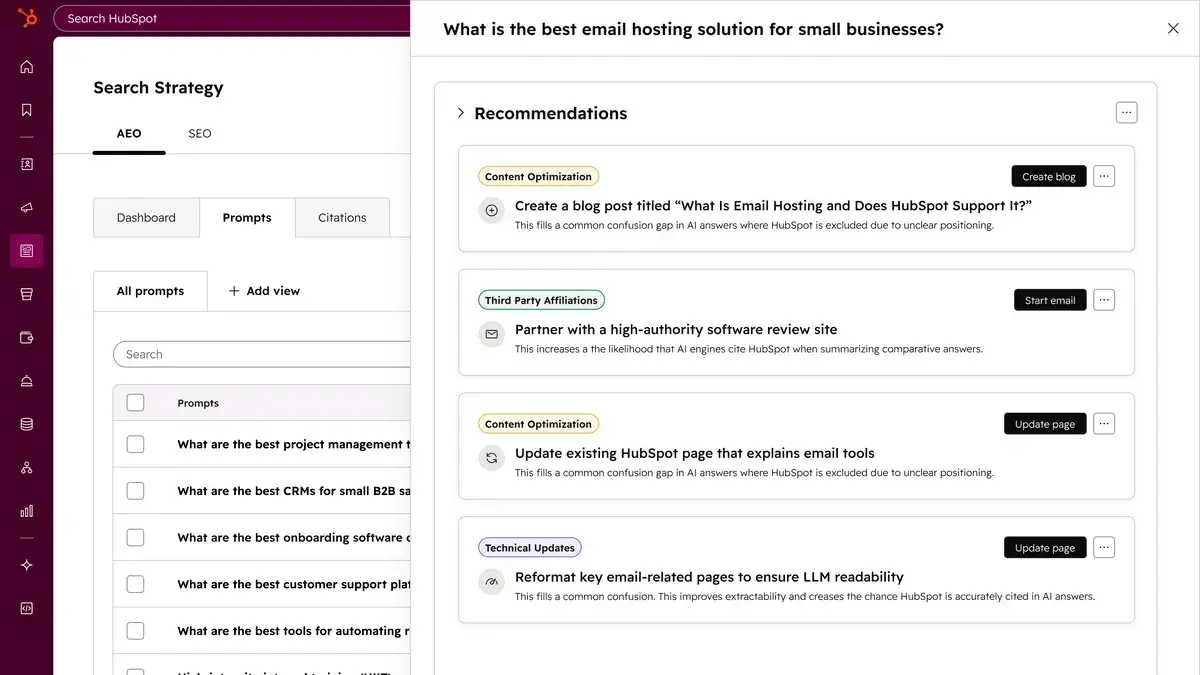
Answer Engine Optimization (AEO) is rapidly becoming an indispensable component of modern digital marketing, shifting the focus from traditional search engine rankings to visibility within advanced AI tools such as Gemini, Perplexity, and ChatGPT. This evolving discipline ensures brands are present and accurately represented where prospective customers are increasingly seeking immediate, synthesized information. As the digital landscape undergoes a profound transformation, understanding and implementing AEO insights is crucial for businesses aiming to maintain relevance and drive high-quality engagement.
The Paradigm Shift: From Search to Answers
For decades, Search Engine Optimization (SEO) has been the cornerstone of digital visibility, centered on guiding users to websites through keyword rankings and organic search results. However, the advent and rapid proliferation of large language models (LLMs) and conversational AI have introduced a new dynamic. Users are no longer just searching for links; they are asking questions and expecting direct, comprehensive answers, often without the need to click through to an external website. This fundamental shift underpins the emergence of AEO, which, while complementary to SEO, operates with distinct principles. While robust SEO practices provide a strong foundation, AEO specifically addresses how AI models interpret, synthesize, and present information to answer user queries directly within their interfaces.
The urgency of this shift is underscored by several critical trends shaping the digital ecosystem. The widespread adoption of AI tools by consumers and businesses alike signifies a fundamental change in information consumption habits. Google’s integration of AI Overviews, alongside the independent growth of platforms like ChatGPT, Gemini, and Perplexity, means that a significant portion of online queries are now resolved directly within these AI environments. This creates both a challenge and an opportunity for brands: to be the authoritative source cited by AI, rather than just ranking high on a traditional search results page.
Key AEO Insights Driving Strategic Imperatives
The data consistently highlights the growing importance of AEO, revealing patterns that demand immediate attention from marketers.
Rapid Growth in AI Referral Traffic and Superior Conversion Rates:
Reports indicate a dramatic increase in referral traffic originating from LLMs. A Search Engine Land analysis revealed that referral traffic from platforms like ChatGPT and Gemini tripled in 2025. More compellingly, this isn’t merely increased volume; it’s higher-quality traffic. A Semrush study, encompassing over 500 high-value digital marketing topics, found that visitors referred by LLMs converted at a rate 4.4 times higher than those arriving through traditional organic search, according to Growth Marshal’s subsequent analysis. This statistic underscores that even a modest share of AI-referred traffic can significantly impact a business’s lead generation and sales pipeline, making AEO not just a visibility play, but a direct revenue driver.
The "Zero-Click" Era: Visibility Inside the Answer:
A defining characteristic of the new AI-driven landscape is the rise of "zero-click" searches. A 2024 study by SparkToro and Datos found that approximately 60% of Google searches no longer result in a click to an external website. Between AI Overviews, featured snippets, and direct answers, users frequently obtain the information they need directly from the search or AI interface. This means that brand visibility within the AI-generated answer becomes as critical, if not more critical, than ranking on the first page of search results. Brands must optimize their content to be readily digestible and citable by AI to ensure their messaging reaches users even when they don’t navigate to a dedicated webpage.
Buyers Leveraging AI for Vendor Evaluation:
The influence of AI extends directly into the purchasing journey. McKinsey research from 2025 indicates that between 40-55% of shoppers in key sectors utilize AI search to inform their buying decisions. This suggests that AI tools are not just providing general information but are actively influencing vendor selection. If a competitor is consistently recommended or cited by AI for specific product or service queries, that brand gains a substantial advantage in the decision-making process. This trend highlights the need for brands to proactively shape how AI perceives and presents them.
Competitive Blind Spots and the Need for Monitoring:
One of the most significant challenges in AEO is the potential for competitive blind spots. A brand might be unaware that its competitors are frequently mentioned in AI responses to critical buyer prompts. For instance, if a prospect asks ChatGPT about "the best CRM for small businesses," and a competitor is consistently cited while your brand is absent, a crucial opportunity is missed. Without dedicated monitoring, businesses remain oblivious to these competitive dynamics within answer engines. Tools designed for AEO can provide a baseline assessment of brand standing relative to competitors across various AI platforms.
AI’s Holistic View: Beyond Owned Content:
Unlike traditional SEO, which heavily prioritizes a brand’s owned website content, AI answer engines adopt a more comprehensive approach. They synthesize information from a vast array of sources, including third-party review sites, social media discussions, Reddit threads, news articles, and other external mentions. This means that a brand’s AEO visibility is intrinsically linked to its broader digital footprint. A robust social media presence, positive reviews on industry platforms, and consistent third-party mentions contribute significantly to how AI models perceive and cite a brand. Conversely, a quiet social presence or a lack of external validation can create gaps in AI answers.
Building an AEO Framework: Unearthing Brand-Specific Insights
While understanding the general AEO landscape is valuable, the real impact comes from brand-specific insights. Identifying where a brand is visible, where it’s absent, and what content or strategic adjustments are needed to close these gaps requires a systematic approach, often facilitated by specialized AEO tools. These tools automate the laborious process of manually querying various AI engines and provide structured data for analysis and action.

Taking an AEO tool like HubSpot AEO as an example, the typical workflow encompasses several key steps:
-
Defining the Scope: Brand, Competitors, and Prompts: The initial step involves configuring the tool by inputting the brand, its primary competitors, and a comprehensive list of prompts (questions) that target audiences are likely to ask AI engines. Advanced tools can leverage CRM data to suggest relevant prompts, ensuring alignment with actual customer queries. Organizing these prompts by product line or customer segment allows for granular performance tracking.
-
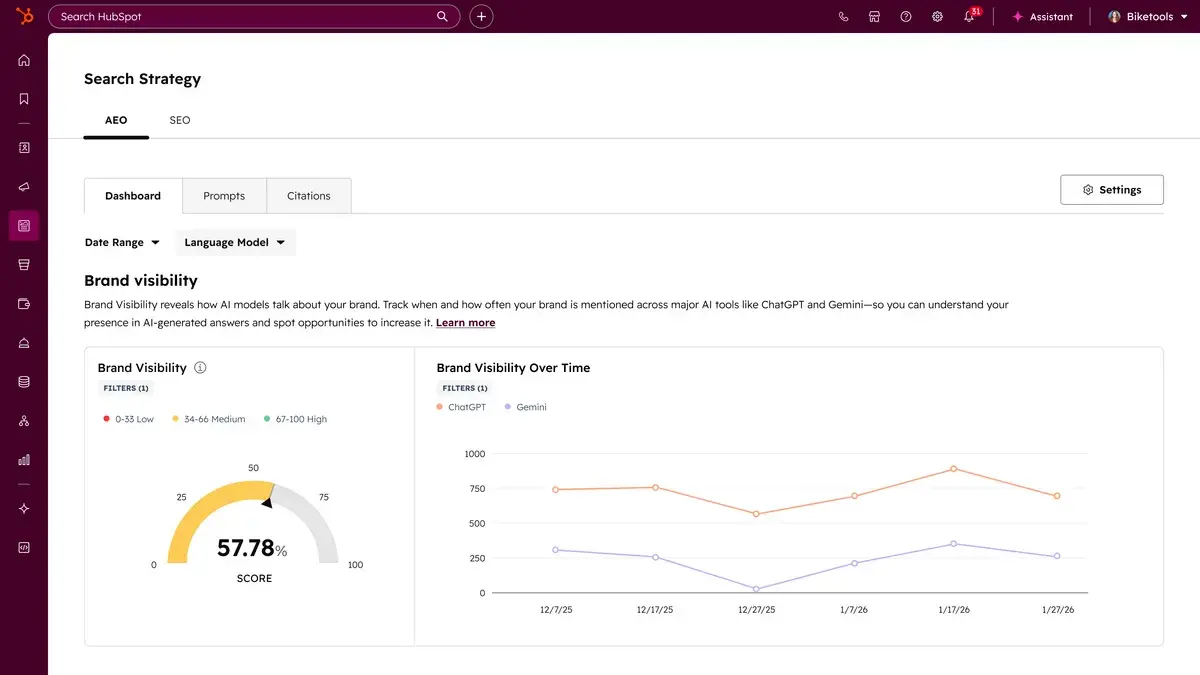
Measuring Brand Visibility: A core metric in AEO is the Brand Visibility score, which quantifies how often a brand is mentioned in AI responses to monitored prompts. For instance, if a brand appears in 5 out of 25 tracked prompts, its visibility score is 20%. This metric serves as a baseline, allowing marketers to track performance trends over time and analyze visibility across different AI engines (e.g., ChatGPT, Perplexity, Gemini).
-
Competitive Analysis: Share of Voice: AEO extends beyond self-assessment to competitive intelligence. The Share of Voice metric indicates the proportion of brand mentions in AI responses that belong to a particular brand versus its competitors. This analysis pinpoints specific prompts where competitors are cited, but the brand is not, revealing high-leverage opportunities for content creation or optimization.
-
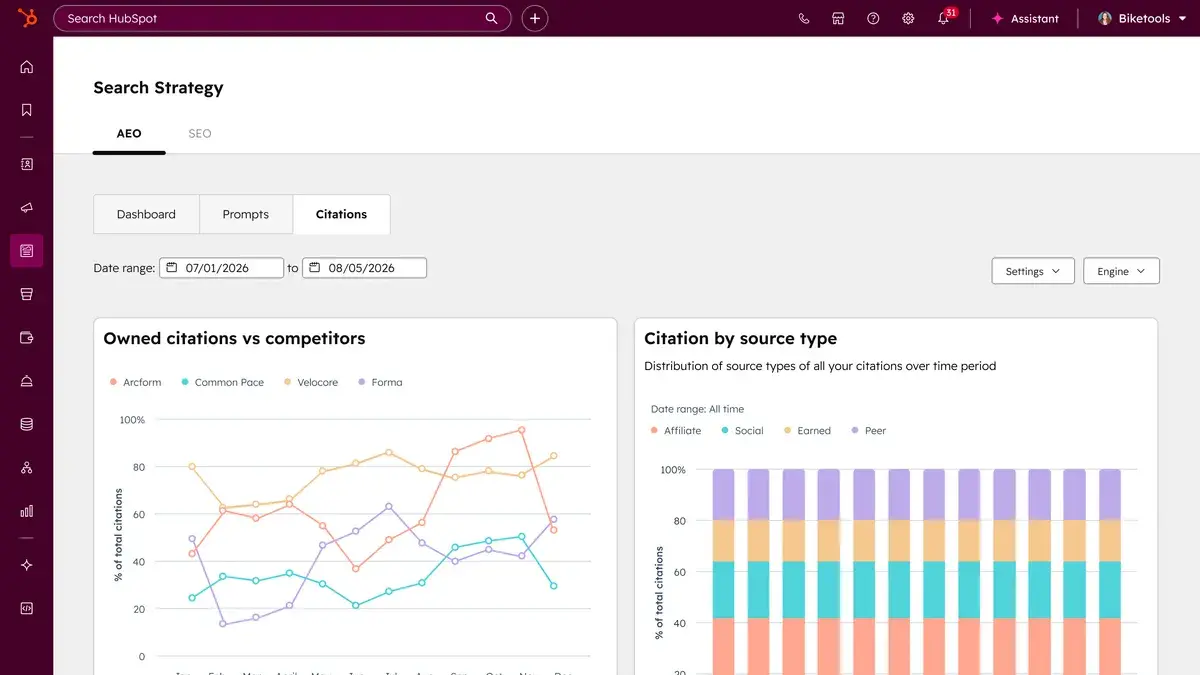
Citation Analysis: Understanding AI’s Sources: AI engines generate answers by referencing various web sources. A citation analysis feature reveals which types of content, channels (owned content, Reddit, earned media), and specific domains are most frequently cited for queries within a brand’s category. This data is invaluable for informing content strategy; for example, if comparison listicles are consistently cited for high-intent prompts, investing in such content becomes a clear priority. Similarly, identifying frequently cited review sites signals opportunities for reputation management or product placement.
-
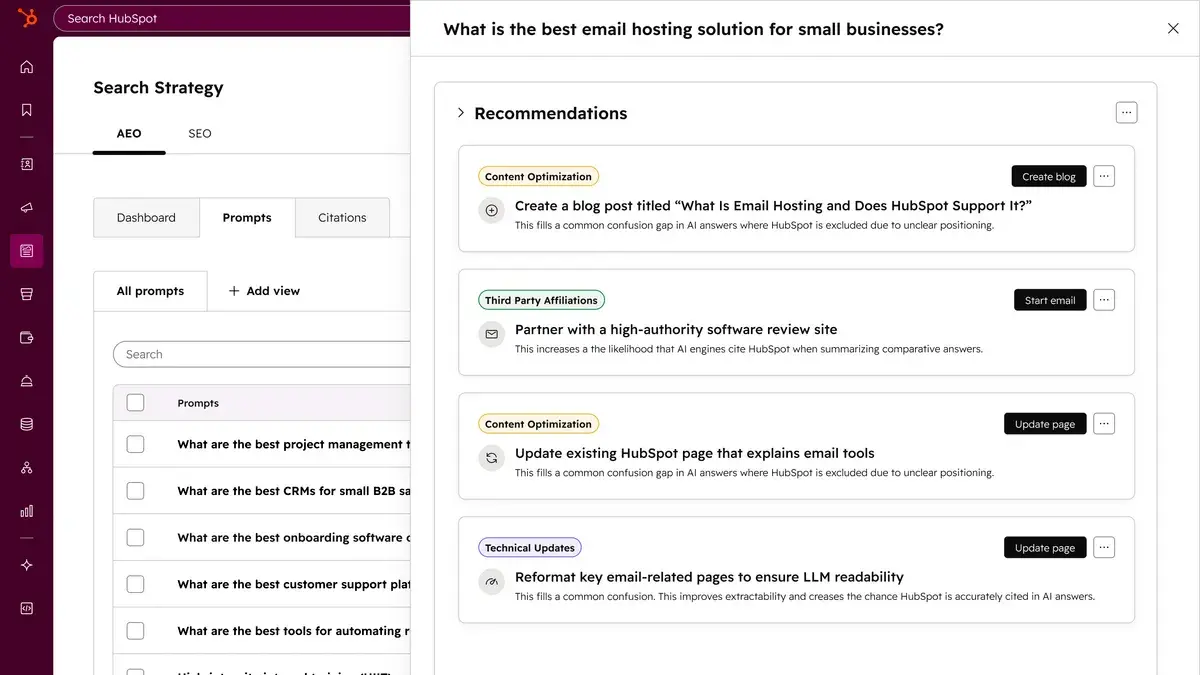
Actionable Recommendations: Data without clear next steps is merely information. Effective AEO tools synthesize performance and citation data into prioritized lists of content and outreach recommendations. These recommendations often include suggested content titles, target audiences, keywords, and the underlying rationale, linking directly to the prompts and citation patterns that informed the suggestion. This translates complex data into a tangible action plan.
-
Granular Filtering and Refinement: As an AEO strategy matures, the ability to slice and dice data becomes crucial. Filtering by AI engine, date range, or prompt group allows marketers to analyze performance for specific product lines, customer segments, or campaigns. This granular view helps pinpoint discrepancies, such as strong visibility on one AI platform but weakness on another, enabling more targeted optimization efforts.
Optimizing for AI Answer Engines: Practical Strategies
Once gaps are identified, the next step is implementation. AEO strategies focus on making content highly consumable and authoritative for AI models.
Content Formatting for AI Citations:
Answer engines are designed to extract specific pieces of information. Therefore, content structure is paramount:
- Clear Headings and Subheadings (H1, H2, H3): These act as signposts, guiding AI to key topics and arguments.
- Concise Paragraphs: Short, focused paragraphs with a single main idea improve readability for both humans and AI.
- Direct Answers to Questions: Incorporating explicit Q&A sections or immediately answering common questions at the beginning of a section increases the likelihood of being cited.
- Bulleted and Numbered Lists: These formats are excellent for presenting digestible, scannable information that AI can easily extract.
- Summary Boxes and Key Takeaways: Placing crucial information in prominent summary boxes or "key takeaway" sections makes it highly visible to AI.
Leveraging Schema Markup:
Schema markup provides machine-readable context about a page’s content, reducing ambiguity for AI engines. While not a guarantee of citation, it significantly improves content legibility for machines. Key AEO-relevant schema types include:
- FAQPage Schema: Ideal for content addressing common questions, explicitly marking question-and-answer pairs.
- HowTo Schema: Useful for step-by-step guides, helping AI understand procedural information.
- Article Schema: Provides context for editorial content, including author, publisher, and publication date, enhancing authority signals.
- Product and Review Schema: Essential for commercial pages, informing AI about product details, ratings, and customer feedback.
Remember, schema enhances good content; it cannot compensate for poor quality or thin information.
Fast Technical Wins for AEO:
Several technical adjustments can yield quick AEO benefits:
- Robots.txt Configuration: Ensure AI crawlers like OAI-SearchBot are not inadvertently blocked, allowing them to access and index content for citation.
- Mobile Responsiveness and Page Speed: AI values user experience. Fast-loading, mobile-friendly pages are generally favored.
- Clear HTML Structure: Semantic HTML (e.g.,
<article>,<section>) helps AI understand the content hierarchy and purpose. - Internal Linking: A robust internal linking structure helps AI discover and understand the relationships between different pieces of content on a site, reinforcing topical authority.
AEO’s Synergistic Relationship with Inbound Marketing
For brands already invested in inbound marketing and content-led SEO, AEO represents a natural extension rather than a complete overhaul. It leverages the same foundational principles: creating helpful content, establishing topical authority, and building brand trust. However, AEO introduces a new dimension by rewarding a broader range of signals. While traditional SEO heavily weighted on-page optimization and backlinks, AEO considers a brand’s presence across review sites, social media, forums like Reddit, and news coverage.
This compounding effect is significant. A blog post optimized for a buyer’s question can generate organic search traffic and increase the likelihood of being cited by AI. A positive G2 review can boost domain authority and appear as a cited source when an AI recommends tools in that category. The more consistently a brand appears across various channels, the more "consensus" AI engines detect, which is a powerful signal driving AI recommendations. Brands with a long-standing inbound strategy may find themselves with a stronger AEO starting position. However, AEO tools are crucial for identifying specific gaps that traditional SEO metrics might not reveal, such as strong Google rankings but low ChatGPT visibility for the same queries.
A Prioritized Checklist for AI Answer Engine Optimization
To guide implementation, here’s a phased checklist for optimizing sites for AI answer engines:
Week 1: High-Leverage Start
- AEO Tool Setup: Configure an AEO tool (e.g., HubSpot AEO) with your brand, competitors, and initial set of buyer-centric prompts. Utilize CRM data for prompt suggestions if available.
- Robots.txt Review: Verify that essential AI crawlers (like OAI-SearchBot) are not blocked, ensuring content eligibility for AI citations.
- High-Intent Prompt Optimization: Identify 5-10 critical buyer questions and ensure existing content directly answers them, using clear headings, concise paragraphs, and summary boxes.
- Core Page Schema: Implement relevant schema (e.g., FAQPage, Article, Product) on your most important pages.
Weeks 2-4: Building the Foundation
- Content Audit for AI Readiness: Review existing content for clarity, conciseness, and direct answers to potential AI queries. Prioritize updates for high-traffic or high-intent pages.
- New Content Strategy: Develop a content calendar specifically targeting prompts where competitors are visible but your brand is not, focusing on formats preferred by AI (e.g., comparison listicles, detailed Q&As).
- Reputation Management: Actively solicit reviews on relevant third-party sites and engage in social listening to manage brand mentions, as AI synthesizes these external signals.
- Internal Linking Enhancement: Strengthen internal linking to improve content discoverability and topical authority for AI crawlers.
Monthly Cadence: Maintain and Compound
- AEO Data Review: Dedicate time each month to review Brand Visibility trends, Share of Voice changes, and new recommendations from your AEO tool.
- Competitive Landscape Monitoring: Track competitor visibility shifts and adjust your strategy accordingly.
- Content Refresh: Update existing content to reflect new insights, data, or product changes, ensuring its continued relevance and accuracy for AI.
- Schema Maintenance: Regularly review and update schema markup to ensure it accurately reflects content changes and aligns with evolving AI standards.
Frequently Asked Questions About AEO
Should I block or allow AI crawlers like GPTBot?
The decision to block or allow AI crawlers depends on specific business objectives. OpenAI operates two primary crawlers: GPTBot, which collects data for model training, and OAI-SearchBot, which gathers information for generating cited responses during ChatGPT’s web searches. Blocking OAI-SearchBot will generally prevent your site from appearing as a source in ChatGPT’s answers. If the goal is to prevent model training while still being eligible for citations, you can block GPTBot specifically while allowing OAI-SearchBot in your robots.txt file. It’s crucial to review your current robots.txt, as some sites may have blanket AI-bot blocks that inadvertently limit their eligibility for AI-generated citations.
Which schema is most impactful for AEO?
There isn’t a single "most impactful" schema type; effectiveness is context-dependent. For question-led content, FAQPage schema is highly valuable as it explicitly outlines question-and-answer pairs, making them easily digestible for AI. For editorial content, Article schema helps AI interpret crucial details like author, publisher, and publication date, lending credibility. Commercial pages benefit significantly from Product and Review schema, aligning with buyer-intent queries. However, schema markup serves to make strong content more machine-readable; it cannot elevate poor-quality or thin content to citation-worthy status. It is a powerful enhancer, not a magic fix.
How do I track traffic from Perplexity or ChatGPT browsing?
ChatGPT automatically appends the UTM parameter utm_source=chatgpt.com to outbound links when returning search results, allowing most analytics platforms to capture this traffic if UTM parameters are already tracked. For Perplexity, marketers should look for perplexity.ai in their referral traffic reports. Setting up dedicated segments or filters within analytics platforms for these specific sources enables separate tracking of volume, engagement metrics, and conversion rates, providing valuable insights into the performance of AI-referred traffic distinct from traditional organic search.
Conclusion: Embracing the Future of Digital Presence
The advent of AI answer engines marks a pivotal moment in digital marketing. AEO is not merely a fleeting trend but a fundamental shift in how brands must approach their online visibility and content strategy. By understanding the unique behaviors of AI models, leveraging dedicated tools for analysis, and implementing a robust, phased optimization strategy, businesses can secure their presence in this new answer-driven landscape. Those who adapt quickly, focusing on providing clear, authoritative, and multi-sourced answers, will not only gain a competitive edge but also build stronger, more resilient digital foundations for sustainable growth in an increasingly AI-centric world. The future of digital visibility is conversational, and AEO is the language brands must learn to speak.









