rifanmuazin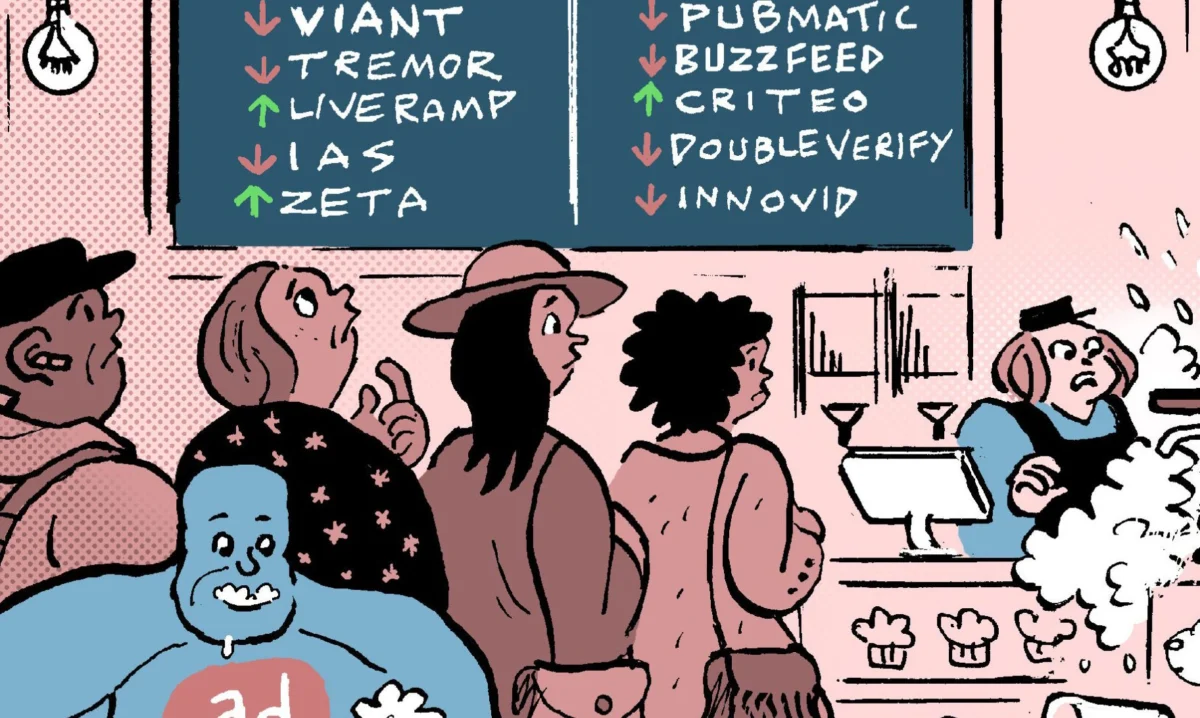
Tuesday, November 18th, 2025 – 1:13 pm
The programmatic advertising ecosystem is currently experiencing a significant surge in competitive tensions and internal disputes, manifesting acutely in recent financial reports from key industry players. This period of upheaval, characterized by disputes over data access, platform strategies, and the very definition of market roles, is directly impacting the revenue streams of Supply-Side Platforms (SSPs) and Demand-Side Platforms (DSPs), forcing a re-evaluation of long-standing industry dynamics.
The once-unified front against Google’s perceived dominance in the ad tech space has fractured, replaced by internal rivalries and strategic maneuvering. Companies that once aligned themselves with The Trade Desk are now finding themselves at odds with its evolving platform and business practices. This shift has become increasingly evident as major ad tech firms, including Magnite, PubMatic, and Nexxen, have reported unexpected and significant decreases in spending from DSPs during the third quarter of 2025. These financial results serve as a tangible indicator of the underlying conflicts brewing within the industry.
The Erosion of Revenue: A Tangible Impact of Industry Friction
The core of the current ad tech drama, according to industry observers and the companies themselves, is not rooted in abstract debates about data transparency or supply chain intricacies. Instead, the immediate and pressing concern for many programmatic companies is a demonstrable decline in their financial performance. This downturn is directly linked to shifts in spending patterns by major demand-side platforms, with The Trade Desk’s strategic initiatives emerging as a central point of contention.
Magnite, a prominent SSP, explicitly stated in its earnings call that The Trade Desk had implemented a change that "prioritized OpenPath as a default path for supply." This strategic shift by The Trade Desk, a significant source of demand for SSPs, necessitated direct engagement by Magnite with major agency buyers to re-establish what it termed a "preferred supply path." Michael Barrett, CEO of Magnite, acknowledged that this action had a "clear impact" due to the integral role of both companies within the programmatic ecosystem.
Similarly, PubMatic, another leading SSP, reported that unnamed DSPs had "unexpectedly and precipitously decreased spending" on their platform in Q3. While not directly naming The Trade Desk, PubMatic CEO Rajeev Goel alluded to the company’s new ad-buying platform, Kokai, stating it "operates differently from what we have seen." This sentiment echoed previous characterizations by PubMatic leadership regarding sudden spending reductions from a particular DSP.
Nexxen, which operates both a DSP and an SSP, revised its financial forecast downwards for the remainder of the year. CEO Ofer Druker attributed this adjustment to a "programmatic-wide reduction plateau" that failed to materialize in the crucial pre-holiday October period. Druker noted that this wasn’t an isolated incident with a single DSP but rather a systemic issue, indicating a broader retrenchment in programmatic spending. He also pointed to the trend of "big DSPs" moving towards building "end-to-end solutions" to enhance their own margins, a strategic move that could further consolidate demand and potentially sideline independent SSPs.
Adding to the challenges, System1 CEO Michael Blend disclosed that an unnamed programmatic vendor in its demand channel had exposed the company to "significant invalid or nonhuman traffic." System1 is reportedly seeking reimbursement and is considering legal action, highlighting the persistent issue of traffic quality and accountability within the programmatic supply chain.
Shifting Alliances and the Battle for Market Definition
Beyond the immediate financial pressures, the escalating antagonism within the ad tech sector is also a strategic play for market positioning. Companies are actively attempting to shape narratives for investors and marketers, advocating for their particular vision of how programmatic advertising should function. This involves not only defending their current business models but also redefining the competitive landscape.
The Trade Desk CEO Jeff Green, in a recent investor call, articulated a distinct view on the market, stating, "I don’t think Amazon has a DSP as we define it." This statement appears to draw a line in the sand, potentially excluding large integrated players from the traditional DSP category and emphasizing The Trade Desk’s self-defined position.
In response, independent DSP Viant, through its CEO Tim Vanderhook, offered a contrasting perspective. Vanderhook stated that Viant "sees less competition when you look at truly objective buy-side-only platforms." He implicitly excluded The Trade Desk from this category, characterizing it as "no longer independent or objective" due to its prioritization of OpenPath supply integrations. This framing positions Viant as a purer buy-side solution, in contrast to what it perceives as The Trade Desk’s encroaching role on the sell-side.
Nexxen’s CEO, Ofer Druker, also weighed in on this evolving landscape, observing the trend of DSPs crossing over to the supply side, like The Trade Desk’s OpenPath initiative. He reiterated his belief that larger DSPs will increasingly build integrated, end-to-end solutions to capture greater profit margins. This perspective suggests a future where the lines between buy-side and sell-side become increasingly blurred, leading to a more consolidated and potentially less fragmented market.
The divergence in these viewpoints underscores a fundamental disagreement about market structure and the roles of different players. While some advocate for integrated, end-to-end solutions, others champion the principles of independent, objective platforms. This ideological rift, coupled with the economic pressures, is fueling the current volatility.
The "Reseller" Controversy and the SSP Defense
A significant point of contention that has surfaced, particularly for SSPs, is The Trade Desk’s recent designation of some programmatic partners as "resellers." This label has caused considerable unease among SSPs, who are keen to distance themselves from any perception of being intermediaries that add little value or engage in questionable practices.
PubMatic CEO Rajeev Goel has been vocal in asserting that his company is "not a reseller" and remains a "strong partner" of The Trade Desk. Goel appears unfazed by the decrease in spending from The Trade Desk or the broader "noise" surrounding the reseller designation. He characterized the ecosystem as "multifaceted, certainly complex," suggesting a pragmatic approach to navigating these industry shifts.
Magnite’s CEO, Michael Barrett, echoed this sentiment, emphasizing that while the problem of supply-side resellers is real, it does not apply to Magnite. He stated that Magnite is "supportive of cleaning up the system" by eliminating duplicate bids and low-quality impressions, thereby aligning itself with efforts to improve transparency and efficiency. Barrett was unequivocal in his assertion: "Let’s be clear, we don’t believe Magnite is a reseller. I think the term applies to others." This statement signals Magnite’s commitment to its role as a primary source of programmatic supply and its intention to differentiate itself from entities perceived as mere intermediaries.
The controversy surrounding the "reseller" label highlights the ongoing struggle for control over the narrative and the definition of value within the programmatic supply chain. SSPs are actively working to reinforce their roles as essential infrastructure providers, capable of delivering quality inventory and facilitating efficient transactions, rather than being perceived as redundant layers in the ad buying process.
Broader Implications and Future Outlook
The current ad tech climate, marked by increased competition and financial strain, has several significant implications for the future of programmatic advertising.
Increased Consolidation and Strategic Alliances:
The pressure on revenues and the strategic maneuvering by major players like The Trade Desk are likely to accelerate industry consolidation. Companies that cannot adapt to the evolving market dynamics or secure their strategic positioning may become acquisition targets or face significant business challenges. This could lead to fewer, larger players dominating key segments of the programmatic ecosystem.
Heightened Scrutiny on Transparency and Efficiency:
The disputes over data access, traffic quality, and the definition of market roles will likely lead to increased scrutiny from advertisers and regulatory bodies. The industry’s ability to self-regulate and demonstrate transparency and efficiency will be crucial for maintaining trust and continued investment. The push for cleaner supply paths and more accountable transactions is likely to intensify.
The Evolving Role of the SSP:
SSPs are at a critical juncture. To thrive, they must continue to demonstrate their value proposition beyond simply providing access to inventory. This may involve investing in advanced analytics, developing proprietary technologies for quality assurance, and forging stronger, more collaborative relationships with both publishers and demand partners. The challenge for SSPs is to prove they are indispensable partners, not just pass-through entities.
The Future of DSP Differentiation:
DSPs face the challenge of differentiating themselves in an increasingly competitive and consolidated market. Those that can offer unique value, such as superior targeting capabilities, enhanced measurement, or more transparent buying processes, will be better positioned to retain and attract clients. The debate over "independent" vs. "integrated" DSPs will likely continue to shape strategic decisions.
The ongoing conflicts and financial pressures within the programmatic ad tech sector represent a critical inflection point. The outcomes of these battles will not only determine the fortunes of individual companies but also shape the fundamental architecture and operational principles of digital advertising for years to come. The industry’s capacity for adaptation, innovation, and collaborative problem-solving will be paramount in navigating this turbulent period and building a more sustainable and efficient future for programmatic advertising.