rifanmuazin
The landscape of email marketing in 2026 has fundamentally shifted, moving beyond the initial reactive phase to generative AI and the scramble to adapt to new privacy regulations. The industry now finds itself in an era defined by strategic refinement, where the discerning and increasingly skeptical subscriber demands a delicate balance between cutting-edge automation and authentic human connection. With artificial intelligence becoming an omnipresent force, influencing not just content creation but also content delivery and consumption, brands must master a new suite of tactical shifts to ensure their email programs remain powerful engines of growth.
The Evolving Digital Ecosystem: A Chronology of Change
The journey to the current email marketing paradigm in 2026 has been a rapid and transformative one. The late 2023 and early 2024 period witnessed the widespread proliferation of generative AI tools, initially met with a mix of excitement and apprehension. Marketers experimented with AI for subject lines, body copy, and even basic segmentation, often leading to a glut of generic, easily detectable AI-generated content that quickly alienated savvy subscribers. Simultaneously, the industry grappled with an accelerating pace of privacy regulations. Following the precedents set by GDPR and CCPA, further amendments and new regional laws, coupled with Apple’s Mail Privacy Protection (MPP) and Google’s ongoing Privacy Sandbox initiatives, significantly curtailed traditional tracking methods and rendered metrics like open rates increasingly unreliable by 2025.
This confluence of AI proliferation and heightened privacy concerns created an imperative for change. By early 2026, the market had matured, moving past the novelty of AI to a more strategic integration. A significant development was the mainstream adoption of "intelligent gatekeepers" – AI-powered inbox assistants like Apple Intelligence and Gmail’s Gemini. These tools, designed to enhance user experience, began summarizing email content directly within the inbox, providing users with a concise overview before they even considered opening the message. This innovation, while beneficial for users, fundamentally altered how marketers needed to conceive and structure their emails, pushing optimization beyond mere deliverability to "summarization-ability."
Personalization: The Enduring Cornerstone, Redefined by AI
At the heart of effective email marketing in 2026 remains personalization, though its definition has expanded significantly. Connecting with subscribers now requires messages that are not just relevant and timely, but deeply personalized across every touchpoint of the marketing campaign. This isn’t merely about inserting a subscriber’s name; it’s about anticipating needs, understanding preferences, and delivering truly bespoke experiences. Industry analysts report that companies leveraging advanced, data-driven personalization strategies are seeing a 25-30% increase in conversion rates and customer lifetime value. This level of personalization rests on several critical pillars: comprehensive data collection, sophisticated segmentation, and the intelligent application of AI to craft dynamic content and optimal send times.

Designing for the AI-Gatekeeper: A New Frontier in Deliverability
One of the most profound shifts in 2026 is the recognition that emails are no longer read solely by humans; they are also parsed and interpreted by artificial intelligence. Tools such as Apple Intelligence and Gmail’s Gemini actively summarize email content for users, presenting snippets and key takeaways even before an email is opened. This paradigm shift has rendered traditional open rates less reliable as a primary performance metric, compelling marketers to ask a new question: "Did the AI accurately surface the right topics and value proposition in its summary?"
This necessitates a strategic approach akin to search engine optimization (SEO). Email content must be front-loaded with clear keywords, and the most important value proposition needs to be immediately discernible and easily "scraped" by machine learning algorithms. For emails rich in imagery, detailed and descriptive alt attributes are no longer optional but essential for conveying content to AI. Furthermore, the use of specialized preview tools that simulate how AI might summarize an email provides an invaluable advantage, allowing marketers to tailor messages for optimal machine interpretation. In this evolving landscape, victory belongs not solely to the most creative writer, but to the marketer who designs content with the intelligent gatekeepers in mind.
Minimalist and Structured Design: Prioritizing Clarity and Speed
The human attention span, a topic of much debate and often exaggerated statistics, nonetheless points to a fundamental truth: users gravitate towards efficiency and immediate value. In 2026, this translates to a strong trend away from dense, text-heavy emails towards minimalist, structured designs. Leaner builds load faster, improve accessibility, and, crucially, are far easier for AI tools to interpret and summarize accurately.
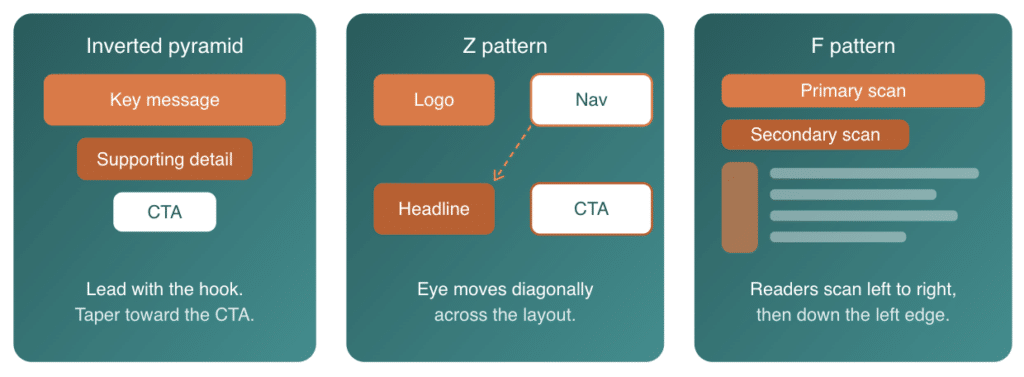
Effective email design now leverages established content hierarchy structures such as the Inverted Pyramid, Z-pattern, or F-pattern to guide both human and AI readers. The proper use of heading tags (H1 for main section titles, H2 for sub-sections, etc.) is paramount, serving as explicit signals to AI about the relative importance of information. This structural discipline not only enhances readability but also significantly improves the likelihood that AI summaries will accurately reflect the email’s core message.
Leveraging Annotation Schema: Giving AI the Blueprint
Years ago, Gmail introduced support for structured data within emails, utilizing small code snippets in JSON-LD or Microdata formats to provide mailbox providers with richer information about a message’s content. While initially used to render special UI elements like image carousels or discount banners within the promotions tab, structured data’s role has expanded significantly by 2026. Though there’s no official confirmation that structured data directly feeds into every AI summarization process, it forms an integral part of the message body and is undeniably parsed by AI.
At a minimum, structured data offers AI engines meaningful, organized signals about the content, acting as a clear blueprint for interpretation. With a significant portion of senders still not fully utilizing this capability—estimates suggest less than 15% of marketers leverage it comprehensively—adopting annotation schema now presents a straightforward and powerful competitive advantage. It allows brands to explicitly guide AI on key aspects of their message, leading to more accurate and compelling inbox summaries.
The Email Orchestrator: Mastering the Human-AI Collaboration
The role of the email marketer has undergone a profound transformation. In 2026, the marketer is no longer primarily a content builder or coder; they are an orchestrator. AI has absorbed much of the heavy lifting—drafting subject lines, generating body copy, segmenting audiences, interpreting basic results, and even coding HTML tables. The modern marketer’s value now lies in their ability to manage, refine, and strategically deploy this AI output.
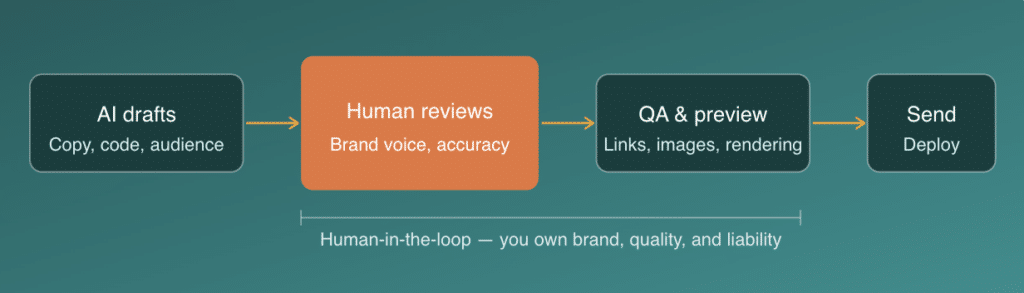
This shift places quality assurance at the forefront of the marketer’s responsibilities. The primary job becomes ensuring that automation does not "hallucinate," deviate from brand guidelines, or produce content that feels inauthentic. A "human-in-the-loop" approach, where AI generates initial drafts or analyses which are then reviewed and edited by human experts, has been shown to yield up to 40% higher quality output compared to purely autonomous AI. As Drew Price, Co-Founder at JRNY PPL, succinctly puts it, "We’ve been playing checkers for too long and not enough chess. Looking at things more holistically and diversifying our investments with automation will go a long way. There’s just a bit of a mindset shift that we need to do." Marketers must delegate labor, but never liability, meticulously reviewing AI-generated content in email rendering previews, flagging stakeholders when necessary, and diligently checking all links and images before deployment.
Enhancing Customer Experience with AI Beyond Generic Copy
The initial novelty of AI-generated copy has faded. In 2026, the strategic goal is to harness AI to genuinely enhance the customer experience, particularly as subscribers grow more discerning and resistant to obviously automated content. This moves beyond simple text generation to sophisticated applications that add real value:
- Hyper-personalized Product Recommendations: AI analyzes past purchases, browsing history, and even real-time intent to suggest products or services with unparalleled accuracy.
- Dynamic Content Generation: AI can adapt elements within an email (images, offers, calls-to-action) based on individual subscriber data, location, or even the weather.
- Optimal Send Time Optimization: Predictive AI models analyze individual engagement patterns to determine the precise moment each subscriber is most likely to open and interact with an email.
- Intelligent A/B Testing: AI can autonomously run and analyze complex multivariate tests, rapidly identifying the most effective content, subject lines, and design elements.
Crucially, every AI output still requires human oversight and editing to ensure it aligns with the brand’s unique voice and maintains an authentic, human feel.
Beyond Written Content: Expanding AI’s Role in Email Marketing
While written content remains the most popular application of generative AI for marketers, its capabilities extend far beyond text:
- Image and Video Generation: AI can create custom visuals, infographics, or short video clips tailored to specific campaign needs or individual preferences, drastically reducing design time and costs.
- Advanced Audience Segmentation: AI algorithms can identify subtle patterns in customer data to create highly granular and effective audience segments that human analysis might miss.
- Predictive Analytics: AI can forecast future customer behavior, such as churn risk or likelihood to purchase, enabling proactive marketing interventions.
- Customer Journey Mapping and Optimization: AI analyzes complex customer paths to identify friction points and suggest optimizations for automated email sequences.
- Campaign Performance Optimization: Beyond A/B testing, AI can continuously monitor and adjust live campaigns for maximum effectiveness, adapting to real-time feedback.
Investing in Specialized Design and Automation Tools
As email continues to solidify its position as one of the marketing channels with the highest return on investment, specialization is no longer a luxury but a necessity. Brands must invest in dedicated email designers, ideally equipped with the right tools for the job. The days of generalist marketers haphazardly assembling emails are over.
Beyond human talent, marketing teams must critically evaluate and diversify their automation tools. "We’ve been playing checkers for too long and not enough chess," notes Drew Price, advocating for a holistic view of automation investments. To accelerate design and development, teams should leverage robust templates, advanced email building tools that drastically cut development time, reusable HTML modules, and AI-powered design tools capable of generating layout and style variants. For filling lifecycle gaps, leaning on intelligent automation is key; a single well-crafted automated email sequence can outperform numerous one-off sends.
Strategic Data Management and Integration

Data management remains a persistent challenge that will only intensify as personalization demands escalate. As Cynthia Price, SVP of Marketing at Validity, emphasizes, "Data collection and management is not a ‘set it and forget it’ proposition. You’d be surprised how much information subscribers will offer once you prove you’re asking questions to make their lives easier." Robust data hygiene, such as using tools like BriteVerify from Validity to validate addresses at the point of entry, is crucial for protecting sender reputation and minimizing soft bounces.
Marketers must then strategically narrow their focus on data collection and utilization to power targeted campaigns:
- Customers purchasing across multiple categories: Data points on purchase history and category preferences can drive curated gift guides or store visit invitations.
- Customers who bought one product but not a second: Purchase history allows for personalized product recommendations for complementary items.
- Superfans (3+ products purchased): Engagement data can trigger requests for reviews or social media shoutouts, leveraging brand advocates.
- Prospects browsing in the last 24 hours: Real-time browsing data enables "back in stock" or "get it before it’s gone" urgency campaigns.
- Prospects unengaged for 30+ days: Engagement metrics can trigger re-engagement campaigns designed to rekindle interest.
- Prospects close to purchase: Abandoned cart or abandoned browsing data is vital for conversion-focused reminders.
Integrating email platforms with CRM, Customer Data Platforms (CDPs), analytics tools, and broader marketing automation systems unlocks a wealth of insights, facilitates deeper personalization, and provides clearer attribution of results. Even without a complex tech stack, simple signup forms, preference centers, and in-email polls can effectively surface invaluable subscriber data.
Optimizing for Accessibility and Inclusivity: A Legal and Ethical Imperative
In 2026, email accessibility is not merely a best practice; it is increasingly a legal requirement, underscored by the European Accessibility Act and similar legislation worldwide. Beyond compliance, it is an ethical imperative to ensure that emails are usable by everyone, regardless of ability. Studies show that over 15% of the global population lives with some form of disability, and optimizing for accessibility significantly broadens reach and enhances user experience for all.
Key best practices include:
- Clear and Concise Subject Lines: Easily understandable for screen readers and cognitive processing.
- Descriptive Alt Text for Images: Crucial for visually impaired users to understand image content.
- Sufficient Color Contrast: Ensures readability for individuals with low vision or color blindness.
- Descriptive Link Text: Avoid generic "click here"; provide context.
- Proper Heading Hierarchy: Structurally organize content for screen reader navigation.
- Plain Language: Simple, direct, and jargon-free communication.
- Avoid Text-in-Images: Ensure core messages are readable even if images don’t load.
- Keyboard Navigation: Design for users who cannot use a mouse.
Rigorous testing before sending is non-negotiable. Marketers must move beyond basic ESP-provided checks to utilize specialized tools offering robust accessibility audits. These include visual impairment filters, automatic checks for alt text, text justification, table roles, and comprehensive NVDA screen reader previews. As showcased at Litmus Live 2026, such tools are critical for reviewing content against a comprehensive checklist, including screen reader compatibility, keyboard navigation, color contrast, and proper semantic HTML, maximizing the impact and reach of every email.

The Future of Email in 2026: A Blend of Efficiency and Humanity
The roadmap for email marketing in 2026 is characterized by an intriguing and essential duality: a pursuit of unparalleled efficiency through advanced automation and AI, coupled with a renewed emphasis on humanity. While tools continue to evolve, enabling marketers to work faster and smarter, the core challenge remains humanizing messages. This involves crafting inspiring, personalized emails that resonate deeply with individual subscribers and ensuring that all communications are inclusive and accessible. The future of email success lies in expertly orchestrating AI to serve human connection, ensuring that technology amplifies, rather than diminishes, the authentic voice of the brand.