rifanmuazin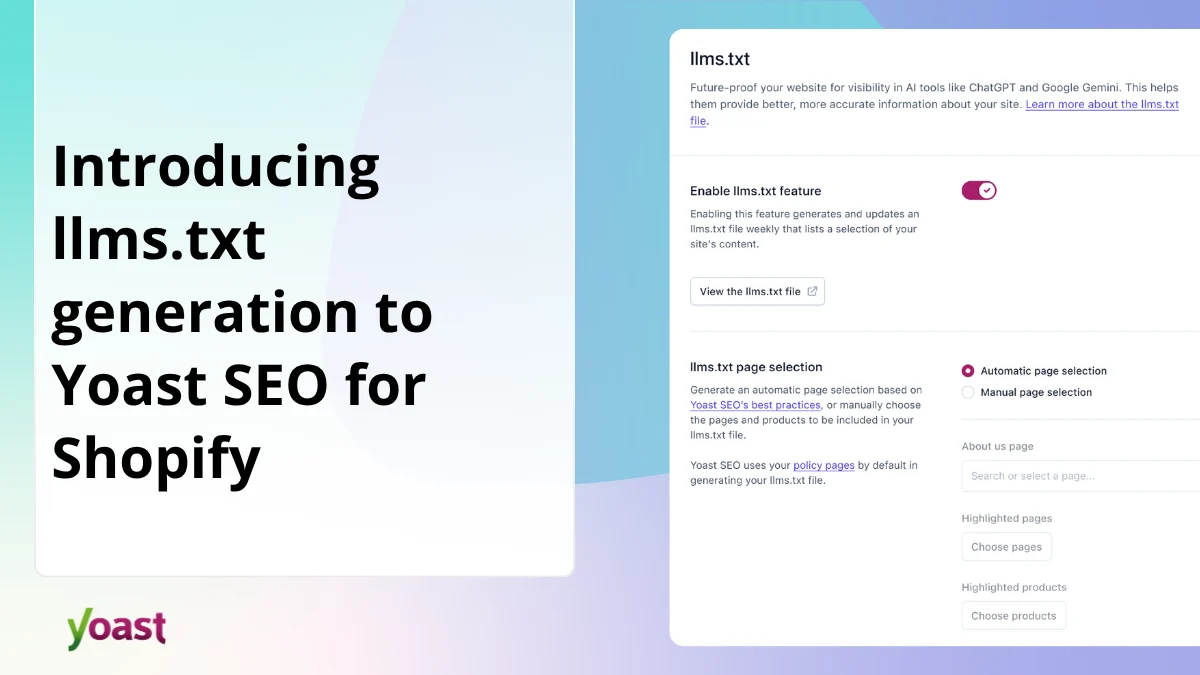
Yoast SEO, a leading name in search engine optimization tools, has announced the launch of its innovative llms.txt feature for Shopify, designed to empower e-commerce merchants in controlling how artificial intelligence (AI) tools, such as ChatGPT and Google Gemini, interpret and describe their product catalogs. This new protocol aims to bridge a significant gap in the rapidly evolving digital landscape, where AI-driven discovery is becoming increasingly prevalent, yet often prone to inaccuracies, outdated information, or misdirection of potential customers. The introduction of llms.txt marks a proactive step by Yoast to ensure that merchants’ carefully curated product information is accurately represented, safeguarding brand integrity and enhancing the customer journey.
The Rise of AI in E-commerce and the Challenge of Accuracy
The global e-commerce market continues its exponential growth, with projections indicating it will exceed $7 trillion by 2025. A substantial portion of this growth is influenced by digital discovery channels, where consumers increasingly leverage AI-powered search engines, conversational bots, and virtual assistants to research products, compare options, and make purchasing decisions. According to a recent survey, over 60% of consumers have used AI tools for shopping-related queries, highlighting the critical role these technologies now play in the sales funnel. However, this reliance on AI has brought forth a new set of challenges for online retailers.
Unlike traditional search engine crawlers that methodically index entire websites, large language models (LLMs) operate differently. They are trained on vast datasets and are designed to generate human-like text based on patterns and inferences. When queried about specific products or services, these AI tools often "grab what they can find, quickly, and fill in the gaps." This approach, while efficient for general knowledge, can be detrimental for detailed product catalogs, especially those with thousands of unique items. The result can be incomplete answers, outdated specifications, incorrect pricing, or, in the worst-case scenario, sending potential shoppers to a competitor based on misconstrued information. Such inaccuracies not only erode consumer trust but also undermine the significant effort merchants invest in building and maintaining their product data.
This phenomenon is often referred to as "AI hallucination," where LLMs generate plausible but factually incorrect information. In a commercial context, hallucinations can translate directly into lost sales, increased customer service inquiries, and damage to a brand’s reputation. E-commerce platforms, particularly those with dynamic inventory and frequently updated product details, are especially vulnerable to these issues. Addressing this growing concern, Yoast SEO for Shopify’s llms.txt feature emerges as a crucial tool for merchants seeking to assert control over their digital narrative in the age of AI.
Functionality and Implementation: A Merchant-Centric Approach
The llms.txt feature operates by creating a dedicated file that acts as a comprehensive guide for AI tools. Instead of allowing AI to "wander around" a store, this file directs it to the most critical parts of the merchant’s online presence: top-selling products, key collections, essential policy pages (e.g., shipping, returns, privacy), and other significant pages that define the brand. This structured guidance ensures that AI systems access and prioritize accurate, up-to-date, and brand-approved information when responding to user queries related to the store.
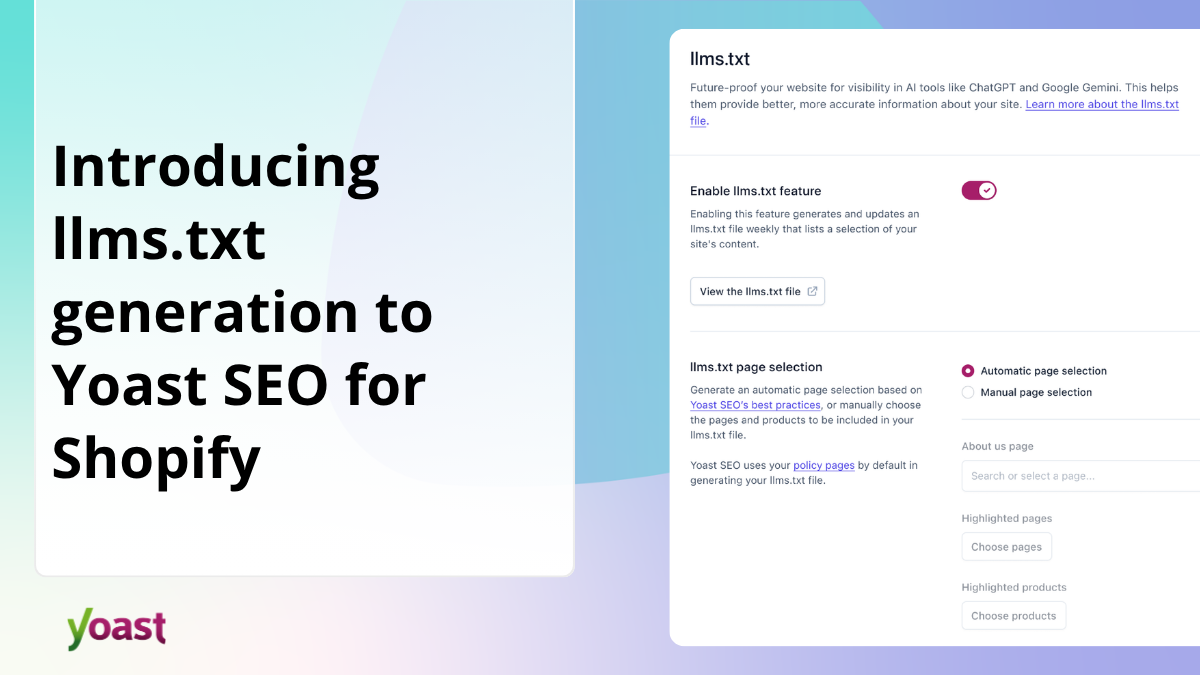
Yoast has designed the implementation of llms.txt with merchant ease in mind, making it an opt-in feature accessible directly within the Yoast SEO for Shopify settings. This approach emphasizes Yoast’s belief that every merchant should have agency over how their content is perceived and utilized by AI. The setup process requires no technical coding knowledge, allowing any member of a merchant’s team to activate it in seconds. This accessibility is vital for small to medium-sized businesses (SMBs) who may lack dedicated IT or SEO specialists.
Merchants are provided with two distinct methods for utilizing the llms.txt feature:
-
Automatic Management: For merchants who prefer a hands-off approach, Yoast SEO can automatically build and update the
llms.txtfile on a weekly basis, drawing data directly from their Shopify store. This automated selection intelligently highlights crucial elements such as top-performing products, new arrivals, seasonal collections, and essential informational pages. This method is ideal for busy merchants who want to ensure AI tools always have access to relevant information without constant manual oversight. The system is designed to dynamically adapt, removing deleted products and updating information regularly. -
Manual Selection and Granular Control: For those who desire complete control, the manual selection option allows merchants to hand-pick the specific products, collections, and pages they wish to feature prominently in the
llms.txtfile. This includes a dedicated section for the "About Us" page, ensuring AI tools can accurately convey the brand’s story, values, and unique selling propositions. This level of granular control is particularly beneficial for businesses launching specific campaigns, promoting niche products, or those with unique brand narratives they want to ensure are consistently communicated. Like the automatic option, the manually curated file also updates weekly and automatically removes any products that have been deleted from the store.
Crucially, Yoast has integrated safeguards to prevent conflicts with existing configurations. If a merchant already has a redirect set up for /llms.txt, the Yoast feature will respect it and notify the user, preventing any disruption to existing site structures.
Background and Evolution of Content Control Protocols
The concept behind llms.txt draws a direct parallel to the well-established robots.txt protocol, which has been a cornerstone of search engine optimization for decades. Introduced in 1994, robots.txt allows website owners to instruct web crawlers (like Googlebot) on which parts of their site should or should not be indexed. While robots.txt primarily serves to restrict access or prevent indexing of certain content, llms.txt is designed to guide and prioritize information for generative AI, ensuring accuracy rather than just preventing access.
The development of llms.txt reflects the industry’s growing recognition that content creators and publishers need new mechanisms to interact with and influence the behavior of AI. As AI models become more sophisticated and integrated into daily information consumption, the need for transparent and controllable data ingestion becomes paramount. Yoast, with its extensive history in SEO, has been at the forefront of adapting to these changes, continually updating its tools to meet the demands of an evolving digital landscape. Their move into the AI governance space with llms.txt is a natural progression, providing merchants with an essential tool to navigate the complexities of AI-driven product discovery.
Implications for E-commerce SEO and Brand Integrity
The introduction of llms.txt has profound implications for e-commerce SEO and brand management. In an environment where a significant portion of product discovery may soon originate from AI interactions, optimizing for AI accuracy becomes as critical as optimizing for traditional search engines.
-
Enhanced Accuracy and Trust: By providing AI tools with a curated, authoritative source of information, merchants can drastically reduce the incidence of inaccurate product descriptions or outdated details. This fosters greater consumer trust, as shoppers receive reliable information, leading to more informed purchasing decisions and fewer post-purchase issues.
-
Improved Conversion Rates: Accurate and compelling product descriptions, consistently delivered by AI tools, can significantly improve conversion rates. When AI guides a potential customer to a product with precise details, pricing, and availability, it removes friction from the buying process, making it more likely for the customer to proceed to purchase.
-
Stronger Brand Storytelling: The ability to highlight the "About Us" page and other key brand narrative elements ensures that AI tools can articulate the unique story and values behind a merchant’s brand. This is particularly vital for direct-to-consumer (DTC) brands that rely heavily on their unique identity and customer connection.
-
Competitive Advantage: Merchants who proactively implement
llms.txtwill gain a distinct competitive advantage. As AI-driven discovery becomes more ubiquitous, those whose product information is consistently accurate and well-represented by AI will stand out from competitors whose information may be fragmented or misinterpreted. -
Future-Proofing E-commerce Strategies: The
llms.txtfeature positions merchants to adapt to future shifts in online discovery. As AI technologies continue to advance, having a robust system for guiding these models will be essential for maintaining visibility and control over online presence. It represents an investment in future-proofing e-commerce operations against the unpredictable evolution of AI.
Industry analysts suggest that tools like llms.txt will become indispensable for any serious e-commerce operation. "The internet is transitioning from a search-based information retrieval system to an AI-powered conversational discovery platform," explains Dr. Anya Sharma, a leading expert in AI and digital marketing. "Merchants need explicit mechanisms to ensure their commercial data is represented truthfully. llms.txt offers a pragmatic solution for this emerging challenge, giving businesses a voice in how AI perceives them."
The Broader Impact and Future Outlook
The launch of llms.txt by Yoast SEO for Shopify is more than just a new feature; it signifies a broader movement towards greater transparency and control in the interaction between human-generated content and artificial intelligence. As AI models continue to learn and influence public perception, the debate around AI governance, data sourcing, and content attribution will intensify. Tools like llms.txt provide a practical, opt-in framework for content creators to actively participate in shaping how their information is consumed by these powerful new technologies.
This initiative by Yoast could set a precedent for other platforms and content management systems, potentially leading to a wider adoption of similar AI-specific content control protocols. The ultimate goal is to foster an ecosystem where AI serves as an accurate and helpful intermediary, rather than a source of confusion or misdirection. For Shopify merchants, who collectively represent a significant portion of the global e-commerce landscape, this feature offers a timely and powerful mechanism to safeguard their digital storefronts and ensure their products are presented authentically in the age of AI.
As AI continues to integrate deeper into the fabric of online commerce, the ability for merchants to explicitly guide these systems will be paramount. Yoast SEO’s llms.txt feature is a clear signal that the future of e-commerce success will not only depend on traditional SEO but also on intelligent AI optimization, ensuring that the hard work of building a product catalog translates into accurate and effective discovery for millions of online shoppers. Merchants are encouraged to activate the llms.txt toggle in Yoast SEO for Shopify the next time they log into their store, taking a proactive step towards mastering their AI-driven future.