rifanmuazin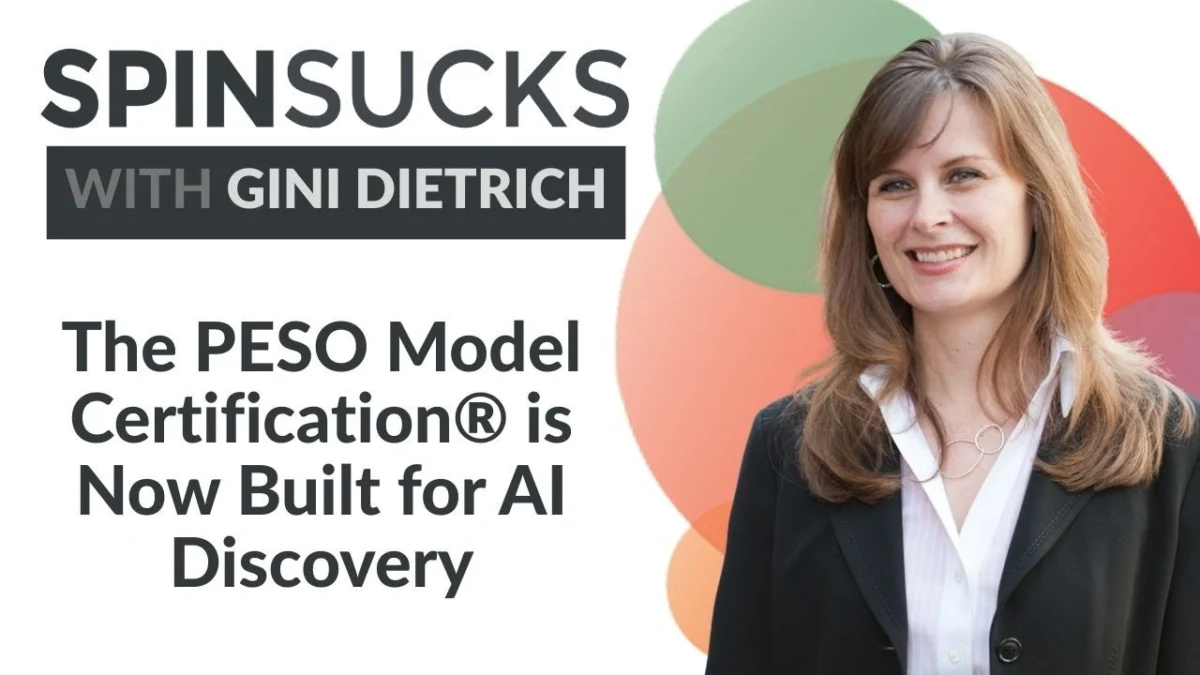
Spin Sucks, the premier professional development site for public relations and marketing professionals, has officially announced the launch of its rebuilt PESO Model® Certification for 2026. This comprehensive update marks a significant evolution of the industry-standard framework, transitioning it from a tactical planning tool into a robust "operating system" designed to navigate the complexities of an AI-driven digital landscape. Led by Gini Dietrich, the creator of the PESO Model, the certification aims to equip communicators with the strategies necessary to maintain visibility in an era dominated by zero-click search results and generative artificial intelligence.
The 2026 iteration of the certification arrives at a critical juncture for the communications industry. As search engines increasingly prioritize AI-generated summaries and direct answers, traditional traffic-driving strategies are facing unprecedented challenges. The updated curriculum focuses on "visibility engineering," a strategic approach that ensures brand messaging and expertise are not only discoverable by human audiences but are also accurately indexed and surfaced by the large language models (LLMs) that power modern search experiences.
The Evolution of the PESO Model: From Tactics to Operating System
Since its inception over a decade ago, the PESO Model—which categorizes media into Paid, Earned, Shared, and Owned—has served as a foundational framework for integrated communications. However, the 2026 update reflects a fundamental shift in how the model is implemented. Dietrich and her team argue that the previous "channel-first" approach, where professionals managed each media type in isolation, has become insufficient.
In the new framework, the PESO Model functions as an underlying operating system. This systemic approach is designed to ensure that every piece of content created (Owned) is validated by third-party credibility (Earned), distributed through relevant social networks (Shared), and amplified strategically through targeted spend (Paid). By treating these four pillars as an integrated system rather than a checklist of tasks, organizations can create a compounding effect where each effort strengthens the others, ultimately leading to higher authority and trust.
The Challenge of AI-Powered Discovery and Zero-Click Search
The primary driver for this overhaul is the rapid transformation of the search landscape. Data from industry analysts suggests a growing trend toward "zero-click" searches—queries where the user finds the answer directly on the search engine results page (SERP) without ever clicking through to a website. Furthermore, the rise of AI agents and chatbots means that consumers are increasingly interacting with synthesized summaries of information rather than original source material.
To counter the potential loss of website traffic and brand control, the 2026 PESO Model Certification introduces "visibility engineering." This discipline focuses on building a consistent, defensible body of work across the web. The goal is to ensure that when AI tools explain, compare, or recommend products and services, they draw from a cohesive and authoritative narrative established by the brand across all PESO channels.
Comprehensive Eight-Week Curriculum and Timeline
The 2026 certification is structured as a high-intensity, eight-week program designed to be completed while practitioners manage their daily responsibilities. The curriculum is broken down into specific weekly milestones to ensure a logical progression from foundational concepts to full system implementation.
Week 1: Orientation and Strategic Mindset
The program begins with an analysis of the current media landscape, focusing on AI discovery and the shift toward an operating system mindset. Participants are introduced to the tools and templates that will serve as their command center throughout the course.
Week 2: Owned Media – Building the Foundation
The second week focuses on establishing "Owned" media as the brand’s home base. This involves identifying core themes that the brand can authentically defend and creating an ecosystem of content that serves as the ultimate source of truth for both humans and AI crawlers.
Week 3: Earned Media – Scaling Credibility
Participants learn to leverage "Earned" media not just for mentions, but as a credibility engine. This phase involves mapping story angles and proof points that reinforce the expertise established in the Owned media phase.
Week 4: Shared Media – Designing Distribution
In the fourth week, the focus shifts to "Shared" media. Rather than chasing social media trends, the curriculum teaches professionals how to design distribution strategies that move audience signals in a specific, measurable direction.
Week 5: Paid Media – Strategic Amplification
The "Paid" media component is treated as an accelerator. The program provides frameworks for amplifying proven content, setting intelligent rules for budget allocation, and determining success metrics for spends ranging from small-scale social boosts to large enterprise campaigns.
Week 6: System Integration
This critical phase involves merging the four media types into a single, cohesive program. Participants build the workflows and intersections that allow content to be reused and scaled across different channels without duplicating effort.
Week 7: Advanced Measurement Architecture
The penultimate week addresses one of the most significant pain points in PR: measurement. The 2026 certification emphasizes business outcomes over vanity metrics, teaching professionals how to use AI to combine data with compelling storytelling that resonates with executive leadership.
Week 8: Final Implementation and Operating System Launch
The program concludes with the consolidation of all work into a final PESO plan. This document serves as the blueprint for the organization’s new operating system, allowing for repeatable, scalable execution.
Technical Enhancements and AI Integration
Recognizing the need for practical tools, Spin Sucks has integrated several high-value technical assets into the 2026 certification. A central feature is the "PESO OS AI," a specialized AI tool designed to help communicators pressure-test their strategies and automate routine tasks. This tool, valued at an annual subscription of $1,000, is included as a core component of the certification package.
Additionally, the program provides a comprehensive workbook featuring specific AI prompts. These prompts are engineered to help professionals generate high-quality outputs more efficiently, ensuring that the use of artificial intelligence remains ethical and strategically aligned with the PESO framework.
Industry Impact and Institutional Support
The launch of the updated certification has garnered support from major industry bodies. Members of the International Association of Business Communicators (IABC) and the Public Relations Society of America (PRSA) are eligible for specialized discounts, signaling a broad industry consensus on the importance of the PESO Model in modern professional development.
Furthermore, Spin Sucks has extended the program to the academic sector, offering discounts for university students and faculty. This move is aimed at ensuring the next generation of communicators enters the workforce with a systems-based understanding of integrated marketing, rather than a reliance on traditional, siloed tactics.
Implications for Diverse Organizational Structures
The 2026 PESO Model Certification is designed to be scalable across various organizational sizes and types:
- Solopreneurs and Consultants: The system allows for "momentum without headcount," helping individuals make their work compound so they can compete with larger entities without requiring a massive increase in resources.
- Small Teams: The framework acts as a "command center," reducing the need to reinvent strategies for every new campaign and ensuring all efforts contribute to a singular goal.
- Enterprise Organizations: In large corporations, the PESO operating system serves as an alignment mechanism. It prevents the fragmentation of brand authority that often occurs when paid, earned, and social teams operate in silos or across different regional agencies.
- Agencies: For agencies, the certification provides a methodology for delivering consistent, measurable results to clients while justifying the value of integrated services beyond simple media placements.
Analysis of the Shifting Communications Paradigm
The move to rebuild the PESO Model for 2026 reflects a broader trend in the communications industry: the transition from "creative-only" roles to "strategic-technical" roles. As the gatekeepers of information shift from human editors to algorithmic systems, the role of the PR professional is expanding to include elements of data science, search engine optimization, and technical architecture.
By formalizing the concept of "visibility engineering," Dietrich is positioning the PR industry to take a leading role in how brands are perceived in the AI era. The emphasis on consistency and authority across multiple channels suggests that the future of successful communication lies not in the volume of content produced, but in the structural integrity of the brand’s digital presence.
As organizations prepare for the 2026 fiscal year, the adoption of an integrated operating system like the PESO Model may become a necessity rather than an option. With the decline of traditional search traffic and the rise of synthesized information, the ability to engineer visibility and maintain trust across all media types will likely be the defining factor in marketing and communications success.