
 rifanmuazin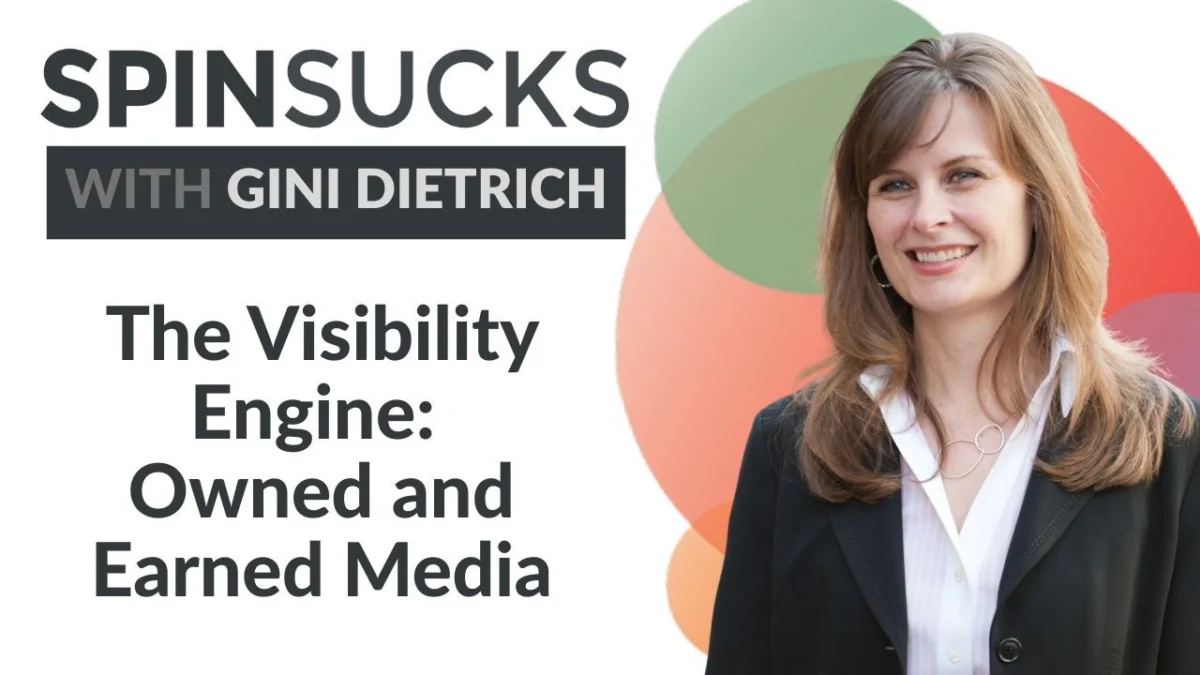
The landscape of digital discovery has undergone a fundamental shift, moving away from traditional click-based interactions toward a system-driven model where visibility is determined by authority and algorithmic recognition. In an era dominated by artificial intelligence and zero-click searches, the traditional approach of managing marketing and public relations as separate channels has become increasingly ineffective. Communications experts now argue that visibility is no longer a channel-specific problem but a systemic one, requiring a unified "Visibility Engineering" strategy that integrates owned and earned media into a single, compounding engine of trust and authority.
As search engines like Google transition toward providing direct answers through AI-generated summaries and creators share information via screenshots rather than links, the necessity for a cohesive digital presence has never been higher. According to recent industry analyses, the "discovery game" is no longer about driving traffic to a central website, but about ensuring that a brand’s expertise is recognized and surfaced by AI systems, even when a user never visits the brand’s owned properties.
The Shift Toward Zero-Click Search and AI Discovery
The primary driver behind the rise of Visibility Engineering is the dramatic change in how information is consumed. Data from recent search studies indicates a significant decline in the traditional "search-and-click" behavior. A 2024 zero-click search study revealed that for every 1,000 Google searches in the United States, only 374 result in a click to the open web. In the European Union, the figure is even lower, at approximately 360 clicks. This means nearly two-thirds of search queries are resolved on the search engine results page (SERP) itself, often through AI Overviews or featured snippets.
This environment presents a challenge for organizations that rely on traditional traffic metrics to measure success. When AI tools provide recommendations or summaries without requiring a click, brand visibility becomes dependent on the "signals" the brand leaves across the web. If these signals are inconsistent or scattered across disconnected channels, AI models—and human audiences—are less likely to recognize the brand as a definitive authority.
The Foundations of Visibility Engineering
Visibility Engineering is defined as the deliberate practice of building authority and trust in a way that humans, search engines, and AI systems can simultaneously recognize and validate. This approach moves away from the "channel-first" mentality, where social media, content marketing, and public relations operate in parallel silos with different metrics and goals.
The core of this system lies in the synergy between owned media and earned media. Owned media serves as the foundation where an organization establishes its "truth" and expertise. Earned media serves as the validation, where third parties—journalists, influencers, analysts, and community members—provide the credibility that an organization cannot grant itself. When these two components work in tandem, they create a feedback loop that compounds visibility and trust over time.
Owned Media: The Foundation of Structured Expertise
In a Visibility Engineering framework, owned media is redefined. It is no longer viewed simply as a blog or a website, but as a "home base" for structured expertise. The goal of owned media is to decide what is true about an organization’s expertise and provide rigorous proof to support those claims.
To build an effective owned media foundation, organizations are encouraged to focus on three key elements:
- Defensible Themes: Rather than chasing fleeting trends, brands must identify a small set of core themes that they can consistently defend and reinforce. These themes provide the "spine" of the organization’s narrative.
- Authority Anchors: These are clear, repeatable points of view associated with the brand. They are designed to show up across all touchpoints, from executive communications to sales enablement materials.
- Empirical Proof: This is the element that transforms a claim into an established fact. Proof includes data, proprietary methodologies, customer evidence, and third-party validation.
Consistency in these elements is critical for AI visibility. Large Language Models (LLMs) and search algorithms prioritize consistent information across the web. If a brand’s leadership team, its blog, and its external coverage all present a unified message backed by the same proof points, the brand becomes significantly easier for AI systems to categorize as a trusted authority.
Earned Media: The Transfer of Credibility
While owned media establishes the narrative, earned media provides the "credibility transfer" necessary to breach the limits of self-published content. Research suggests that both humans and AI systems recognize that organizations control their own websites; therefore, third-party validation is the primary metric for trustworthiness.
Earned media in the modern era has expanded beyond traditional newspaper or television coverage. It now encompasses:
- Trade publications and industry-specific journals.
- Podcasts and guest appearances on authoritative platforms.
- Analyst reports and academic mentions.
- Awards and industry recognitions.
- Mentions within respected newsletters and community forums.
The power of earned media lies in its inability to be purchased. While reach and impressions can be bought through paid media, true validation must be earned. In a Visibility Engineering system, earned media is not treated as a series of random "hits" or one-off announcements. Instead, every piece of earned coverage is intended to reinforce the "Authority Anchors" established in the owned media strategy.
A Chronology of Communications Strategy Evolution
The transition to Visibility Engineering marks the latest stage in the evolution of professional communications.
- The Traditional Era (Pre-2000s): PR was primarily focused on earned media and "gatekeeper" relationships with journalists.
- The SEO and Content Era (2000s–2014): The focus shifted to keywords, backlinking, and the volume of content production to satisfy search engine algorithms.
- The Introduction of the PESO Model (2014): Gini Dietrich introduced the PESO Model (Paid, Earned, Shared, Owned), providing a framework for integrating different media types. This shifted the focus from silos to an integrated ecosystem.
- The E-E-A-T Era (2018–2022): Google’s emphasis on Experience, Expertise, Authoritativeness, and Trustworthiness (E-E-A-T) forced brands to prioritize quality and credentials over simple keyword optimization.
- The AI and Visibility Engineering Era (2023–Present): With the explosion of generative AI, the focus has moved to "systemic visibility." Success is now measured by an organization’s ability to provide consistent signals that AI models can digest and surface in zero-click environments.
Industry Implications and Expert Analysis
The shift toward Visibility Engineering has significant implications for how corporate communications and marketing departments are structured. Industry analysts suggest that the "siloed" model—where a PR team handles earned media and a marketing team handles owned and paid media—is becoming a liability.
"When you treat owned and earned as a single engine, you build consistent, proof-backed authority," notes the Spin Sucks organization, the architect of the PESO Model. The organization argues that many teams currently operate "four separate programs that occasionally bump into one another in the hallway," leading to scattered performance and a lack of clear authority.
The fix, according to experts, is to move toward a "systems" approach. This involves:
- Shared Dashboards: Measuring owned and earned media against the same authority-based metrics.
- Unified Narratives: Ensuring that the proof points used in a PR pitch are the same ones documented on the company blog.
- Compounding Returns: Using earned media successes to bolster owned content, which in turn makes the next earned media opportunity easier to secure.
The Role of LLMs in Brand Recognition
As LLMs like GPT-4, Claude, and Gemini become the primary interface for information retrieval, the technical side of visibility is changing. These models are trained on massive datasets and prioritize "high-signal" information. A brand that consistently appears in reputable third-party publications (earned) while maintaining a deeply informative and data-rich home base (owned) creates a high-signal profile.
Furthermore, AI systems are less susceptible to the "recency bias" that once dominated SEO. While fresh content remains important, the consistency and depth of the overall "knowledge graph" surrounding a brand are now more critical. Visibility Engineering ensures that the information consumed by LLMs is accurate, consistent, and authoritative.
Conclusion: Engineering Authority in a Post-Click World
The move toward Visibility Engineering represents a maturation of the communications profession. It acknowledges that in a world where AI provides the answers, being "found" is no longer enough; an organization must be "trusted" and "validated" by the systems that govern the internet.
By integrating owned and earned media into a single, repeatable system, organizations can stop chasing fleeting clicks and start building a permanent foundation of authority. This systemic approach not only satisfies the requirements of modern AI discovery but also provides a more coherent and persuasive experience for human audiences who are increasingly skeptical of unverified claims.
As the digital landscape continues to evolve, the organizations that succeed will be those that stop running disconnected programs and start engineering visibility as a unified, compounding asset. The focus has moved from the quantity of content to the quality of the system, and from the frequency of mentions to the consistency of authority. In the AI era, authority is the only currency that guarantees visibility.










