rifanmuazin
The landscape of search engine optimization has undergone a profound transformation, moving far beyond the rudimentary keyword matching that once defined Google’s early algorithms. Today, success in search rankings hinges on a sophisticated understanding of user intent, contextual relevance, and, critically, the adherence to Google’s stringent E-E-A-T principles: Experience, Expertise, Authoritativeness, and Trustworthiness. This paradigm shift demands that content creators and publishers abandon outdated strategies focused on algorithm manipulation and instead prioritize the delivery of high-quality, valuable, and verifiable information to their audiences.
The Dawn of Quality: From Keywords to Intent
When Google first emerged as the dominant force in online search, its primary function was straightforward: to index web pages and return results based on the presence and frequency of keywords matching a user’s query. This mechanistic approach gave birth to the early days of keyword research and optimization, a methodology that, surprisingly, many publishers still rely upon as their main strategy for achieving visibility. However, Google’s capabilities have evolved dramatically, driven by advancements in artificial intelligence and machine learning. The search engine no longer merely scans for keywords; it endeavors to comprehend the deeper intent behind a search query, the broader context of the information, and the intrinsic quality of the content presented.
Teaching a machine to discern "high-quality" content is an inherently complex challenge, as the very definition of quality is subjective and varies widely based on individual user needs and the nature of the information sought. This fundamental difficulty necessitated a more nuanced framework, leading to the development and refinement of the E-A-T, and subsequently E-E-A-T, guidelines. These guidelines were not developed in isolation; they were forged through a continuous feedback loop involving thousands of human Quality Raters. These individuals manually evaluate auto-generated search results against a comprehensive set of standards, thereby "teaching" Google’s algorithms what constitutes a truly valuable and reliable piece of content.
A Chronology of Trust: The Genesis and Evolution of E-E-A-T
The concept of evaluating content quality based on intrinsic merit, rather than just technical SEO signals, began to solidify around 2014 with the introduction of E-A-T (Expertise, Authoritativeness, Trustworthiness) in Google’s Search Quality Raters’ Guidelines. This extensive document, publicly available, outlines precisely how human raters should assess the utility and reliability of web pages. The original E-A-T framework emphasized the importance of a content creator’s or website’s credibility in a given subject area.
A significant update to these guidelines occurred in December 2022, when Google formally added a second "E" for "Experience," transforming E-A-T into E-E-A-T. This addition underscored Google’s increasing emphasis on firsthand knowledge and practical experience as a vital component of content quality. For instance, an individual reviewing a product would now be expected to demonstrate actual use of the product, not just theoretical knowledge or compilation of other reviews. This evolution reflects Google’s ongoing commitment to delivering search results that are not only accurate and well-researched but also genuinely helpful and reflective of real-world understanding.
Deconstructing E-E-A-T: The Pillars of Quality Content
Understanding each component of E-E-A-T is crucial for crafting content that resonates with both users and Google’s algorithms:
- Experience: This refers to the content creator’s firsthand experience with the topic. It asks: Does the creator have direct, practical engagement with the subject matter? For example, a travel blogger writing about a destination should ideally have visited it, and a software reviewer should have used the software extensively. This element adds a layer of authenticity and practical insight that theoretical knowledge alone cannot provide.
- Expertise: This denotes a high level of knowledge or skill in a particular field. It’s about demonstrating competence. For medical advice, this means content written or reviewed by qualified doctors. For financial guidance, it implies input from certified financial planners. Expertise can be formal (degrees, certifications) or informal (extensive hobbyist knowledge, years of practical work).
- Authoritativeness: This relates to the reputation and recognition of the content creator and the website as a trusted source within a specific industry or topic. It’s about being known as a "go-to" authority. This is often built through consistent high-quality content, mentions from other authoritative sources, and a strong professional presence.
- Trustworthiness: This is perhaps the most encompassing element, serving as the bedrock for the other three. It’s about being accurate, honest, safe, and transparent. A trustworthy website clearly states its purpose, backs claims with evidence, corrects errors, and protects user data. For e-commerce sites, it means secure transactions and reliable customer service. For informational sites, it means unbiased, factual reporting.
It’s important to note that E-E-A-T is not a universal metric applied identically across all content. A website may possess high E-E-A-T for certain topics while lacking it for others. For example, a renowned chef’s website would likely have high E-E-A-T for culinary content but low E-E-A-T for quantum physics.
The Imperative for "Your Money Your Life" (YMYL) Topics
The importance of high E-E-A-T is amplified exponentially for "Your Money Your Life" (YMYL) topics. These are subjects where inaccurate, misleading, or low-quality information could directly impact a person’s health, financial stability, safety, or well-being. Google exercises extreme caution and applies the most rigorous E-E-A-T standards to content pertaining to:
- Medical and Health Information: Content must originate from, or be heavily vetted by, qualified medical professionals, scientists, or reputable scientific publications. Misinformation in this domain can have severe public health consequences, making expertise and trustworthiness paramount.
- Financial and Legal Advice: Pages offering guidance on investments, taxes, loans, or legal matters must be authored by certified financial advisors, lawyers, or official regulatory bodies. The potential for financial harm necessitates impeccable authority and trustworthiness.
- News Reporting and Current Events: News content requires accurate factual reporting, verified sources, and the expertise of experienced journalists. Bias, sensationalism, or false information can erode public trust and have societal repercussions.
- Civic, Governmental, and Public Policy Information: Topics related to voting, legislation, and public policy demand information directly from official government sources or highly reputable, non-partisan research institutions.
- Topics Related to Children: Any advice or information concerning children, especially their health, safety, or development, must come from highly reliable and expert sources.
- Product Reviews: With the addition of "Experience," product reviews are expected to demonstrate genuine, first-hand interaction with the product, often accompanied by a detailed methodology of testing and comparison, alongside consideration of third-party reviews.
Crucially, Google acknowledges that a lack of widespread public reputation does not automatically equate to low E-E-A-T. Many small websites or individual creators, particularly in niche areas, may not have extensive brand recognition but can still produce highly valuable, expert content, especially when their content is imbued with genuine first-hand experience. This nuance is vital for independent creators and small businesses striving for visibility.
Strategic Shifts: Cultivating E-E-A-T for Modern Content Success
The era of merely stuffing keywords into an article is unequivocally over. To achieve sustainable rankings and genuinely serve users, content creators must embrace a holistic, E-E-A-T-centric approach. This requires a fundamental shift in content planning and creation, moving from optimizing for search engines to creating truly valuable content for human beings.
1. Learning from Exemplary Content
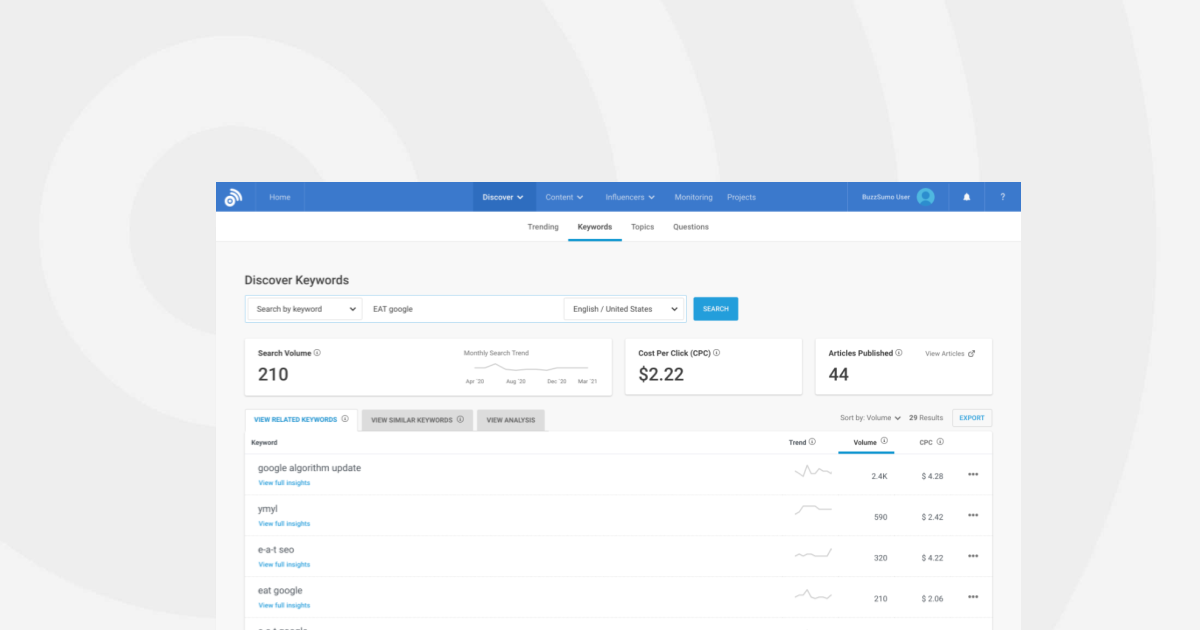
A foundational step in improving E-E-A-T is to rigorously analyze what constitutes high-quality, successful content within your niche. This involves looking beyond simple keyword density and delving into deeper metrics that reflect user satisfaction and content efficacy:
- Engagement and Shares: Content that generates significant social shares, comments, and other forms of engagement indicates that it resonates with an audience. Analyzing the headlines, formats, and depth of such content can reveal powerful insights into user preferences and what drives interaction. This suggests the content is meeting a need and providing value.
- Links and Citations: Articles that are frequently linked to by other reputable websites are strong indicators of authoritativeness and trustworthiness. Backlinks serve as votes of confidence, signifying that peers and experts in the field deem the content valuable enough to reference. Studying the characteristics of highly linked content can inform your own content strategy.
- Evergreen Visibility: Content that maintains high levels of engagement and visibility over extended periods post-publication is deemed "evergreen." This type of content typically addresses fundamental, enduring questions or provides comprehensive resources that remain relevant. Prioritizing evergreen content signals long-term value and sustained quality to search engines.
- Top Rankings: Directly analyzing the content that currently ranks at the top of search engine results pages (SERPs) for your target topics provides direct clues about what Google currently favors. While not a direct E-E-A-T metric, high rankings often correlate with content that Google has already assessed as meeting its quality standards.
By deconstructing the attributes of successful content across these dimensions, publishers can reverse-engineer effective strategies and identify gaps in their own content offerings.
2. Building and Demonstrating Authority
Google explicitly encourages its human raters to investigate the background of content creators and websites to ascertain their topical authority. While not always a prerequisite for good ratings, strong authority is consistently a significant advantage. Cultivating niche authority is a long-term endeavor that yields substantial benefits, including improved rankings and increased trust from both users and search engines.
Strategies for becoming an authority in your niche include:
- Guest Contributions and Interviews: Actively seeking opportunities to contribute articles to reputable industry publications or participate in podcasts and interviews establishes you as a recognized voice.
- Consistent High-Quality Content: Regularly publishing well-researched, insightful, and original content on your own platforms builds a body of work that demonstrates expertise.
- Thought Leadership: Participating in industry discussions, offering unique perspectives, and sharing proprietary research can position you as a leader rather than a follower.
- Structured Data Implementation: Utilizing schema markup, specifically Organization and Author schema, helps Google programmatically understand who is behind the content and the entity it represents. This provides clear signals about the brand and individual author, linking their digital footprint across the web.
- Unified Online Presence: Consolidating your various professional channels (website, social media, portfolios) into a coherent, branded presence (e.g., via "link in bio" tools) makes it easier for Google and users to verify your identity and expertise.
- Professional Bylines and Bios: Ensure that all your content bylines and social media profiles clearly articulate your relevant experience, qualifications, and areas of expertise.
3. Shifting to Topic-Centric Content Planning
With Google’s increasing ability to understand topics and entities rather than just discrete keywords, content strategies must evolve towards a topic-centric approach. This involves creating "topic clusters," where a broad "pillar content" piece covers a main subject comprehensively, and numerous "cluster content" articles delve into specific sub-topics, all interlinked.
For instance, a pillar piece on "Content Marketing Strategies" might be supported by cluster articles on "Blogging Best Practices," "Video Content Production," and "Email Marketing Automation." This interconnected structure signals to Google that your website possesses deep, holistic knowledge about a broader subject, enhancing your topical authority. This approach aligns perfectly with Google’s goal of providing comprehensive answers to complex user queries, fostering a richer, more satisfying user experience, and subsequently, improving rankings.
4. Crafting a "Satisfying Amount" of Content
The notion of content length, in the context of E-E-A-T, is not about arbitrary word counts but about providing a "satisfying amount" of information. What constitutes "satisfying" is entirely dependent on the user’s search intent and the complexity of the topic. A quick definition might require a few hundred words, while a comprehensive guide to a complex subject could demand thousands.
To determine the optimal content length for a given topic, analyze top-performing content in that specific niche. This data-driven approach reveals what content length tends to correlate with the highest engagement and visibility, thereby guiding your own content creation. For example, if analyses show that "Social Media Marketing" guides between 3,000 and 10,000 words garner the most engagement, it indicates that users expect a thorough, in-depth resource on that topic.
5. The Power of Relationships: Beyond Just Links
While backlinks remain a vital SEO signal, Google’s advanced algorithms are increasingly capable of understanding relationships and entity associations beyond explicit hyperlinks. This means that who your brand and content are associated with, and who promotes your work, significantly influences your E-E-A-T score. Google employs over 10,000 human quality raters to manually assess content, and their findings are continuously fed back into the self-learning algorithm.
Building genuine relationships with credible authors, journalists, and authoritative publications within your niche is paramount. This involves:
- Identifying Influencers: Proactively research and identify the most influential voices and publications in your field.
- Engaging and Collaborating: Foster authentic connections by interacting with their content, offering valuable insights, and seeking opportunities for collaboration or exclusive content pitches.
- Semantic Entity Recognition: Even if direct links are not exchanged, Google’s sophisticated semantic understanding can recognize if your brand, as an entity, is consistently mentioned or associated with other influential entities (individuals or organizations). This network of associations strengthens your perceived authority and trustworthiness.
This approach underscores that genuine outreach and community building are not just public relations tactics, but critical components of a modern E-E-A-T strategy.
6. Providing and Citing Trusted Sources
The cornerstone of trustworthiness is the diligent citation of credible sources. This practice not only reinforces the accuracy and reliability of your content but also demonstrates a commitment to thorough research and unbiased reporting. For YMYL topics, citing sources is non-negotiable.
Content creators should cultivate a habit of including a variety of authoritative sources, prioritizing official data and recommendations. For example, when discussing public health topics like vaccine-related news, explicitly referencing official government health organizations (e.g., using Google’s site:.gov search operator) signals to both users and Google that your information is grounded in verifiable, authoritative data. While linking out might seem counterintuitive to keeping users on your site, it ultimately builds a stronger foundation of trust and demonstrates a commitment to providing comprehensive, well-supported information, which are strong E-E-A-T signals.
The Future of Content: A Commitment to Quality
Google’s ongoing advancements in AI and machine learning mean its algorithms are increasingly adept at evaluating content with a human-like discernment. This dictates that content marketers and SEO professionals must fundamentally shift their focus from technical workarounds to the creation of truly exceptional content designed for their audience. The E-E-A-T framework is not merely a set of guidelines; it is a blueprint for building sustainable online visibility, fostering genuine audience trust, and establishing lasting authority in the digital sphere. By prioritizing experience, expertise, authoritativeness, and trustworthiness, publishers can align their strategies with Google’s evolving vision, ensuring their content not only ranks but also genuinely informs and empowers its readers.