rifanmuazin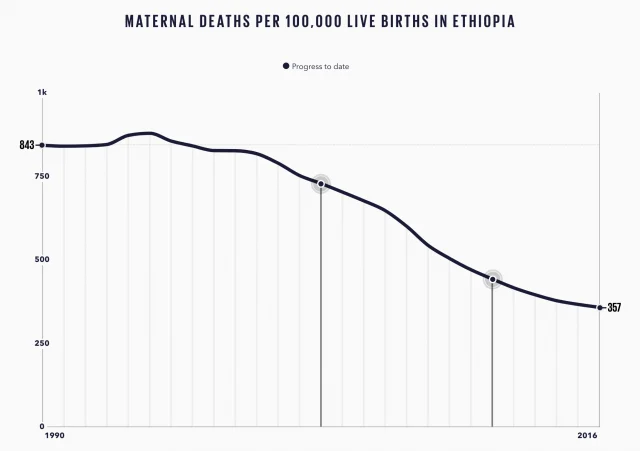
The Bill and Melinda Gates Foundation released its inaugural "Goalkeepers" report in 2017, marking a significant shift in how global developmental data is synthesized and presented to the public. Titled "Goalkeepers 2017: The Stories Behind the Data," the report serves as a diagnostic tool designed to accelerate progress toward the United Nations Sustainable Development Goals (SDGs). By identifying urgent problems and highlighting promising solutions through rigorous data visualization, the report aims to spread best practices in the fight against extreme poverty and preventable disease. A central focus of this inaugural publication is the dramatic reduction of maternal mortality, with a specific case study on the transformative healthcare initiatives undertaken in Ethiopia.
The Global Challenge of Maternal Mortality
Maternal mortality remains one of the most critical indicators of a nation’s healthcare infrastructure and social equity. Defined as the death of a woman while pregnant or within 42 days of termination of pregnancy from any cause related to or aggravated by the pregnancy or its management, it is a metric that reflects the accessibility of emergency obstetric care, the prevalence of skilled birth attendants, and the overall status of women’s rights.
According to data compiled by UNICEF and analyzed within the Goalkeepers framework, the world saw approximately 302,530 maternal deaths in 2015. This equates to a global maternal mortality ratio (MMR) of 168.7 deaths per 100,000 live births. While these figures represent a substantial decline from 1990 levels, the impact of a single maternal death extends far beyond the individual. Bill and Melinda Gates have characterized maternal mortality as a uniquely devastating force, noting that the loss of a mother often compromises the survival, nutrition, and education of her surviving children, thereby destabilizing entire communities.
Ethiopia: A Case Study in Rapid Transformation
A primary highlight of the 2017 report is the progress made in Ethiopia. In 1990, Ethiopia faced one of the highest maternal mortality rates in the world, with 843 deaths per 100,000 live births. By 2015, this figure had plummeted to 357 per 100,000—a reduction of more than 50%.
This success is attributed to a coordinated national strategy that prioritized rural health access. The Ethiopian government implemented the Health Extension Program (HEP), which involved training and deploying over 38,000 female health extension workers. These workers were stationed in rural villages to provide essential health services, including prenatal care, immunization, and family planning. By bringing healthcare directly to the doorsteps of those in remote areas, Ethiopia successfully bridged the gap between marginalized populations and life-saving medical interventions.
Furthermore, the Ethiopian government invested heavily in the "Health Development Army," a network of millions of women volunteers who promote healthy behaviors and encourage expectant mothers to seek professional care at health centers. This grassroots approach transformed maternal health from a clinical issue into a community-led movement.
Chronology of Global Health Initiatives: 1990 to the SDG Era
The trajectory of maternal mortality reduction is best understood through the timeline of international developmental frameworks:
- 1990: The baseline year for the Millennium Development Goals (MDGs). Global maternal deaths were estimated at over 530,000 annually.
- 2000: The United Nations adopts the Millennium Declaration. MDG 5 specifically targeted a 75% reduction in the maternal mortality ratio by 2015.
- 2000–2010: Increased funding from organizations like the Gates Foundation and the Global Fund leads to improved tracking and medical interventions in Sub-Saharan Africa and South Asia.
- 2015: The MDG era concludes. While the 75% reduction target was not met globally, the 44% decline achieved was considered a historic milestone.
- 2016: The Sustainable Development Goals (SDGs) are launched. Goal 3, Target 3.1, sets an ambitious new target: reducing the global MMR to less than 70 per 100,000 live births by 2030.
- 2017: The launch of the first Goalkeepers report provides a data-driven "report card" to ensure the momentum of the MDGs is maintained during the transition to the SDGs.
Supporting Data and Regional Disparities
While the progress in Ethiopia is exemplary, UNICEF’s maternal mortality datasets reveal persistent and stark disparities between regions. The global average of 168.7 deaths per 100,000 live births masks the reality of different geographic zones:
- Sub-Saharan Africa: Despite significant improvements, this region continues to bear the highest burden, accounting for roughly two-thirds of all maternal deaths globally. In several nations, the MMR remains above 500 per 100,000.
- South Asia: This region has seen some of the fastest rates of decline, driven largely by improved female literacy and increased institutional delivery rates in countries like India and Bangladesh.
- Developed Regions: In high-income countries, the MMR typically stays below 15 per 100,000. However, the United States has notably seen a slight upward trend in maternal mortality in recent years, highlighting that progress is not always linear and requires constant vigilance.
The data indicates that the most common causes of maternal death—hemorrhage, sepsis, hypertension, and complications from delivery—are largely preventable with the presence of a skilled birth attendant and access to basic emergency obstetric care.
Official Responses and Strategic Implications
The Goalkeepers report has elicited responses from various international stakeholders who emphasize the necessity of data transparency. Bill Gates has argued that "the world cannot improve what it does not measure." By making UNICEF and World Health Organization (WHO) data accessible through interactive charts and narratives, the foundation seeks to hold governments accountable for their commitments to the SDGs.
Health ministers in developing nations have frequently cited the Goalkeepers report as a tool for advocacy, using the data to justify increased budgetary allocations for primary healthcare. Conversely, the report also serves as a warning. It suggests that if current trends in funding and political will do not persist, the progress made over the last two decades could be reversed by factors such as population growth, political instability, and emerging health crises.
The methodology of the report also highlights the importance of "information design." By utilizing a mix of text, video, and interactive animations, the Bill and Melinda Gates Foundation has set a new standard for how developmental data is communicated. This approach aims to engage not only policymakers but also the general public, fostering a global community of "Goalkeepers" dedicated to monitoring and supporting humanitarian progress.
Broader Impact and the Path to 2030
The insights gleaned from the 2017 Goalkeepers report and the accompanying UNICEF data suggest that the path to reaching the 2030 target of 70 deaths per 100,000 will require a multifaceted approach.
First, the "Ethiopia model" of community-based health workers must be adapted and scaled in other high-burden regions. Second, there must be a continued focus on data accuracy. Many maternal deaths in rural areas still go unrecorded, leading to an "invisibility" that hinders effective policy response. Strengthening civil registration and vital statistics (CRVS) systems is essential for a more accurate global picture.
Third, the role of technology in maternal health is expanding. From mobile health (mHealth) applications that remind mothers of prenatal appointments to the use of drones for delivering blood supplies in cases of postpartum hemorrhage, innovation will be a key driver in reaching the last mile of maternal care.
In conclusion, the Goalkeepers 2017 report is more than a collection of statistics; it is a call to action. The success seen in Ethiopia proves that significant reductions in maternal mortality are possible even in resource-constrained environments. However, as the UNICEF data illustrates, the global community is at a crossroads. Sustaining the downward trend in maternal deaths will require an unwavering commitment to the principles of equity, data-driven decision-making, and the recognition that the health of a society is inextricably linked to the health of its mothers. As the world moves toward the 2030 deadline for the Sustainable Development Goals, the lessons from 2017 serve as a vital blueprint for future progress.


 Ali Ikhwan
 Dwi Wanna