
 rifanmuazin
The digital marketing landscape has undergone a fundamental transformation as businesses shift from treating websites as static brochures to utilizing them as high-performance sales engines. Recent industry analysis indicates that the traditional reliance on centralized IT departments for minor website updates is being replaced by a more agile approach, where marketing teams utilize no-code tools and artificial intelligence to drive conversion rates. This evolution reflects a broader trend in the global digital economy, where the cost of customer acquisition continues to rise, making the optimization of existing web traffic a critical priority for sustainable growth.
The Evolution of Web-Based Lead Generation
The methodology behind capturing digital leads has transitioned through several distinct phases over the last two decades. In the early 2000s, websites served primarily as informational repositories, with lead generation often limited to a basic "Contact Us" page. By the mid-2010s, the rise of content marketing introduced the era of gated PDFs and "white papers," though this approach eventually led to consumer fatigue.
Today, the industry is entering a phase defined by hyper-personalization and technical efficiency. According to Josh Gallant, founder of Backstage SEO, the modern objective is to transform casual browsers into qualified prospects through strategic, incremental tweaks rather than wholesale site overhauls. This shift is supported by data-driven platforms that allow marketers to bypass traditional development bottlenecks, facilitating real-time testing and deployment of conversion-centric assets.
Core Strategies for High-Impact Conversion
To address the growing gap between traffic volume and lead quality, industry experts have identified several battle-tested strategies that leverage psychological triggers and technical optimization.
Deployment of Dedicated Landing Pages
One of the most significant findings in conversion rate optimization (CRO) is the superior performance of dedicated landing pages compared to generic homepages. A homepage is designed to serve multiple stakeholders and navigate various user intents, which often results in a "leaky" conversion funnel. In contrast, a dedicated landing page focuses on a single campaign and one specific conversion goal.
Data suggests that landing pages remove the "paradox of choice"—a psychological phenomenon where an abundance of options leads to user paralysis. By narrowing the focus to one offer, businesses can align their messaging precisely with the advertisement or email that brought the visitor to the site, thereby maintaining "message match" and reducing bounce rates.

The Impact of A/B and Multivariate Testing
The practice of A/B testing—comparing two versions of a webpage to see which performs better—remains a cornerstone of modern digital strategy. Even minor adjustments to headlines, call-to-action (CTA) buttons, or form lengths can yield disproportionate results.
A notable case study involves the travel deals company Going, which modified its CTA from "Sign up for free" to "Trial for free." This three-word change resulted in a 104% increase in conversions month-over-month. Such data underscores the reality that marketing success is often found in granular refinements rather than broad creative changes.
Value-First Lead Magnets
The efficacy of traditional lead magnets has declined as users become more protective of their personal data. Modern consumers are increasingly resistant to generic "top ten tips" guides. Instead, high-performing lead magnets now focus on providing immediate, practical utility. Examples include:
- Interactive toolkits or calculators.
- Industry-specific benchmark reports.
- Checklists that solve a localized, urgent problem.
The objective is to establish a value exchange where the visitor feels the information provided is worth the cost of their contact details.
Technical Optimization and User Experience
Technical performance is no longer just an IT concern; it is a primary driver of marketing ROI. Search engines and users alike have set high benchmarks for site speed and accessibility.
The Critical Role of Site Speed
Research from ToolTester indicates that 53% of mobile visitors will abandon a page if it takes longer than three seconds to load. Furthermore, every additional second of load time can decrease conversion rates by over 4%. In an era where Google’s Core Web Vitals influence search rankings, site speed has become a non-negotiable component of lead generation. Marketers are now prioritizing image compression, the use of Content Delivery Networks (CDNs), and the elimination of heavy, unnecessary scripts to maintain a competitive edge.
Strategic Placement of Calls to Action
The placement of CTAs must align with natural eye-tracking patterns. Experts recommend utilizing the "Above the Fold" area for immediate visibility, while also placing CTAs at the end of high-value content sections. "Sticky" bars—navigation elements that remain visible as a user scrolls—ensure that the opportunity to convert is always within reach without being intrusive.

The Integration of Artificial Intelligence in Traffic Routing
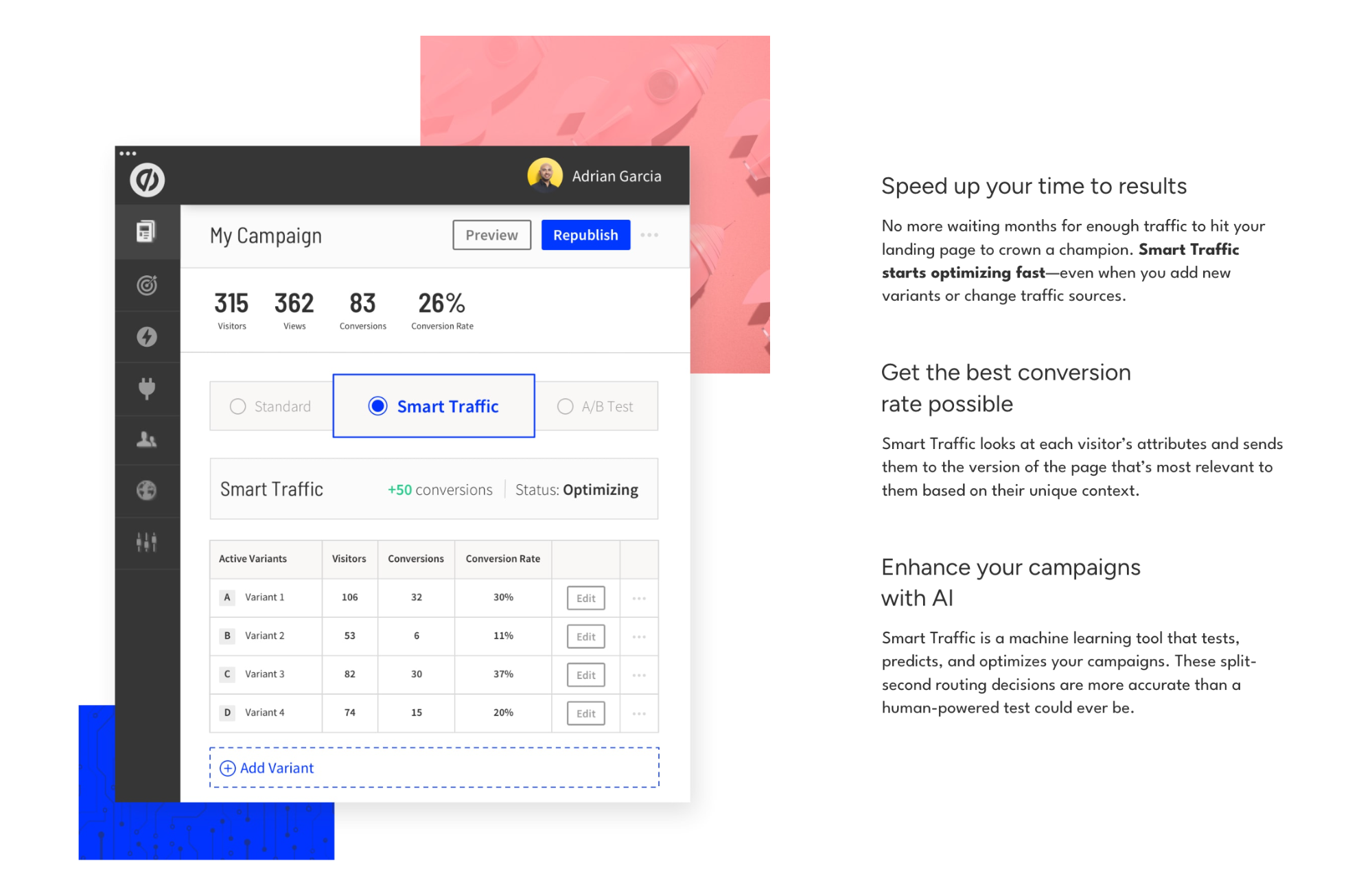
A significant advancement in lead generation technology is the move toward AI-powered traffic optimization. Traditional A/B testing requires a period of "learning" where traffic is split 50/50 until a winner is declared, often resulting in lost conversions during the testing phase.
Platforms like Unbounce have introduced "Smart Traffic" features that use machine learning to analyze visitor attributes—such as location, device type, and time of day—to automatically route them to the page variant most likely to convert them. This approach acknowledges that different segments of an audience may respond differently to various messaging styles, allowing for a more nuanced and effective conversion strategy.
Content Marketing and Social Proof
Trust remains the primary barrier to online lead generation. To overcome "skepticism bias," businesses are increasingly relying on social proof and value-driven content.
The Power of Social Proof
Strategic social proof involves more than just displaying customer logos. It requires the integration of:
- Specific Testimonials: Moving beyond "Great service" to "Increased our revenue by 20% in three months."
- Case Studies: Providing detailed narratives of how a problem was solved.
- Third-Party Validation: Displaying trust badges, awards, and real-time review counts from platforms like G2 or Trustpilot.
Real-Time Engagement via Chat
The rise of conversational marketing has seen live chat and AI-driven chatbots become essential for lead capture. By answering prospect questions in real-time, businesses can prevent "friction-based abandonment." Modern chatbots can qualify leads by asking preliminary questions before routing high-value prospects to a live sales representative, ensuring that human resources are used efficiently.
Sales and Marketing Alignment through Lead Qualification
A recurring challenge in the corporate world is the tension between marketing teams, who focus on lead quantity, and sales teams, who focus on lead quality. To mitigate this, successful organizations are implementing rigorous lead qualification systems.
Lead Scoring Models
Lead scoring allows organizations to categorize prospects based on their level of engagement and fit for the product. Criteria often include:
- Demographics: Industry, company size, and job title.
- Behavioral Data: Number of pages visited, types of content downloaded, and email open rates.
- Intent Signals: Direct inquiries or repeated visits to pricing pages.
By filtering out "window shoppers" and focusing sales efforts on "Sales Qualified Leads" (SQLs), companies can improve their closing ratios and reduce the cost per acquisition.
Broader Implications and Future Outlook
The transition toward self-serve marketing platforms and AI-driven optimization reflects a broader democratization of web technology. As marketing teams gain the ability to build, test, and iterate without constant developer intervention, the speed of experimentation is increasing.
However, this shift also places a higher premium on strategic thinking. As technical barriers fall, the competitive advantage will likely shift to those who best understand their customer’s psychology and can craft the most resonant, value-driven narratives.
In the long term, the integration of CRM data with website performance will allow for even greater levels of personalization. Industry analysts predict a future where a website’s layout and content could change entirely based on a visitor’s previous interactions with the brand, creating a seamless, one-to-one marketing experience.
The strategies outlined above represent a shift from passive observation to active engagement. For businesses looking to maintain relevance in an increasingly crowded digital marketplace, the optimization of the website as a lead generation powerhouse is no longer optional—it is the foundation of digital survival. By focusing on speed, clarity, and the strategic application of AI, organizations can ensure that their digital presence serves as their most effective and consistent sales representative.








