Jia Lissa
The intricate ecosystem of email delivery, often taken for granted by marketers, reveals its profound sensitivities during periods of exceptionally high sending volume. Far from being an isolated endeavor, the success of an email program—measured by its ability to land in the inbox—is deeply interwoven with the broader dynamics of the digital landscape. This interconnectedness becomes acutely apparent during major events such as the frenetic Black Friday-to-Cyber Monday retail spree or the intense communication blitz of an election cycle. Analysis from the Validity Intelligence Network, drawing on data from the 2024 presidential election, clearly demonstrates that political email surges create significant pressure points, detrimentally impacting deliverability for commercial senders across the board and carrying substantial financial implications.
The Digital Deluge: Political Campaigns and Inbox Overload
Political campaigns, particularly in the United States, have long leveraged email as a cornerstone of their outreach strategy. Its cost-effectiveness, directness, and immediate call-to-action capabilities make it an indispensable tool for fundraising, volunteer recruitment, and voter mobilization. As election day draws near, the volume of political emails intensifies dramatically. Candidates, party committees, and Political Action Committees (PACs) routinely dispatch four or more messages daily from a single program, inundating subscriber inboxes with urgent pleas for donations and support. This relentless barrage creates an unprecedented level of "noise" in the email channel, testing the limits of Mailbox Providers (MBPs) and leading to widespread subscriber fatigue.
MBPs, such as Microsoft, Apple, Gmail, and Yahoo (collectively MAGY, accounting for roughly 90% of a typical US B2C email program), are designed to manage vast email flows. However, even their sophisticated infrastructures have capacity limits. When faced with an overwhelming surge in volume—whether from retail giants during holiday sales or political entities during election season—MBPs respond by implementing stricter filtering mechanisms. This includes increased throttling (slowing down delivery), deferrals (temporarily delaying emails), higher rates of spam placement, and even outright rejections. Crucially, these measures are not solely aimed at the source of the high volume; they affect the entire email ecosystem. High-quality senders, those with strong engagement metrics and established reputations, are generally prioritized. Conversely, lower-quality senders, or even otherwise reputable senders caught in the crossfire, often experience significant delivery delays or see their messages diverted to spam folders or blocked entirely.
Chronology of Pressure: Election Week vs. Retail Peak
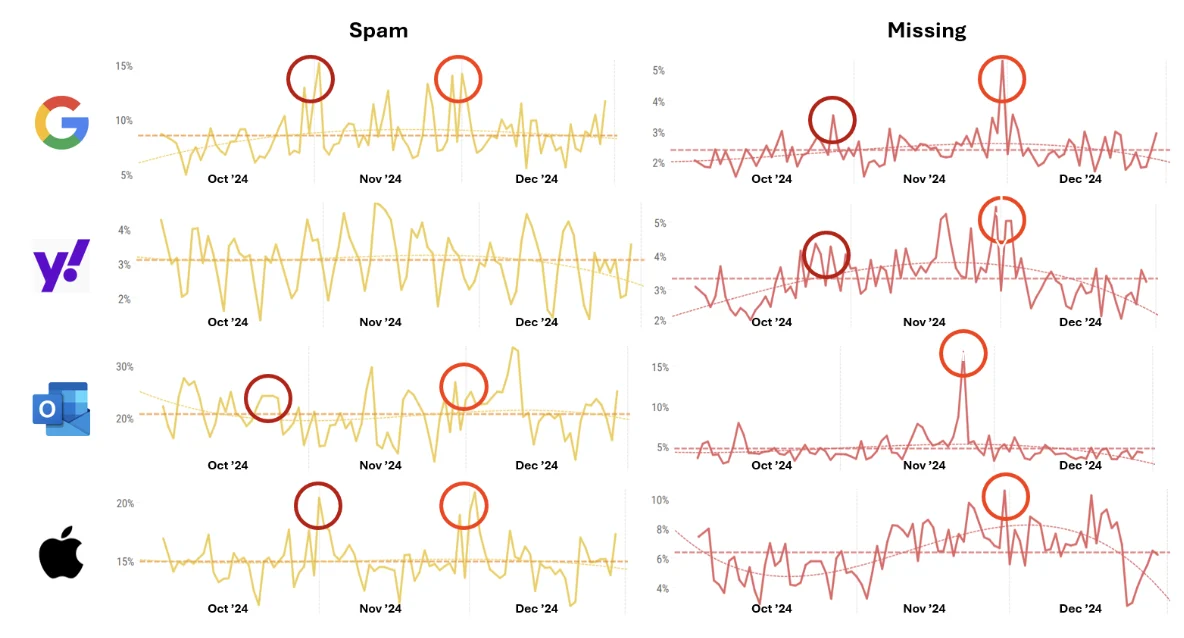
The data from the 2024 presidential election cycle provides a stark illustration of this phenomenon. The week leading up to election day witnessed a significant downturn in overall email deliverability, mirroring, and in some aspects even exceeding, the pressure observed during the peak retail periods of Black Friday and Cyber Monday.
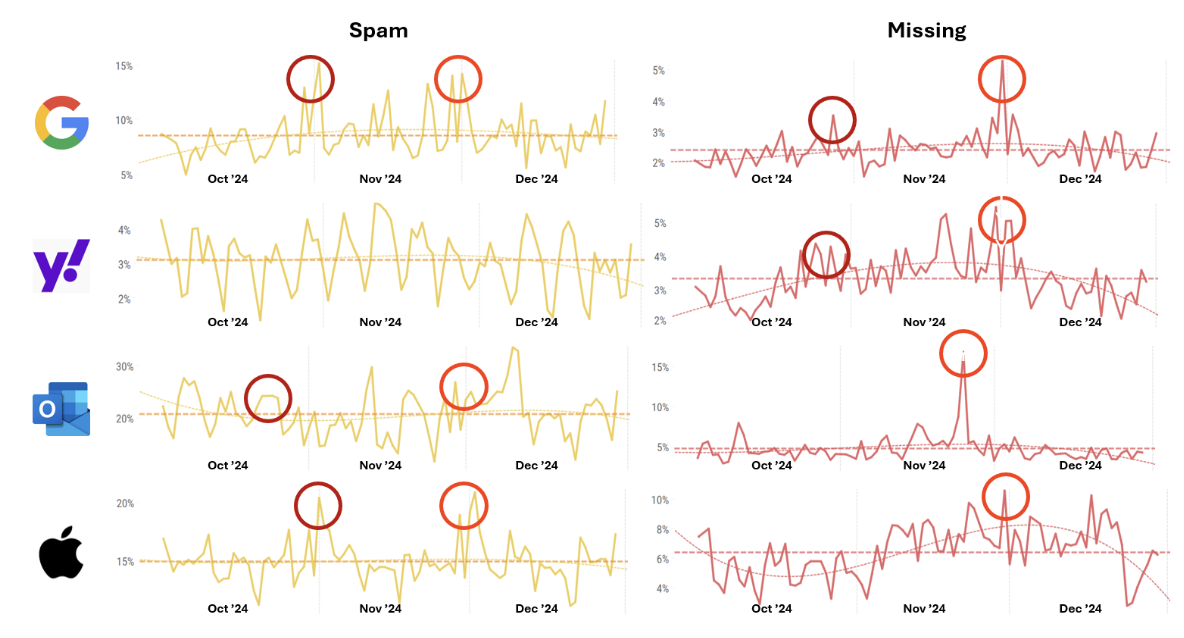
Leading up to election day in 2024, the average inbox placement rates across MAGY dropped by more than 5 percent. This decline was not confined to political mailers; it impacted all legitimate, permission-based email marketing activity indiscriminately. To understand the mechanics of this widespread impact, it is essential to differentiate between two primary forms of non-delivery: "Spam" and "Missing." "Spam" refers to emails that are delivered to a recipient’s inbox but are automatically shunted into the junk or spam folder, making them less likely to be seen. "Missing" denotes emails that are rejected outright by the MBP and never reach the recipient’s mailbox at all. Both categories spiked sharply during election week.
When comparing election week to the Q4 2024 quarterly benchmark, and subsequently to Black Friday and Cyber Monday, the extent of the disruption becomes clear. The combined non-delivery rate—the sum of spam and missing emails—during election week reached 17.6 percent. This figure represented a 1.5-fold increase over the Q4 2024 benchmark of 12.3 percent. More tellingly, it was almost identical to the pressure experienced during Black Friday (18.5 percent combined non-delivery) and Cyber Monday (17.4 percent combined non-delivery) that same year.
This data translates into staggering real-world consequences. Given average US sending volumes of approximately 10 billion emails per day, a 5.3% increase in non-delivery means nearly half a billion additional emails failed to reach their intended inboxes every single day during the election week. Using an estimated average value of $0.11 per email (based on industry benchmarks like Klaviyo), this equates to approximately $50 million per day in lost potential revenue. This substantial financial drain was not due to any fault or misstep by commercial email marketers but was a direct consequence of the systemic pressure exerted by the election-driven email surge on the channel as a whole.
Understanding the Mechanisms: Subscriber Engagement and Complaint Rates
The underlying reason for this widespread deliverability dip lies in how major MBPs, particularly Gmail, interpret and react to subscriber engagement signals. These signals are continuously monitored and serve as critical indicators of a sender’s reputation and the perceived quality of their content. Positive signals—such as opens, clicks, forwards, and replies—are associated with high-quality programs whose subscribers genuinely value the messages they receive. Conversely, negative signals—primarily spam complaints, but also actions like deleting an email without opening it—push mail towards the spam folder or trigger outright rejection.
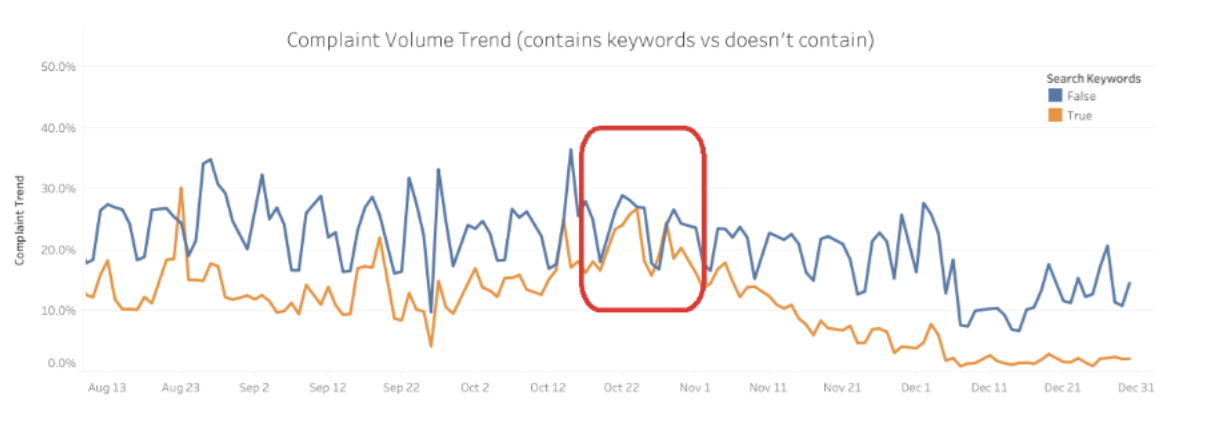
Analysis of complaint data from the Validity Intelligence Network provides further insight. By tagging emails with common political terms like "election," "vote," "donate," and "president," researchers were able to distinguish between political and non-political senders. Both groups exhibited above-average complaint rates in the pre-election period. What stood out, however, was that the peaks in complaint rates during the pre-election window were actually higher than those recorded during the Black Friday/Cyber Monday period just four weeks later.
This data leads to a clear inference: political campaigns not only generate significant complaint rates for their own messages but also contribute to an elevated level of negative sentiment and perceived inbox clutter across the entire email channel. Political mailers are frequently criticized for disregarding email best practices. Their strategies often involve extremely high frequency, aggressive language designed to create urgency, and minimal audience targeting beyond initial list acquisition. The resulting high complaint rates are therefore not coincidental but a direct consequence of these aggressive sending tactics.
However, the data also revealed an interesting nuance: donation-focused emails from political programs generated spam complaints at a rate one-third lower than content and news-oriented emails from the same senders. This suggests that the fundamental mechanics of fundraising, when presented clearly, were not the primary driver of complaints. Instead, it was often the specific framing, tone, and overall content of political messages—particularly those focused on news, advocacy, or general political discourse—that proved more off-putting to subscribers, leading to higher rates of negative engagement.
Commercial Senders Respond: Strategic Adjustments in 2024
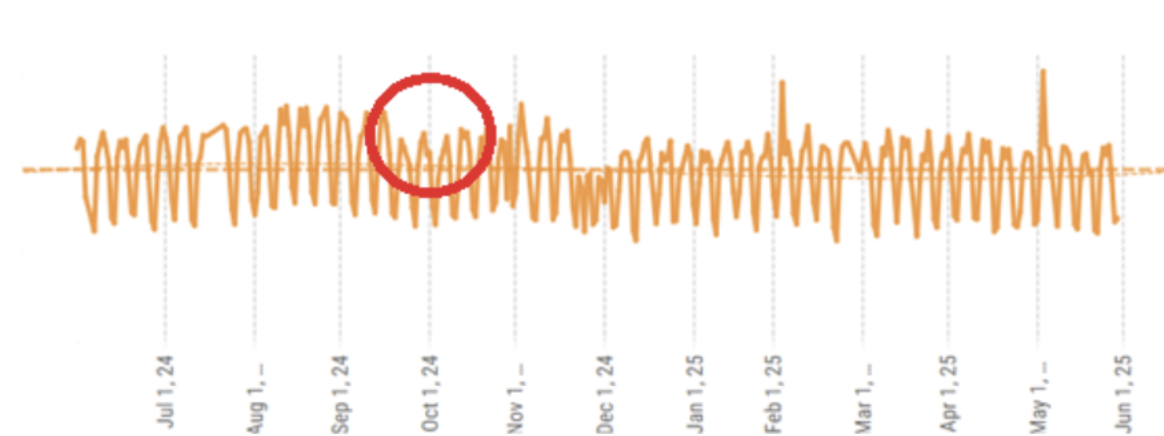
Faced with this challenging environment, commercial senders in 2024 largely adopted a cautious approach. Data from Validity customers showed that average daily campaign volumes dropped by 5 to 10 percent in the four weeks leading up to election day. Many marketers chose to scale back their sending activity, only ramping back up once the election dust had settled. This strategic pullback reflected an acknowledgement of the increased risk to deliverability and the potential for messages to be lost in the political din or filtered out by overwhelmed MBPs.
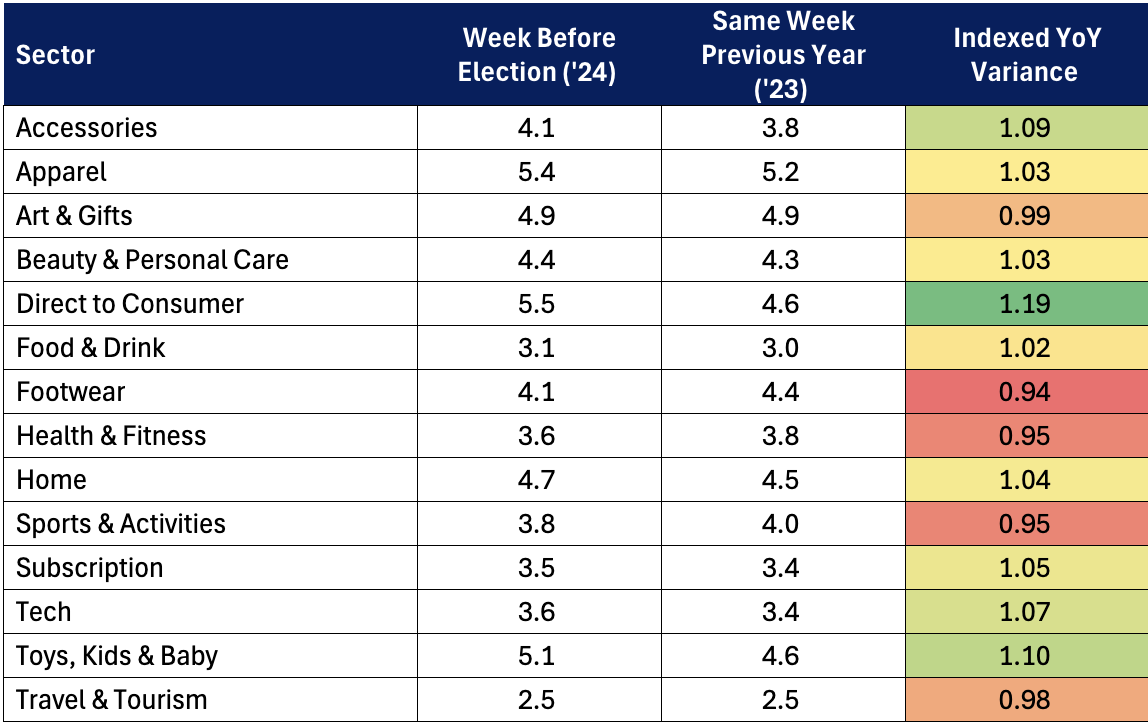
However, this response was not uniform across all sectors. A comparison of sending frequency in the week immediately before the 2024 election with the same week in 2023 (a non-election year) revealed varied strategies:
- Increased Activity: Direct-to-Consumer (D2C) brands, Toys/Kids/Baby, and Accessories sectors all demonstrated increased activity during election week. These sectors may have perceived less direct competition from political messaging or found unique ways to engage audiences during this time.
- Reduced Activity: Footwear, Health & Fitness, and Sports & Activities categories, conversely, pulled back their sending volumes. These industries might be more sensitive to subscriber fatigue or prefer to avoid periods of high inbox saturation to protect their brand image and deliverability.
For sectors that under-indexed in 2024, the upcoming 2026 midterms might represent a strategic opportunity to reassess their approach, provided they can navigate the deliverability challenges effectively.
Looking Ahead: Will 2026 Midterms Be Different?
As the email marketing community looks toward the 2026 midterm elections, the critical question remains: will the landscape be as disruptive, or will recent developments offer some mitigation? Several factors suggest that the 2026 cycle might present a somewhat altered, and potentially less universally disruptive, environment for commercial senders.
Firstly, the overall baseline for email deliverability has softened. After reaching a high-water mark of 87.2 percent in 2025, global inbox placement rates have trended downward, settling at 84.5 percent for Q2 2026. This lower starting point means that any additional pressure from political campaigns will compound an already more challenging environment for all senders. The margin for error has shrunk, making proactive deliverability management even more critical.
Secondly, and perhaps more optimistically for commercial senders, Mailbox Providers have significantly tightened their bulk sender requirements. Major platforms like Gmail and Yahoo have rolled out stringent new policies, including mandates for authenticated sending (DMARC), easy one-click unsubscribe options, and maintaining low spam complaint rates. Non-compliant senders now face a much higher likelihood of their emails being blocked outright or heavily filtered to spam. Political mailers, which historically generate high complaint rates and often lag in adopting best practices, may find a much larger proportion of their volume suppressed before it can even enter the general email flow and negatively impact sentiment for everyone else. This could act as a self-regulating mechanism, reducing the overall "noise" from the most aggressive political campaigns.
Thirdly, the past 18 months have seen a wave of AI-powered inbox features introduced by major MBPs. Gmail’s relevance-sorted Promotions tab, the integration of Gemini for Gmail, and Microsoft Copilot are all designed to nudge subscribers toward more conversational, high-engagement inbox experiences. These tools intelligently categorize, summarize, and prioritize emails based on perceived user interest and engagement. Low-engagement senders—a category into which many high-volume, generic political mailers often fall—become less visible in such an environment. If political mailers cannot generate strong engagement signals, they are more likely to be filtered or buried by AI algorithms before they can reach inboxes at scale. This could significantly reduce the channel-wide pressure observed in previous election cycles.
Strategic Considerations: To Engage or Not to Engage?
The decision to scale back during election season is not universally applicable. For some brands, election season presents a genuine opportunity to align with overarching themes of choice, freedom, civic duty, or community participation that resonate broadly with consumers. Smart marketers can tap into these themes creatively without alienating their audience.
Examples from 2024 demonstrated successful approaches where brands leaned into election themes. These ranged from patriotic product tie-ins and public service announcements encouraging voting to clever wordplay and humor. The most successful strategies shared several key characteristics: they remained strictly non-partisan, kept the political messaging light and indirect, and found a natural, authentic connection between the act of voting or civic engagement and their own products or brand values. Brands that employed humor ensured it was broad enough to land positively across the political spectrum, avoiding divisive jokes.
The critical "guardrail" for any brand considering such an approach is brand fit. Overtly political messaging, particularly that which could be perceived as partisan, carries a significant risk of alienating a substantial portion of the audience. The analysis from 2024 indicated that most brands embracing election themes were smaller businesses, likely more agile and perhaps less risk-averse regarding potential brand exposure. Larger, more established brands largely stayed focused on their core Black Friday preparations, opting to avoid the potential pitfalls of political engagement.
The Bottom Line: A Proactive Stance in a Dynamic Environment
The data from the 2024 election unequivocally demonstrates that election season is a significant deliverability pressure point for all email senders, not just political campaigns. Inbox placement rates decline, complaint rates spike, and this pressure peaks well in advance of the crucial Black Friday retail period. The most robust defense for commercial senders remains unwavering adherence to email best practices: maintaining a strong sender reputation, meticulously curating a healthy, engaged subscriber list, and developing a clear, data-informed timing strategy as November approaches.
While there are compelling reasons to believe that the 2026 midterms may be somewhat less disruptive due to evolving MBP policies and AI advancements, this potential mitigation is not a license for complacency. Continuous monitoring of key email metrics—inbox placement, spam rates, complaint rates, and engagement—remains paramount. For brands considering creative engagement with election themes, the lessons from 2024 are clear: keep the messaging light, non-partisan, and authentically connected to your products or brand values. As a general rule, expressions of civic pride tend to travel well, fostering positive connections, whereas overt political stances typically do not, risking division and alienation.
For marketers seeking to deepen their understanding of these complex deliverability trends and benchmark their performance against global and industry standards, consulting comprehensive resources such as the 2026 Email Deliverability Benchmark report is an essential step in navigating an increasingly intricate email landscape. Adaptability, data-driven strategy, and an unwavering focus on subscriber experience will be the hallmarks of successful email programs in the years to come.


 Nila Kartika Wati

 Reynand Wu