Dwi Wanna

Most marketers meticulously craft captivating subject lines, agonize over compelling calls-to-action, and rigorously A/B test preview text, investing countless hours in optimizing the most visible elements of their email campaigns. Yet, when it comes to the email footer, this critical section is often an afterthought, typically populated with recycled content from previous sends. This oversight represents a significant missed opportunity, not only for enhancing brand engagement but, more crucially, for ensuring legal compliance and safeguarding sender reputation. The email footer, despite its humble position at the bottom of every message, is arguably the most consistent piece of digital real estate in a marketer’s arsenal and one of the few legally regulated components of an email. Getting it right is paramount to protecting a business, fostering subscriber trust, and reinforcing brand identity with every single interaction.
The Underestimated Power of the Email Footer
The pervasive neglect of the email footer stems from a common misconception that it serves merely as a legal obligation or a digital graveyard for miscellaneous links. However, when approached strategically, the footer transcends this passive role, becoming a powerful tool that communicates essential information about your identity, offers clear avenues for communication, and, perhaps most importantly, provides a graceful exit for recipients who no longer wish to engage. This last point is not merely a matter of good digital etiquette; it is a fundamental legal requirement enshrined in major anti-spam and privacy regulations worldwide. A thoughtfully designed footer signals professionalism and transparency. Conversely, a footer lacking a legitimate physical address, a functional unsubscribe link, or clear sender information can instantly transform even the most brilliantly conceived campaign into what recipients perceive as spam, severely damaging deliverability and brand credibility.
Navigating the Regulatory Landscape: A Global Overview
The legal mandates governing email footers are a direct response to the proliferation of unsolicited commercial email, or "spam," which began to overwhelm inboxes in the late 1990s and early 2000s. Governments globally recognized the need to protect consumers while allowing legitimate businesses to communicate effectively. This led to the enactment of various legislations, each with its nuances but a shared objective: ensuring transparency, providing control to recipients, and holding senders accountable.
-
CAN-SPAM Act (Controlling the Assault of Non-Solicited Pornography and Marketing Act) – United States (2003): This landmark U.S. law sets the rules for commercial email. Its primary requirements for email footers include:
- A clear and conspicuous unsubscribe mechanism: Senders must provide a clear and easy way for recipients to opt out of future emails, and this link must remain functional for at least 30 days after the email is sent. Opt-out requests must be honored within 10 business days.
- A valid physical postal address: This requirement ensures transparency and accountability, allowing recipients to know the legitimate physical location of the sender. This cannot be a P.O. box unless it is officially registered as the business address.
- Clear identification that the message is an advertisement: While not always explicitly in the footer, the overall email, including the footer, should not be misleading about its commercial nature.
Violations of CAN-SPAM can result in significant penalties, with fines potentially reaching tens of thousands of dollars per individual email.
-
CASL (Canada’s Anti-Spam Legislation) – Canada (2014): Widely considered one of the strictest anti-spam laws globally, CASL goes beyond CAN-SPAM by requiring explicit consent for sending commercial electronic messages (CEMs) to Canadian recipients. Its footer requirements are robust:
- Identification of the sender: The email must clearly identify the person or organization sending the message.
- Contact information: This includes the sender’s mailing address and either a phone number, email address, or website address.
- A functional unsubscribe mechanism: Similar to CAN-SPAM, an unsubscribe link must be present and easy to use, and requests must be processed within 10 business days.
CASL carries severe penalties, with fines up to CAD $1 million for individuals and CAD $10 million for organizations per violation, underscoring the gravity of compliance.
-
GDPR (General Data Protection Regulation) – European Union (2018): While not solely focused on email, GDPR has profound implications for email marketing, especially concerning personal data processing and consent. For email footers, GDPR emphasizes:

- Explicit consent: All recipients in the EU must have given clear, affirmative consent to receive marketing emails. While not a direct footer requirement, the footer often contains a statement reminding recipients why they are receiving the email, reinforcing this consent.
- Transparency and data controller identification: The footer should clearly identify the data controller (the entity responsible for processing personal data) and often includes a link to the organization’s privacy policy, detailing how subscriber data is collected, stored, and used.
- Right to erasure (right to be forgotten) and data access: While typically managed through a preference center or direct contact, the footer can provide links to exercise these rights, which are fundamental under GDPR.
GDPR fines are particularly hefty, reaching up to €20 million or 4% of annual global turnover, whichever is higher, for serious infringements.
These regulations collectively establish a global baseline for ethical and legal email communication, making the footer a crucial checkpoint for compliance. A quick self-assessment for marketers: if you stripped everything from your footer except the address and the unsubscribe link, would you still meet the core legal requirements of the regions you serve? If the answer is no, immediate revision is necessary.
Beyond Compliance: Building Trust and Brand Identity
While legal compliance forms the bedrock of an effective email footer, its utility extends far beyond avoiding fines. A well-constructed footer is a powerful instrument for cultivating subscriber trust and reinforcing brand identity.
- Professionalism and Credibility: In an era rife with phishing attempts and spam, a footer that provides a real address, a working unsubscribe link, and clear sender information immediately signals legitimacy. It tells subscribers that this is a reputable business that respects their inbox and values transparency. Conversely, missing or broken links, or obscure sender details, can trigger suspicion and lead to unsubscribes or, worse, spam complaints.
- Brand Reinforcement: The footer is an extension of your brand’s visual and textual identity. Incorporating your logo, using consistent brand fonts and colors, and maintaining a tone that aligns with your brand persona helps to reinforce your identity. This consistency fosters recognition and builds a subconscious sense of reliability with every email opened.
- Enhanced Subscriber Experience: An accessible and well-organized footer improves the overall subscriber experience. By making it easy for recipients to manage their preferences, access support, or connect on other platforms, you demonstrate a commitment to user autonomy and satisfaction. This positive experience can significantly reduce churn and encourage long-term engagement.
Essential Elements: The Non-Negotiables (and Highly Recommended Additions)
Drawing from regulatory mandates and best practices, certain elements are consistently non-negotiable for commercial email footers:
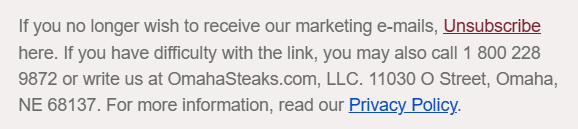
- Physical Postal Address: As discussed, this is a legal requirement in most jurisdictions (e.g., CAN-SPAM, CASL). It provides transparency and accountability. Ensure it’s current and accurately reflects your business’s registered address.
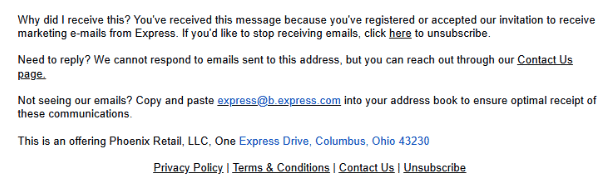
- Clear Unsubscribe Link: This is the most critical element for compliance and sender reputation. It must be prominent, easy to find, and functional. Hiding it or making it difficult to use is a surefire way to frustrate subscribers, leading them to mark your email as spam rather than opt-out. Spam complaints are far more damaging to your sender reputation and deliverability than a straightforward unsubscribe.
- Sender Identification: Clearly state the name of your company or brand. This helps recipients immediately identify who the email is from, reducing confusion and increasing trust.
Once these fundamental legal boxes are checked, marketers have ample opportunity to make the footer work harder for their brand and subscribers by including "nice-to-have" elements:
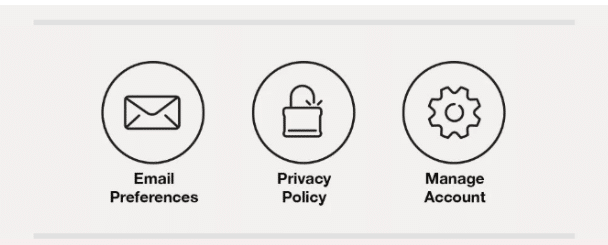
- Preference Center Link: Instead of forcing a full unsubscribe, a preference center allows subscribers to tailor the types of emails they receive, how often, or even pause subscriptions temporarily. This empowers users, significantly reducing full unsubscribes and retaining valuable contacts.
- Social Media Links: Provide easy access to your social media profiles (e.g., Facebook, Twitter, LinkedIn, Instagram). This extends your brand’s reach, encourages cross-platform engagement, and offers alternative channels for interaction.
- Privacy Policy Link: Especially crucial under GDPR and other data protection laws, a link to your privacy policy demonstrates transparency about how you handle subscriber data, building trust and ensuring legal compliance.
- Website Link: A direct link back to your main website is essential for driving traffic and allowing recipients to explore more about your offerings at their convenience.
- Contact Information (beyond physical address): Providing an email address for support, a phone number, or a link to a "Contact Us" page offers additional avenues for direct communication and customer service.
- "Why You’re Receiving This Email" Statement: A concise statement reminding subscribers how they joined your list (e.g., "You are receiving this email because you subscribed to our newsletter…") can significantly reduce spam complaints by jogging recipients’ memories and validating the communication.
- Copyright Notice and Year: A simple copyright notice (e.g., "© 2024 [Your Company Name]. All Rights Reserved.") adds a professional touch and asserts legal ownership of your content.
Strategic Optimization: Best Practices for a Footer That Works
Optimizing your email footer involves more than just listing required elements; it demands strategic design and ongoing maintenance.
- Keep it Clean and Concise: A footer cluttered with an overwhelming number of links and lengthy disclaimers is counterproductive. It becomes easy to ignore and challenging to navigate, especially on mobile devices. Prioritize the required elements, then judiciously add only a few extras that genuinely add value and enhance the subscriber experience. Less is often more.
- Don’t Bury the Unsubscribe Link: This cannot be stressed enough. Attempting to hide or obscure the unsubscribe link does not save subscribers; it merely frustrates them. Data consistently shows that subscribers who cannot easily find an unsubscribe option are far more likely to mark an email as spam. This action directly damages your sender reputation with Internet Service Providers (ISPs), leading to lower deliverability rates for all your future campaigns. A clean opt-out, while a loss, is always preferable to a spam complaint.
- Design for Mobile-First: With over 50% of emails now opened on mobile devices, responsive design is non-negotiable. Footer text should remain large enough to be easily legible on small screens (typically 12-14px minimum), and links should be spaced sufficiently apart to allow for accurate tapping (at least 44×44 pixels for tap targets) to prevent accidental clicks.
- Maintain Consistency Across Campaigns: Use the same footer format, fonts, colors, and overall design language across every email campaign. This consistency is crucial for brand recognition and builds a sense of trustworthiness over time. Subscribers learn what to expect, reinforcing your professional image.
- Implement Rigorous Link Testing: Broken unsubscribe links, dead social media icons, or outdated website links are common and entirely avoidable mistakes. Before every send, especially after any template updates or system migrations, thoroughly test every link within your footer. Automated email testing tools can be invaluable for catching these errors across various email clients and devices.
- Conduct Periodic Audits: Email regulations evolve, and so does your business. An address that was accurate two years ago, or a social media channel your company no longer actively uses, can quietly become a compliance liability or a dead end for subscriber engagement. Make it a standard practice to review and update your email footer at least once a year, or whenever there are significant changes to your business, legal environment, or marketing strategy.
- Consider Accessibility: Beyond mobile design, ensure your footer is accessible to all users. Use sufficient color contrast for text against the background, and ensure link text is descriptive enough for screen readers.
The Broader Implications for Email Marketing Success
The strategic management of your email footer has profound implications for the overall success of your email marketing program. A compliant and well-designed footer directly contributes to:
- Improved Deliverability: ISPs closely monitor sender reputation. A high volume of spam complaints (often triggered by difficult-to-find unsubscribe links) will quickly flag your domain as untrustworthy, leading to your emails being routed to spam folders or blocked entirely. A good footer helps maintain a healthy sender reputation.
- Enhanced Sender Reputation: Beyond deliverability, a strong sender reputation built on trust and transparency encourages higher engagement rates (opens, clicks), which further signals to ISPs that your emails are valuable to recipients.
- Higher Return on Investment (ROI): By reducing unsubscribes through preference centers, minimizing spam complaints, and fostering trust, a well-managed footer helps maintain a larger, more engaged, and ultimately more valuable subscriber list. This directly translates to better campaign performance and a stronger ROI from your email marketing efforts.
Conclusion
The email footer might occupy the smallest section of your email, yet it carries an outsized responsibility. It is not merely a formality but a strategic asset that ensures legal compliance, builds invaluable subscriber trust, and serves as a consistent extension of your brand identity. Marketers must move beyond treating it as an afterthought and instead approach its design and content with the same intentionality and strategic rigor applied to subject lines and calls-to-action. By doing so, the email footer will reliably perform its multifaceted duties, protecting your business, nurturing your audience, and contributing significantly to the long-term success of your email marketing initiatives. Don’t let a footer misstep jeopardize your sender reputation or undermine your marketing efforts.
Originally published on August 26, 2026
About the Author:
Julie Stuck is a Sr. Email Strategist at Validity.
You might also like:
Blog: 53% of Emails Opened on Mobile; Outlook Opens Decrease 33%
We’ve been tracking email opens for more than 4 years. And it’s incredible to see how behaviors have changed over time. Mobile email was barely a blip on our radars in 2011, and made up just 8% of email opens. Fast forward to 2014, and nearly half of emails are opened on smartphones and tablets—a 500% increase in four years.
The Unsung Hero: Why Your Email Footer is Critical for Compliance, Trust, and Brand Building
Most marketers meticulously craft captivating subject lines, agonize over compelling calls-to-action, and rigorously A/B test preview text, investing countless hours in optimizing the most visible elements of their email campaigns. Yet, when it comes to the email footer, this critical section is often an afterthought, typically populated with recycled content from previous sends. This oversight represents a significant missed opportunity, not only for enhancing brand engagement but, more crucially, for ensuring legal compliance and safeguarding sender reputation. The email footer, despite its humble position at the bottom of every message, is arguably the most consistent piece of digital real estate in a marketer’s arsenal and one of the few legally regulated components of an email. Getting it right is paramount to protecting a business, fostering subscriber trust, and reinforcing brand identity with every single interaction.
The Underestimated Power of the Email Footer
The pervasive neglect of the email footer stems from a common misconception that it serves merely as a legal obligation or a digital graveyard for miscellaneous links. However, when approached strategically, the footer transcends this passive role, becoming a powerful tool that communicates essential information about your identity, offers clear avenues for communication, and, perhaps most importantly, provides a graceful exit for recipients who no longer wish to engage. This last point is not merely a matter of good digital etiquette; it is a fundamental legal requirement enshrined in major anti-spam and privacy regulations worldwide. A thoughtfully designed footer signals professionalism and transparency. Conversely, a footer lacking a legitimate physical address, a functional unsubscribe link, or clear sender information can instantly transform even the most brilliantly conceived campaign into what recipients perceive as spam, severely damaging deliverability and brand credibility.
Navigating the Regulatory Landscape: A Global Overview
The legal mandates governing email footers are a direct response to the proliferation of unsolicited commercial email, or "spam," which began to overwhelm inboxes in the late 1990s and early 2000s. Governments globally recognized the need to protect consumers while allowing legitimate businesses to communicate effectively. This led to the enactment of various legislations, each with its nuances but a shared objective: ensuring transparency, providing control to recipients, and holding senders accountable.
-
CAN-SPAM Act (Controlling the Assault of Non-Solicited Pornography and Marketing Act) – United States (2003): This landmark U.S. law sets the rules for commercial email. Its primary requirements for email footers include:
- A clear and conspicuous unsubscribe mechanism: Senders must provide a clear and easy way for recipients to opt out of future emails, and this link must remain functional for at least 30 days after the email is sent. Opt-out requests must be honored within 10 business days.
- A valid physical postal address: This requirement ensures transparency and accountability, allowing recipients to know the legitimate physical location of the sender. This cannot be a P.O. box unless it is officially registered as the business address.
- Clear identification that the message is an advertisement: While not always explicitly in the footer, the overall email, including the footer, should not be misleading about its commercial nature.
Violations of CAN-SPAM can result in significant penalties, with fines potentially reaching tens of thousands of dollars per individual email.
-
CASL (Canada’s Anti-Spam Legislation) – Canada (2014): Widely considered one of the strictest anti-spam laws globally, CASL goes beyond CAN-SPAM by requiring explicit consent for sending commercial electronic messages (CEMs) to Canadian recipients. Its footer requirements are robust:
- Identification of the sender: The email must clearly identify the person or organization sending the message.
- Contact information: This includes the sender’s mailing address and either a phone number, email address, or website address.
- A functional unsubscribe mechanism: Similar to CAN-SPAM, an unsubscribe link must be present and easy to use, and requests must be processed within 10 business days.
CASL carries severe penalties, with fines up to CAD $1 million for individuals and CAD $10 million for organizations per violation, underscoring the gravity of compliance.
-
GDPR (General Data Protection Regulation) – European Union (2018): While not solely focused on email, GDPR has profound implications for email marketing, especially concerning personal data processing and consent. For email footers, GDPR emphasizes:
- Explicit consent: All recipients in the EU must have given clear, affirmative consent to receive marketing emails. While not a direct footer requirement, the footer often contains a statement reminding recipients why they are receiving the email, reinforcing this consent.
- Transparency and data controller identification: The footer should clearly identify the data controller (the entity responsible for processing personal data) and often includes a link to the organization’s privacy policy, detailing how subscriber data is collected, stored, and used.
- Right to erasure (right to be forgotten) and data access: While typically managed through a preference center or direct contact, the footer can provide links to exercise these rights, which are fundamental under GDPR.
GDPR fines are particularly hefty, reaching up to €20 million or 4% of annual global turnover, whichever is higher, for serious infringements.
These regulations collectively establish a global baseline for ethical and legal email communication, making the footer a crucial checkpoint for compliance. A quick self-assessment for marketers: if you stripped everything from your footer except the address and the unsubscribe link, would you still meet the core legal requirements of the regions you serve? If the answer is no, immediate revision is necessary.
Beyond Compliance: Building Trust and Brand Identity
While legal compliance forms the bedrock of an effective email footer, its utility extends far beyond avoiding fines. A well-constructed footer is a powerful instrument for cultivating subscriber trust and reinforcing brand identity.
- Professionalism and Credibility: In an era rife with phishing attempts and spam, a footer that provides a real address, a working unsubscribe link, and clear sender information immediately signals legitimacy. It tells subscribers that this is a reputable business that respects their inbox and values transparency. Conversely, missing or broken links, or obscure sender details, can trigger suspicion and lead to unsubscribes or, worse, spam complaints.
- Brand Reinforcement: The footer is an extension of your brand’s visual and textual identity. Incorporating your logo, using consistent brand fonts and colors, and maintaining a tone that aligns with your brand persona helps to reinforce your identity. This consistency fosters recognition and builds a subconscious sense of reliability with every email opened.
- Enhanced Subscriber Experience: An accessible and well-organized footer improves the overall subscriber experience. By making it easy for recipients to manage their preferences, access support, or connect on other platforms, you demonstrate a commitment to user autonomy and satisfaction. This positive experience can significantly reduce churn and encourage long-term engagement.
Essential Elements: The Non-Negotiables (and Highly Recommended Additions)
Drawing from regulatory mandates and best practices, certain elements are consistently non-negotiable for commercial email footers:
- Physical Postal Address: As discussed, this is a legal requirement in most jurisdictions (e.g., CAN-SPAM, CASL). It provides transparency and accountability. Ensure it’s current and accurately reflects your business’s registered address.
- Clear Unsubscribe Link: This is the most critical element for compliance and sender reputation. It must be prominent, easy to find, and functional. Hiding it or making it difficult to use is a sure-fire way to frustrate subscribers, leading them to mark your email as spam rather than opt-out. Spam complaints are far more damaging to your sender reputation and deliverability than a straightforward unsubscribe.
- Sender Identification: Clearly state the name of your company or brand. This helps recipients immediately identify who the email is from, reducing confusion and increasing trust.
Once these fundamental legal boxes are checked, marketers have ample opportunity to make the footer work harder for their brand and subscribers by including "nice-to-have" elements:
- Preference Center Link: Instead of forcing a full unsubscribe, a preference center allows subscribers to tailor the types of emails they receive, how often, or even pause subscriptions temporarily. This empowers users, significantly reducing full unsubscribes and retaining valuable contacts.
- Social Media Links: Provide easy access to your social media profiles (e.g., Facebook, Twitter, LinkedIn, Instagram). This extends your brand’s reach, encourages cross-platform engagement, and offers alternative channels for interaction.
- Privacy Policy Link: Especially crucial under GDPR and other data protection laws, a link to your privacy policy demonstrates transparency about how you handle subscriber data, building trust and ensuring legal compliance.
- Website Link: A direct link back to your main website is essential for driving traffic and allowing recipients to explore more about your offerings at their convenience.
- Contact Information (beyond physical address): Providing an email address for support, a phone number, or a link to a "Contact Us" page offers additional avenues for direct communication and customer service.
- "Why You’re Receiving This Email" Statement: A concise statement reminding subscribers how they joined your list (e.g., "You are receiving this email because you subscribed to our newsletter…") can significantly reduce spam complaints by jogging recipients’ memories and validating the communication.
- Copyright Notice and Year: A simple copyright notice (e.g., "© 2024 [Your Company Name]. All Rights Reserved.") adds a professional touch and asserts legal ownership of your content.
Strategic Optimization: Best Practices for a Footer That Works
Optimizing your email footer involves more than just listing required elements; it demands strategic design and ongoing maintenance.
- Keep it Clean and Concise: A footer cluttered with an overwhelming number of links and lengthy disclaimers is counterproductive. It becomes easy to ignore and challenging to navigate, especially on mobile devices. Prioritize the required elements, then judiciously add only a few extras that genuinely add value and enhance the subscriber experience. Less is often more.
- Don’t Bury the Unsubscribe Link: This cannot be stressed enough. Attempting to hide or obscure the unsubscribe link does not save subscribers; it merely frustrates them. Data consistently shows that subscribers who cannot easily find an unsubscribe option are far more likely to mark an email as spam. This action directly damages your sender reputation with Internet Service Providers (ISPs), leading to lower deliverability rates for all your future campaigns. A clean opt-out, while a loss, is always preferable to a spam complaint.
- Design for Mobile-First: With over 50% of emails now opened on mobile devices, responsive design is non-negotiable. Footer text should remain large enough to be easily legible on small screens (typically 12-14px minimum), and links should be spaced sufficiently apart to allow for accurate tapping (at least 44×44 pixels for tap targets) to prevent accidental clicks.
- Maintain Consistency Across Campaigns: Use the same footer format, fonts, colors, and overall design language across every email campaign. This consistency is crucial for brand recognition and builds a sense of trustworthiness over time. Subscribers learn what to expect, reinforcing your professional image.
- Implement Rigorous Link Testing: Broken unsubscribe links, dead social media icons, or outdated website links are common and entirely avoidable mistakes. Before every send, especially after any template updates or system migrations, thoroughly test every link within your footer. Automated email testing tools can be invaluable for catching these errors across various email clients and devices.
- Conduct Periodic Audits: Email regulations evolve, and so does your business. An address that was accurate two years ago, or a social media channel your company no longer actively uses, can quietly become a compliance liability or a dead end for subscriber engagement. Make it a standard practice to review and update your email footer at least once a year, or whenever there are significant changes to your business, legal environment, or marketing strategy.
- Consider Accessibility: Beyond mobile design, ensure your footer is accessible to all users. Use sufficient color contrast for text against the background, and ensure link text is descriptive enough for screen readers.
The Broader Implications for Email Marketing Success
The strategic management of your email footer has profound implications for the overall success of your email marketing program. A compliant and well-designed footer directly contributes to:
- Improved Deliverability: ISPs closely monitor sender reputation. A high volume of spam complaints (often triggered by difficult-to-find unsubscribe links) will quickly flag your domain as untrustworthy, leading to your emails being routed to spam folders or blocked entirely. A good footer helps maintain a healthy sender reputation.
- Enhanced Sender Reputation: Beyond deliverability, a strong sender reputation built on trust and transparency encourages higher engagement rates (opens, clicks), which further signals to ISPs that your emails are valuable to recipients.
- Higher Return on Investment (ROI): By reducing unsubscribes through preference centers, minimizing spam complaints, and fostering trust, a well-managed footer helps maintain a larger, more engaged, and ultimately more valuable subscriber list. This directly translates to better campaign performance and a stronger ROI from your email marketing efforts.
Conclusion

The email footer might occupy the smallest section of your email, yet it carries an outsized responsibility. It is not merely a formality but a strategic asset that ensures legal compliance, builds invaluable subscriber trust, and serves as a consistent extension of your brand identity. Marketers must move beyond treating it as an afterthought and instead approach its design and content with the same intentionality and strategic rigor applied to subject lines and calls-to-action. By doing so, the email footer will reliably perform its multifaceted duties, protecting your business, nurturing your audience, and contributing significantly to the long-term success of your email marketing initiatives. Don’t let a footer misstep jeopardize your sender reputation or undermine your marketing efforts.
Originally published on August 26, 2026
About the Author:
Julie Stuck is a Sr. Email Strategist at Validity.
You might also like:
Blog: 53% of Emails Opened on Mobile; Outlook Opens Decrease 33%
We’ve been tracking email opens for more than 4 years. And it’s incredible to see how behaviors have changed over time. Mobile email was barely a blip on our radars in 2011, and made up just 8% of email opens. Fast forward to 2014, and nearly half of emails are opened on smartphones and tablets—a 500% increase in four years.


 Basiran
 Reynand Wu