Ammar Sabilarrohman
In the competitive landscape of e-commerce, the conventional wisdom often suggests that scaling a business invariably leads to an increase in headcount and a corresponding rise in revenue. However, a closer examination of high-performing businesses reveals a different narrative, one where operational efficiency and strategic tax planning play a more significant role in profitability than aggressive marketing campaigns. This analysis delves into the underappreciated strategies that enable e-commerce businesses to achieve greater financial success, often by bucking the trend of traditional growth models.
The Case for Operational Leaness
The journey to heightened profitability for many e-commerce ventures often begins not with expanding marketing budgets, but with a critical re-evaluation of operational overheads. Consider the hypothetical case of a once-struggling online retailer. This business, which at its peak employed 35 individuals, consistently generated solid revenue but grappled with razor-thin profit margins and persistent owner stress. The daily management of a sizable team became a significant burden, detracting from strategic business development.
The turning point came with a series of decisive strategic shifts. The business embraced a remote work model, significantly reducing the need for physical office space and associated costs. A partnership with a third-party logistics (3PL) provider was established, outsourcing the complexities of warehousing and fulfillment. Furthermore, a significant portion of the full-time workforce was transitioned to a freelance and contract-based model. The outcome was a dramatic transformation: the company now operates with a lean core team of just one employee, supplemented by eight independent contractors. This restructuring led to unprecedented profit levels and a substantial reduction in management-related stress.

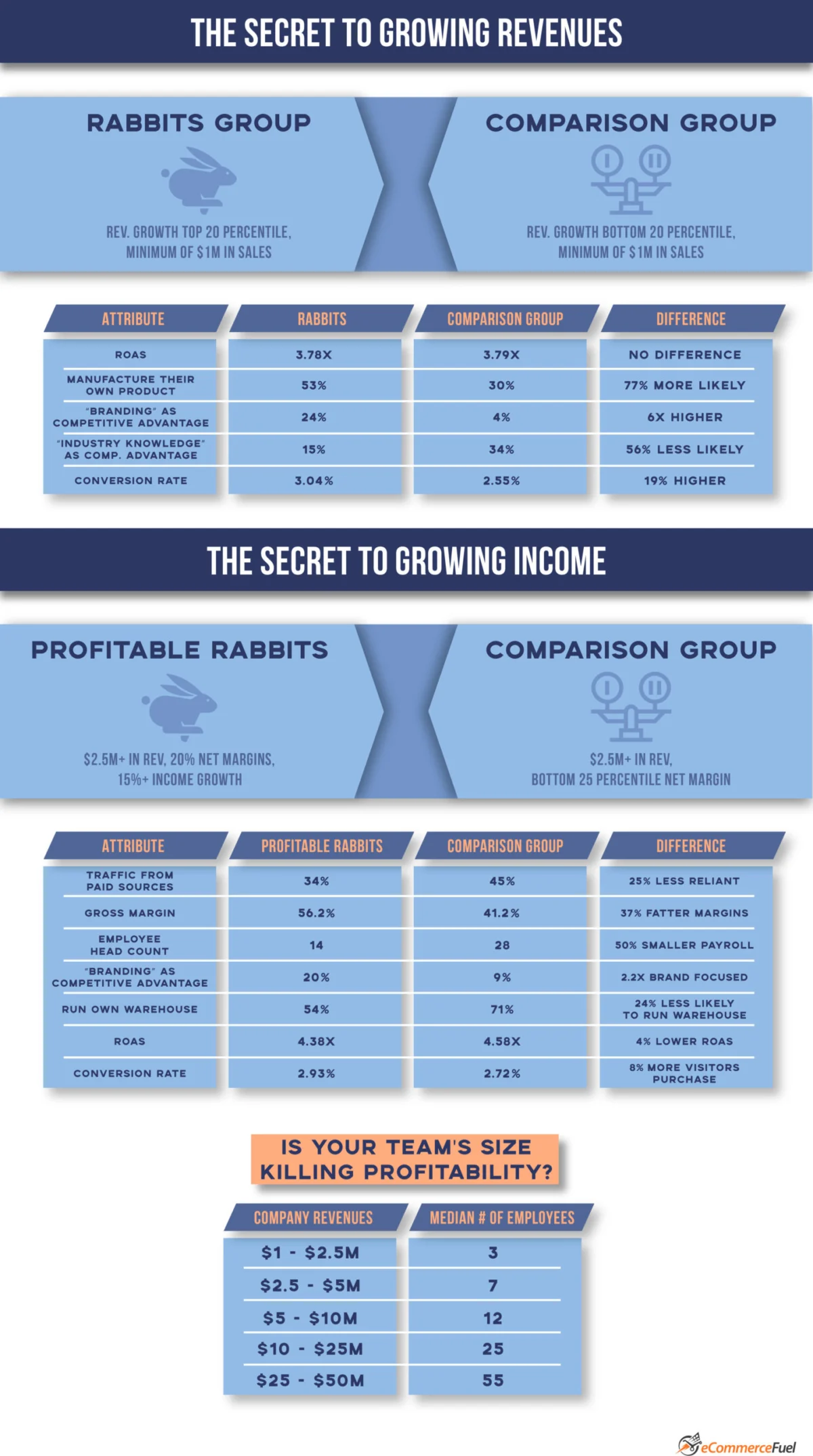
This anecdote, while illustrative, is not an isolated incident. Research conducted across hundreds of e-commerce businesses indicates a strong correlation between profitability and operational leanness, often outweighing the impact of marketing prowess. A comprehensive study analyzing the financial performance of e-commerce stores revealed that top-performing businesses, those demonstrating superior profitability, typically operated with approximately half the payroll expenses of their less profitable counterparts. These highly successful entities were also found to be 25% more likely to outsource their warehouse operations and demonstrated a 25% reduced reliance on paid traffic acquisition. This data suggests that a focus on operational efficiency, often termed "operational leanness," is a more potent driver of profit than aggressive or "clever" marketing strategies.
Beyond Headcount: Rethinking Overhead
The concept of "staying lean" in business is often mistakenly equated solely with workforce reduction. However, true operational leanness extends to all facets of overhead. This includes examining underutilized physical assets, such as office spaces that may have been deemed necessary in previous economic climates but are now a significant drain on resources. Similarly, the decision to maintain in-house fulfillment operations when a 3PL provider could offer more cost-effective and efficient solutions represents another area of potential overhead. Furthermore, the cumulative effect of recurring software subscriptions, often forgotten after initial implementation, can represent a substantial, albeit incremental, drain on a company’s financial health.
A valuable framework for assessing what constitutes necessary operational expenditure involves identifying the core competencies that define a brand’s unique value proposition. For instance, if a company’s competitive advantage lies in its product design, retaining in-house design talent would be a strategic imperative. Conversely, if the manual process of packing and shipping orders does not contribute to the brand’s distinctiveness, outsourcing this function to a specialized provider becomes a more logical and financially sound decision. The most profitable businesses are not merely cutting costs indiscriminately; they are making deliberate choices about where to allocate their resources, focusing on activities that directly contribute to their competitive edge.
The Imperative of Difficult Conversations

Achieving sustained profitability often necessitates engaging in uncomfortable conversations, a skill that many business leaders tend to postpone until forced by financial distress. Proactive business owners, however, recognize that their capacity to navigate challenging discussions directly correlates with their long-term success. These individuals are not waiting for economic downturns, cash flow crises, or existential threats to profitability before addressing critical issues.
Instead, they are actively engaging in a process of continuous self-assessment. This includes questioning the necessity of every role within the organization, discerning whether positions were created out of genuine need or simply due to a perception of being busy. They scrutinize every subscription and service, asking whether the expenditure is a strategic necessity or merely a habitual outlay. Crucially, they simulate worst-case scenarios, contemplating what 25% of their current expenses they would eliminate if faced with an immediate financial challenge. By proactively identifying these potential cuts, these business leaders are not reacting to crisis; they are strategically positioning their companies for resilience and enhanced profitability.
Unlocking Tax Efficiency: A Neglected Frontier
While operational efficiency is a well-recognized driver of profit, the strategic optimization of tax liabilities often remains an overlooked area, despite its significant potential to increase after-tax income. Many business owners perceive taxes as a fixed cost, a percentage of revenue that is non-negotiable. However, astute business leaders recognize that proactive tax planning can lead to substantial savings, effectively keeping more of the money they earn.
Consider the hypothetical scenario of two e-commerce business owners, both generating $2.5 million in revenue and realizing $250,000 in profit annually, with identical salary structures and family situations. Owner A, operating without a strategic tax plan, might find themselves paying upwards of $75,000 in annual taxes. In contrast, Owner B, who diligently implements a range of tax-efficient strategies, could potentially reduce their tax liability to as low as $21,000, representing a staggering annual saving of $54,000.

This remarkable difference can be achieved through several well-established, legal tax planning techniques. Profit-sharing plans allow business owners to contribute significantly to retirement accounts, well beyond typical 401(k) limits, offering substantial tax deferrals. For instance, a $45,000 profit-sharing contribution could yield approximately $13,500 in immediate tax savings, assuming a 30% marginal tax rate.
Another effective strategy involves the donation of appreciated stock to charities. By donating assets that have increased in value, owners can avoid capital gains taxes entirely while still receiving a full tax deduction for the fair market value of the donation. This can result in savings of around $3,500 on a modest donation.
Maximizing contributions to a Health Savings Account (HSA) offers triple tax advantages: contributions are tax-deductible, growth is tax-free, and qualified withdrawals are tax-free. Contributing the maximum family limit of $8,500 could save approximately $2,550 in taxes.
A less commonly utilized but highly effective strategy involves legitimately paying one’s children for real work performed within the business. If three children each earn $7,000 annually for their contributions, this amounts to $21,000 in deductible expenses for the business owner. Crucially, these earnings can be invested in Roth IRAs, allowing for tax-free growth for decades. This particular strategy can yield significant tax savings, estimated at around $6,300.
Perhaps one of the most impactful yet underutilized strategies for e-commerce businesses is the donation of slow-moving or obsolete inventory to charitable organizations. Instead of liquidating such inventory at a loss, donating it at its fair market value can generate a substantial tax deduction. For example, donating $60,000 worth of aged inventory could result in tax savings of approximately $18,000.

The cumulative effect of these intentional tax planning measures can dramatically alter a business’s net profitability. The disparity between Owner A and Owner B highlights that these are not complex or illicit schemes, but rather a deliberate and informed application of existing tax laws.
The Invisible Nature of Tax Optimization
The reason these significant tax-saving opportunities often go unnoticed is the fragmented nature of financial reporting. Personal income tax returns, business filings, brokerage statements, and payroll tax reports are often managed in silos, preventing a holistic view of an individual’s or business’s total tax liability. Without a consolidated dashboard, it becomes challenging to accurately assess the overall tax burden and identify areas for optimization.
The scenario with Owner A exemplifies this. While possessing a competent accountant who ensures accurate filing, this accountant may not proactively suggest tax-saving strategies. The responsibility then falls on the business owner to identify and implement these opportunities, a task that requires specialized knowledge and a dedicated focus.
A Simple Test for CPA Effectiveness

A straightforward method for evaluating the effectiveness of one’s Certified Public Accountant (CPA) lies in their proactivity. The crucial question to ask is: "When was the last time my CPA approached me with a proactive idea for improving my financial situation, rather than simply responding to my queries or accurately filing my taxes?" While a CPA who diligently handles tax filings is valuable, one who consistently offers strategic advice and identifies potential savings is invaluable. The financial disparity between Owner A and Owner B underscores that "fine" accounting practices can lead to substantial missed opportunities, whereas intentional and proactive tax planning yields tangible benefits. If a CPA is not actively bringing forward new strategies, it may be time to seek out a professional who does.
Conclusion: Prioritizing Profit Preservation
In the realm of e-commerce, marketing efforts such as Return on Ad Spend (ROAS), Customer Acquisition Cost (CAC), and Lifetime Value (LTV) rightfully receive considerable attention. These metrics are critical for understanding customer acquisition and marketing campaign effectiveness. However, the ultimate measure of a business’s success is its profitability – the amount of money it retains after all expenses are paid.
The most successful e-commerce entrepreneurs are not solely focused on acquiring more customers or driving more sales. They understand that optimizing operational expenses and strategically managing tax liabilities are equally, if not more, important levers for enhancing profitability. By adopting lean operational models, embracing strategic outsourcing, and diligently implementing tax-efficient strategies, businesses can significantly increase their net earnings. While effective marketing is undeniably beneficial, the ability to retain a larger portion of the revenue already generated often presents a more immediate and impactful path to sustained financial prosperity. The focus should, therefore, shift from solely expanding revenue streams to a more balanced approach that includes robust profit preservation strategies.


 Asep Darmawan

 Raul Delapena Setiawan