Dwi Wanna
The digital marketing landscape has reached a critical juncture in 2024, as new data reveals that the median conversion rate for landing pages across all sectors now stands at 6.6 percent. This baseline, derived from an extensive study of over 57 million conversions and 464 million pageviews, serves as a vital barometer for businesses navigating an increasingly competitive online economy. However, as market volatility and consumer behavior continue to shift, experts warn that "average" is no longer a sufficient target for brands seeking to maximize their return on ad spend.

According to the 2024 Conversion Benchmark Report released by Unbounce, there is a significant stratification between median performers and the top tier of digital marketers. While 6.6 percent represents the "middle of the pack," top-performing pages—those in the 75th percentile—are achieving conversion rates between 11.4 percent and 40.8 percent, depending on their specific industry. This data suggests that the "one-size-fits-all" approach to conversion rate optimization (CRO) is officially obsolete, replaced by a need for granular, industry-specific strategies.
The Statistical Foundation: Median vs. Mean in Digital Performance
To understand the 2024 benchmarks, one must first distinguish between the median and the mean. The report intentionally utilizes median values to provide a more accurate representation of the "typical" landing page. In a dataset comprising 41,000 landing pages, traditional averages can be heavily skewed by "unicorn" pages—those rare outliers that convert at 90 percent—or by defunct pages with near-zero activity.

The median provides the true center of the market. For instance, if an industry’s median is 5 percent, it means half of the practitioners are performing above that mark and half below. This distinction is crucial for stakeholders and C-suite executives who use these figures to set realistic KPIs and allocate annual marketing budgets.
Industry-Specific Breakdown: A Divergent Landscape
The 2024 data highlights a dramatic variance in performance across different business sectors. These discrepancies are largely driven by user intent, the complexity of the offering, and the length of the sales cycle.
Software as a Service (SaaS) and Technology
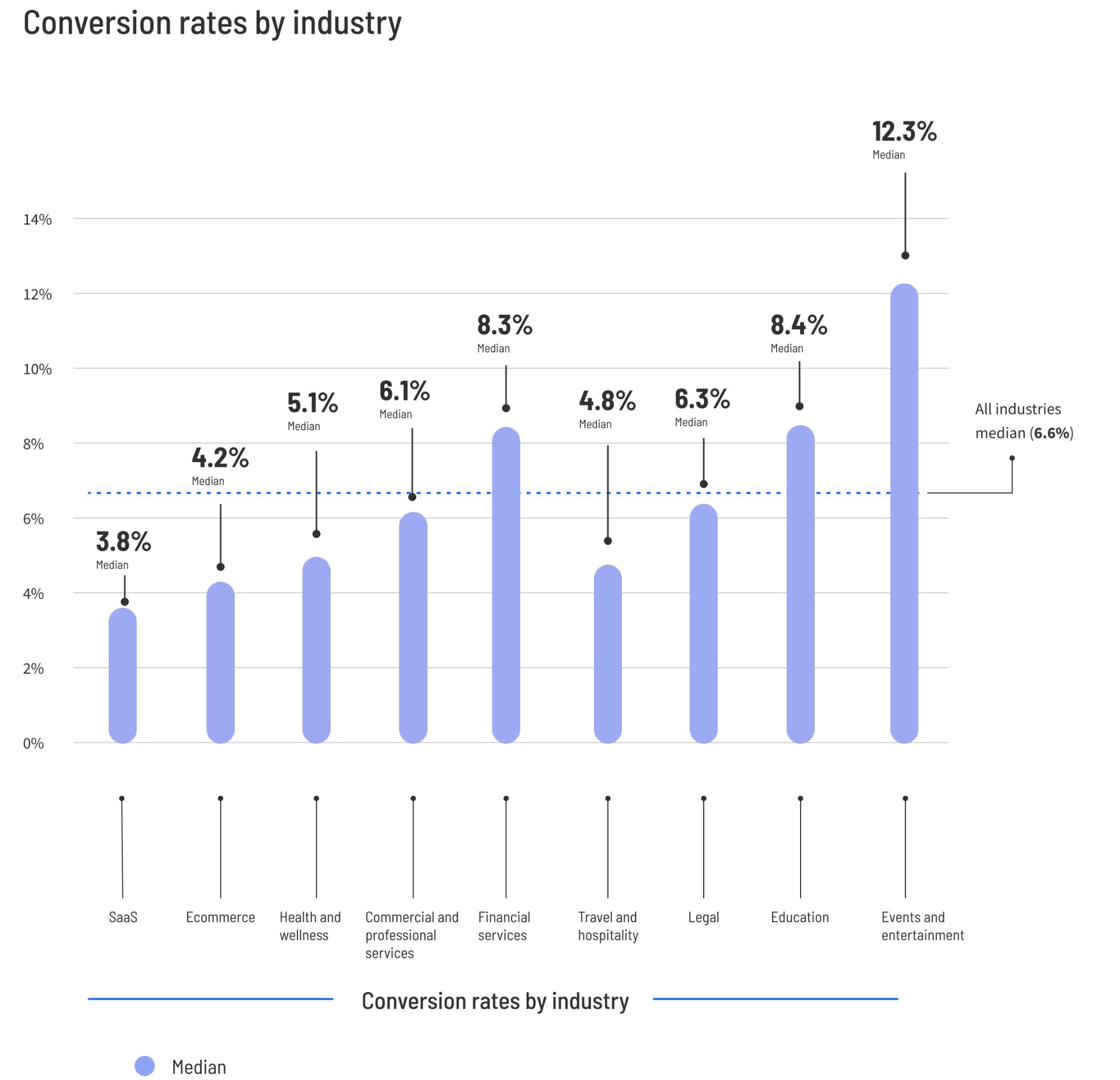
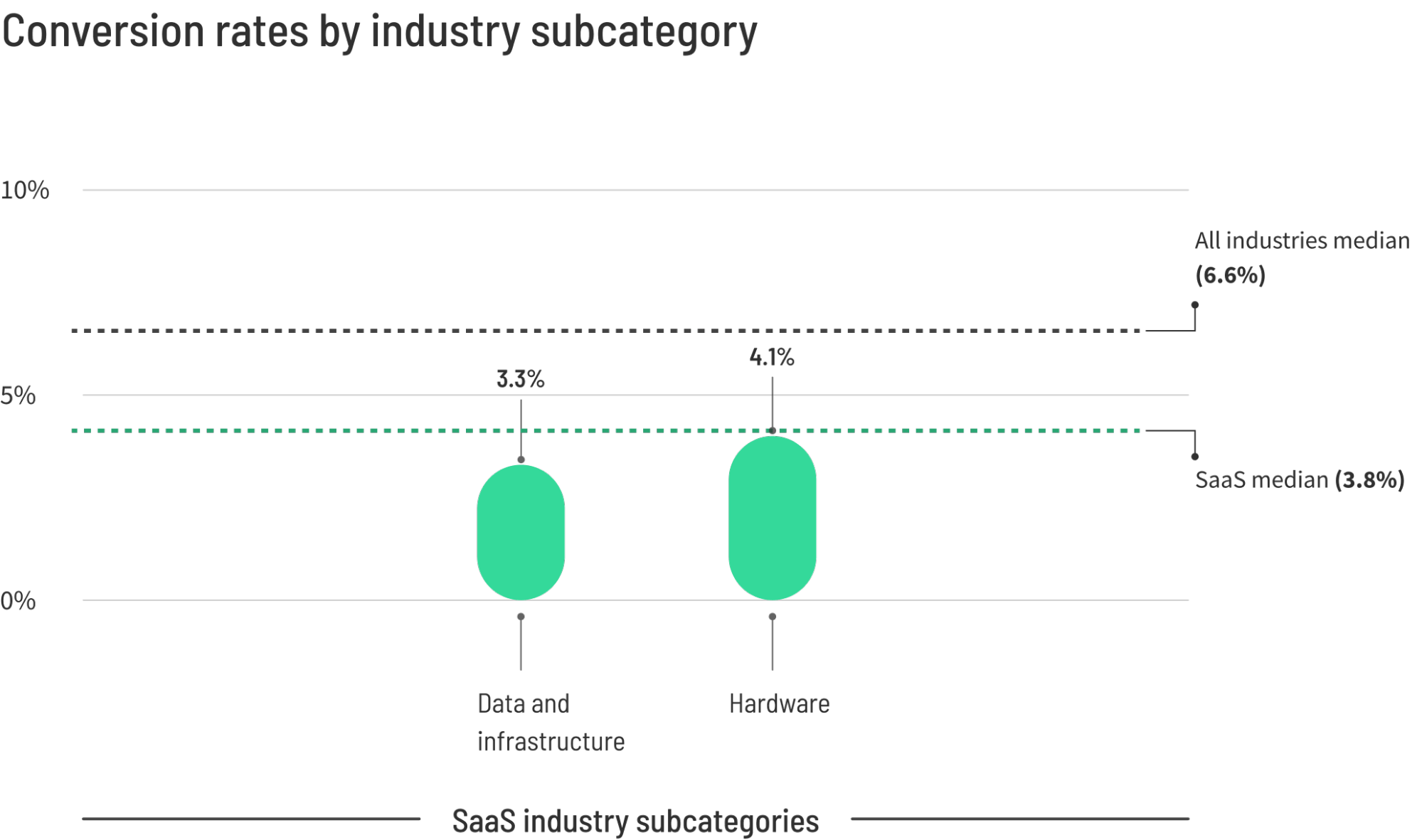
The SaaS sector continues to face the steepest uphill battle, with a median conversion rate of 3.8 percent. This is notably lower than the all-industry average, a reflection of the high-consideration nature of software purchases. SaaS landing pages often require users to understand complex value propositions or commit to long-term subscriptions. Within this sector, a "good" conversion rate is considered 11.6 percent or higher. Interestingly, infrastructure and data-heavy solutions see lower engagement (3.3 percent) compared to hardware-integrated SaaS (4.1 percent), suggesting that tangible product connections still resonate more effectively with digital buyers.
Ecommerce and Retail
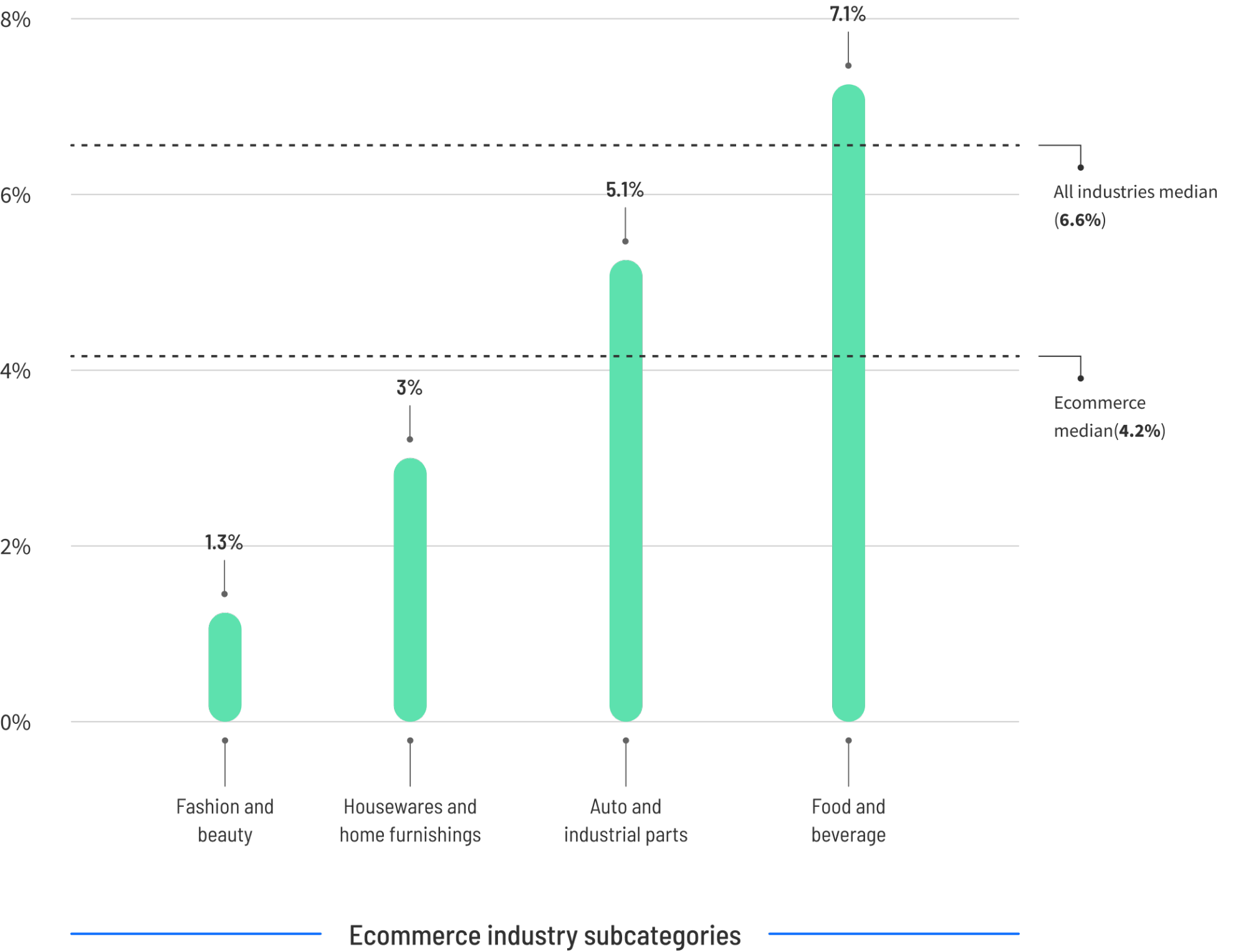
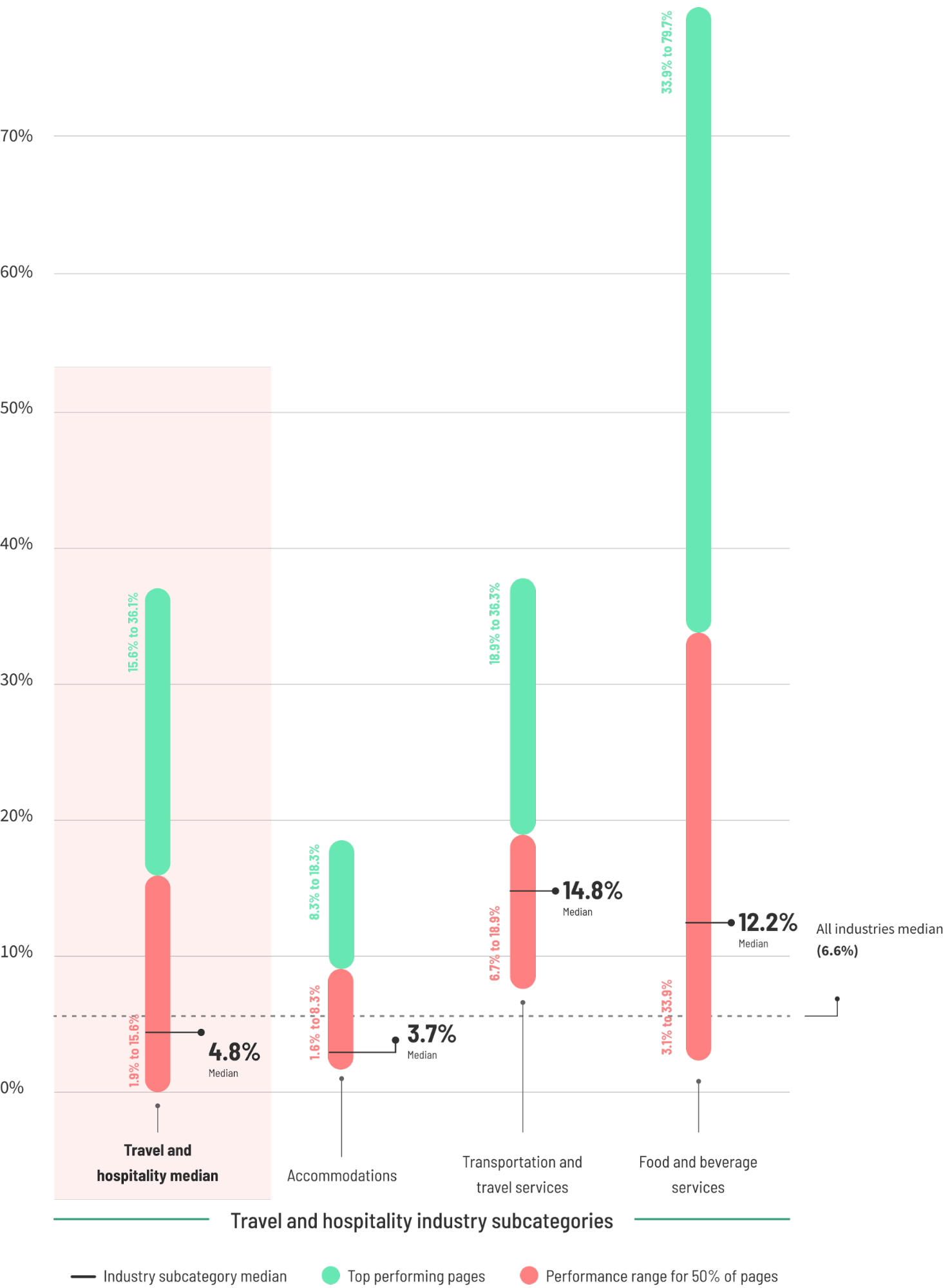
Ecommerce landing pages maintain a median conversion rate of 4.2 percent. While this may seem modest, the volume of traffic in this sector means that even incremental gains result in massive revenue shifts. For a store with an average order value of $75, moving from the median to the "good" threshold of 11.4 percent can generate tens of thousands of dollars in additional monthly revenue. The report notes a sharp divide within the sector: food and beverage pages lead with a 7.1 percent median, while fashion and beauty struggle at 1.3 percent, likely due to the high rate of comparison shopping in the apparel industry.
Professional and Financial Services
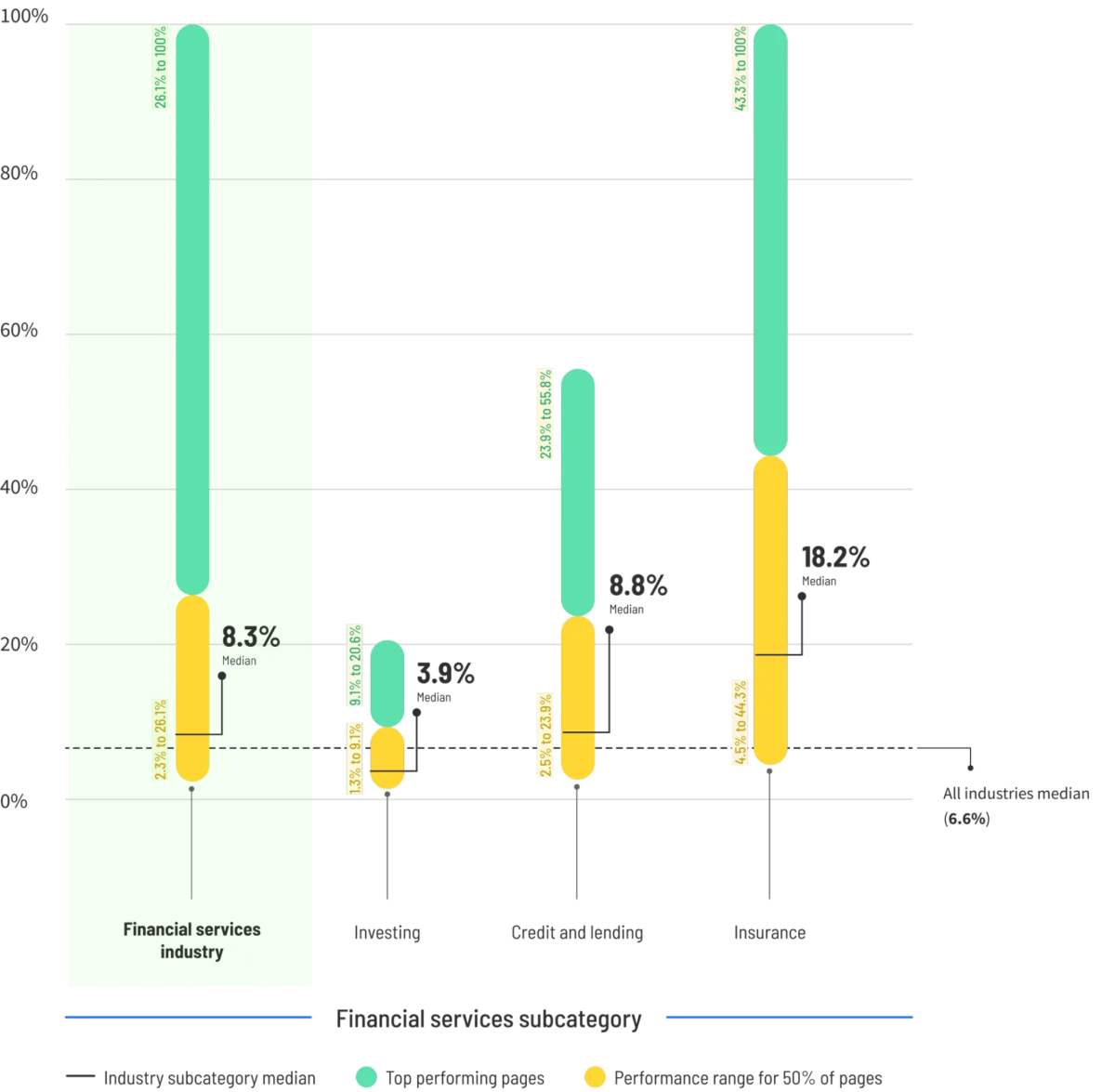
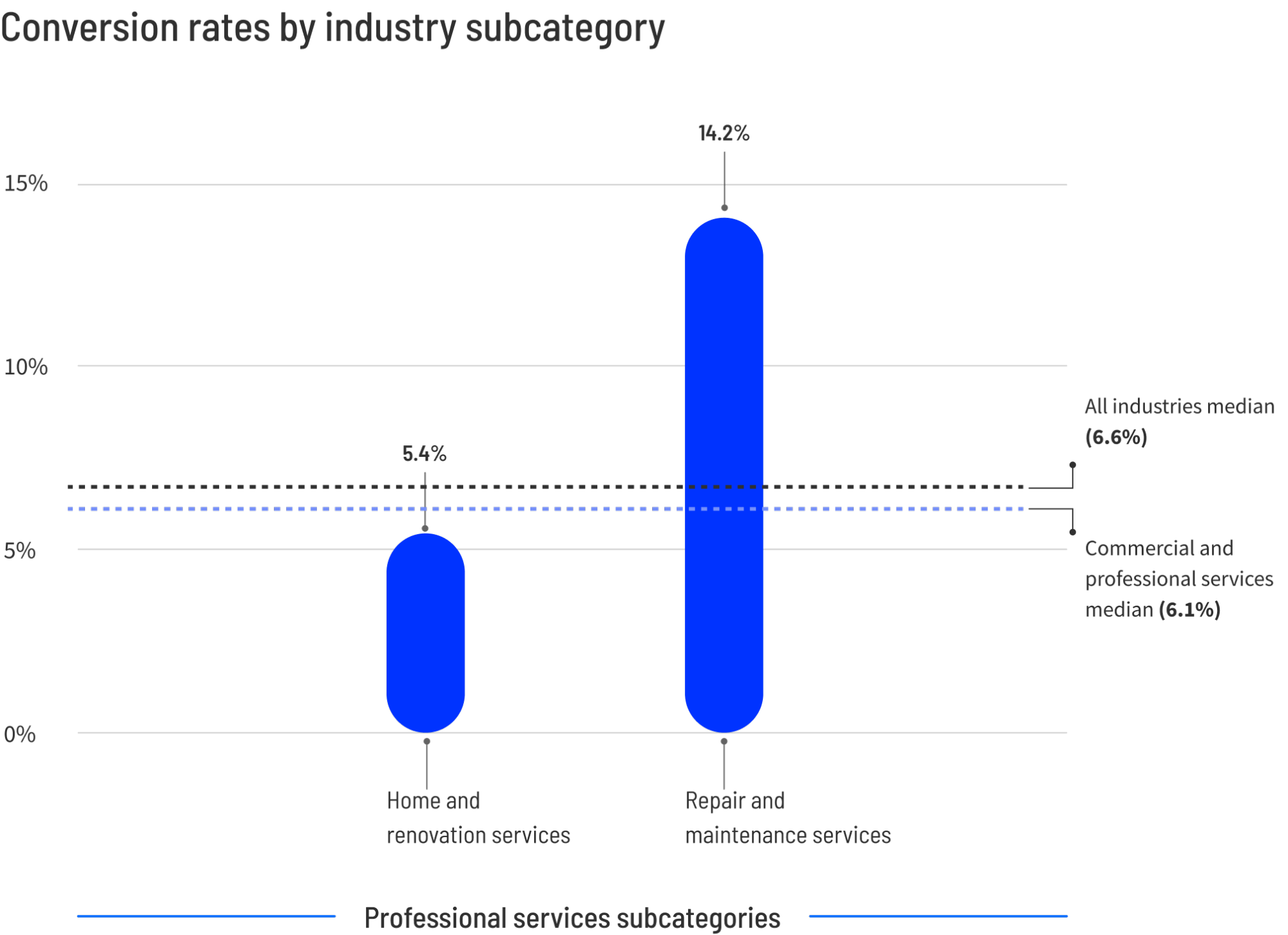
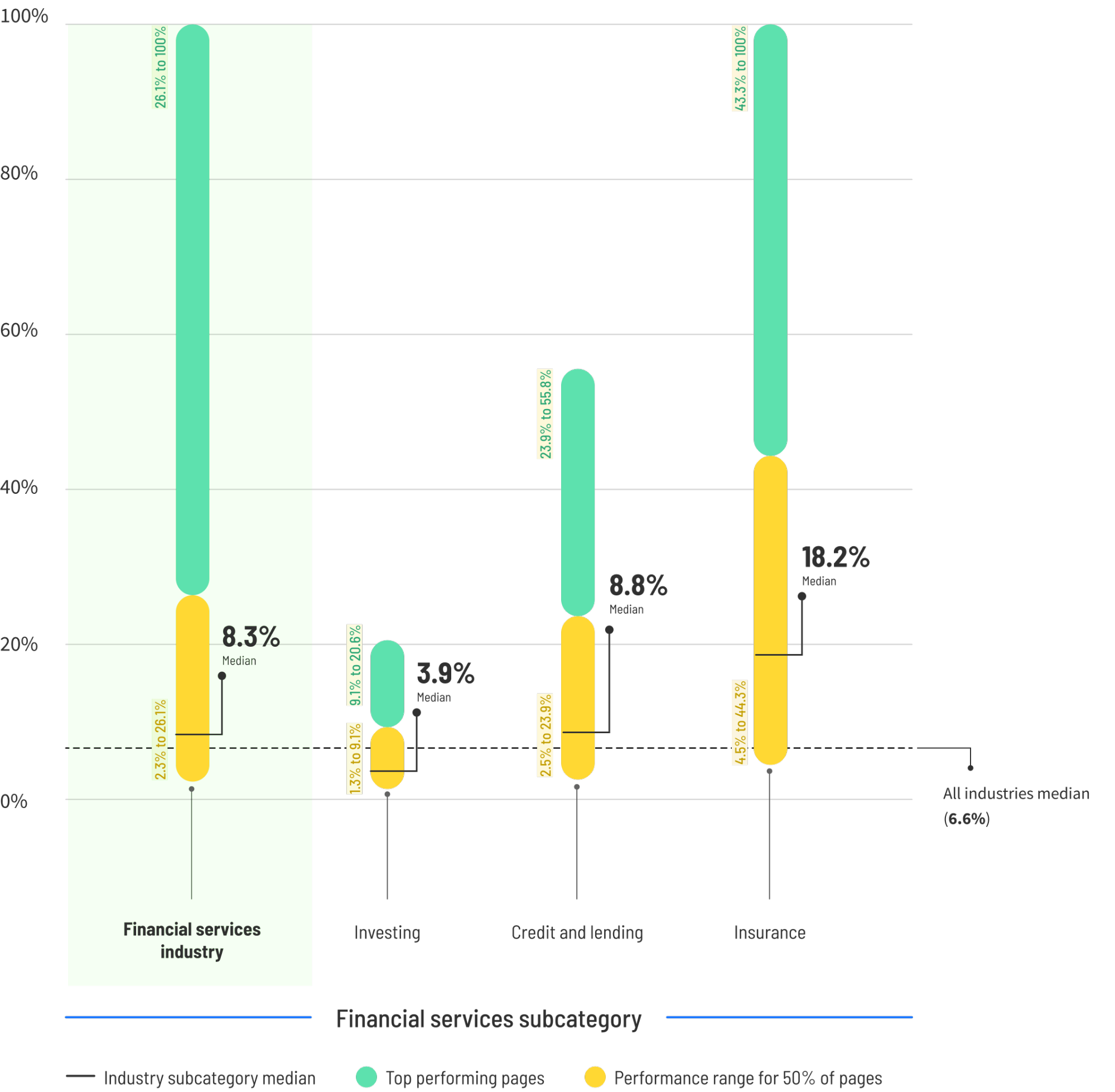
Professional services, encompassing consulting and agencies, show a robust median of 6.1 percent, with top performers hitting 14.1 percent. Financial services outperform many sectors with a median of 8.3 percent. This high performance is attributed to "high-intent" searches; consumers looking for insurance or investment advice are typically further along in the decision-making funnel than those browsing for leisure. Insurance specifically leads the subcategories at 18.2 percent, more than double the industry median.
Legal and Education
The legal industry presents a unique case study in urgency-driven conversion. With a median of 6.3 percent, legal pages see a significant boost on mobile devices, where conversion rates reach 21 percent compared to 15.9 percent on desktop. This suggests that users in legal distress—searching for "lawyer near me" after an accident or incident—prioritize immediate contact over long-form research.
Education marketers are currently "crushing it," according to the report’s analysis. The sector boasts a 13.1 percent median, driven largely by online courses which see an 18.3 percent median conversion rate. These pages succeed by selling "transformation" and career advancement rather than just credit hours.
The Mobile-Desktop Paradox and Traffic Channel Efficacy
A critical finding in the 2024 report is the disconnect between traffic volume and conversion efficiency on mobile devices. Currently, mobile accounts for a staggering 83 percent of all landing page visits. However, across most industries, mobile conversion rates continue to lag behind desktop.
The exceptions to this rule—Legal and Financial Services—provide a blueprint for mobile success: they prioritize "click-to-call" buttons and simplified forms. For most other industries, the data suggests that while the "discovery" phase happens on a smartphone, the "transaction" phase still favors the stability and screen real estate of a desktop computer.
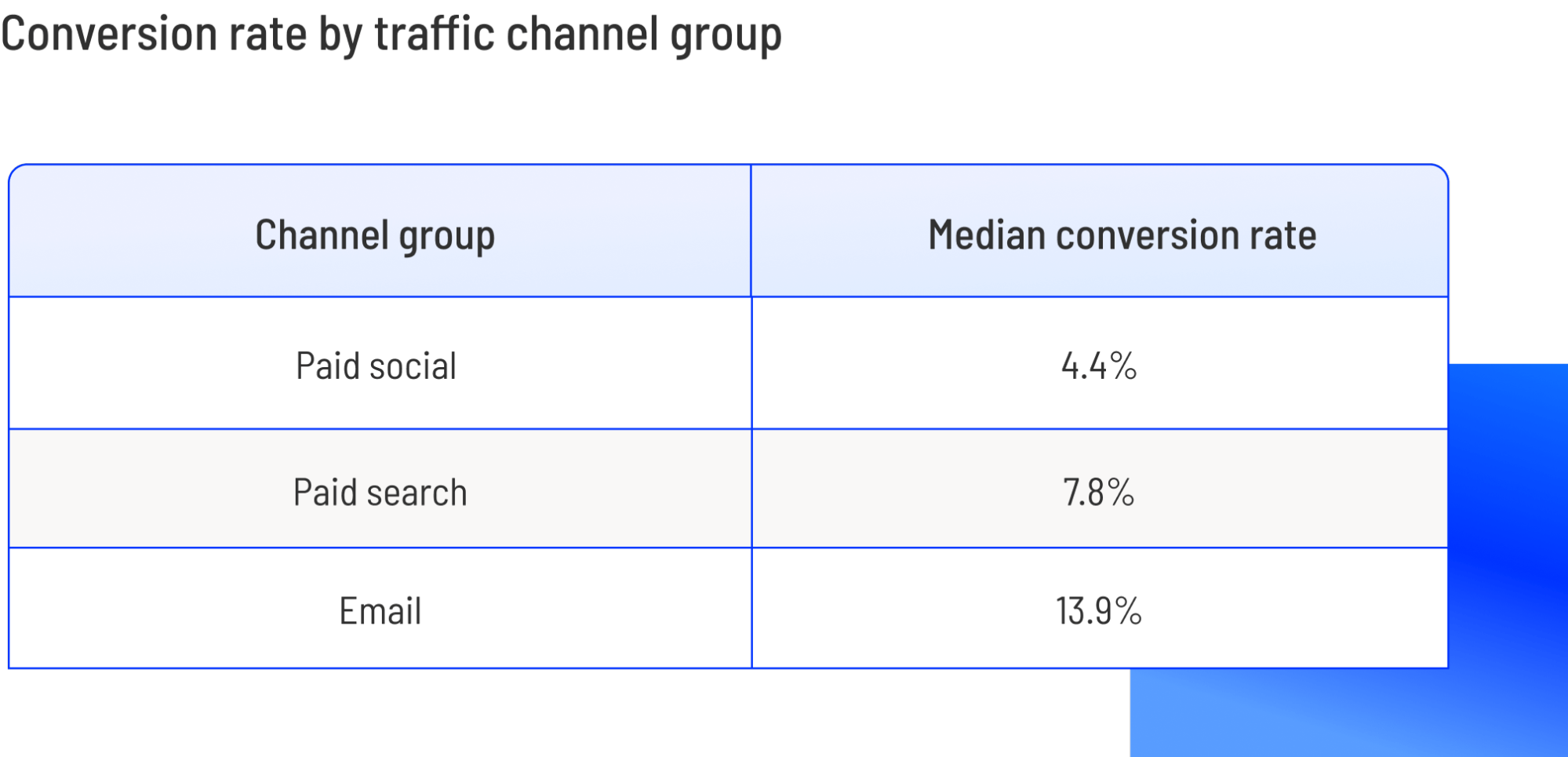
Furthermore, the source of traffic remains a primary predictor of success. Email marketing continues to be the highest-converting channel for professional services and education, often doubling the conversion rates of paid search. Paid social traffic, while effective for brand awareness, generally shows the lowest conversion intent across the board.
Strategic Chronology: The Evolution of Conversion Standards
The shift toward these 2024 benchmarks reflects a multi-year evolution in digital consumer behavior.
- 2020-2022: The pandemic era saw a surge in digital adoption, leading to inflated conversion rates as consumers had fewer offline alternatives.
- 2023: A "correction" year where privacy changes (such as Apple’s iOS updates) and the rise of AI-generated content began to saturate the market, making it harder to capture genuine attention.
- 2024: The current era is defined by "Cognitive Ease." As consumers become more tech-savvy and time-poor, the complexity of a landing page has become its greatest liability.
Expert Analysis: The "Fifth-Grade" Rule and Cognitive Load
Josh Gallant, founder of Backstage SEO and a primary contributor to the research, emphasizes that the most successful pages in 2024 share a common trait: radical simplicity. The data indicates that landing pages written at a 5th to 7th-grade reading level convert at 11.1 percent—56 percent better than those written at an 8th or 9th-grade level.
"Conversion optimization isn’t about flashier design," the report suggests. "It’s about removing the friction between a visitor’s problem and your solution." This analysis points to a growing trend where "professional" jargon is being replaced by conversational, direct language to lower the "cognitive load" on the visitor.
Broader Impact and Future Implications
The implications of these benchmarks extend beyond simple marketing metrics. They signal a broader shift in how digital business is conducted. Companies that fail to reach the 6.6 percent median are essentially paying a "complexity tax"—spending more on acquisition while losing prospects to friction and confusion.
To bridge the gap between average and excellent, the report identifies five immediate levers for 2024:
- Language Simplification: Moving away from corporate-speak toward 5th-grade readability.
- Strategic Social Proof: Placing testimonials and trust signals near the CTA, rather than in the footer.
- Mobile Refinement: Optimizing for the 83 percent of visitors who are on handheld devices.
- Distraction Elimination: Removing navigation menus that lead users away from the primary goal.
- Aggressive A/B Testing: Using AI-driven tools to route traffic to the best-performing variants in real-time.
As the industry moves toward 2025, the gap between the "medians" and the "top-performers" is expected to widen. The integration of AI in landing page creation allows for unprecedented personalization, meaning those who stick to static, generic pages will likely see their conversion rates erode. The 2024 benchmarks serve as both a warning and a roadmap: the path to growth lies not in higher traffic, but in the systematic, data-backed optimization of the traffic a brand already possesses.


 Nila Kartika Wati