Neng Nana

As the calendar turns towards 2026, a comprehensive analysis of emerging trends and potential disruptions within the e-commerce landscape has been presented by industry experts. Bill D’Alessandro, a prominent figure in the e-commerce space, and his associate have released their joint forecast, outlining eleven key predictions that span the transformative impact of artificial intelligence, shifting global trade dynamics, and the evolving nature of online brands. This forward-looking report aims to equip businesses with a strategic roadmap to navigate the complexities and capitalize on the opportunities anticipated in the coming year.
The stakes for these predictions have been heightened, with the authors adopting a novel approach to accountability. Unlike previous years where self-assessment was the norm, the 2026 predictions will be rigorously evaluated by advanced AI models, specifically Claude and Grok, at the close of the year. This impartial arbitration promises to definitively crown a winner, with the loser facing the lighthearted but significant consequence of buying the victor a steak dinner, complete with the ceremonial first bite, a testament to the competitive spirit driving these forecasts.
The Algorithmic Ascent: AI’s Dominance in Advertising and Content Creation
One of the most significant themes emerging from the predictions centers on the profound integration of artificial intelligence across various facets of e-commerce. The expectation is that AI will move beyond mere data analysis to become an almost prescient force in understanding consumer behavior and crafting targeted outreach.
AI-Powered Advertising: Beyond Precision to Telepathy
The forecast posits that platforms leveraging AI will offer an unprecedented level of advertising precision. Drawing parallels with Meta’s existing understanding of user interests, the report anticipates that AI will gain the capacity to infer deeply personal consumer insights. This could include everything from recognizing signs of personal stress or burnout, as indicated by search patterns, to understanding an individual’s financial anxieties and potential receptiveness to business divestment. The imminent launch of advertising capabilities by OpenAI is expected to be a watershed moment, enabling targeting that feels "telepathic," giving early adopters a substantial competitive advantage.
This prediction is supported by the rapid advancements in natural language processing and machine learning, which are enabling AI models to interpret complex human emotions and intentions from vast datasets. Companies that can effectively integrate these AI-driven insights into their advertising strategies are likely to see a significant boost in conversion rates and customer engagement.

Automated Content Creation: Democratizing Production Quality
The automation of content creation, particularly in video and audio editing, is another area where AI is expected to make significant strides. The prediction suggests that by the end of 2026, AI tools will be capable of producing polished video and audio edits with a quality rating of "7 out of 10." This advancement will empower smaller businesses and individual entrepreneurs, often referred to as "scrappy founders," to generate professional-grade content that previously required the resources of a dedicated production team. Tools like Descript are already demonstrating this capability, hinting at a future where raw footage can be transformed into compelling narratives with minimal human intervention.
This trend has the potential to level the playing field, allowing smaller players to compete more effectively with larger corporations in terms of content marketing and brand storytelling. The reduced barrier to entry for high-quality content production could lead to an explosion of innovative and diverse e-commerce marketing campaigns.
Verified Human Content: Restoring Trust in a Digital Age
In parallel with the rise of AI-generated content, a counter-trend focused on authenticity and trust is also anticipated. The report predicts that major online platforms will begin testing "verified human" content badges. This initiative stems from the growing concern over the proliferation of AI-generated material, which, as observed on platforms like X (formerly Twitter), can make it difficult to discern genuine human expression from synthetic creations. The erosion of trust is a significant challenge for online communities and businesses, making the implementation of such verification systems a crucial step in rebuilding user confidence.
The introduction of these badges could significantly impact content moderation policies and user engagement strategies, encouraging creators to prioritize genuine human interaction and storytelling.
Global Trade and Economic Realities: Navigating Tariffs and Inflation
Beyond the technological advancements, the predictions also delve into the complex geopolitical and economic forces shaping the e-commerce landscape.

Tariffs on China: A Pragmatic Equilibrium?
Regarding trade relations with China, the forecast suggests that tariffs will likely stabilize within the 30-50% range. This projection is informed by the current economic climate, characterized by rising inflation and subdued economic growth. The report argues that in such an environment, a response from market forces, such as the bond market’s reaction to previous tariff escalations, could lead to a more measured approach. The potential for further economic downturn is seen as a disincentive for imposing overly aggressive trade measures.
This prediction implies a period of relative stability in trade policy, allowing businesses to better plan their supply chains and pricing strategies. However, the underlying tensions in global trade relations remain a significant factor to monitor.
The Enduring AI Bubble: Fundamentals Trump Hype
Countering prevailing sentiments, the analysis asserts that the "AI bubble" is unlikely to burst in 2026. The report draws a distinction between the current market conditions and the dot-com bubble of the early 2000s. While the NASDAQ’s forward Price-to-Earnings ratio is currently around 27x, it soared above 100x during the tech bubble. Furthermore, adjusted for inflation, current government spending on AI is approximately five times that of tech spending in 2000. These figures suggest that the current AI boom is underpinned by more robust fundamentals, indicating sustained growth rather than speculative overvaluation.
This perspective suggests that investments in AI technologies and companies are likely to remain a significant driver of economic activity and innovation for the foreseeable future.
The K-Shaped Economy: Divergent Fortunes for Consumers and Businesses
Bill D’Alessandro’s predictions introduce the concept of a "K-shaped economy" for 2026, a scenario where the fortunes of different economic segments diverge significantly. The forecast anticipates continued strong performance for big tech and major market players, potentially seeing gains of 20% or more. In stark contrast, the broader economy and the average consumer are expected to face ongoing struggles.

For e-commerce businesses, this dichotomy presents a strategic challenge. The recommendation is to either target affluent consumers by moving "up-market" or focus on essential goods with competitive pricing to capture the "down-market." The "middle ground" is identified as a particularly precarious position for businesses. This prediction highlights the growing wealth inequality and its direct impact on consumer spending patterns, requiring businesses to adopt highly differentiated strategies to succeed.
Persistent Inflation: A Long-Term Economic Reality
Echoing concerns about economic stability, the prediction is made that inflation will remain above 3% in 2026. This is attributed to a perceived lack of political will to curtail government spending, leading to continued deficit spending, which is inherently inflationary. This forecast extends beyond the immediate year, suggesting that persistent inflation could be a defining characteristic of the economic landscape for the next decade. Businesses and investors are advised to position themselves accordingly, adapting their financial strategies and operational models to a sustained inflationary environment.
This long-term inflation outlook has significant implications for cost management, pricing strategies, and investment decisions within the e-commerce sector.
The Demise of the Lifestyle Brand: Consolidation and Specialization
A stark prediction is made regarding the future of lifestyle brands. Unless a business possesses strong intellectual property protection or ranks within the top 5-10% of brands in its niche, the forecast suggests that many e-commerce businesses with revenues in the single-digit millions are likely to face significant challenges. Larger, AI-powered competitors are expected to outspend, out-test, and tolerate higher customer acquisition costs, making it increasingly difficult for smaller, undifferentiated lifestyle brands to survive.
This prediction points towards a consolidation within the e-commerce market, favoring businesses with strong competitive moats, unique value propositions, or significant technological advantages.
Mergers and Acquisitions: A Tale of Two Markets
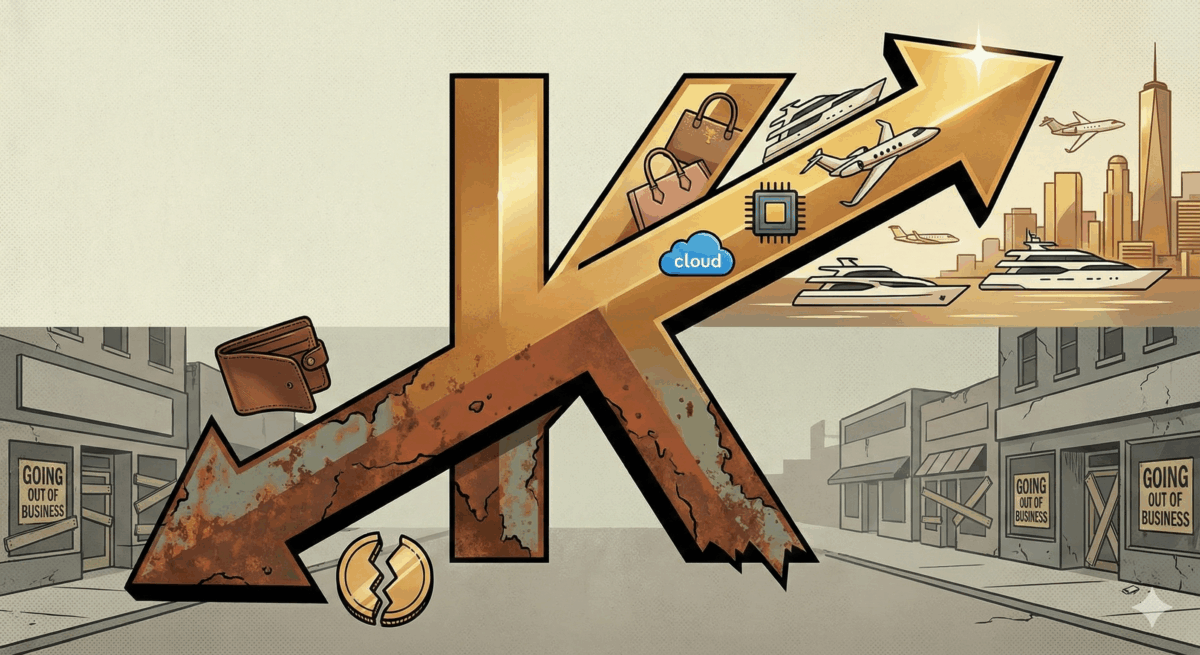
The M&A landscape is also expected to reflect the widening economic divide. The report anticipates a robust market for high-end deals, with transactions exceeding $1 billion showing a 19% year-over-year increase. Conversely, the small and mid-size M&A market is projected to be anemic, with deals in this range dropping by 18%. This trend suggests that while top-tier e-commerce businesses will continue to attract significant investment and command high valuations, smaller brands will struggle to find buyers or achieve favorable transaction terms.
This divergence in M&A activity underscores the increasing premium placed on scale, market leadership, and technological innovation in the e-commerce sector.
Bitcoin’s Trajectory: Volatility and Inflationary Hedge
In the realm of digital assets, Bitcoin is predicted to experience a dip below $70,000 in the first half of 2026, only to rebound and finish the year above $100,000. This forecast is based on competing pressures. A struggling consumer economy is expected to exert downward pressure on Bitcoin as a risk asset. However, persistent inflation is seen as a bullish factor, positioning Bitcoin as a potential "digital gold" or hedge against currency devaluation. The initial dip is attributed to market volatility and consumer sentiment, followed by a recovery as the inflationary narrative gains prominence.
This prediction highlights the complex interplay of macroeconomic factors and investor sentiment in shaping the cryptocurrency market.
Looking Ahead: The Value of Community in a Rapidly Evolving Landscape
While these predictions offer a compelling glimpse into the potential future of e-commerce, the authors emphasize that staying ahead of the curve requires more than just foresight. They advocate for active participation in dynamic communities of experienced e-commerce entrepreneurs. By engaging with a "brain trust" of thousands of seven and eight-figure store owners, businesses can gain real-time insights into what strategies are proving effective, which are faltering, and how to best anticipate future shifts. The eComFuel community is presented as such a platform, offering a space for collaborative learning and strategic adaptation in the face of an ever-evolving digital marketplace. This highlights the enduring importance of human connection, shared experience, and collective intelligence in navigating the complexities of modern commerce.


 Ammar Sabilarrohman
 Laily UPN