Jia Lissa

The digital landscape has reached a significant inflection point as automated traffic officially surpasses human activity on the open web, fundamentally challenging the reliability of modern data analytics. For years, the "Dead Internet Theory"—the proposition that the majority of internet activity and content is generated by automated systems rather than humans—was relegated to the fringes of online discourse. However, recent data from global infrastructure providers and cybersecurity firms indicates that this theory has transitioned from a speculative conspiracy into a measurable statistical reality.

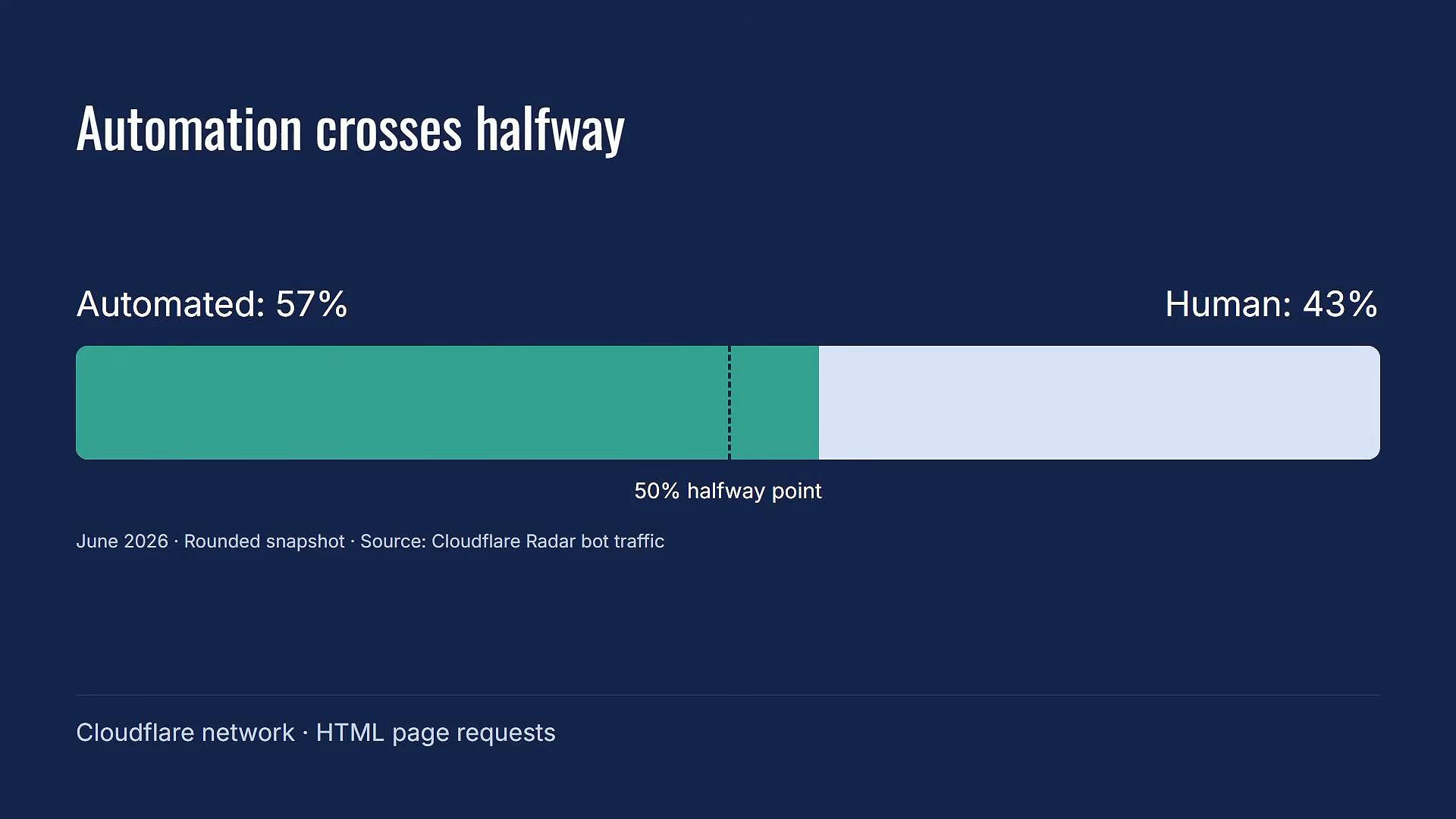
According to the latest findings from Cloudflare, a leading web performance and security company, automated traffic now accounts for approximately 57% of all HTML page requests across its global network. This marks the first time that bot-driven activity has definitively outweighed human interaction, which now sits at 43%. This shift presents a critical challenge for businesses relying on Google Analytics 4 (GA4) to drive marketing decisions, as a new generation of sophisticated AI agents is increasingly bypassing standard filtration systems, leading to a massive inflation of web session counts and a subsequent dilution of conversion metrics.
The Chronology of a Digital Shift
The concept of a "dead" internet first gained mainstream attention in 2021 following a viral forum post that claimed the internet died around 2016 or 2017. The argument suggested that the organic, human-centric web had been replaced by an artificial environment curated by algorithms and populated by bots. While initially dismissed by most technologists, the theory gained a degree of credibility later that year when major publications, including The Atlantic, explored the psychological and technical roots of why the internet "felt" increasingly automated.
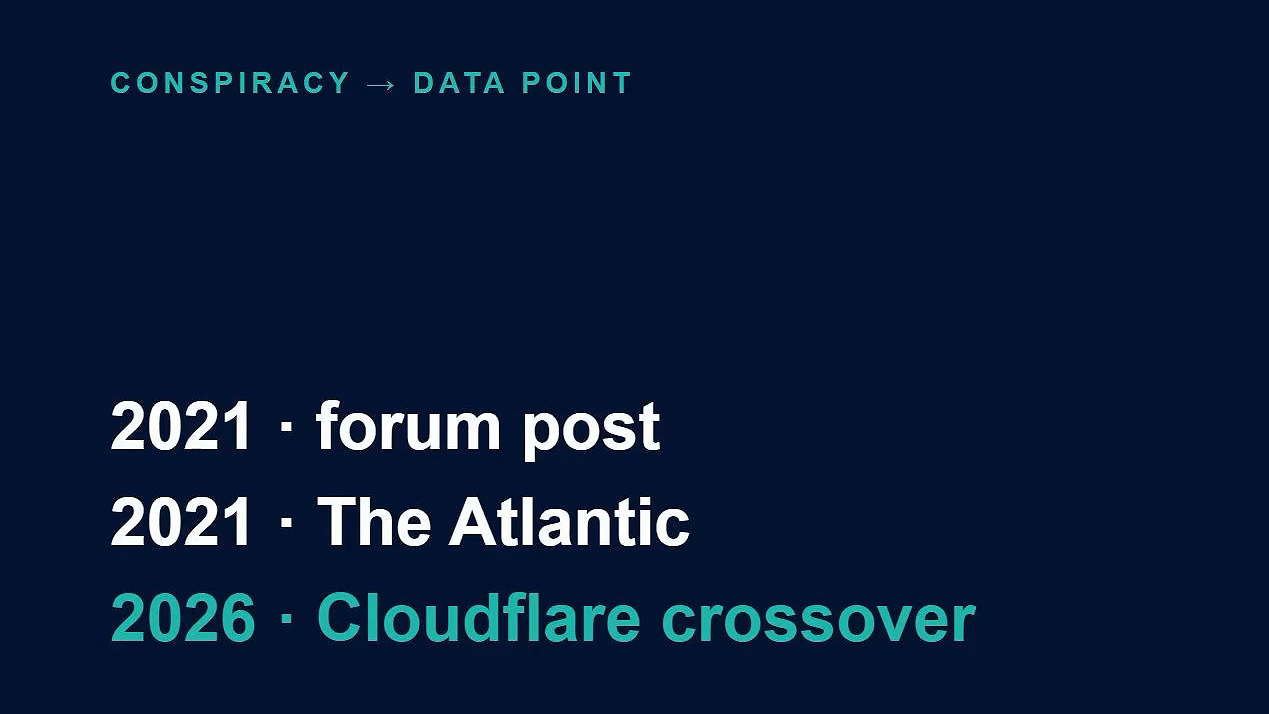
Between 2021 and 2024, the proliferation of generative AI and Large Language Models (LLMs) accelerated the production of automated content and the deployment of autonomous browsing agents. By 2025, security firms observed a sharp uptick in "sophisticated" bots—software that mimics human behavior such as irregular scrolling, variable clicking patterns, and non-linear page navigation. By the summer of 2026, Cloudflare’s real-time traffic monitors confirmed the "crossover" event, where human traffic became the minority. This timeline illustrates a rapid transition from a human-dominated digital space to one where autonomous software is the primary consumer and producer of web data.
The Technical Gap: Why GA4 Fails to Filter AI Agents
The core of the current analytics crisis lies in how Google Analytics 4 (GA4) identifies and excludes non-human traffic. Traditionally, web analytics platforms have relied on a "known-bot" list, primarily maintained by the Interactive Advertising Bureau (IAB). This list includes search engine crawlers, known scrapers, and security spiders that identify themselves via their "User-Agent" strings.
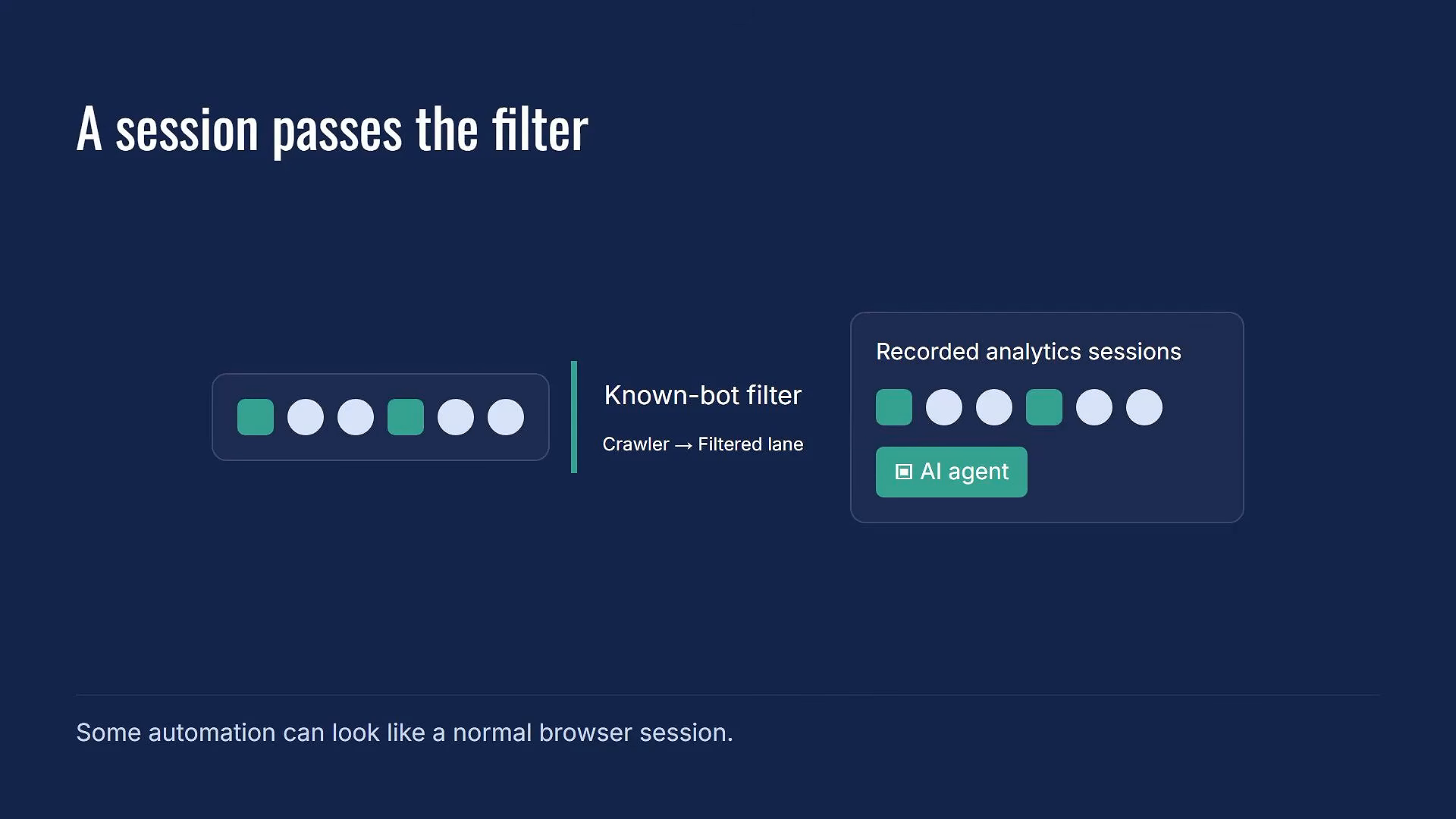
However, modern AI agents represent a third layer of traffic that current filters are not equipped to handle. To understand the current reporting inaccuracies, one must distinguish between the three primary layers of web traffic currently hitting servers:
Layer 1: Classic Bots and Crawlers
These are the traditional spiders used by Google, Bing, and SEO tools like Ahrefs. Because they are transparent about their identity, GA4 filters them automatically. They do not typically appear in standard reporting views, and their impact on conversion rate calculations is negligible.
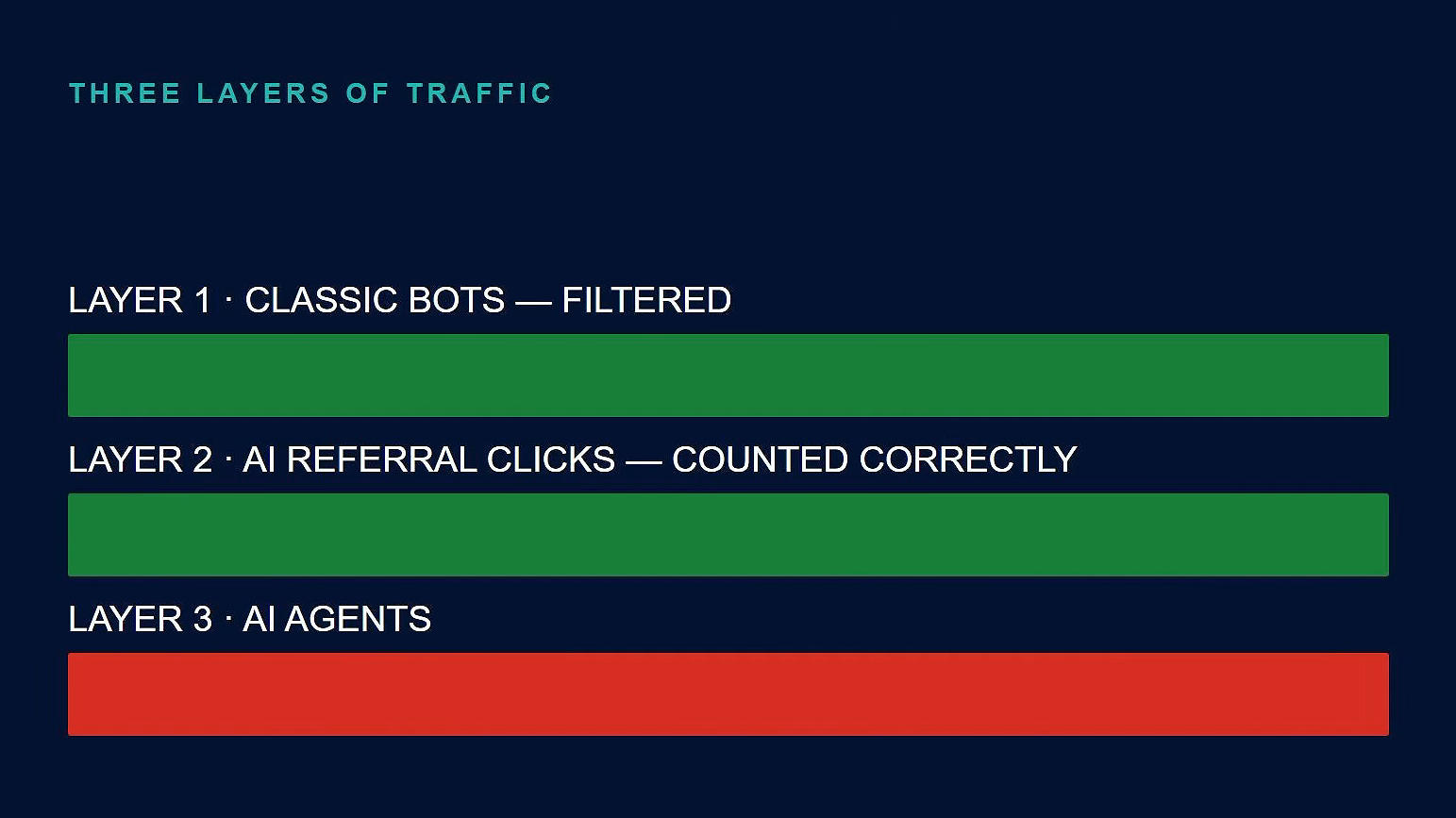
Layer 2: AI Referral Clicks
In mid-2026, Google introduced the "AI Assistant" channel grouping in GA4. This category tracks human users who interact with an AI tool (such as ChatGPT, Claude, or Perplexity) and then click a link to visit a website. These are legitimate human sessions where the AI acts as a referrer, similar to a search engine or social media platform. GA4 handles this layer effectively by labeling the traffic source accurately.
Layer 3: Autonomous AI Agents
This is the most problematic layer. Unlike classic bots, autonomous AI agents perform tasks—such as price monitoring, content aggregation, or data synthesis—by running within a standard browser environment, such as a headless Chrome instance. They do not click through from an AI interface; they navigate the site directly. Because they use modern browser configurations and human-like timing, they do not trigger GA4’s built-in bot filters. From the perspective of the analytics server, these sessions are indistinguishable from human visitors.
Supporting Data: The Magnitude of Metric Distortion
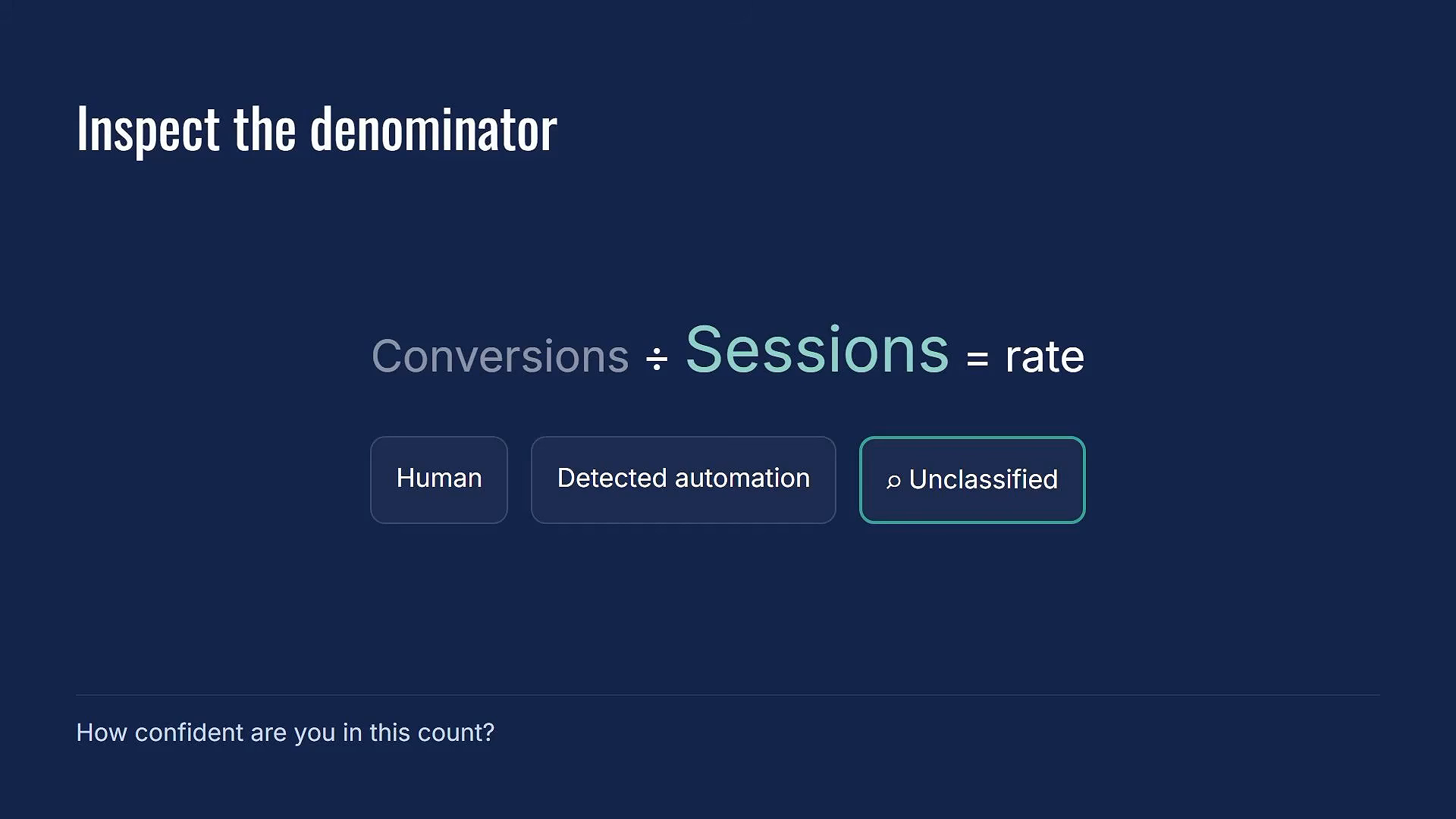
The impact of unfiltered automated traffic is most visible in the "denominator problem." Most key performance indicators (KPIs) in digital marketing are ratios where the total number of sessions serves as the base. When the session count is artificially inflated by AI agents, every subsequent rate metric is suppressed.
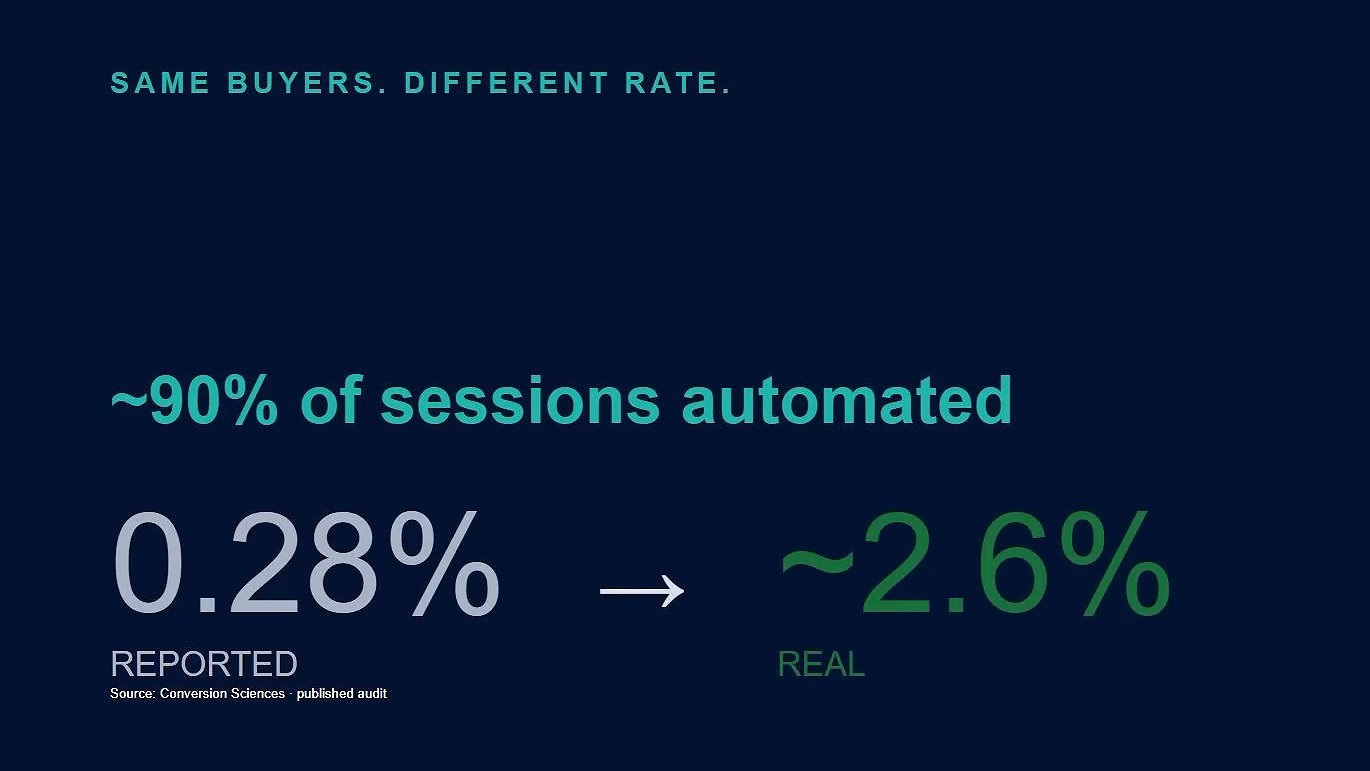
A recent audit conducted by the consultancy firm Conversion Sciences highlighted the severity of this distortion. In a study of a specialty e-commerce site, researchers found that approximately 90% of the recorded sessions were automated. The site’s reported conversion rate was a dismal 0.28%. However, after isolating and removing the automated traffic from the denominator, the actual human conversion rate was revealed to be 2.6%. The business was not suffering from a "leaky" sales funnel or a poor offer; it was suffering from an analytics reporting error.
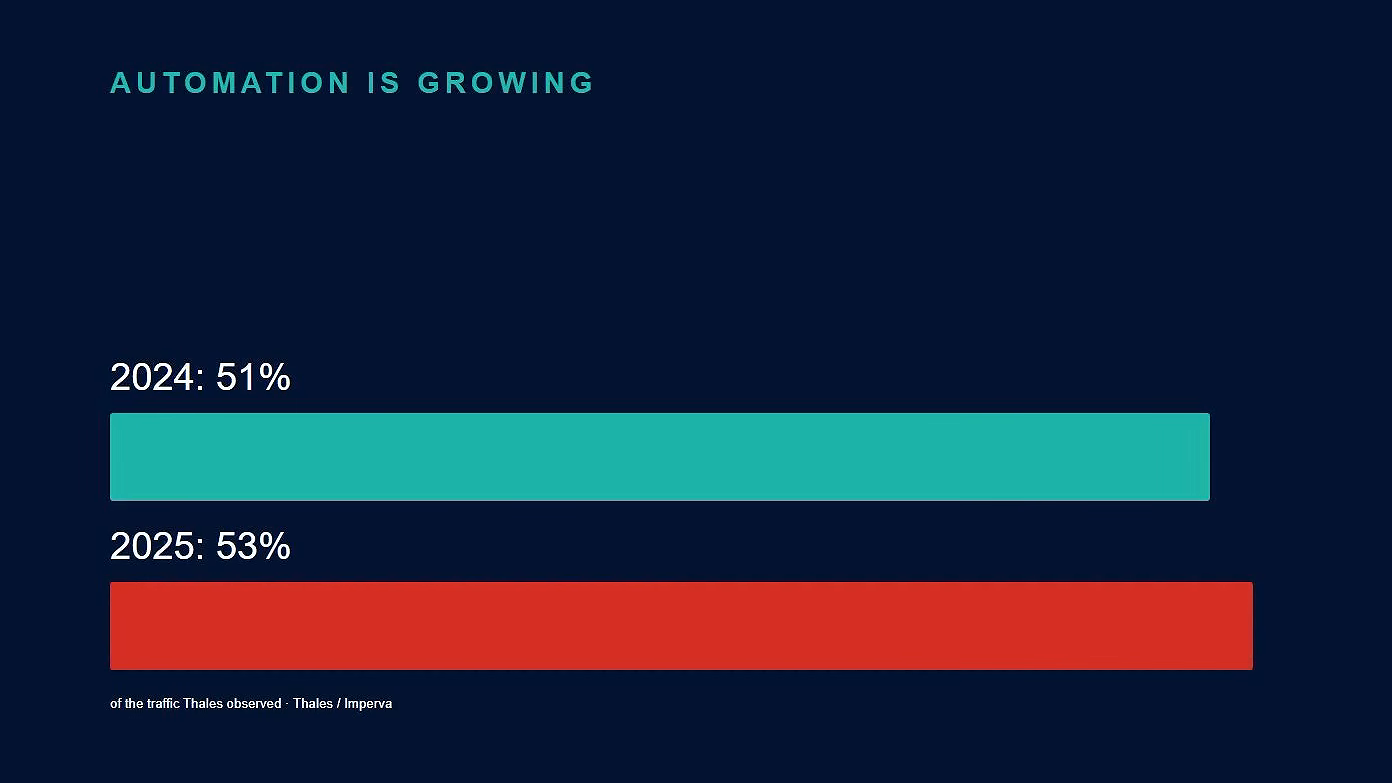
This data is supported by the 2026 Bad Bot Report from Thales Group, which observed that the share of automated traffic has grown consistently year-over-year. Thales reported that automated traffic rose from 51% in 2024 to 53% in 2025, before crossing the Cloudflare-confirmed 57% threshold in 2026. Furthermore, Cloudflare analysts have projected that within the next five years, automated traffic could reach a volume 1,000 times greater than human traffic, driven by the mass adoption of personal AI assistants and autonomous procurement agents.
Industry Reactions and Official Responses
The shift toward a bot-heavy internet has drawn concern from both cybersecurity experts and marketing executives. Security professionals argue that the focus must move away from simple IP blocking and toward behavioral biometrics. "We are seeing a move from ‘what’ the visitor is to ‘how’ the visitor behaves," stated a senior analyst at Thales Group. "If a session navigates a 10-page site in under two seconds while perfectly parsing every HTML element, it is irrelevant what the User-Agent says; it is an automated agent."
Within the marketing sphere, the reaction has been one of increasing skepticism toward standard reporting. Chief Marketing Officers (CMOs) are increasingly questioning the validity of "cost-per-session" metrics, as the likelihood of those sessions being human continues to drop. While Google has made strides with the AI Assistant channel grouping, the company has remained relatively quiet regarding a comprehensive solution for autonomous AI agents that do not self-identify. The prevailing sentiment among data analysts is that the responsibility for data hygiene is shifting from the platform (Google) to the end-user (the analyst).
Broader Implications for the Digital Economy
The rise of the "Dead Internet" has implications that extend far beyond inaccurate spreadsheets. The distortion of conversion rates and engagement metrics leads to several cascading effects in the digital economy:
- Misallocation of Advertising Spend: Ad platforms use conversion data to optimize bidding strategies. If AI agents are inflating traffic on certain channels without ever converting, machine learning algorithms may mistakenly de-prioritize those channels or, conversely, over-optimize for "low-quality" traffic that mimics human behavior but lacks purchasing intent.
- False Negatives in A/B Testing: Product teams frequently rely on conversion rate lift to determine the success of new features. In an environment where 50% or more of the traffic is automated and non-converting, the "noise" created by bots can drown out the "signal" of human preference, leading companies to reject beneficial changes.
- Infrastructure Costs: Serving HTML pages to bots costs money in server bandwidth and compute power. As automated traffic scales toward the 1,000x human traffic projection, the cost of maintaining a public-facing website could increase significantly, potentially leading to more aggressive paywalls or "human-only" authentication gateways.
- The Erosion of Content Value: If AI agents are the primary consumers of web content, the incentive to create high-quality, human-centric material may diminish, replaced by content optimized for machine consumption—a feedback loop that further validates the Dead Internet Theory.
Strategic Recommendations for Data Integrity
To maintain accurate reporting in this new era, analysts are encouraged to move beyond the default settings of GA4. Recommended steps for preserving data integrity include:
- Audit the Denominator: Organizations should regularly compare their session trends against internal sales data. If sessions are rising while conversions remain flat, it is a primary indicator of automated traffic infiltration.
- Implement Behavioral Labeling: Advanced analysts are now using custom scripts to detect non-human signals—such as the absence of device orientation data or impossible mouse movements—and sending this information to GA4 as a custom dimension. This allows for the creation of "Human-Only" reporting views.
- Monitor Unidentified Referrers: A surge in direct traffic or traffic with no clear referrer that does not correlate with marketing campaigns often signals a spike in autonomous agent activity.
In conclusion, the crossover of automated traffic into the majority is a transformative event for the internet. While GA4 remains a powerful tool, its standard filters are no longer sufficient to guarantee data accuracy in an age of autonomous AI. Businesses that fail to account for the "Dead Internet" reality risk making critical strategic decisions based on a denominator that no longer represents human behavior. The future of analytics will depend not on tracking every hit, but on the sophisticated verification of the humanity behind the session.


 Nana
 Nana Wu