Sagoh

The global affiliate marketing industry has undergone a radical metamorphosis over the past ten years, transitioning from a manual, often misunderstood marketing niche into a sophisticated, multi-billion-dollar pillar of the digital economy. Once characterized by basic banner ads and simple referral links, the sector is now a high-tech ecosystem driven by artificial intelligence, complex data analytics, and a diverse array of content creators. This evolution reflects broader shifts in consumer behavior, regulatory environments, and the rapid advancement of advertising technology. As businesses seek more measurable returns on investment, affiliate marketing—often referred to as performance marketing—has become a primary vehicle for scalable growth across e-commerce, travel, and financial services.
A Decade of Transformation: The Chronological Shift
To understand the current state of the industry, one must look at the timeline of its development. In the early 2010s, affiliate marketing was largely dominated by coupon sites, loyalty programs, and basic blog reviews. Tracking was rudimentary, often relying on simple cookies with long expiration windows, and the primary metric of success was the "last-click" attribution model.
By 2015, the rise of mobile commerce forced a shift in how tracking was handled. Cross-device attribution became a necessity as consumers began researching products on smartphones and completing purchases on desktops. This period also saw the initial integration of social media into the affiliate mix, as platforms like Instagram began to influence purchasing decisions, though formal "influencer" programs were still in their infancy.
The year 2018 marked a pivotal regulatory turning point with the implementation of the General Data Protection Regulation (GDPR) in the European Union. This, followed by the California Consumer Privacy Act (CCPA) and updates to Federal Trade Commission (FTC) guidelines in the United States, forced the industry to prioritize transparency. Affiliates were required to disclose paid relationships more clearly, and networks had to overhaul their data collection practices to ensure consumer privacy.
By 2020, the global pandemic acted as a catalyst for the industry. With physical retail restricted, brands poured resources into digital channels. Affiliate marketing proved to be one of the most resilient models, as advertisers only paid for successful conversions during a time of extreme economic uncertainty. Today, in 2024, the industry has fully embraced the "creator economy" and generative AI, moving toward a future defined by predictive modeling and hyper-personalized consumer journeys.
The Impact of Automation and Artificial Intelligence
The most significant driver of efficiency in the modern affiliate landscape is the integration of Automation and Artificial Intelligence (AI). A decade ago, the role of an affiliate manager involved hours of manual data entry, manual approval of partners, and the tedious task of scouring the web for fraudulent activity. Modern Software-as-a-Service (SaaS) platforms have automated these processes, allowing for real-time monitoring and management.
AI-powered fraud detection systems now analyze patterns in milliseconds to identify "cookie stuffing," click injection, and other forms of attribution fraud that once plagued the industry. Beyond security, AI is used for predictive analytics. Brands can now forecast which affiliates are likely to perform well during specific seasonal windows based on historical data.
Furthermore, the transition from "last-click" attribution to "predictive attribution" represents a monumental leap in strategy. Last-click models often unfairly rewarded coupon sites that a user visited at the very end of their journey, ignoring the content creators who actually introduced the user to the product. Predictive attribution uses machine learning to weigh every touchpoint in the consumer journey, providing a more equitable distribution of commissions and a clearer picture of how different marketing channels interact.
Diversification of Payout Models and Dynamic Commissions
The traditional Cost-Per-Acquisition (CPA) model remains the bedrock of affiliate marketing, but it has become significantly more nuanced. In the past, a flat percentage of the sale was the standard. Today, dynamic commission structures allow brands to be much more strategic. For instance, a fashion retailer might offer a higher commission for the sale of full-price items while offering a lower rate for clearance goods. Brands can also incentivize the acquisition of "new customers" over "returning customers" by offering tiered payouts.
In addition to refined CPA models, the industry has seen a resurgence in Cost-Per-Lead (CPL) and Cost-Per-Click (CPC) models, albeit with much stricter quality controls. These models are particularly prevalent in the B2B and financial sectors, where the path to purchase is longer and more complex. By paying for qualified leads rather than just final sales, brands can build a robust top-of-funnel pipeline. This flexibility allows companies to tailor their affiliate programs to specific business objectives, whether that is market penetration, inventory clearance, or brand awareness.
The Rise of the Influencer and the Creator Economy
Perhaps the most visible change in the last decade is the emergence of influencers and content creators as dominant forces in affiliate marketing. Traditional affiliates were often faceless entities—websites or aggregators. In contrast, today’s affiliates are often personalities with dedicated followings on TikTok, Instagram, and YouTube.
The shift is rooted in trust. Research indicates that modern consumers, particularly Gen Z and Millennials, are more likely to trust a recommendation from a creator they follow than a traditional celebrity endorsement or a corporate advertisement. This has led to the "professionalization" of the influencer. Creators now utilize sophisticated affiliate tools to track their own performance, optimizing their content based on what resonates with their audience.
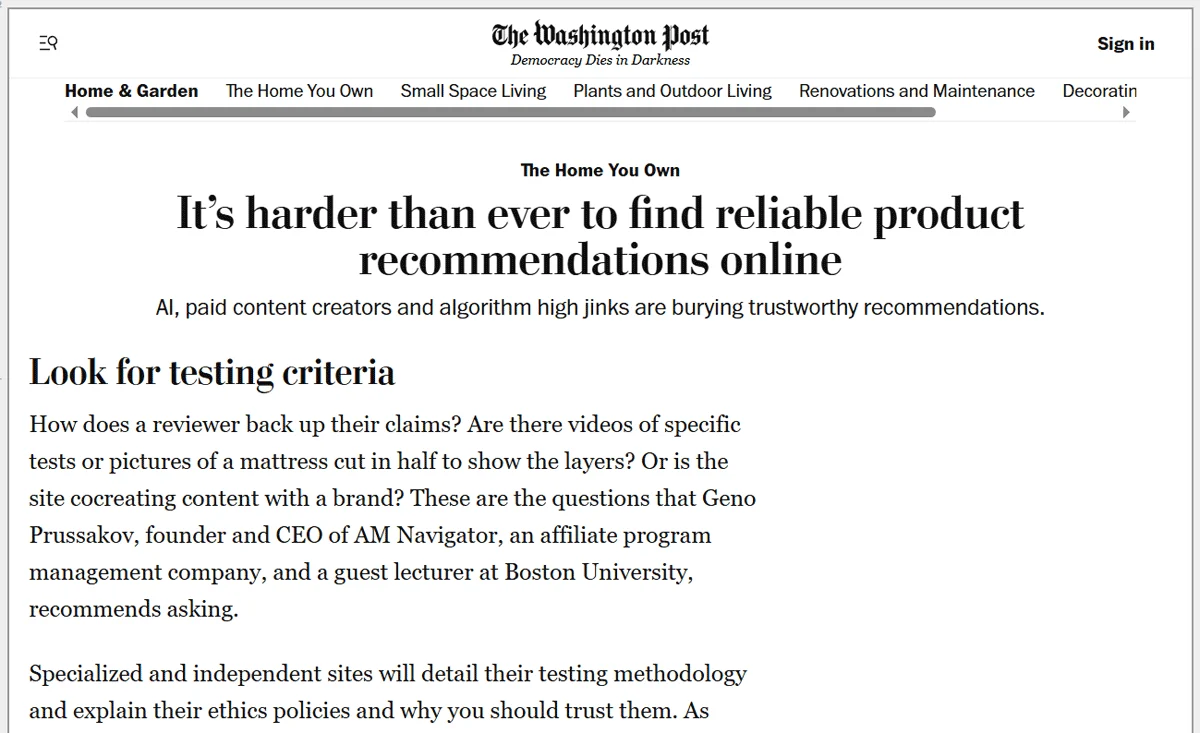
This trend has also birthed "commerce content" within major media houses. Large publishers like The New York Times (via Wirecutter) and Vox Media have integrated affiliate links into their editorial reviews. This blend of high-quality journalism and performance marketing has created a new revenue stream for the publishing industry, which had previously struggled with the decline of traditional display ad revenue.
Quality Over Quantity: A Strategic Realignment
In the early years of affiliate marketing, the prevailing philosophy was "the more, the better." Brands would recruit thousands of affiliates regardless of their relevance or the quality of their traffic. This often led to brand dilution and high rates of low-quality leads.
The modern approach is characterized by "quality over quantity." Brand safety has become a paramount concern. Companies now use AI and manual vetting to ensure that their affiliates align with their brand values and ethical standards. This shift has resulted in smaller, more potent affiliate programs where brands maintain close relationships with a core group of high-performing partners. By focusing on "super-affiliates" and niche experts, brands can ensure higher conversion rates and better long-term customer lifetime value (CLV).
Regulatory Oversight and Consumer Transparency
The maturation of the industry has been accompanied by a significant increase in regulatory oversight. The introduction of GDPR in 2018 set a new global standard for data privacy, requiring affiliate networks to be transparent about how they track users. Similarly, the FTC has stepped up enforcement of disclosure guidelines, requiring influencers and bloggers to clearly label affiliate links with terms like "#ad" or "Paid Partnership."
These regulations, while initially viewed as a hurdle, have ultimately benefited the industry by flushing out bad actors and building consumer confidence. Ethical affiliate marketing is now the standard, and brands that fail to comply face not only legal repercussions but also significant reputational damage. The industry’s move toward "first-party data" solutions—in response to the phasing out of third-party cookies by browsers like Safari and Chrome—further emphasizes the importance of direct, transparent relationships between brands, affiliates, and consumers.
The Convergence of Public Relations and Affiliate Marketing
A decade ago, Public Relations (PR) and affiliate marketing operated in separate silos. PR was focused on "earned media" and brand sentiment, while affiliate marketing was focused on "paid performance" and direct sales. Today, these two disciplines have converged.
PR agencies now frequently incorporate affiliate links into their pitches to journalists and editors. Many top-tier publications will no longer feature a product unless it is part of an affiliate network, as this allows the publication to monetize the traffic the article generates. This "PR-affiliate hybrid" model has become essential for product launches. It allows brands to gain the prestige of a media mention while providing the tracking and ROI data that modern marketing departments demand.
Future Implications and Industry Outlook
The trajectory of affiliate marketing suggests a future defined by even deeper technological integration. As generative AI becomes more prevalent, we can expect to see AI-driven content creation where affiliates use automated tools to produce personalized reviews and comparisons at scale. Additionally, the rise of "social commerce"—where the entire checkout process happens within a social media app—will further blur the lines between content and commerce.
Data from industry reports suggests that the affiliate marketing industry is expected to reach a valuation of over $20 billion by 2027. This growth will likely be driven by the continued expansion of e-commerce in emerging markets and the increasing adoption of performance-based models by traditional service industries.
In conclusion, the evolution of affiliate marketing over the last ten years represents a journey from the periphery of digital marketing to its very center. By embracing automation, prioritizing creator partnerships, and adhering to strict ethical standards, the industry has proven its ability to adapt to a rapidly changing digital landscape. For businesses, the message is clear: affiliate marketing is no longer a "set-it-and-forget-it" tactic, but a sophisticated strategic discipline that requires constant innovation and a commitment to quality. Those who navigate this evolved landscape with agility and data-driven insights will continue to find unparalleled opportunities for growth.


 Nana Wu