Raul Delapena Setiawan

The public relations and communications industry stands at a pivotal crossroads as artificial intelligence reshapes the landscape of brand reputation and information discovery. After twice failing to claim ownership of transformative shifts—first with Search Engine Optimization (SEO) and later with the values-driven corporate communications surge of 2020—industry experts warn that a third and potentially final opportunity has emerged. This new frontier, known as AI visibility or Generative Engine Optimization (GEO), involves managing how Large Language Models (LLMs) perceive, cite, and recommend brands to users. Despite the clear alignment between AI training data and traditional PR outputs, current industry data reveals a staggering gap in leadership, with only 3% of PR professionals currently claiming ownership of AI visibility within their organizations.
A Historical Context of Missed Opportunities
To understand the urgency of the current moment, analysts point to two distinct periods where the communications industry failed to capitalize on its inherent strengths. The first occurred during the rise of SEO in the early 2000s. At its core, search engine authority was built on two pillars: high-quality content and earned backlinks from credible third-party sources. While these elements fall squarely within the domain of public relations, the industry was slow to adapt.
During this era, PR practitioners largely remained focused on traditional "clip books" and media impressions. Meanwhile, digital marketers and technical specialists recognized the opportunity, developed data-driven vocabularies, and presented comprehensive dashboards to Chief Marketing Officers (CMOs). By the time the PR industry recognized link-building as a form of "digital PR," the discipline had already been institutionalized as a marketing function. This resulted in a decade where SEO agencies frequently sold services back to PR clients that the PR teams were already inadvertently performing but failing to measure or claim.
The second missed opportunity arrived in 2020, catalyzed by a global pandemic, a volatile election cycle, and a profound social justice reckoning. During this "polycrisis," CEOs turned to communications teams to navigate complex conversations regarding organizational values, Diversity, Equity, and Inclusion (DEI), and employee well-being. For a brief period, communications professionals held a definitive "seat at the table," acting as the primary advisors to the C-suite.
However, as the immediate crises subsided and organizations faced legal challenges, activist campaigns, and shifting economic priorities, many of these communications-led initiatives were scaled back. Industry analysis suggests that the PR industry’s seat was "on loan" because it was tied to a specific cultural moment rather than integrated into the core business engine. Because many teams failed to link their 2020 efforts to tangible revenue, retention, or long-term reputation metrics, their strategic influence diminished when the crisis-driven demand cooled.
The Mechanics of AI Visibility and the PR Connection
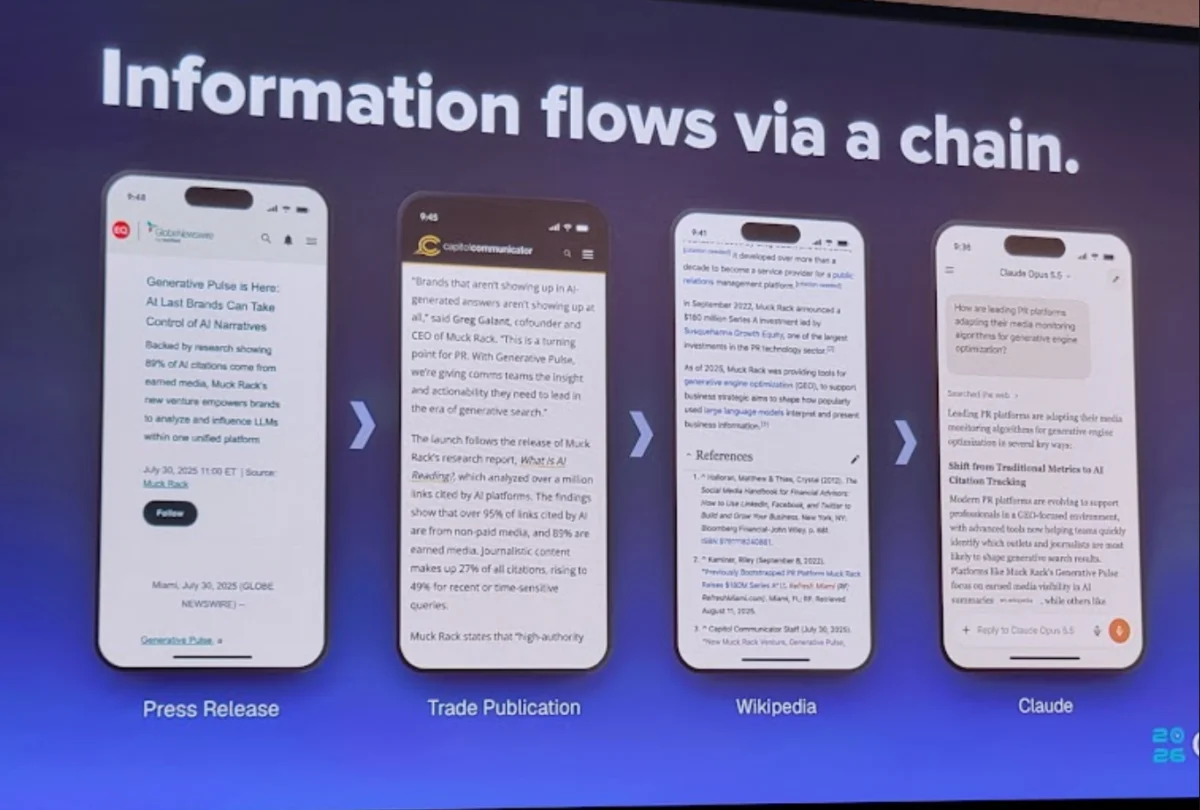
The emergence of AI-driven search and discovery presents a third chance for the industry to reclaim its strategic standing. AI models such as OpenAI’s ChatGPT, Anthropic’s Claude, and Google’s Gemini do not generate information in a vacuum; they "learn" from vast datasets comprised primarily of earned and owned media. This includes news coverage, expert commentary, white papers, and official corporate content—the exact outputs generated by PR and communications teams.
Recent studies highlight the direct correlation between PR activities and AI responses:
- Training Data Composition: LLMs rely heavily on high-authority journalistic sources and verified third-party validation to establish the "truth" about a brand.
- Citation Dynamics: When AI assistants provide recommendations or summaries, they prioritize sources that have been consistently cited across reputable media outlets.
- The PESO Model Integration: The PESO Model© (Paid, Earned, Shared, Owned), a staple of modern integrated communications, mirrors the ecosystem that AI models scrape for data.
Despite this synergy, the "Earned Media in the AI Era" report from D S Simon and research from Sword and the Script indicate that the vast majority of PR pros are currently sidelined. The 3% ownership figure suggests that while PR teams are providing the "fuel" for AI models through media relations and content creation, other departments—such as IT or Marketing—are beginning to claim the "engine" of AI strategy.
Establishing a Hierarchy of AI Presence
To move from passive participation to active ownership, communications experts suggest a shift in how brand presence is measured within AI environments. Rather than relying on traditional vanity metrics like total impressions or Ad Value Equivalency (AVE), teams are being urged to adopt a four-tiered baseline for AI visibility:
- Absent: The brand does not appear in AI-generated answers to relevant category questions.
- Mentioned: The brand name appears in the text of an AI response but without further context or validation.
- Cited: The AI model includes the brand and provides a link or reference to the brand’s owned or earned content as a source of truth.
- Featured: The brand is presented as a primary recommendation or a leading example in the AI model’s output.
By establishing these baselines, communications teams can set quarterly goals to "climb the ladder." For example, a Q1 goal might focus on moving from "Absent" to "Mentioned" through targeted media placements in trade publications that AI models are known to crawl frequently.
Strategic Planning for 2027 and Beyond
The current budget and planning cycles for the upcoming years are viewed as the "dress rehearsal" for this industry shift. Experts argue that claiming the AI visibility seat requires more than just professional conviction; it requires a structured business case that addresses the concerns of the Chief Financial Officer (CFO) and the CEO.
A robust 2027 communications plan must include three core pillars:
- Technical Competency: Teams must demonstrate the ability to run AI audits across multiple platforms (ChatGPT, Perplexity, Gemini) and interpret the nuances of how their brand is being characterized.
- Visibility Engineering: This involves "anchor hub" strategies where earned media is used to bolster owned content, creating a feedback loop that AI models recognize as high authority.
- Evidence-Based Reporting: Moving away from anecdotes, teams must use first-party measurement—such as traffic, lead generation, and pipeline influence—traceable back to the visibility gained in AI-driven discovery.
Industry Reactions and the Call for Courage
The sentiment within the industry’s leadership reflects a mix of frustration and optimism. During a recent fireside chat for the PRSA Maryland Chesapeake chapter, industry veteran Greg Abel and other practitioners discussed the necessity of "courage" in the profession. The consensus was that expertise alone is insufficient; practitioners must proactively "raise their hands" to lead AI initiatives before other departments fill the vacuum.
Fred Cook, a prominent figure in the PR world, has frequently emphasized that a seat at the table is earned through results that align with business objectives. The failure of the 2020 surge was largely attributed to the lack of this alignment. In the AI era, the "results" are quantifiable: if a buyer asks an AI assistant for the "best enterprise software for 2027" and a brand is missing from that list, it represents a direct failure of the communications strategy.
Broader Implications and Potential Risks
If the PR industry fails to seize this third opportunity, the implications could be profound. A new category of agencies, often referred to as "GEO" (Generative Engine Optimization) or "Visibility Engineering" firms, is already emerging. These firms often approach the problem from a purely technical or algorithmic perspective, potentially overlooking the nuances of reputation management, ethics, and brand voice that are the hallmarks of professional communicators.
Furthermore, a lack of PR oversight in AI training inputs could lead to "hallucinations" or brand inaccuracies going unchecked. When IT or Marketing owns AI visibility, the focus often shifts to volume and technical "hacks" rather than the quality and credibility of the information—a shift that can damage long-term brand equity.
As the planning for the 2027 fiscal year begins, the communications industry faces a clear mandate. The tools, the data, and the historical lessons are all available. The industry must now decide whether it will remain a provider of "clips" or become the strategic architect of how the world—and the machines that inform it—understands and trusts global brands. The seat at the table is currently empty; the question remains who will be the first to sit down.

 Nana Muazin

 Dwi Wanna