Nila Kartika Wati

The digital marketing landscape is currently undergoing a seismic shift as privacy regulations and browser-level tracking restrictions fundamentally alter how businesses measure advertising performance. In response to increasing demand from the MeasureU community and technical marketing specialists, a streamlined integration between Tracklution and Google Tag Manager (GTM) has emerged as a critical solution for maintaining data accuracy without necessitating a complete overhaul of existing web architectures. This integration addresses the primary concern of many digital entities: the ability to leverage server-side tracking capabilities while retaining the familiarity and investment of their current Google Tag Manager setups.

The Technical Context: From Client-Side to Server-Side Tracking
To understand the significance of the Tracklution and GTM integration, one must examine the broader challenges facing modern digital advertising. For over a decade, client-side tracking—where tags fire directly in the user’s browser—was the industry standard. However, the introduction of Apple’s App Tracking Transparency (ATT) framework in iOS 14.5, alongside Intelligent Tracking Prevention (ITP) in Safari and Enhanced Tracking Protection (ETP) in Firefox, has significantly degraded the reliability of client-side cookies.
Industry data suggests that businesses relying solely on traditional client-side tracking now experience a data loss of between 30% and 60% in their conversion reporting. This discrepancy leads to inefficient ad spend, as algorithms on platforms like Meta, Google Ads, and TikTok receive incomplete signals, thereby hindering their ability to optimize for high-value conversions. Tracklution serves as a bridge, transitioning these signals from the client-side environment of GTM to a secure server-side environment, ensuring that data reaches advertising platforms even when browser-level restrictions are in place.
Chronology of Implementation: A Step-by-Step Technical Framework
The implementation of Tracklution through Google Tag Manager follows a structured protocol designed to minimize site latency and maximize data fidelity. This process is particularly beneficial for custom-built websites, including those developed using generative AI coding tools, where standard WordPress or Shopify plugins may not be applicable.
Phase 1: Establishing the GTM Foundation
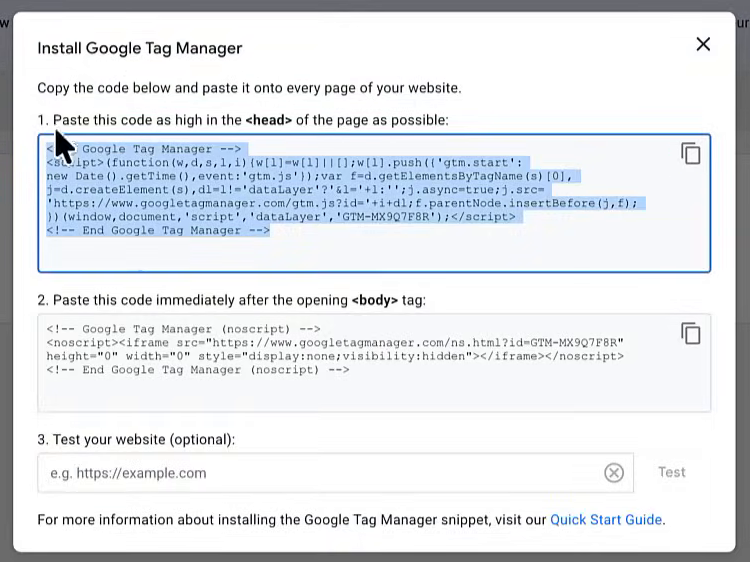
The process begins with the deployment of the Google Tag Manager container. For WordPress environments, the industry-standard GTM4WP plugin remains a primary recommendation for establishing a robust data layer. For custom-built or hand-coded sites, the implementation involves the manual insertion of GTM’s JavaScript snippets into the <head> and <body> sections of the site’s HTML. Verification of this stage is typically conducted via browser extensions such as Tag Hound or the native GTM Preview mode to ensure the container is active and responding to user interactions.
Phase 2: Deployment of the Tracklution Community Template
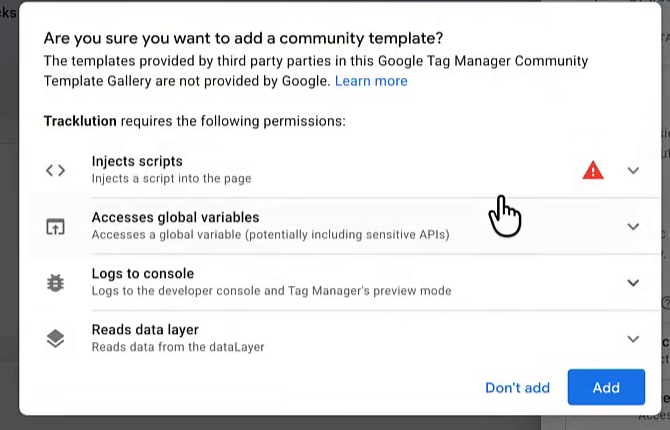
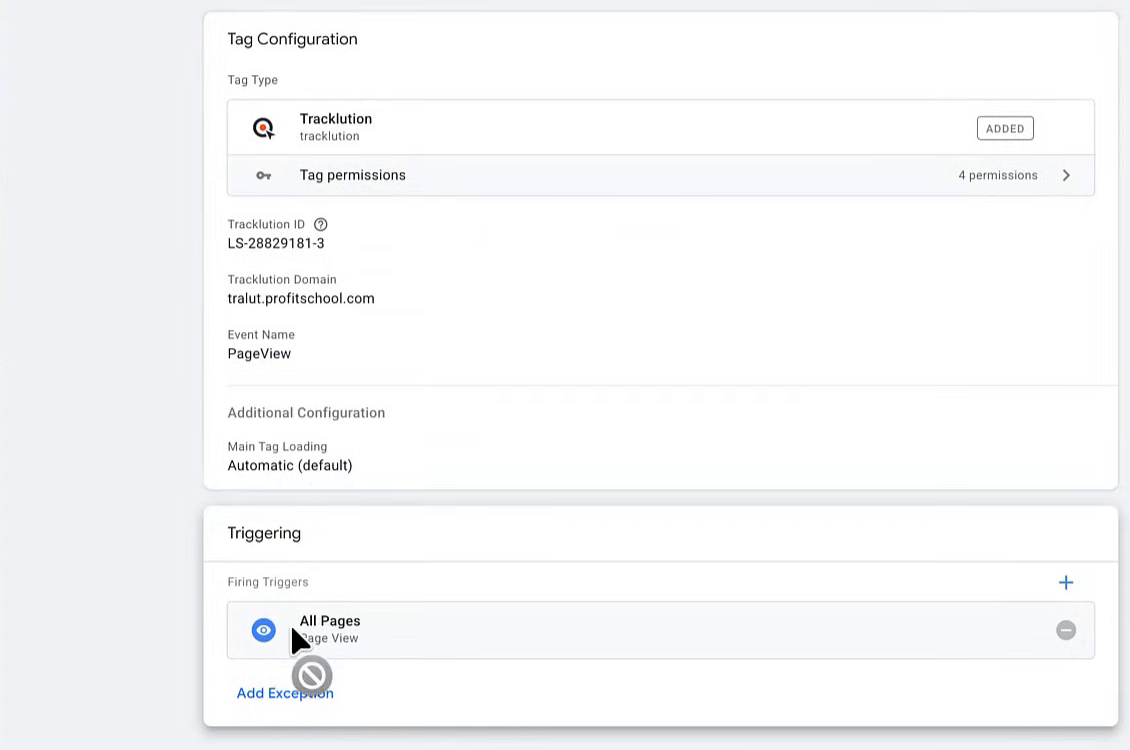
A significant milestone in this integration is the availability of the official Tracklution template within the Google Tag Manager Community Template Gallery. This template simplifies the configuration process by providing a pre-built structure for data transmission. Security protocols dictate that users should only install templates from verified sources to prevent unauthorized code injection. The Tracklution template requires specific permissions to inject scripts, which is a standard requirement for establishing the server-side handshake.
Phase 3: Configuration of Core Event Tracking
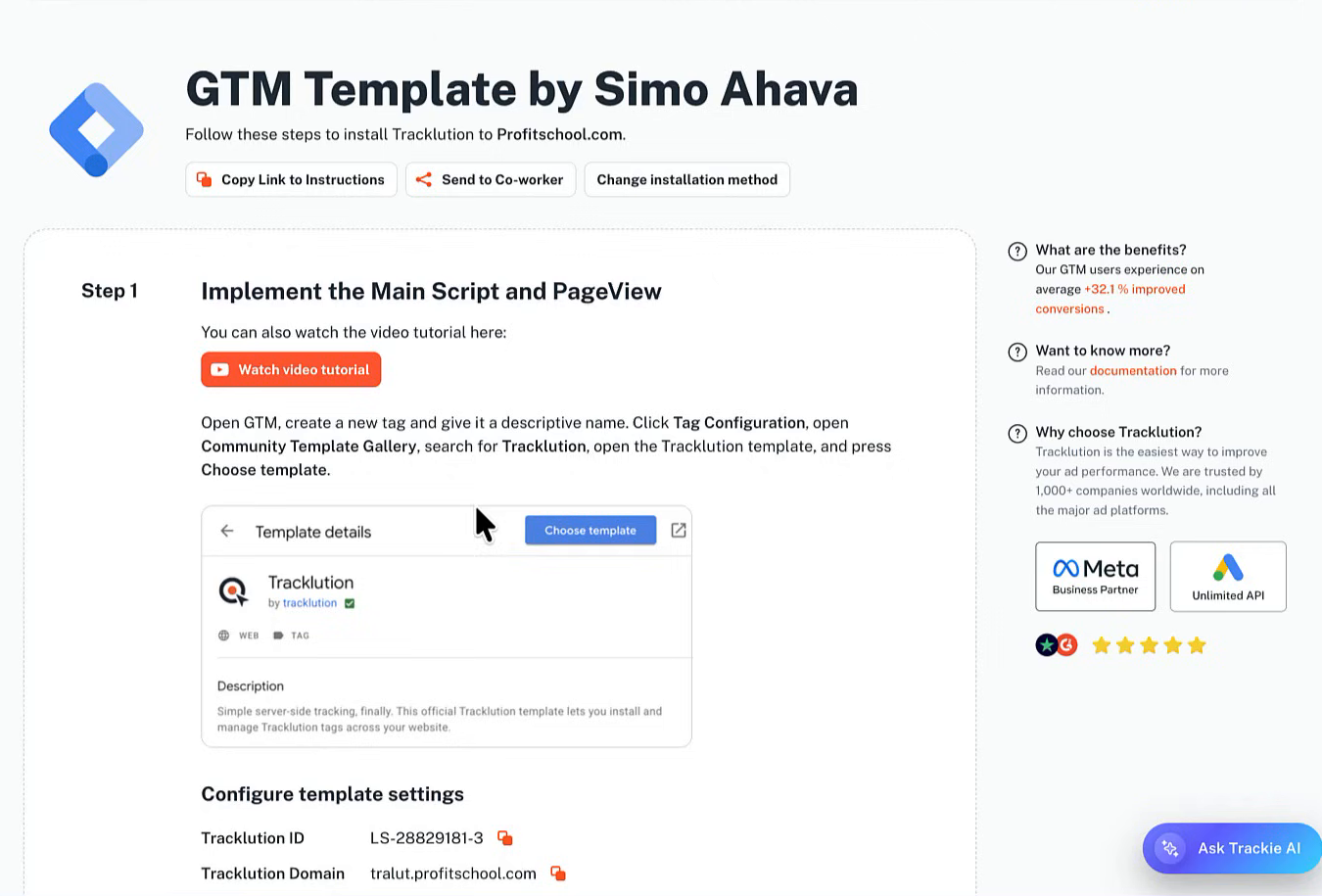
Once the template is integrated, the "Page View" tag is established as the primary data anchor. This requires the input of a unique Tracklution Installation ID and a designated tracking domain. By setting the trigger to "All Pages," the system ensures a continuous stream of baseline data. For more granular insights, the framework allows for the duplication of these tags to track "View Content" events on specific high-value URLs, such as lead generation pages or checkout sequences.
Phase 4: Validation and Data Flow Verification
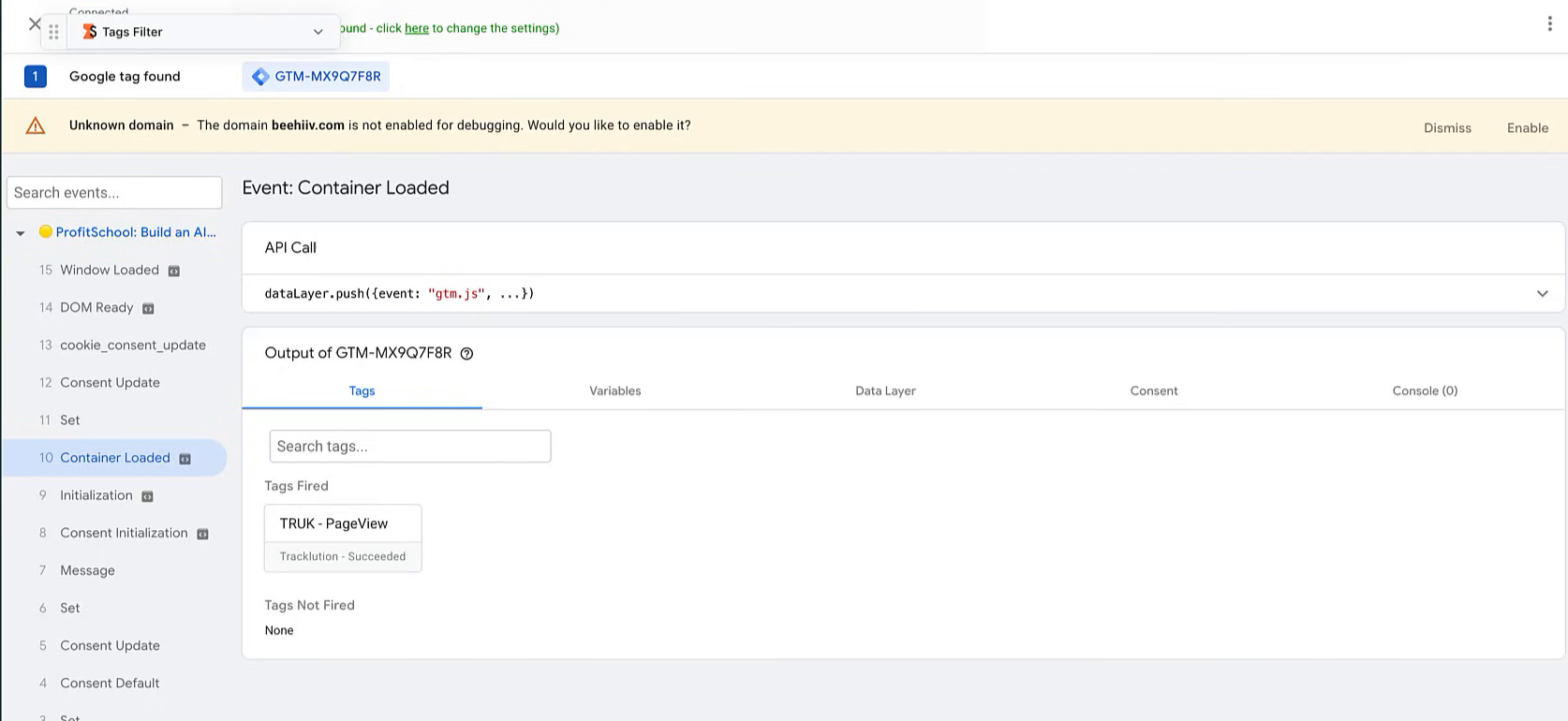
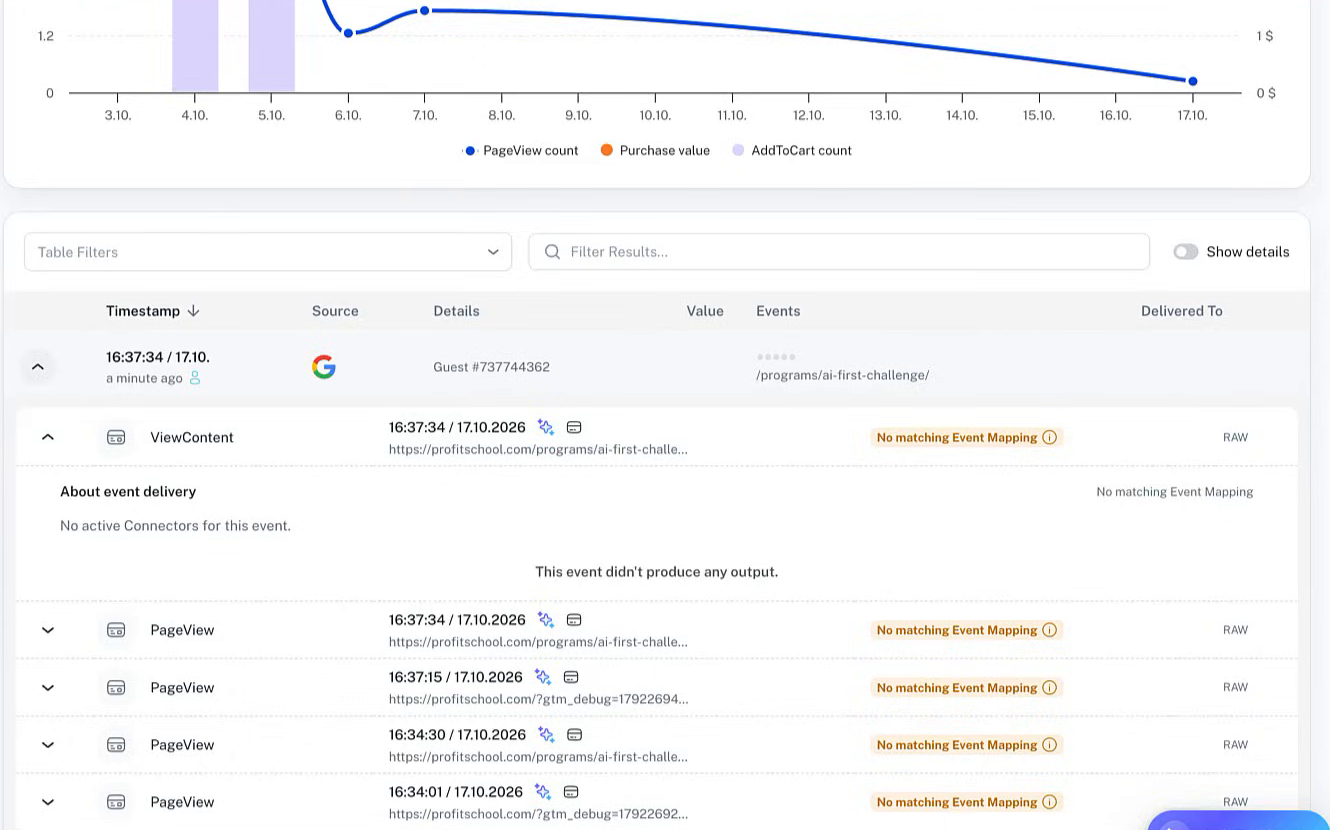
The final phase of implementation involves a rigorous testing protocol. Using GTM’s Preview mode, developers can verify that tags are firing correctly based on defined triggers. Simultaneously, the Tracklution dashboard provides a real-time "Received Events" log, allowing for the confirmation that data has successfully migrated from the client-side GTM environment to the Tracklution server.
Supporting Data: Why the Hybrid Approach Outperforms Traditional GTM
The integration of Tracklution with GTM offers several quantifiable advantages over traditional multi-platform GTM configurations. In a standard setup, a website might fire separate tags for Meta, Google Ads, LinkedIn, and TikTok. Each of these tags adds JavaScript weight to the page, increasing document object model (DOM) load times.
Research indicates that every one-second delay in page load time can result in a 7% reduction in conversions. By using Tracklution as a singular destination for GTM tags, the "tag bloat" is significantly reduced. Instead of managing fifteen different platform-specific tags, GTM sends a single stream of data to Tracklution, which then redistributes that data server-side to the respective ad platforms. This "one-to-many" architecture preserves site speed while ensuring platform-specific requirements are met.
Furthermore, the server-side nature of Tracklution enhances data privacy compliance. By intercepting data before it is sent to third-party ad platforms, businesses can more effectively manage consent signals and strip away sensitive personally identifiable information (PII) that should not be shared, thereby aligning with GDPR and CCPA mandates.
Official Responses and Industry Implications
Representatives from MeasureU have noted that the most frequent inquiry from their user base revolves around the compatibility of modern server-side tools with legacy GTM setups. The official stance is that the combination of GTM and Tracklution represents a "best-of-both-worlds" scenario. It allows marketing teams to maintain their existing GTM triggers and logic while upgrading their infrastructure to meet the demands of the "cookieless" future.
Technologists at Tracklution have emphasized that their goal is to democratize access to advanced measurement. While server-side tracking was previously the domain of enterprise-level companies with massive engineering budgets, the GTM template approach makes these capabilities accessible to small and medium-sized enterprises (SMEs) and independent developers.

Broader Impact on Digital Advertising Strategy
The move toward integrated server-side solutions like Tracklution has profound implications for the future of digital advertising:
- Algorithmic Efficiency: By providing ad platforms with a more complete dataset (often referred to as a "Conversion API" or CAPI), the machine learning models that power modern advertising can find customers more effectively. This typically results in a lower Cost Per Acquisition (CPA) and higher Return on Ad Spend (ROAS).
- Operational Agility: Marketing managers can add or remove advertising channels (such as Pinterest, Reddit, or Microsoft Ads) directly within the Tracklution dashboard without requiring further modifications to the website’s GTM container. This decouples the technical implementation from the strategic marketing execution.
- Future-Proofing: As Google Chrome prepares for the eventual phase-out of third-party cookies, businesses that have already transitioned to a server-side pipeline via GTM and Tracklution will face minimal disruption compared to those still relying on client-side pixels.
Conclusion and Strategic Recommendations
For organizations looking to optimize their digital measurement framework, the integration of Tracklution with Google Tag Manager is no longer an optional upgrade but a strategic necessity. The process facilitates a cleaner, faster, and more accurate data environment.
The immediate recommendation for digital entities is to conduct a "tracking audit" to identify the extent of data loss currently occurring between their website and their advertising platforms. Following this audit, the deployment of the Tracklution GTM template provides a low-friction path toward server-side parity. As the digital ecosystem continues to prioritize user privacy and data security, the ability to manage sophisticated tracking through a centralized, server-side hub will remain the hallmark of successful digital marketing operations.
By following the established chronology—from container setup to dashboard verification—businesses can ensure that their advertising efforts are supported by the most accurate data possible, ensuring long-term viability in an increasingly complex regulatory and technical environment.


 Evan Lee Salim
 Muslim