Pevita Pearce
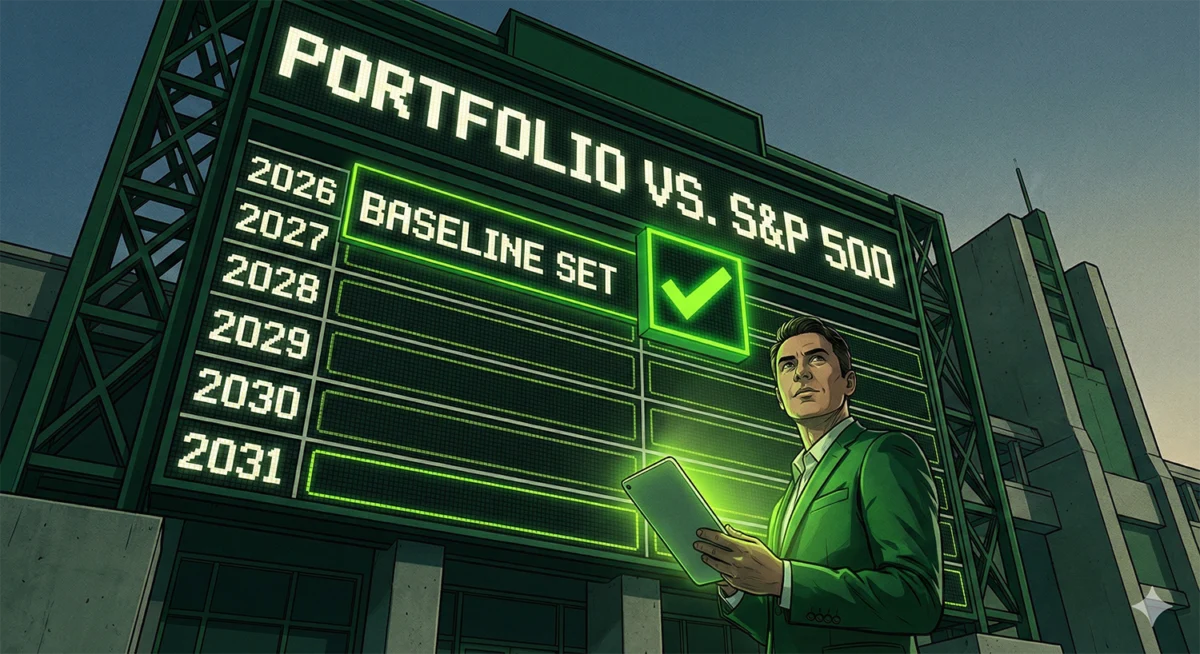
In a candid disclosure, an entrepreneur deeply involved in the e-commerce sector has unveiled the composition of his personal investment portfolio, emphasizing a strategic approach to building financial independence that runs parallel to his business ventures. This detailed breakdown, presented as a baseline for 2026, aims to provide a roadmap for fellow business owners seeking to diversify their assets and mitigate the risks associated with relying solely on a future business exit. The entrepreneur advocates for a proactive approach to personal wealth accumulation, arguing that a robust personal balance sheet offers crucial optionality and security, enabling more strategic and less desperate business decisions.
The disclosure comes as part of a broader initiative by the entrepreneur to outline an eight-pillar financial mastery framework for store owners. By sharing his own portfolio’s performance against the S&P 500 annually, he intends to demystify personal finance for entrepreneurs and encourage a more holistic view of financial well-being. This practice challenges the common entrepreneurial tendency to pour all resources and focus into a single business, a strategy that carries significant inherent risk if market conditions or exit opportunities falter.
Methodology for Portfolio Assessment
The entrepreneur has clarified the specific criteria used in calculating his personal balance sheet. Notably, his primary residence, personal physical possessions, and the value of his active business are excluded from these calculations. This deliberate exclusion is based on a foundational principle: the home is considered a consumption asset rather than an investment vehicle, and physical possessions are not typically liquid or investable assets. Furthermore, including an active business, which is often illiquid and volatile until a sale, can create a misleading sense of financial security. By focusing strictly on liquid investments, the entrepreneur aims for a clearer and more accurate representation of his financial flexibility and net worth.
Portfolio Allocation: A Diversified Approach
The disclosed portfolio is meticulously broken down into several key asset classes, reflecting a blend of calculated risks and foundational stability.
-
Individual Stocks (3.5%): Representing a small but targeted portion of the portfolio, individual stock investments are characterized by a philosophy of "90% boring and 10% bold." The entrepreneur believes in making a few high-conviction bets in sectors where he possesses deep understanding and confidence in outperformance. These positions must be significant enough to materially impact the portfolio’s overall performance if successful. Currently, his individual stock holdings are concentrated in two companies: Shopify and Cloudflare.
- Shopify: The entrepreneur identifies Shopify as a near-monopoly in the e-commerce software space, second only to Amazon. He views its hosted software solutions as an indispensable offering for online retailers, a position he believes is strengthening annually.
- Cloudflare: While acknowledging less internal knowledge of Cloudflare’s operations, the entrepreneur’s positive interactions with industry peers and his own favorable experiences with the service have fueled his investment. He cites the company’s broad capabilities and strong organizational culture as key factors.
-
Index Funds (63%): This substantial allocation forms the bedrock of the portfolio, primarily consisting of U.S. total market index funds. Approximately 15% of this segment is dedicated to international stock exposure, with no allocation to bonds. This approach is described as "boring and intentional," prioritizing broad market diversification and low fees for long-term holding. The entrepreneur indicates a strategic intention to slightly increase his international exposure. He notes that international stocks have performed exceptionally well recently, and he perceives continued valuation opportunities alongside the benefits of enhanced diversification. The core strategy remains simple: invest in broad market index funds, minimize fees, and maintain a buy-and-hold approach.
-
Cryptocurrency (12%): The portfolio includes a 12% allocation to cryptocurrencies, predominantly Bitcoin and Ethereum. The entrepreneur maintains his belief in the long-term potential of these assets as a store of value, particularly as a hedge against potential government monetary policy missteps. However, he expresses some apprehension regarding the recent performance of cryptocurrencies, noting their increasing correlation with risk assets rather than traditional "digital gold" behavior. He contrasts this with gold’s significant appreciation over the past year, a performance that Bitcoin has not matched. Despite this, he remains committed to his long-term fundamental outlook, benefits from tax deferral on existing gains, and views crypto as a crucial diversification play, acting as an anti-institutional hedge. He acknowledges that increasing institutional adoption and market size could temper future upside potential and increase volatility, but he intends to hold his positions.

-
Real Estate (11%): This segment is comprised of a single rental property. The entrepreneur candidly admits that this property is not primarily an investment but rather a residence he enjoys and has decided to rent out temporarily. His experience managing a short-term rental (Airbnb) over the past four months has provided him with a heightened appreciation for the operational complexities involved, even when delegated to a third party. This practical experience has also led him to a greater understanding of the value proposition for travelers using platforms like Airbnb, highlighting the convenience of short-term stays without the burdens of property management.
-
Cash (9%): A 9% cash reserve is maintained, a strategy he finds prudent, especially given current market highs. Half of this cash is earmarked for a "big bets" fund, awaiting high-conviction investment opportunities where he can deploy capital meaningfully. He anticipates identifying such opportunities within 2026.
-
Private Investments (Less than 1%): A minimal allocation, less than 1%, is dedicated to private investments. These are small bets placed on three founders in whom he has strong belief: IntelliGems, Postpilot, and Kanpai Foods. He acknowledges the value of such opportunities when domain expertise aligns with trusted relationships but maintains it as a minor component of his overall strategy.
Portfolio Adjustments: Key Divestments in 2026
The entrepreneur also detailed two significant divestments from his portfolio during the year.
-
Tesla: After holding Tesla for approximately four years, the entrepreneur sold his position. His initial investment thesis was anchored in the superior product—the car itself and customer satisfaction. However, he observed a strategic shift in the company’s focus from automotive manufacturing to ambitious ventures in robotics, self-driving technology, and automated taxis. While not dismissing the potential of these future technologies, he felt his original investment thesis had evolved, and he had not conducted the necessary due diligence to justify the company’s multi-trillion-dollar valuation based on these new objectives. Additionally, he cited growing "key man risk" associated with Elon Musk. The entrepreneur noted Musk’s advanced age, lifelong intense work ethic, and divided attention across multiple ventures as increasing risks over time. Given the valuation and the altered investment premise, he deemed it an opportune moment to exit.
-
Airbnb: This divestment is described as one of his more regrettable recent decisions. The initial investment was impulsive, stemming from a recommendation without thorough personal conviction. He held the stock for six to twelve months, breaking roughly even before selling. His decision to sell was informed by his recent experience in setting up and managing his own Airbnb, which led him to re-evaluate his bullishness on the company. While not outright negative, he characterized the company’s growth as "lackluster" in recent years and was uncertain about potential catalysts for significant future acceleration. The primary lesson learned from this experience is the importance of investing only in individual stocks with high conviction (a "9- or 10-out-of-10" conviction), advocating for index fund investments for any opportunities with lower conviction.
Looking Ahead: Performance Tracking and Community Engagement
The entrepreneur intends to provide an update at the end of 2026, detailing the performance of this baseline portfolio against the S&P 500. He also extends an invitation to entrepreneurs seeking regular insights on building financial mastery, alongside exclusive perspectives from a community of seven- and eight-figure business owners, to subscribe to his newsletter. This initiative underscores a commitment to fostering financial literacy and strategic wealth management within the entrepreneurial ecosystem. The detailed disclosure of his personal financial strategy serves as a tangible example of the principles he advocates, aiming to inspire and equip other business owners to achieve greater financial security and strategic freedom.


 Nana

 Muslim