Reynand Wu

The global social listening market has undergone a significant transformation since Cision acquired Brandwatch for $450 million in 2021. While Brandwatch remains a formidable player in the consumer intelligence space, boasting an archive of 1.7 trillion historical conversations dating back to 2010, the platform’s evolution has increasingly favored large-scale public relations and research departments over agile growth teams. As organizations seek to reconcile the rising costs of data access with the need for actionable marketing insights, a diverse ecosystem of alternatives has emerged. These range from enterprise-grade competitors to specialized tools designed to convert brand mentions into measurable revenue.
The Strategic Shift in Social Listening
The primary motivation for teams seeking alternatives to Brandwatch often stems from a misalignment between tool complexity and business requirements. Brandwatch’s Consumer Intelligence product is highly rated, maintaining a 4.4 out of 5 score on review platforms like G2, yet common user grievances center on four pillars: high entry costs, steep learning curves, the absence of transparent pricing, and a feature set that often exceeds the needs of mid-market brands.
Furthermore, the acquisition by Cision positioned Brandwatch as a cornerstone of a PR-centric software suite. This strategic direction prioritizes corporate communications and long-term research over the immediate needs of performance marketing and creator-led growth. For modern brands, the goal is no longer just "listening" to what is said; it is about identifying the specific individuals driving the conversation and quantifying the impact of those mentions on the bottom line.
1. Talkwalker: The Enterprise Benchmark
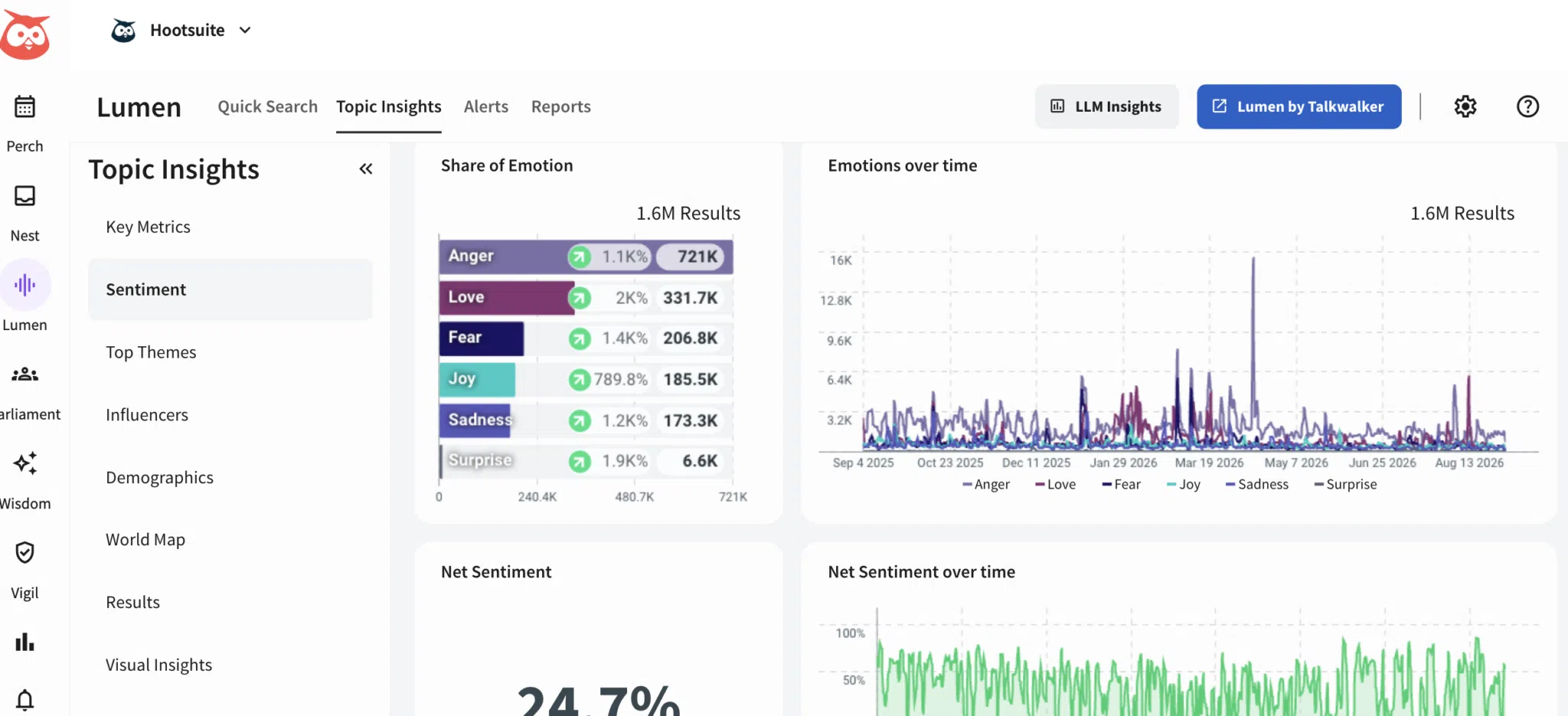
For organizations requiring a direct, like-for-like replacement for Brandwatch’s deep research capabilities, Talkwalker stands as the leading contender. Now owned by Hootsuite following a landmark acquisition in April 2024, Talkwalker specializes in monitoring social and news sources at an enterprise scale.
Talkwalker has differentiated itself through the early adoption of Large Language Model (LLM) Insights. This feature allows brands to track how AI assistants, such as ChatGPT and Claude, describe their brand to users. As search behavior shifts from traditional engines to AI-driven queries, this "AI listening" has become a critical metric for brand reputation management. Talkwalker offers three primary tiers—Core, Analyze, and Business—all of which include unlimited users. The transition to higher tiers is generally dictated by the need for non-sampled data, ensuring that every mention is counted rather than estimated from a statistical subset.

2. Meltwater: The Communications Specialist
Meltwater is the preferred alternative for teams where the social listening budget is managed by the corporate communications or PR department. By integrating social listening with traditional news monitoring, Meltwater allows press coverage and social sentiment to be viewed within a single dashboard.
However, the platform requires a high level of commitment. Meltwater typically mandates 12-month minimum contracts and does not offer a self-serve trial. This makes it less suitable for experimental teams or startups looking for a "plug-and-play" solution. It remains a robust choice for established enterprises that need to track global media impact alongside digital conversations.
3. Sprinklr: The Unified Customer Experience Suite
Sprinklr represents the high end of the market, offering a "unified customer-experience suite" that spans over 30 digital channels. Its listening module, Sprinklr Insights, is often considered overkill for teams solely focused on brand monitoring. Sprinklr is most effective when a company also uses its modules for customer service and marketing automation, allowing a mention on social media to be instantly converted into a support ticket or a lead.
4. Sprout Social: Integration and Ease of Use
Sprout Social has built its reputation on a user-friendly interface that combines publishing, engagement, and analytics. Its social listening tool is an add-on to its core management platform. For teams already utilizing Sprout Social for scheduling posts, adding the listening module is often more efficient than training staff on an entirely new ecosystem. Pricing starts at $199 per seat per month, making it a "per-seat" model that can become expensive as teams scale.
5. Hootsuite: The Consolidated Powerhouse
With its acquisition of Talkwalker, Hootsuite now offers two tiers of listening. Basic listening is included in its standard paid plans (starting at $99 per month), but this is often limited to a 30-day historical window. For deep trend analysis and historical data, users must upgrade to the Enterprise tier, which utilizes Talkwalker’s Lumen technology. This makes Hootsuite a versatile choice that can grow from a simple management tool into a high-end research platform.
6. Agorapulse: The Management-First Approach
Agorapulse is primarily a social media management tool where listening is treated as a secondary feature. With plans ranging from $79 to $199 per user, it is an affordable option for small teams. However, because listening is a paid add-on with undisclosed pricing, it is rarely the first choice for brands whose primary goal is deep consumer intelligence.

7. Brand24: Keyword Monitoring and Alerts
Brand24 is a "monitoring-first" tool that excels at tracking specific keywords across the open web, including forums and blogs. Unlike enterprise tools, Brand24 publishes transparent pricing tiers based on keyword and mention volume.
- Individual: $199/month (3 keywords, 2,000 mentions)
- Team: $299/month (7 keywords, 10,000 mentions)
- Pro: $399/month (12 keywords, 40,000 mentions)
Brand24 is ideal for brands that need to be alerted to every mention in real-time but do not necessarily need the complex data-slicing tools found in Brandwatch.
8. Mentionlytics: Value for Small Teams
Mentionlytics offers significant value for smaller organizations, tracking mentions across social networks and the open web while providing "Share of Voice" reports. At an entry price of approximately $49 per month (on annual billing), it provides 5,000 mentions—a significantly higher volume-to-price ratio than many of its competitors. It also includes an 18-month archive, which is rare at this price point.
9. Awario: The Solo Marketer’s Tool
Awario is a lean tool built around Boolean search queries. It skips the "inbox" and "publishing" features of larger platforms to focus entirely on discovery. With plans starting as low as $29 per month, it is the most accessible tool for solo entrepreneurs or niche researchers. However, it has strict storage caps, dropping old mentions once a topic limit is reached.
10. Upfluence: From Mentions to Revenue
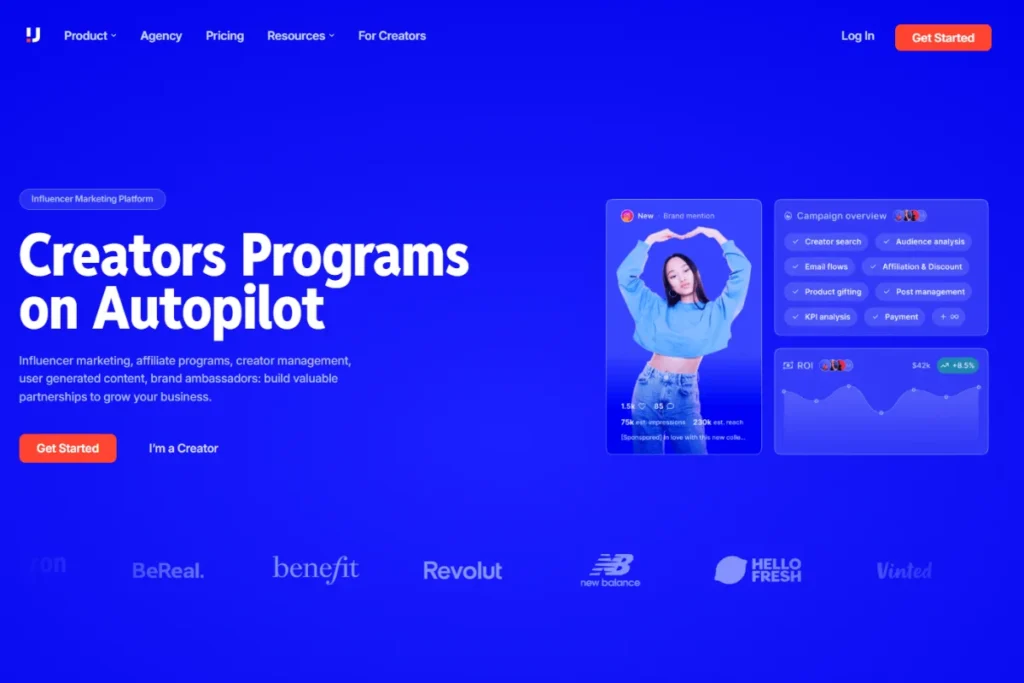
Upfluence represents a shift in how brands view social listening. Rather than treating a mention as a mere data point, Upfluence identifies the creator behind the mention. It analyzes whether the creator’s audience is authentic and provides tools for outreach, payment, and affiliate tracking. This is specifically designed for growth teams that want to turn organic brand mentions into official partnerships.
Data Analysis: The Quality vs. Quantity Dilemma
When evaluating these alternatives, brands must look beyond simple mention counts. Data quality has become a major concern in the social listening industry. In a 2026 analysis of 4 million Instagram profiles, it was found that the median profile carried roughly 7% fake followers. Some accounts showed fake follower shares exceeding 25%. A tool that merely counts mentions without auditing the quality of the source can lead to skewed sentiment reports and wasted marketing spend.
The type of creator also dictates the strategy. For example, a Q1 2026 brand report showed that Shein and L’Oréal Paris both receive massive volumes of mentions, but their profiles differ wildly. Shein’s mentions are dominated by mid-tier creators (50k–250k followers), whereas L’Oréal Paris sees ten times more activity from "nano" creators. An effective Brandwatch alternative must be able to segment data by creator tier to provide actionable insights.
The Impact of Platform API Restrictions
A significant factor in the cost and effectiveness of social listening tools is the "API Tax." Major platforms like X (formerly Twitter) and Reddit have tightened access to their data. Reddit, in particular, restricts commercial use of its data without specific permissions. This is why coverage of forums and niche communities varies significantly between vendors. Before migrating from Brandwatch, companies must ensure their new vendor has the necessary data partnerships to cover the specific networks where their audience is most active.
Analysis of Implications and Future Outlook
The transition away from all-in-one enterprise tools like Brandwatch toward more specialized or modular platforms reflects a broader trend in the MarTech industry: the demand for ROI over "vanity metrics." Organizations are no longer satisfied with knowing that their brand was mentioned 100,000 times; they need to know if those mentions led to sales, and they need the ability to contact the people responsible for those mentions instantly.
The integration of Model Context Protocol (MCP) and AI assistants is the next frontier. As AI agents like "Jaice" from Upfluence begin to recommend campaign strategies based on real-time listening data, the role of the social media manager will shift from data entry to strategic approval.
For teams looking to replace Brandwatch, the decision ultimately rests on whether the goal is to protect the brand (PR/Crisis Management) or to grow the brand (Influencer/Growth Marketing). While Talkwalker and Meltwater remain the titans of the former, platforms like Upfluence and Sprout Social are increasingly winning the latter by proving that listening is only valuable if it leads to action.

 Nana Wu

 Muslim