rifanmuazin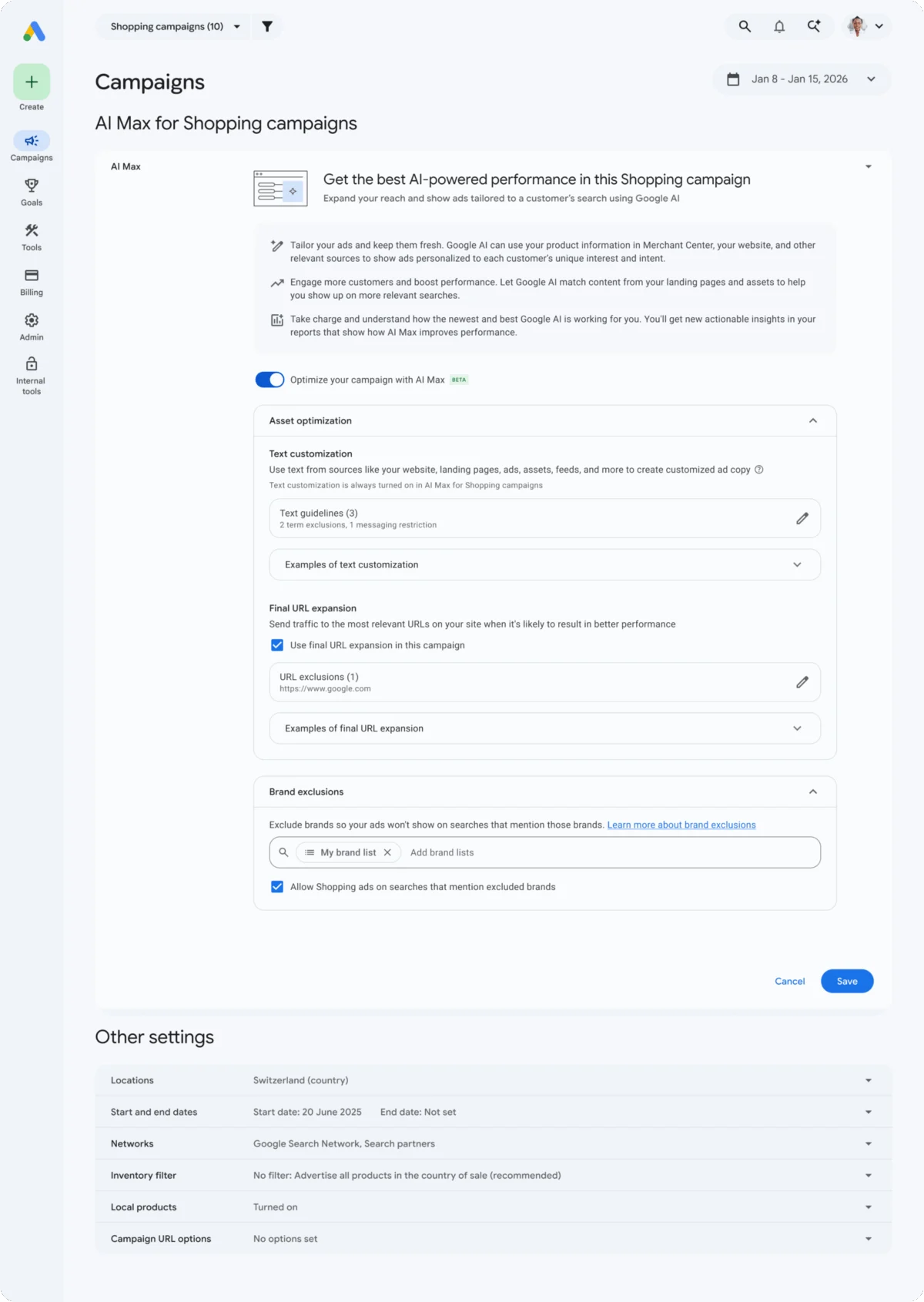
Google has unveiled a suite of significant updates for its AI Max capabilities within Google Ads, signaling a robust advancement in its artificial intelligence-driven advertising solutions. These enhancements, announced through official channels including a Google blog post and statements from key executives, introduce a new era of advertiser control, heightened compliance, and expanded reach across critical e-commerce and travel sectors. The core updates include the introduction of AI Brief for conversational campaign guidance, enhanced text disclaimers for regulatory compliance, and the strategic expansion of AI Max to power Shopping and Search Campaigns for Travel. These developments underscore Google’s ongoing commitment to leveraging its advanced AI, particularly the Gemini model, to simplify complex advertising processes, improve campaign performance, and cater to the evolving needs of marketers worldwide.
The Evolution of AI in Google Ads: A Strategic Imperative
Google’s journey with artificial intelligence in advertising is not new, but these latest updates represent a crucial evolutionary step. For years, Google has progressively integrated AI into its advertising products, moving from automated bidding strategies to the comprehensive, AI-powered Performance Max campaigns. Performance Max, launched in 2021, was designed to help advertisers find more converting customers across all of Google’s channels, including Search, Display, YouTube, Gmail, Discover, and Maps, all from a single campaign. It marked a significant shift towards fully automated, goal-oriented campaign management, with AI optimizing bids, budgets, audiences, and creatives in real-time.
However, the rapid acceleration of generative AI capabilities, exemplified by models like Google’s Gemini, has opened new frontiers. The current updates to AI Max are a direct reflection of this technological leap, aiming to address both the opportunities and the challenges presented by increasingly sophisticated AI. While AI offers unparalleled efficiency and scale, advertisers have often expressed a desire for more granular control and transparency over the automated processes. Simultaneously, the digital advertising landscape is subject to increasingly stringent regulatory frameworks, necessitating robust compliance solutions. The expansion into Shopping and Travel campaigns acknowledges the high-value, complex nature of these verticals, where deep intent understanding and specialized inventory access can significantly impact performance. These updates are strategically positioned to empower advertisers, ensuring their campaigns are not only efficient but also aligned with brand strategy and regulatory requirements.
AI Brief: A New Paradigm for Advertiser Control
One of the most anticipated features is the AI Brief, designed to give advertisers unprecedented control over their AI-driven campaigns using natural, conversational language. This innovation directly addresses a long-standing desire among marketers to infuse more strategic guidance into automated systems, moving beyond simple keyword inputs or asset uploads.
The core mechanism of AI Brief is its conversational interface. Advertisers can now articulate their business context, specific marketing objectives, brand guidelines, target audience nuances, and even desired messaging guardrails in their own words. For instance, a marketer could instruct the AI: "Our campaign aims to attract eco-conscious millennials in urban areas for our new line of sustainable apparel, focusing on the product’s durability and ethical sourcing. Avoid any messaging that feels overly corporate or uses jargon." The AI, powered by Gemini, then processes these strategic directives, translating them into actionable parameters for campaign execution across various ad formats and placements. This approach mitigates the "black box" perception sometimes associated with highly automated AI campaigns, providing a transparent bridge between human strategy and AI execution.

The benefits are multi-fold. For brand managers, AI Brief ensures brand consistency and message accuracy across diverse ad placements. For performance marketers, it offers a refined level of targeting and creative optimization, allowing them to focus on high-level strategy rather than minute manual adjustments. This feature is initially rolling out in English for Search campaigns, with plans to extend its capabilities to Performance Max and Shopping campaigns in subsequent phases. This phased rollout strategy allows Google to gather critical feedback, fine-tune the AI’s understanding of diverse inputs, and ensure robust performance before a broader release. The underlying implication is a democratization of sophisticated AI tools, enabling marketers of all sizes to leverage advanced capabilities with intuitive control.
Text Disclaimers: Fortifying Compliance and Trust
In an increasingly regulated digital ecosystem, ensuring compliance is paramount, especially for businesses operating in sensitive sectors such as finance, healthcare, pharmaceuticals, and gambling. The introduction of improved Text Disclaimers within Final URL Expansion directly tackles this critical need, providing an automated solution for embedding required legal text into advertisements.
Previously, managing disclaimers could be a manual, error-prone process, leaving advertisers vulnerable to non-compliance issues, fines, and reputational damage. The new system ensures that mandated legal disclaimers, terms and conditions, or specific regulatory disclosures always appear in the ads, irrespective of the dynamic nature of AI-generated content or expanded final URLs. For example, a financial institution advertising a new credit product might be legally required to include specific disclosures about interest rates or terms. The AI Max system will now automatically detect and append these critical pieces of information, ensuring full adherence to local and international regulations.
This feature is rolling out globally in the coming weeks and will support all languages. The immediate global availability underscores the universal importance of regulatory compliance in digital advertising. By automating this aspect, Google significantly reduces the operational burden on advertisers, allowing them to expand their reach into regulated markets with greater confidence. Beyond mere compliance, this feature also plays a crucial role in building and maintaining consumer trust. Transparent and clear communication, especially concerning legal obligations, fosters a sense of reliability and accountability, which is vital for brand reputation and long-term customer relationships. For Google, it reinforces the platform’s commitment to responsible advertising practices and positions it as a trusted partner for businesses navigating complex regulatory landscapes.
Expansion with AI Max for Shopping and Travel Campaigns: Unlocking Niche Intent
The strategic expansion of AI Max into Shopping and Search Campaigns for Travel marks Google’s intensified focus on high-value, intent-driven verticals. These sectors are characterized by complex, often conversational search queries, where understanding deep user intent is crucial for delivering relevant ads and driving conversions.

AI Max for Shopping Campaigns:
For e-commerce businesses, the ability to connect specific products with diverse and evolving customer queries is a constant challenge. Traditional Shopping campaigns rely heavily on product feeds and keyword matching. However, modern consumers often use natural language and nuanced queries that go beyond simple keywords. For instance, a user might search for "durable, waterproof hiking boots for women with wide feet under $150." AI Max for Shopping campaigns, powered by Gemini, is designed to excel in understanding such complex, conversational searches. By integrating deeply with Merchant Center data, AI Max can leverage detailed product attributes to generate more relevant and compelling ads across a broader range of search contexts. This means that instead of relying solely on exact matches, the AI can infer intent and match products that fit the descriptive criteria, even if the exact phrase isn’t in the product title. This enhancement promises increased visibility for products, higher click-through rates, and ultimately, improved return on ad spend for retailers. The feature is rolling out in a closed beta globally, in all languages, allowing Google to refine its performance with real-world data before a wider release.
AI Max for Search Campaigns for Travel:
The travel industry presents another complex domain, where booking decisions involve multiple variables like destination, dates, budget, number of travelers, amenities, and specific preferences. A user might search for "family-friendly beach resorts in Hawaii with direct flights from Chicago in July, including kids’ activities." AI Max for Travel campaigns is engineered to decipher these multi-faceted, conversational queries and provide specialized inventory access. It moves beyond simple hotel or flight searches to understand the holistic travel experience a user is seeking. By intelligently matching user intent with available travel options, AI Max can present highly personalized and relevant ads for flights, hotels, vacation packages, and experiences. This deep intent understanding allows travel advertisers to capture demand that might otherwise be missed by more rigid, keyword-based approaches. This capability is now available in Search campaigns, promising to transform how travel businesses connect with potential customers by delivering hyper-relevant recommendations at critical decision-making points.
Official Voices and Industry Outlook
Google executives have been vocal about the strategic importance of these updates. Vidhya Srinivasan, VP/GM of Ads at Google, highlighted the significance of AI Brief, stating, "We’re launching the AI Brief to give marketers more strategic control and guide the AI. Marketers can set specific guidelines for messaging, audiences and search matching and let the AI Brief act as a new strategic bridge." She further emphasized AI Max’s rapid growth as an AI-powered Search ads product and the pivotal role of Gemini, "Powering AI Max is Gemini, the same engine and model driving the future of Search." The official AdsLiaison account also underscored these points, noting that AI Max for Shopping campaigns would enable Merchant Center data to power more relevant ads in complex searches and that AI Brief would offer "more ways to guide AI Max text customization, search term matching and the audiences you want to reach – in your own words."
These statements reflect Google’s confidence in its AI trajectory and its commitment to addressing advertiser feedback. The industry is likely to view these updates positively, especially the increased control offered by AI Brief and the compliance assurances of Text Disclaimers. For many marketers, the ability to provide strategic direction to AI, rather than simply ceding control, represents a significant step forward in the human-AI collaboration model. The expansion into Shopping and Travel is also poised to be a game-changer, intensifying competition and raising the bar for ad relevance and performance in these lucrative sectors. Early adopters who master these new tools are expected to gain a significant competitive advantage.
Broader Impact and Future Implications
The latest enhancements to Google Ads AI Max signify a broader shift in the digital advertising landscape. They underscore the inevitable move towards a more intelligent, automated, and personalized advertising ecosystem, where AI plays an increasingly central role in every stage of the campaign lifecycle, from strategy formulation to execution and optimization.

Evolving Role of the Marketer: These updates do not diminish the role of the human marketer but rather elevate it. Instead of spending time on tedious, repetitive tasks or micro-optimizations, marketers can now focus on higher-level strategic thinking, brand storytelling, and defining the core business objectives that the AI will then execute. The AI Brief, in particular, empowers marketers to become strategic conductors, guiding the AI orchestra rather than playing every instrument themselves.
Competitive Landscape: By leveraging its proprietary Gemini AI model, Google continues to solidify its dominant position in the ad tech market. These advanced capabilities create a higher barrier to entry for competitors and reinforce Google’s appeal to advertisers seeking cutting-edge performance and efficiency. The deep integration of AI across all ad formats and channels positions Google to capture an even larger share of digital ad spend, particularly as search queries become more conversational and complex.
Economic Impact: For businesses of all sizes, these updates promise increased efficiency and potentially higher return on investment. Small and medium-sized enterprises (SMEs), which may lack the resources for extensive manual campaign management, can particularly benefit from sophisticated AI tools that democratize access to high-performance advertising. By making campaigns more effective and easier to manage, Google helps businesses grow, contributing to broader economic activity.
Ethical Considerations and Trust: The introduction of Text Disclaimers directly addresses critical ethical considerations around transparency and compliance in advertising. As AI becomes more sophisticated, the potential for unintended consequences or misrepresentation increases. By building in robust compliance mechanisms, Google aims to foster trust among advertisers and consumers alike. The ongoing dialogue around AI ethics, data privacy, and accountability will continue to shape the development of such tools, and Google’s proactive approach to compliance is a positive step in this direction.
In conclusion, Google’s latest updates to AI Max are more than just incremental improvements; they represent a strategic reorientation towards a future where AI is not just an optimization tool but a collaborative partner for advertisers. By offering enhanced control, ensuring compliance, and expanding reach into key verticals, Google is setting a new standard for intelligent advertising, paving the way for a more efficient, effective, and ethically sound digital marketing ecosystem.