Neng Nana
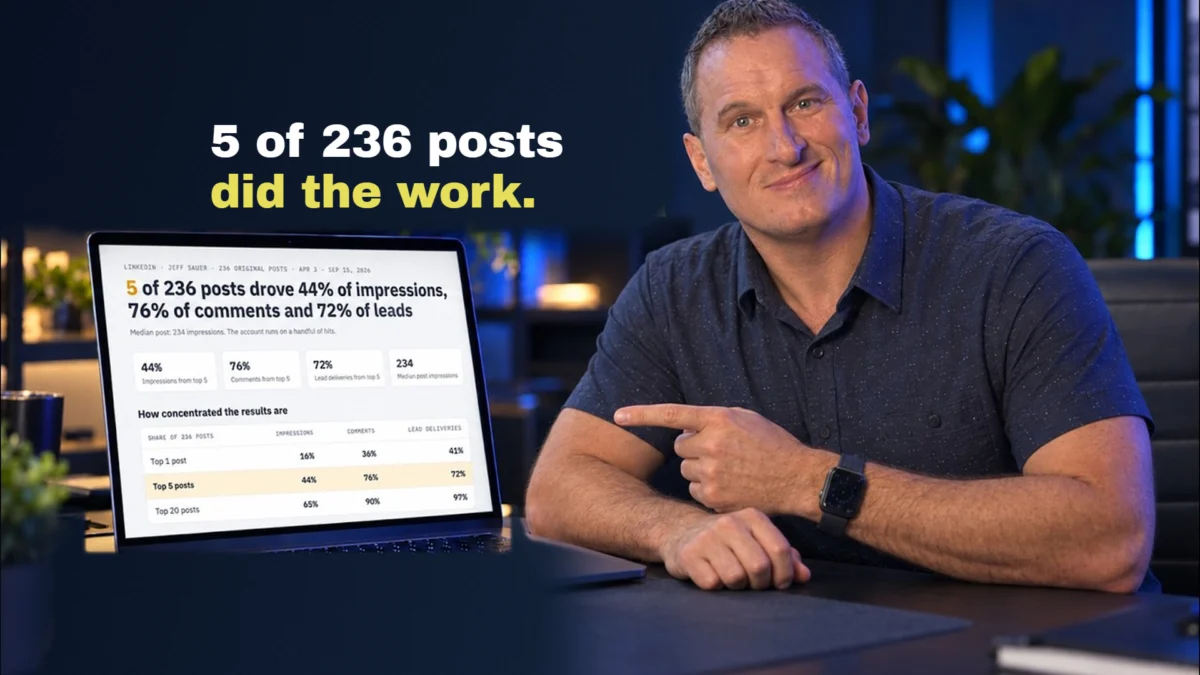
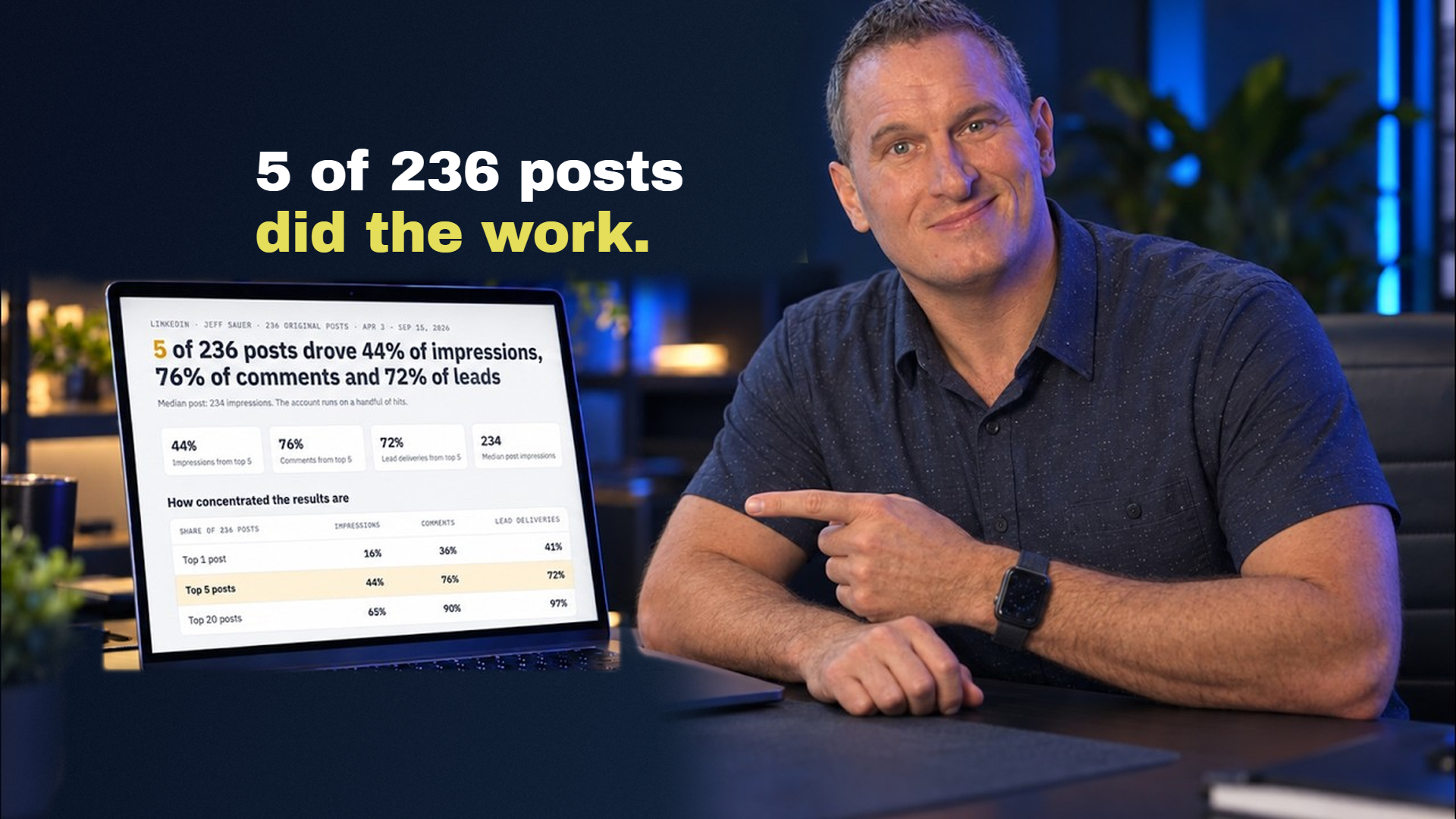
The traditional methodology for analyzing social media performance is undergoing a fundamental shift as digital marketing experts begin utilizing agentic artificial intelligence to bypass restrictive user interfaces. Jeff Sauer, a veteran digital marketer and founder of MeasureU, recently demonstrated that for high-volume content creators, a mere 2% of content can generate nearly three-quarters of total business leads. Specifically, Sauer’s analysis of 236 LinkedIn posts revealed that five individual entries produced 44% of total impressions, 76% of comments, and 72% of leads. Despite the high value of this data, LinkedIn’s native interface remains optimized for user retention and scrolling rather than deep analytical extraction, a gap that AI automation is now beginning to bridge.
The Structural Limitations of Native Social Media Analytics
For years, business owners and marketing professionals have struggled with the manual labor required to track performance on professional networking platforms. LinkedIn’s current architecture allows users to view individual post statistics but lacks a centralized, ranked dashboard for comparing long-term performance or identifying cross-post patterns. This necessitates a process of manual data entry—clicking into each post, recording metrics in a spreadsheet, and attempting to normalize data across different timeframes.
Sauer, who has spent two decades in the agency space and led companies to the Inc. 5000 list five times, argues that this manual "clicking around" is an intentional design choice by platforms to keep users within the ecosystem. The lack of an export button or a ranked view prevents users from seeing the "Pareto Principle" in action—the phenomenon where a small minority of efforts produce the majority of results. Without this visibility, marketers often fall into the trap of "posting blindly," unable to distinguish between high-performing formats and those that offer diminishing returns.
The Technological Shift: From Generative AI to Agentic Automation
The emergence of "agentic" AI marks a new phase in the evolution of digital tools. While the first wave of AI adoption focused on generative tasks—writing copy or creating images—the current phase focuses on "computer use." Tools such as the ChatGPT desktop application and Anthropic’s Claude Code are now capable of interacting with a user’s browser in real-time, effectively acting as a digital proxy that can navigate websites, read screen data, and execute tasks.
In Sauer’s workflow, the AI utilizes an existing browser session to access the user’s LinkedIn activity page. Because the AI acts through the user’s authenticated session, it does not require sensitive API (Application Programming Interface) permissions or third-party integrations, which are often costly or restricted by platform terms of service. By reading the Document Object Model (DOM) of the webpage, the AI can extract impression counts, engagement rates, and timestamps, compiling them into a structured table within minutes—a task that previously required hours of administrative labor.
Case Study Analysis: The 5-Post Lead Engine
The data retrieved through this automated process challenged several industry "best practices" and provided a more nuanced view of content ROI (Return on Investment). Sauer’s research into his own 236-post dataset provided several key insights into modern LinkedIn performance:
The Carousel Performance Paradox
A common narrative in digital marketing circles suggests that PDF carousels have lost their efficacy due to algorithmic shifts. However, Sauer’s data indicated that carousels remain highly effective, albeit volatile. While twelve out of thirteen carousels underperformed his account average, a single "hit" carousel—the "GTM Cookbook"—reached over 6,600 impressions. The takeaway was not that the format was "dead," but that the "hook" or cover slide was the primary determinant of success. Automated data extraction allowed for this granular comparison that manual scrolling would likely have missed.

The Mathematics of Engagement Signal
The analysis further quantified the value of early engagement. By tagging relevant parties who are likely to interact within the first hour of posting, creators can "manufacture" an early signal to the LinkedIn algorithm. Sauer’s data suggested a specific ratio: each comment on a high-performing post correlated with approximately 45 additional impressions. This compounding effect means that a post receiving ten early comments could potentially reach 450 more people than a post with zero initial engagement, as the algorithm interprets early activity as a sign of high-quality content.
Automated Comment Sweeps
Beyond data extraction, agentic AI is being used to manage community interaction. "Comment sweeps" involve the AI scanning high-performing threads to identify unanswered queries. Given the 45-impression-per-comment metric, an unanswered comment represents a lost opportunity for both relationship building and algorithmic reach. The AI can surface these missed connections and even draft context-aware replies for the user to review and approve, maintaining the human element while removing the logistical friction of community management.
Technical Requirements and Security Considerations
Implementing this level of automation requires a specific technical stack. Currently, two primary paths exist for professionals looking to adopt these workflows:
- The ChatGPT Path: This requires the ChatGPT Plus desktop application and a specific Chrome extension that serves as a bridge between the AI and the browser. This setup allows the AI to "see" the active browser window and navigate through the LinkedIn interface.
- The Claude Path: Utilizing "Claude Code," Anthropic’s tool for developers, users can grant the AI permission to control a Chrome instance. This is a more technical approach but offers similar capabilities in terms of screen reading and navigation.
A critical distinction in this technology is that these AI agents are not "bots" in the traditional, autonomous sense. They operate under direct instruction within a session monitored by the user. However, the adoption of such tools involves a trade-off regarding privacy. Granting an AI agent the ability to read a browser screen means it has access to any information visible on that screen. For many, the productivity gain—estimated by Sauer to address the 70% of knowledge work that consists of "navigating interfaces"—outweighs the privacy concerns, provided the user remains in control of the session.

Broader Implications for the Knowledge Economy
The shift toward AI-driven data extraction reflects a broader trend in the professional services industry. As generative AI makes content creation cheaper and more accessible, the volume of noise on platforms like LinkedIn is expected to increase. In this environment, "best practices" published in generic marketing articles become less valuable than proprietary, account-specific data.
Industry analysts suggest that the ability to systematically collect and act upon one’s own data will become a primary competitive advantage. In a world where everyone has access to the same Large Language Models (LLMs) to write posts, the "edge" lies in knowing exactly which topics and formats resonate with a specific audience.
Furthermore, this technology signals a potential displacement of low-level administrative tasks within marketing agencies. Tasks that were once delegated to junior associates or virtual assistants—such as manual reporting and comment monitoring—can now be handled by a single operator using an AI agent. This allows firms to operate with leaner teams and focus human talent on high-level strategy and creative decision-making.
Chronology of AI Integration in Social Media Management
To understand the significance of this shift, one must look at the timeline of social media management tools:

- 2010–2018: The Era of Manual Management. Users relied on native interfaces and basic scheduling tools like Hootsuite or Buffer.
- 2019–2022: The API Integration Era. Third-party analytics platforms (e.g., Sprout Social, Shield) gained popularity by using official platform APIs to pull data into custom dashboards.
- 2023: The Generative AI Boom. Tools like ChatGPT were primarily used to brainstorm content ideas and write drafts, but they remained "trapped" in their own chat interfaces.
- Late 2024–Present: The Agentic AI Era. With the release of "Computer Use" capabilities, AI can now step outside of its chat box and interact with the web directly, mimicking human navigation to perform complex tasks across multiple tabs and platforms.
Conclusion and Future Outlook
The methodology presented by Jeff Sauer highlights a turning point in how business owners interact with digital platforms. By leveraging AI to perform the "grunt work" of data extraction and community management, professionals can reclaim significant portions of their workweek.
The core message for the modern marketer is that the barrier to sophisticated data analysis is no longer technical or financial, but rather one of awareness. As AI agents become more refined, the gap between those who post blindly and those who post based on automated, proprietary data will likely widen. The "superhuman" feeling of efficiency described by early adopters of these tools is not a result of the AI doing the thinking, but of the AI removing the friction that prevents humans from thinking strategically. For the services business of the future, the integration of agentic AI is not merely a luxury but a necessary evolution in a data-saturated landscape.


 Nana Muazin
 Asep Darmawan