The modern business landscape, characterized by pervasive digital interaction, has redefined the bedrock of customer relationships. At the forefront of this evolution is Social Customer Relationship Management (Social CRM), a strategic imperative that transforms transient social media interactions – including comments, direct messages, brand mentions, and subtle sentiment signals – into actionable CRM context. This integration allows customer-facing teams across an organization to access a holistic view of every customer, prospect, and lead, ensuring that every engagement is informed, personalized, and impactful.
The Evolution of Customer Relationships: From Transactions to Engagements
Customer Relationship Management (CRM) has a storied history, evolving from simple contact databases in the 1980s to sophisticated enterprise-wide systems in the early 2000s, managing sales, marketing, and service processes. Initially, CRM focused on structured data: email exchanges, purchase histories, support tickets, and phone call logs. This traditional model provided a valuable, albeit retrospective, view of customer interactions. However, the advent and explosive growth of social media platforms fundamentally altered how consumers and businesses interact. Platforms like Instagram, X (formerly Twitter), Facebook, and LinkedIn transcended their initial roles as social networking sites to become primary channels for customer service inquiries, product research, brand comparisons, and purchasing decisions.

This shift presented both an opportunity and a challenge. Customers began airing grievances, asking questions, and expressing brand loyalty publicly, expecting real-time responses and personalized attention. The sheer volume and unstructured nature of this social data quickly overwhelmed traditional CRM systems, creating a critical need for a new approach. Social CRM emerged as the essential bridge, designed to capture, analyze, and integrate these dynamic social conversations into a company’s existing customer profiles, thereby creating a truly 360-degree view of the customer journey.
Traditional vs. Social CRM: A Paradigm Shift in Customer Understanding
The distinction between traditional and Social CRM is crucial for understanding its strategic value. Traditional CRM, while foundational, primarily focuses on past, structured interactions. It’s largely reactive, responding to events that have already occurred through established channels like email and phone. Data freshness is historical, meaning insights are often derived from completed transactions or communications.

Social CRM, in contrast, thrives on real-time conversations and unstructured data. It proactively monitors, listens, and engages across social platforms, transforming ephemeral mentions and comments into enduring customer intelligence. This approach creates a more complete picture of each customer, allowing teams to anticipate needs, address concerns before they escalate, and build stronger, more authentic relationships.
A comparative overview highlights this paradigm shift:
- Focus: Traditional CRM centers on past actions (purchases, emails); Social CRM emphasizes real-time conversations.
- Data Types: Traditional tracks structured data (emails, purchases, support tickets); Social CRM adds unstructured data (comments, mentions, DMs, sentiment).
- Management: Traditional often siloed within one team; Social CRM is shared across marketing, sales, and support.
- Approach: Traditional is mostly reactive; Social CRM is proactive and relationship-focused.
- Channel Focus: Traditional prioritizes email and phone; Social CRM extends to all social platforms.
- Data Freshness: Traditional relies on historical data; Social CRM leverages real-time insights.
This shift is not merely technological but strategic. As Forrester’s Global Customer Experience Index found, the gap between the experience brands intend to deliver and the one customers actually receive is widening. Social media is often where this disparity becomes most visible, and publicly. Furthermore, responsiveness is paramount: Hootsuite’s Social Media Consumer Report indicates that 53% of respondents value quick responses to direct questions and comments, while 32% will unfollow a brand that fails to interact with its community. The sheer volume of social interactions today means that manual data transfer is unsustainable; automated integration of social data with CRM records is what makes Social CRM both practical and powerful.
Anatomy of Social CRM: Types and Mechanisms for Integration
Social CRM isn’t a monolithic solution; it manifests in various forms to suit different organizational needs. There are generally three main types:
- Built-in Options: These involve social tools added directly to an existing CRM platform. While convenient for keeping everything in one system, they may offer less depth in social media management capabilities.
- Standalone Social CRM Platforms: These specialized platforms, like Hootsuite, excel in social media management and then sync data back to traditional CRMs through robust integrations. This approach provides stronger social capabilities without compromising customer record integrity.
- Hybrid Approaches: Emerging as a powerful middle ground, hybrid solutions (e.g., Hootsuite Social OS) integrate native social listening, publishing, and engagement with AI-powered insights, then feed this intelligence into connected systems like Salesforce or Microsoft Dynamics 365. This blurs the line between a "social tool" and a "CRM," optimizing workflows for both.
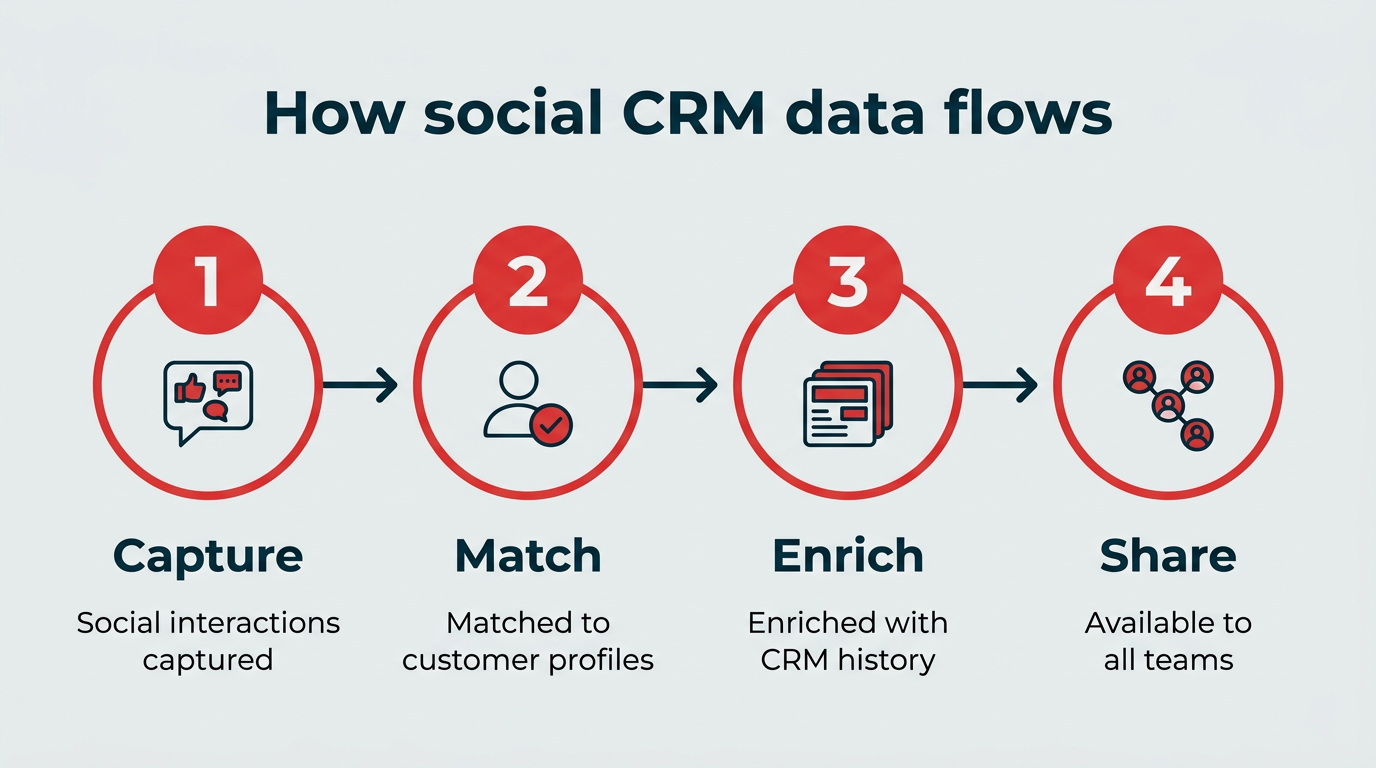
Regardless of the type, the operational flow of Social CRM typically involves four critical steps:
- Capture Social Interactions: Social media activity, including comments, messages, mentions, and other engagements from various platforms, is automatically ingested.
- Match to Customer Profiles: These interactions are then intelligently matched to existing customer profiles within the CRM or used to create new ones if no match is found.
- Enrich with CRM History: The social profile is enriched with comprehensive context from the traditional CRM, including past purchases, support tickets, and previous communications.
- Share with All Teams: This complete, unified customer view is then made accessible to all relevant teams – marketing, sales, and customer service – ensuring consistent, informed interactions.
For instance, a customer sending a direct message on Instagram will have that message appear alongside their entire interaction history, from past emails to support calls, allowing any team member to respond with full context.
The AI Imperative: Transforming Social CRM Capabilities
Artificial intelligence (AI) is not merely augmenting Social CRM; it is fundamentally reshaping it. Gartner now defines CRM sales platforms as "AI-driven systems," recognizing that AI handles the scale, sorting, and prioritization that once consumed valuable human resources. AI social CRM ensures that customer data becomes actionable precisely when a response is needed, rather than surfacing in a report weeks later.
AI’s most significant practical effects include:
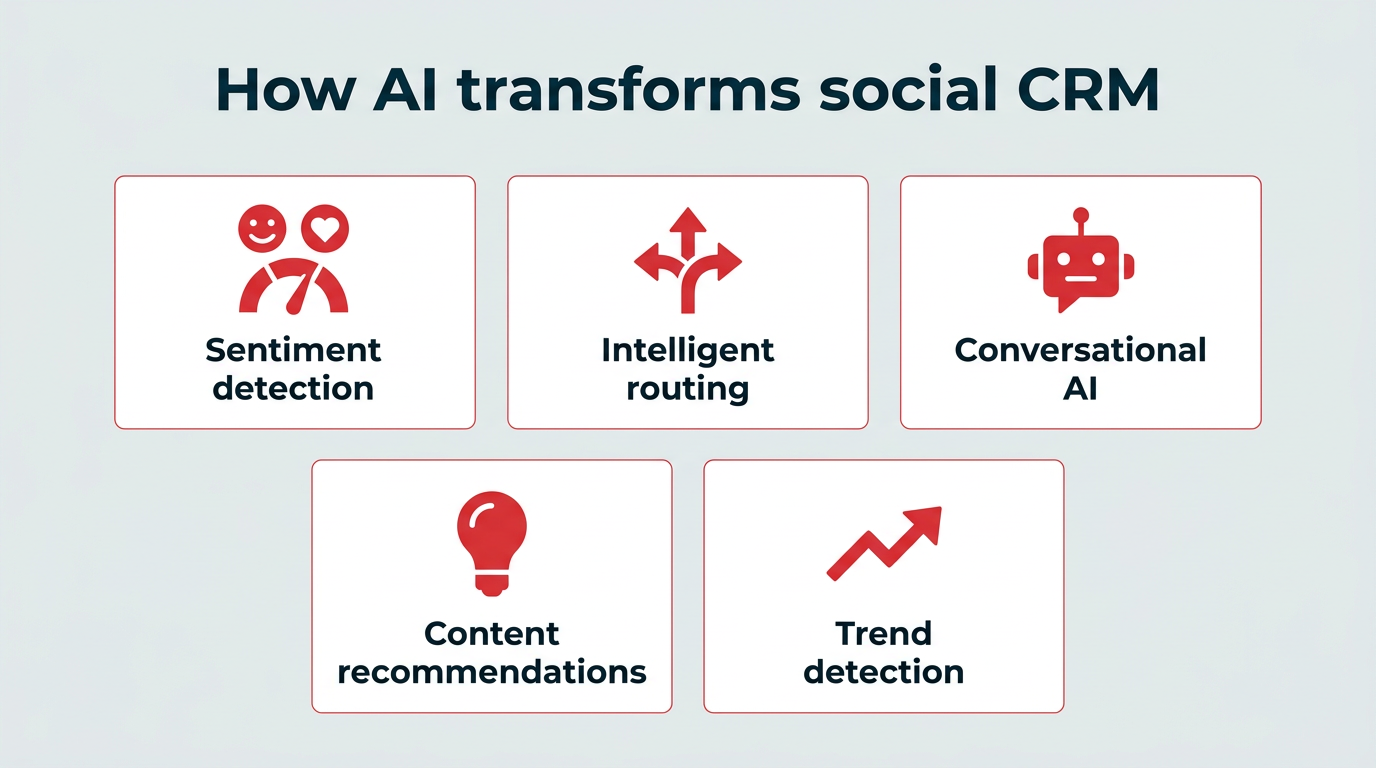
- Automated Sentiment Analysis: AI can instantly detect the emotional tone (positive, negative, neutral) of social interactions, flagging urgent complaints or opportunities for proactive engagement.
- Intelligent Routing: Messages and mentions are automatically routed to the most appropriate team member or department based on topic, urgency, and customer history, reducing response times significantly.
- Predictive Insights: AI analyzes patterns in social data to predict customer needs, identify churn risks, or pinpoint potential sales opportunities, allowing teams to act proactively.
- Automated Responses and Chatbots: For routine inquiries, AI-powered chatbots can provide instant, accurate responses, freeing human agents for more complex issues.
- Topic and Trend Detection: Advanced social listening tools, powered by AI, can identify emerging topics, trending conversations, and shifts in public opinion across multiple languages and markets, providing invaluable market intelligence.
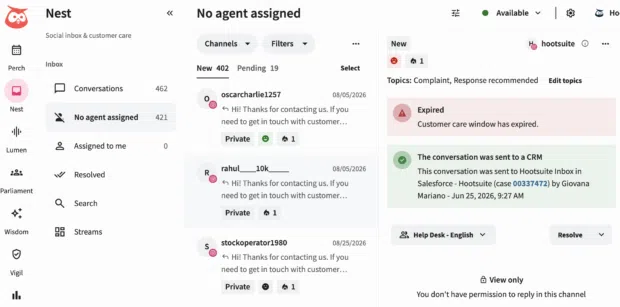
This transforms traditional workflows. Instead of an agent sifting through hundreds of unsorted messages, an AI-triaged queue presents urgent complaints at the top, flags known customers with their full CRM history, and even provides pre-drafted answers for common questions. Platforms like Hootsuite Social OS, with its Lumen for intelligence and listening, Nest for a governed inbox, and Wisdom as the AI agent layer, exemplify this integration. The goal is not to replace human interaction but to empower it, ensuring that human agents have the complete context needed to deliver exceptional customer experiences. Forrester predicts that 30% of firms will damage CX growth in 2026 by misimplementing AI self-service, underscoring the importance of balancing automation with genuine human connection.
Impact Across Business Functions

Elevating Customer Service:
Social CRM dramatically improves customer service by enabling faster, smarter, and more personalized responses. Research indicates that using social media for CRM significantly enhances customer relationship quality. With 37% of consumers expecting a response the same day, immediate context is often the difference between resolution and a lost customer.
- Increased Relationship Quality: By responding personally and promptly, brands foster stronger bonds. For example, Starbucks frequently demonstrates effective social CRM by quickly addressing negative feedback on Instagram, either publicly offering assistance or moving sensitive conversations to direct messages. This responsiveness builds trust and mitigates public dissatisfaction.
- Faster and Smarter Responses: Social CRM tools connect messages to individual customer profiles, providing a comprehensive history in one view. This eliminates the need for customers to repeat themselves and allows teams to deliver consistent, personalized replies. Intelligent routing, as seen in Hootsuite’s Nest inbox, automatically assigns incoming requests based on topic, sentiment, and account, ensuring urgent issues are handled without delay.
Accelerating Sales Cycles and Lead Generation:
Social media is no longer merely a branding tool; it’s a powerful engine for lead generation and qualification. Social CRM adds crucial "signal" to the sales process.
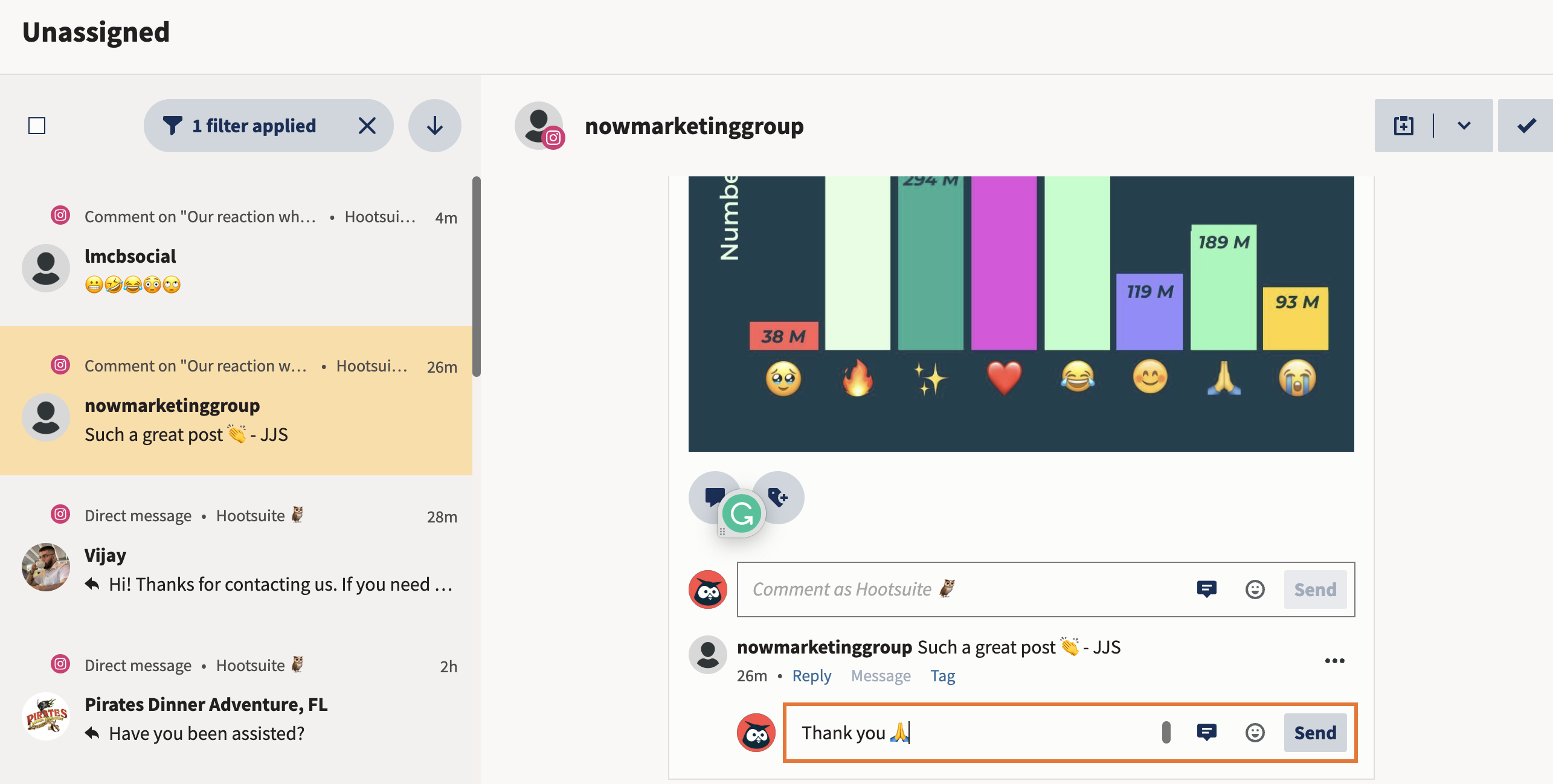
- Turning Conversations into Leads: Social CRM helps fill the sales funnel by identifying prospects who show interest through comments, shares, or direct inquiries. A prospect who engages with multiple product posts, saves comparison content, and asks pricing questions provides clear intent signals that a simple contact list cannot.
- Qualifying and Nurturing Leads: By integrating social activity into lead profiles, sales teams gain immediate context, understanding interests and pain points before initial outreach. AI further refines this by scoring leads based on engagement patterns, prioritizing those with the highest conversion potential. Nurturing these leads through targeted content, drip campaigns, and opt-in newsletters keeps the relationship warm, moving prospects toward a sale.
- Measuring the Value of Social Leads: Accurately measuring the ROI of social sales efforts is vital for budget allocation. Social CRM facilitates this by tagging social-sourced leads within the CRM, allowing them to be tracked through standard pipeline reporting. This provides a clear understanding of their win rate, deal size, and sales cycle, justifying investment in social advertising and engagement strategies. KiwiCo, for instance, found Instagram Reels to be a significant acquisition lever when engaging audiences authentically and with an understanding of their needs.
Informing Marketing Strategy:
Connecting CRM and social media provides a richer understanding of customer demographics, preferences, and expectations, empowering marketing teams to create more impactful campaigns.
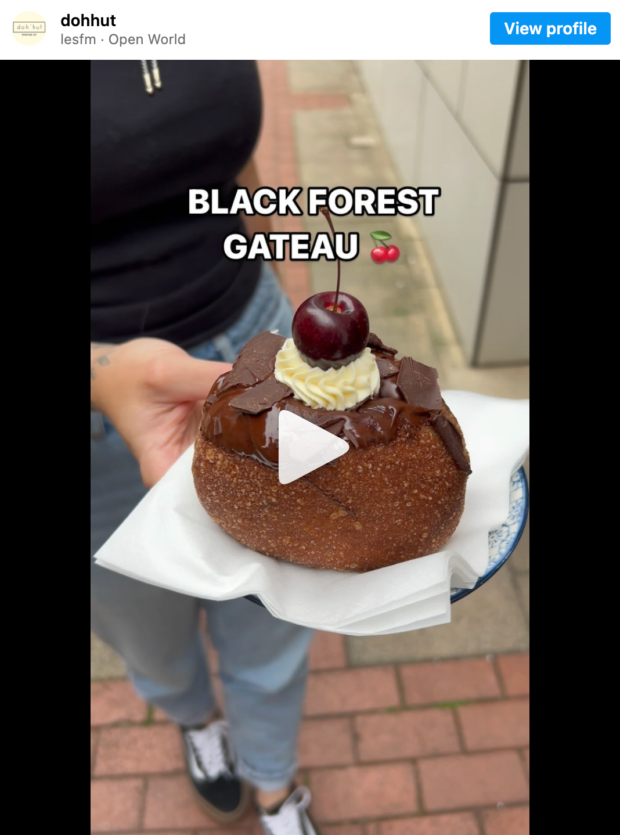
- Creating Targeted Content: Social CRM eliminates guesswork, allowing marketers to tailor content directly to the needs and interests expressed by their target audience. The Hootsuite Consumer Report highlights that 40% of respondents unfollow brands that post boring content. By understanding audience engagement (e.g., Dohhut’s viral doughnut tear-open Reels), brands can create content that resonates deeply, driving engagement and follower retention.
- Dynamic Audience Insights through Social Listening: Social listening tools, enhanced by Social CRM, extend beyond direct engagements to track broader conversations, competitor activities, industry trends, and key influencers. This provides a wider lens to understand public sentiment, spot early feedback, optimize campaigns, and pivot marketing strategies in real-time. AI-powered tools like Lumen accelerate this by surfacing emerging topics and sentiment shifts across languages and markets, treating listening as an input to the content calendar rather than a mere monthly report.
- Connecting Activity to Business Results: One of the most persistent challenges for marketers is proving social ROI. Hootsuite’s 2024 Social Trends Report found that 33% of respondents struggled with connecting social metrics to business metrics. Social CRM directly addresses this by linking social activity (comments, clicks) to tangible outcomes like purchases, subscriptions, and customer lifetime value. This granular attribution allows marketing teams to demonstrate the true impact of their efforts and continuously optimize strategies for maximum return.
Navigating the Landscape: Challenges and Strategic Implementation
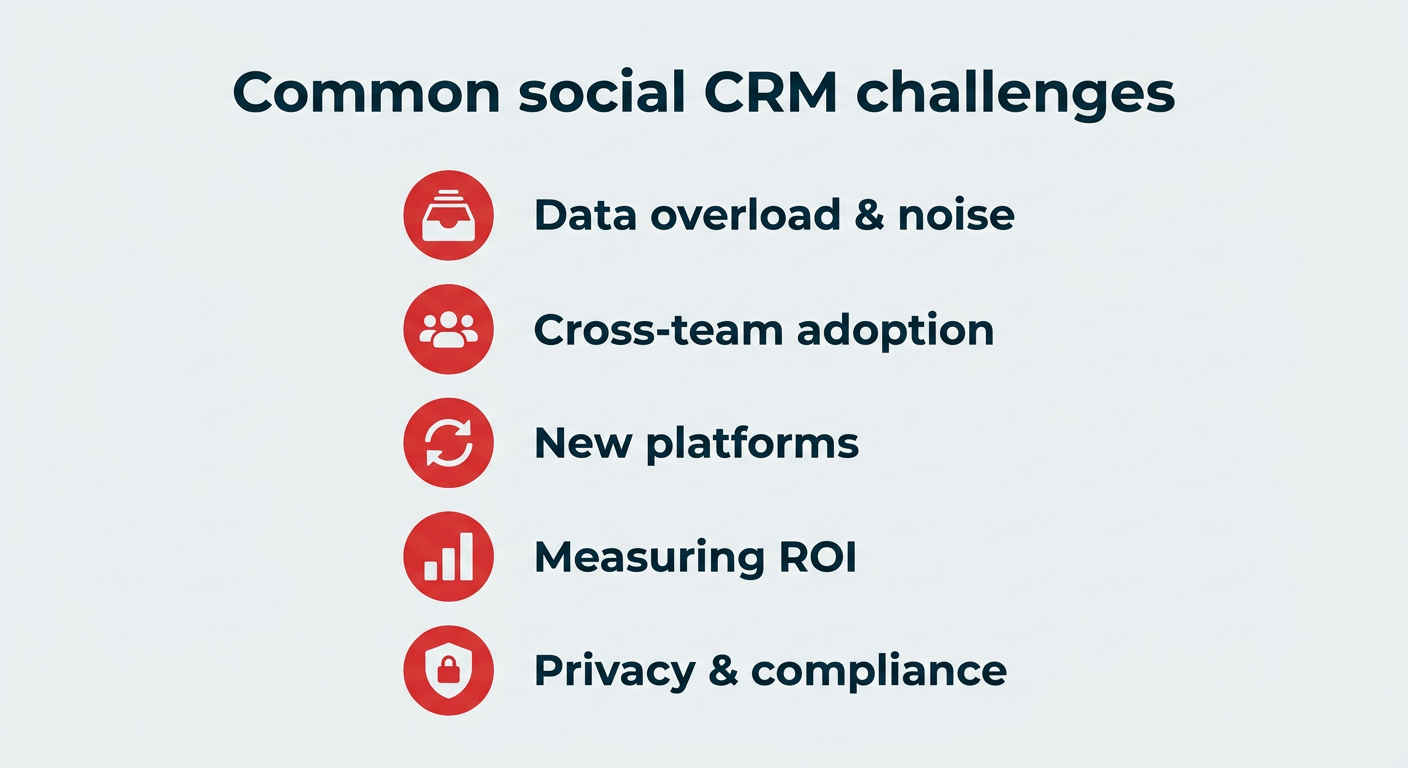
While the benefits of Social CRM are substantial, its implementation is not without challenges. The biggest obstacles include managing the immense volume of unstructured social data, securing cross-team adoption, and keeping pace with rapidly evolving social platforms and privacy regulations. Data privacy, in particular, requires meticulous planning to ensure compliance with global regulations like GDPR and CCPA.

A structured strategic framework is essential for successful adoption:
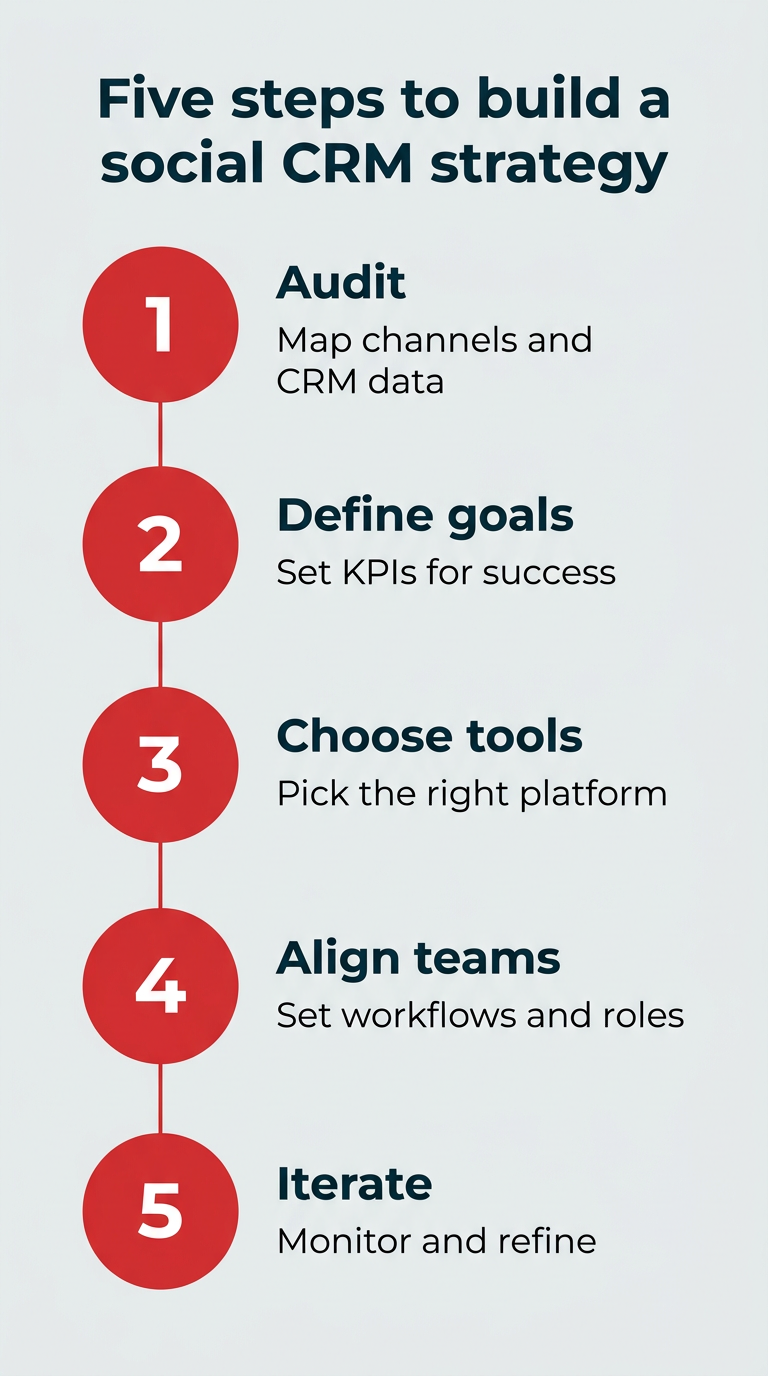
- Audit Your Current Setup: Begin by mapping existing social channels, customer interaction points, and the data residing in your traditional CRM. This reveals gaps and opportunities where social data can add the most value.
- Define Clear Goals and KPIs: Articulate what success looks like. Whether it’s reducing customer service response times, increasing qualified lead volume, or improving content engagement, clear, measurable goals and KPIs are crucial for guiding tool selection and tracking progress.
- Choose the Right Tools and Integrations: Select platforms that seamlessly connect social conversations to your CRM with minimal manual intervention. Solutions like Hootsuite offer comprehensive social listening, engagement, and reporting, integrating with leading CRMs like Salesforce and Microsoft Dynamics 365.
- Align Teams on Workflows: Successful Social CRM requires collaboration. Marketing, sales, and support teams must agree on roles, responsibilities, routing rules, and response guidelines to prevent dropped interactions or duplicated efforts.
- Monitor, Measure, and Iterate: Continuously review KPIs and adapt your strategy based on insights. AI-driven analytics can significantly shorten this feedback loop by flagging shifts in sentiment or emerging trends before they appear in traditional reports. Given the dynamic nature of social media, Social CRM is an ongoing refinement process, not a one-time setup.
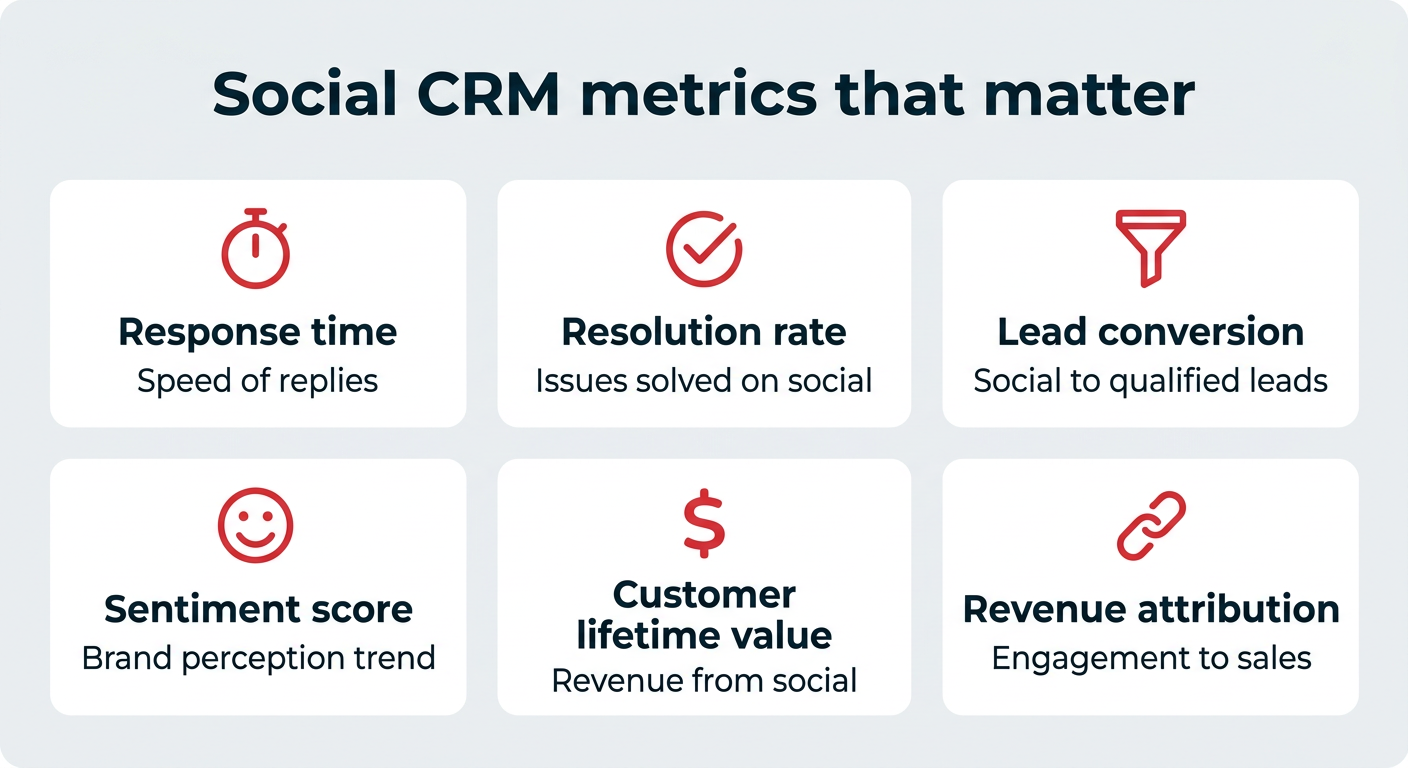
Critical Metrics for Social CRM Success:
Tracking the right metrics is vital for demonstrating value and optimizing strategy:
- Response Time: Average time taken to respond to social inquiries.
- Resolution Rate: Percentage of social customer service issues resolved on the first contact.
- Lead Conversion Rate: Percentage of social leads that convert into sales.
- Sentiment Score: Overall emotional tone of social mentions (positive, neutral, negative).
- Customer Lifetime Value (CLV): The total revenue a customer is expected to generate over their relationship with a brand, enhanced by social engagement.
- Revenue Attribution: Direct revenue linked to social interactions and campaigns.
Integrating Social CRM into the Tech Stack:
Effective Social CRM relies on seamless integration with existing systems. This is achieved through native connectors, APIs, and third-party integrations that ensure social data flows effortlessly into platforms like Salesforce or Microsoft Dynamics 365. The goal is to eliminate manual data entry, ensuring that social interaction history is visible wherever your team works. Hootsuite, for example, offers over 100 apps and integrations, including MCP connectors that allow AI tools to query social data directly, underscoring the principle: if it doesn’t reduce the number of places your team needs to check, it’s not truly integrated.
Leading Social CRM Tools and Platforms
The market offers a range of powerful Social CRM tools, each with distinct strengths:
-
Hootsuite: Best for all-in-one social media management, listening, and engagement. Hootsuite Social OS centralizes conversations from all connected channels, offering Lumen for insights, Nest for a governed inbox, Perch for content, and Wisdom as an AI agent layer. It integrates natively with leading CRMs.
- Key Benefits: Unified inbox, AI-powered listening and insights, seamless CRM integrations, comprehensive reporting, robust governance.
- Pricing: Starts at $99/user/month.
-
HubSpot: A full-funnel marketing, sales, and service CRM platform designed to manage contacts across the entire pipeline. Its Smart CRM connects dedicated hubs for marketing, sales, and service.
- Key Benefits: Comprehensive CRM suite, marketing automation, robust sales tools, customer service features, free basic tools.
- Pricing: Free basic tools; paid plans start at $20/month per seat.
-
Salesforce: An enterprise-grade CRM renowned for sales automation and AI-driven insights, built on its proprietary platform with a conversational AI assistant.
- Key Benefits: Powerful sales automation, AI-driven insights (Einstein AI), extensive customization, vast app ecosystem, strong for large enterprises.
- Pricing: Starts at $25/user/month.
-
Microsoft Dynamics 365: Offers modular, customizable CRM systems to unify teams and provide a holistic customer view, leveraging AI for predictive analytics and audience recommendations.
- Key Benefits: Highly customizable, integrates with Microsoft ecosystem, AI-powered predictions, modular components for tailored solutions, strong for businesses already using Microsoft products.
- Pricing: Individual components start at $65 per user per month.
-
SugarCRM: A flexible, customizable CRM platform that allows businesses to tailor the focus for their specific team needs.
- Key Benefits: High degree of customization, automation of sales and marketing processes, strong reporting capabilities, mobile CRM access, cloud-based flexibility.
- Pricing: Starts at $19/user/month for Essentials tier.
In conclusion, Social Customer Relationship Management is no longer an optional add-on but a critical component of a comprehensive customer strategy. By seamlessly integrating the dynamic world of social media with the structured intelligence of traditional CRM, businesses can unlock unprecedented insights, build stronger relationships, and drive tangible business results. The future of customer engagement is undeniably social and increasingly powered by intelligent automation, making Social CRM an indispensable tool for competitive advantage in the digital age.