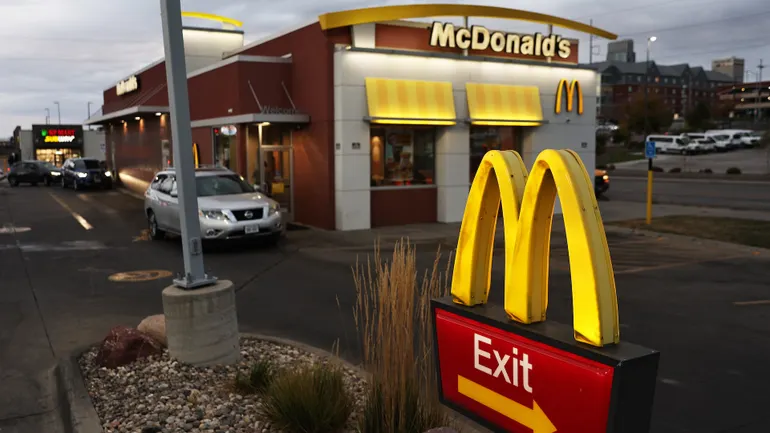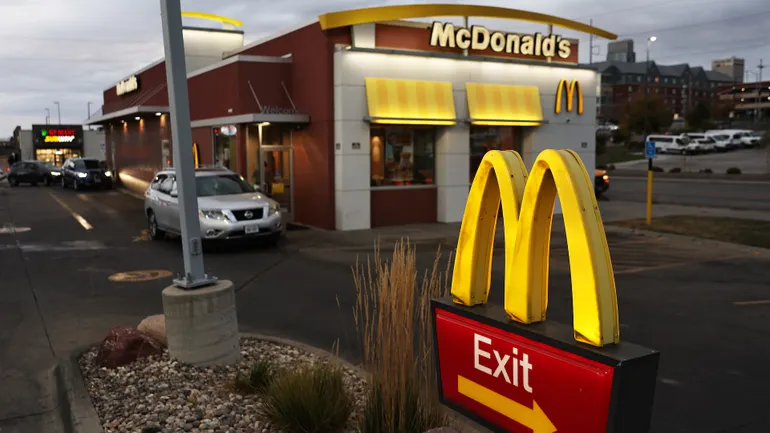
McDonald’s is charting a bold new course for its future, officially announcing the pilot of its own media network across 450 company-owned U.S. restaurants last month. This significant move, detailed during the fast-food giant’s investor day presentation on Wednesday, signals a strategic pivot towards monetizing customer engagement across its digital and physical touchpoints. The Golden Arches aims to transform this nascent media network into a billion-dollar enterprise by offering advertising opportunities to external brands during crucial customer interaction moments – from app usage and kiosk orders to digital menu boards and in-store experiences.
The announcement comes on the heels of earlier media reports that surfaced earlier this week, providing a glimpse into McDonald’s burgeoning advertising ambitions. The formal unveiling during the company’s first investor day since 2023 underscored a broader strategic plan, first introduced in June, which emphasizes a consumer-centric approach to brand building and revenue generation. Executives articulated a vision where McDonald’s leverages its vast customer base and digital infrastructure not only to enhance the customer experience but also to create new, high-margin revenue streams with minimal operational overhead.
"Commerce media is one of the fastest-growing areas in advertising and is expected to reach more than $100 billion in the U.S. alone by 2028," stated Morgan Flatley, McDonald’s Executive Vice President and Global Chief Marketing Officer, during the presentation. Her remarks highlighted the immense market potential and McDonald’s strategic positioning to capitalize on this trend. Flatley further elaborated on the financial and operational advantages, emphasizing that this initiative offers "an opportunity to generate revenue for the system with little in the way of additional cost, no operational complexity and no disruption to our customer experience." This suggests a carefully calculated strategy designed to integrate advertising seamlessly without compromising the core McDonald’s dining experience.
The Rise of Commerce Media and McDonald’s Strategic Entry
The concept of commerce media, which involves advertising within a retail or transactional environment, has gained significant traction in recent years. It offers brands a unique opportunity to reach consumers at the point of decision-making, a far more opportune moment than traditional advertising channels. Research from eMarketer projects the U.S. commerce media market to surpass $100 billion by 2028, underscoring the substantial growth trajectory of this sector. McDonald’s, with its extensive network of restaurants and a deeply integrated digital ecosystem, is exceptionally well-positioned to become a major player in this evolving advertising landscape.
The pilot program, initiated in 450 company-owned restaurants, represents a controlled testbed for McDonald’s media network. This phased approach allows the company to refine its advertising technology, sales strategies, and operational integration before a wider rollout. The chosen touchpoints – the McDonald’s app, in-store kiosks, digital menu boards, and the broader restaurant environment – are all areas where customers actively engage with the brand. By placing relevant advertisements within these moments, McDonald’s aims to capture consumer attention and drive incremental revenue without overtly disrupting the primary purpose of these interactions: ordering food.
A Revamped Marketing Playbook: Fewer, Bigger, and More Ownable Campaigns
Beyond the media network, McDonald’s also detailed a significant overhaul of its marketing strategy, designed to be more efficient, effective, and culturally relevant. This revamped approach is built on a three-pronged pillar focused on consumer engagement, brand leadership, and leveraging the immense power of McDonald’s fandom.
Central to this new model is a shift towards "fewer, bigger campaigns." Instead of a rapid succession of promotional efforts, McDonald’s plans to prioritize larger, more impactful global campaigns built around its own intellectual property (IP). This strategy aims to reduce reliance on external partnerships, which can be costly and subject to fluctuating trends, and instead cultivate brand equity through owned content.
"We’re roughly doubling our investment in longer-running baseline-building programs focused on core credentials like our brand, taste and quality, and value, while reducing the number of short-term promotional campaigns," Flatley explained. This recalibration signifies a strategic investment in building enduring brand value, moving away from the "boom-bust dynamic" of short-term promotions.
The wisdom behind this strategic shift was partly informed by recent performance. During the company’s Q2 earnings call, executives acknowledged that the rapid cadence of campaigns, including its FIFA campaign, a "K-Pop Demon Hunters" initiative, and promotions around its value menu, had acted as a "drag on operations." This experience underscored the need for a more streamlined and focused marketing calendar.
McDonald’s CEO Chris Kempczinski reinforced this sentiment during the investor event, stating, "As we continue to make the upgrade around the taste and quality of our food and drive consumer awareness of it… that’s going to be the gift that keeps on giving. You actually become a little bit less dependent on [whether] you have the right movie property this month or… the right other partnership which creates a little bit of that boom-bust dynamic." This focus on core product enhancements and consistent brand messaging aims to create a more stable and predictable revenue stream, less susceptible to the vagaries of fleeting pop culture trends.
Leveraging Fandom and Global Efficiencies
A cornerstone of McDonald’s new marketing strategy is its deep appreciation and intentional cultivation of its global fanbase. Flatley highlighted that McDonald’s commands approximately 40% of positive social media mentions among leading quick-service restaurant (QSR) brands – a figure exceeding its next three competitors combined. This immense fan engagement represents a powerful asset that McDonald’s intends to harness more effectively.
"These fans are the foundation of our new marketing model, which includes engaging them in big global moments and building deeper individual relationships," Flatley asserted. "We’re evolving exactly how we build our brand to be more efficient and effective at moving culture to support customers making us their first choice." This indicates a move towards co-creation and community building, where fans are not just passive recipients of marketing but active participants in shaping the brand’s narrative.
The "World Menu Heist" campaign was presented as a prime example of this new model in action. This global initiative successfully brought popular international menu items to new markets, tapping into existing fan interest and generating millions of views and thousands of social media comments. Crucially, the campaign leveraged McDonald’s own brand equity and IP, demonstrating its ability to drive significant guest traffic and sales through internally generated concepts.
Manu Steijaert, President of International Operated Markets, elaborated on the efficiency gains realized through such globally scaled campaigns. "We worked with around 10 major partners for Menu Heist versus the 40 that would traditionally have been used if each market had to execute locally, reaching greater scale than any market could achieve on its own." This streamlined partnership model not only reduces complexity but also amplifies the reach and impact of marketing efforts.
The success of past viral campaigns, such as the Grimace Shake phenomenon, Adult Happy Meals, and various "Famous Orders," has provided McDonald’s with valuable insights into the power of unique brand experiences. The company believes these types of initiatives will become even more potent as it continues to innovate its menu and pursue global efficiencies.
Unifying Digital Experiences for Global Scale
In parallel with its marketing and media network advancements, McDonald’s is making significant strides in unifying its digital infrastructure to support global scale and innovation. The company is piloting a unified mobile platform, dubbed Global Mobile App One (GMA One), which is slated for a rollout in France later this year, with broader international expansion planned by the end of 2028.
This ambitious project aims to learn from technologically advanced markets like China, which are at the forefront of social commerce and sophisticated digital engagement. Historically, digital experiences at multinational corporations have often been developed on a market-by-market basis, leading to fragmented codebases, disparate development plans, and ultimately, slow, expensive, and inefficient processes.
Dario Baroni, President of McDonald’s International Developmental Licensed Markets, explained the company’s strategic rearchitecture of its digital foundation. "Over the last three years, we rearchitected our digital foundation from the ground up, unifying ordering, marketing, loyalty and data into one single global backbone." This foundational overhaul is designed to enable rapid deployment of new features and capabilities across nearly all markets.
The new platform’s modular architecture is also "AI ready," according to Baroni, allowing it to seamlessly integrate with emerging conversational commerce channels without requiring extensive re-engineering of its core systems. This forward-thinking approach positions McDonald’s to adapt quickly to evolving consumer behaviors and technological advancements, ensuring its digital presence remains competitive and innovative on a global scale.
Broader Implications and Future Outlook
The strategic initiatives unveiled by McDonald’s at its investor day paint a picture of a company proactively adapting to the changing consumer and advertising landscapes. The launch of its media network signifies a significant diversification of revenue streams, moving beyond traditional food sales to capitalize on its established customer engagement points. This move could potentially redefine how fast-food chains monetize their digital and physical footprints, setting a precedent for competitors.
The revamped marketing strategy, with its emphasis on fewer, bigger, and more ownable campaigns, coupled with the leveraging of fan engagement, suggests a desire for greater brand control and long-term value creation. By investing more in core brand credentials and reducing reliance on fleeting partnerships, McDonald’s aims for a more sustainable and resilient marketing engine.
Furthermore, the global unification of its digital platforms is a critical enabler for both the media network and the broader marketing strategy. A robust, agile, and AI-ready digital backbone will allow McDonald’s to deliver personalized experiences, integrate new advertising technologies, and respond swiftly to market demands across its vast international operations.
The implications for the advertising industry are considerable. McDonald’s entry into commerce media, backed by its substantial reach and customer data, could significantly alter the competitive dynamics of the digital advertising market. It also presents an attractive new channel for brands seeking to connect with consumers at the point of purchase.
As McDonald’s continues to pilot its media network and roll out its new marketing and digital strategies, the industry will be watching closely to assess the long-term impact on its financial performance and brand strength. The company’s ambitious vision signals a commitment to innovation and a forward-looking approach designed to secure its position as a global leader in the years to come.