In an era defined by digital omnipresence, the question for businesses is no longer if they need an online presence, but how effectively they can be discovered. For any enterprise seeking to attract, engage, and convert an audience through its website, Search Engine Optimization (SEO) stands as an indispensable cornerstone of marketing strategy. It is the sophisticated process of enhancing a website’s visibility within search engine results, ultimately driving qualified traffic and fortifying brand authority.
SEO, as succinctly defined by Alex Moss, Principal SEO at Yoast, is "both the art and science of improving a website, and pages within, to be as visible as possible for when people search for a relevant topic within any search platform. SEO covers many areas from technical aspects including optimizing a site’s performance and structure, to enhancing brand authority by providing great content and matching it with that person’s search intent." This definition underscores SEO’s dual nature, blending technical precision with creative content strategy, all aimed at connecting user intent with relevant information. Today, its scope extends beyond traditional search engines like Google and Bing, encompassing AI-powered search experiences, chatbots, and diverse discovery platforms, making it a critical discipline for any modern digital marketing playbook.
The Mechanics of Search: How Engines Discover and Rank Information
At its core, SEO works by aligning websites with the operational mechanisms of search engines, which primarily involve three stages: crawling, indexing, and ranking.
-
Crawling: Search engines deploy automated programs, known as "crawlers" or "spiders," to systematically explore the internet. These bots follow links from known pages to discover new and updated content, reading the code and content of each page they encounter. Essential technical elements like sitemaps (XML files listing a website’s URLs) and robots.txt files (instructions for crawlers) guide these bots, ensuring that critical pages are discovered efficiently while irrelevant ones are omitted.

-
Indexing: Once crawled, the information gathered from each page is processed and stored in a colossal database known as the search engine’s index. This index is a vast, organized catalog of the entire web, constantly updated with fresh content and revised pages. For a page to appear in search results, it must first be successfully indexed. Factors like duplicate content, poor site structure, or canonicalization issues can hinder proper indexing.
-
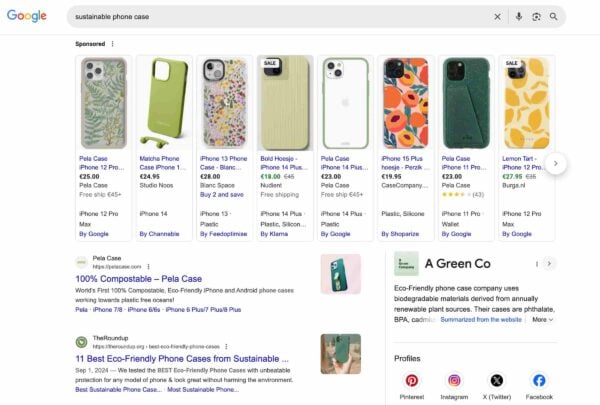
Ranking: When a user enters a search query, the search engine retrieves relevant pages from its index. It then employs complex algorithms, increasingly powered by machine learning and artificial intelligence, to determine the most relevant and authoritative pages for that specific query. These algorithms assess hundreds of ranking factors, presenting the results in a prioritized order. For instance, a search for "sustainable phone case" will trigger Google’s algorithms to scour its index for pages that not only contain these keywords but also demonstrate authority, relevance, and a positive user experience related to the topic. The displayed results, often accompanied by images or product listings, represent Google’s best effort to match the user’s implicit intent with the most suitable content.
Organic vs. Paid Search: A Strategic Distinction
It is crucial to differentiate between organic search results, which are the focus of SEO, and paid search results. Organic results are unpaid listings that appear based on their relevance and authority as determined by search engine algorithms. Conversely, paid search results (often labeled "Ad" or "Sponsored") are advertisements for which businesses pay to appear at the top of search engine results pages (SERPs). While paid advertising offers immediate visibility and precise targeting, SEO delivers a sustainable, cost-effective stream of traffic over the long term. Both strategies have unique benefits and drawbacks, often complementing each other within a comprehensive digital marketing framework. For example, a business might use paid ads to quickly test new keywords or promotions, while simultaneously investing in SEO for enduring brand visibility and authority.
The Evolution of Search Engine Optimization: A Historical Perspective
The journey of SEO mirrors the rapid advancements of the internet itself, evolving from rudimentary tactics to a sophisticated, user-centric discipline.

-
The Early Days (1990s): SEO emerged in the mid-1990s as webmasters sought to get their sites listed on nascent search engines like AltaVista and Yahoo Directory. Algorithms were simplistic, primarily relying on keyword density (how many times a keyword appeared on a page) and meta tags. This led to "keyword stuffing," where pages were crammed with keywords, often making the content unreadable, but effectively gaming the system.
-
Google’s Rise and Algorithm Shifts (Early 2000s): Google’s arrival revolutionized search with its PageRank algorithm, which prioritized links as "votes of confidence" from other websites. This marked a shift towards valuing authority and external validation. However, the industry quickly adapted, leading to "link farming" and other manipulative link-building schemes. Google responded with a series of significant algorithm updates:
- Panda (2011): Targeted low-quality, thin, and duplicate content, penalizing websites that offered little value to users.
- Penguin (2012): Focused on combating manipulative link schemes, penalizing sites with unnatural or spammy backlinks.
- Hummingbird (2013): Represented a major overhaul in how Google processed queries, moving towards semantic search and understanding the meaning behind searches rather than just keywords.
- Mobilegeddon (2015): Prioritized mobile-friendly websites in mobile search results, reflecting the growing dominance of smartphone usage.
- RankBrain (2015): Introduced machine learning to help interpret ambiguous queries and improve the relevance of search results, especially for novel queries.
-
User Experience and E-E-A-T (2016-Present): Google’s updates increasingly emphasized user experience (UX) and content quality. Metrics like page speed, mobile-friendliness, and Core Web Vitals (a set of metrics related to loading, interactivity, and visual stability) became crucial ranking factors. The concept of E-A-T (Expertise, Authoritativeness, Trustworthiness), later expanded to E-E-A-T (Experience, Expertise, Authoritativeness, Trustworthiness), became central to Google’s quality guidelines, especially for "Your Money Your Life" (YMYL) topics (e.g., finance, health, safety) where accurate and trustworthy information is paramount.
-
The AI Era (Current & Future): The advent of large language models and generative AI is reshaping the search landscape once again. AI-powered search results, AI Overviews, and integrated chatbots are becoming increasingly common, requiring SEO professionals to adapt their strategies to optimize for direct answers and comprehensive summaries, sometimes leading to "zero-click searches" where users find their answers directly on the SERP without visiting a website.
Why SEO Remains Indispensable for Businesses
Despite constant evolution, SEO’s fundamental importance for site owners and businesses remains unwavering, largely due to several compelling factors:
-
Immense Search Volume: The sheer scale of online search presents an unparalleled opportunity. Google alone processes over 8.3 billion searches per day in 2024, a figure that has grown exponentially since its inception. Capturing even a fraction of this colossal traffic can translate into significant business growth. Beyond Google, platforms like YouTube, Amazon, and increasingly, social media networks, function as potent search engines in their own right, underscoring the necessity of diversified visibility.
-
Intent-Driven Engagement: Unlike many other marketing channels (e.g., social media ads, display banners) that interrupt a user’s experience, SEO captures individuals who are actively seeking information, products, or solutions. This "inbound" nature means users arrive with pre-existing intent, making them highly qualified leads. Whether they are in the awareness stage (e.g., searching "how to fix a leaky faucet"), consideration stage ("best waterproof phone cases"), or decision stage ("buy sustainable phone case XYZ"), SEO can position a business to meet that demand directly. This inherent intent often translates to higher conversion rates compared to other marketing efforts.
-
Building Brand Authority and Trust: Effective SEO goes beyond mere rankings; it establishes a brand as a credible and authoritative voice within its industry. By consistently providing high-quality, relevant, and trustworthy content that adheres to E-E-A-T principles, a business can build a strong reputation with both users and search engines. This authority translates into increased brand recognition, customer loyalty, and ultimately, sustained revenue growth.
-
Sustainable Competitive Advantage: While creating a website is a prerequisite, optimizing it is the key to standing out in an increasingly crowded digital marketplace. SEO provides a long-term, compounding return on investment. Once a site ranks well for valuable keywords, it can continue to attract organic traffic without the per-click cost associated with paid advertising. This sustainable traffic stream provides a distinct competitive edge, allowing businesses to maintain visibility, build stronger customer relationships, and expand their market share.
-
Beyond Clicks: Holistic Visibility: The modern SEO landscape recognizes that impact extends beyond direct website clicks. As Carolyn Shelby, Principal SEO at Yoast, states, "Rankings still matter, but they are no longer the end goal. They are a proxy for visibility, not a guarantee of impact. As search shifts from ranking pages to selecting sources, rankings should be interpreted alongside presence, citation, and narrative accuracy." Appearing as a trusted source in AI-generated answers, referenced in AI overviews, or discovered through social platforms builds brand awareness and credibility, even if a direct click doesn’t immediately occur. This multi-faceted visibility cultivates future demand and strengthens a brand’s overall digital footprint.
The Three Pillars of Modern SEO
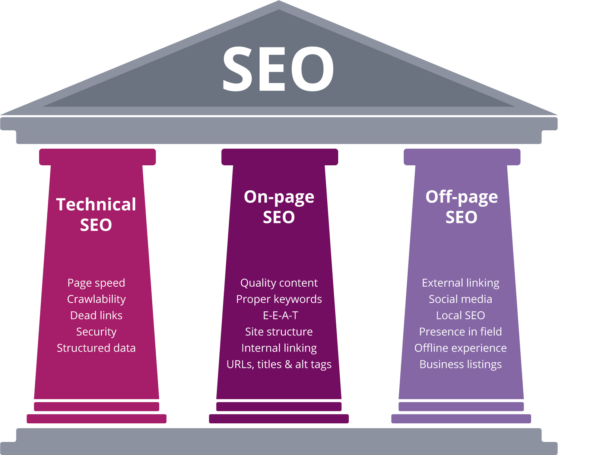
To achieve optimal online visibility, SEO efforts are typically categorized into three interdependent pillars:
-
Technical SEO: This pillar focuses on optimizing the technical infrastructure of a website to improve its crawlability, indexability, and overall user experience. Key aspects include:
- Site Speed: Ensuring fast loading times, crucial for user satisfaction and ranking. Core Web Vitals (Largest Contentful Paint, First Input Delay, Cumulative Layout Shift) are key metrics.
- Mobile-Friendliness: Guaranteeing that a website functions flawlessly and looks good on all devices, especially smartphones, given Google’s mobile-first indexing.
- HTTPS Security: Implementing an SSL certificate to encrypt data, providing a secure browsing experience and signaling trustworthiness.
- Crawlability and Indexability: Ensuring search engine bots can easily access and understand all important pages through well-structured sitemaps and proper robots.txt directives.
- Structured Data (Schema Markup): Adding specific code to content (e.g., product reviews, recipes, events) to help search engines better understand its context and display rich snippets in SERPs, increasing visibility and click-through rates.
- Site Architecture: Organizing content logically with clear navigation paths, making it easy for both users and crawlers to navigate.
-
On-Page SEO: This pillar involves optimizing the content and HTML source code of individual pages to rank higher and attract relevant traffic. It is primarily concerned with what is directly visible and controllable on a web page:
- Keyword Research and Optimization: Identifying relevant keywords and phrases that users search for, and strategically incorporating them into content naturally. This includes long-tail keywords and semantically related terms.
- High-Quality Content Creation: Producing original, in-depth, valuable, and engaging content that genuinely answers user queries and fulfills search intent. This is the cornerstone of E-E-A-T.
- Title Tags and Meta Descriptions: Crafting compelling and keyword-rich titles and descriptions that appear in SERPs, enticing users to click.
- Header Tags (H1, H2, H3): Structuring content logically with hierarchical headings to improve readability and signal content importance to search engines.
- Image Optimization: Using descriptive file names, alt text, and compressing images for faster loading.
- Internal Linking: Creating logical links between related pages within the same website to distribute link equity and improve navigation.
-
Off-Page SEO: This pillar encompasses all SEO activities performed outside of a website to improve its ranking and authority. It primarily focuses on building reputation and credibility:
- Link Building: Acquiring high-quality backlinks from other reputable and relevant websites. These links act as "votes of confidence" and are a strong signal of authority to search engines. Strategies include guest blogging, broken link building, and creating shareable content.
- Social Media Marketing: While social signals don’t directly impact rankings, active engagement on social platforms can increase brand visibility, drive traffic, and attract natural backlinks.
- Local SEO: For businesses with a physical presence, optimizing for local search queries is crucial. This involves managing and optimizing Google Business Profile listings, ensuring consistent Name, Address, Phone (NAP) information across local directories, and encouraging customer reviews.
- Brand Mentions and Citations: Generating mentions of the brand on other websites, forums, and directories, even without direct links, contributes to brand visibility and perceived authority.
Key SEO Ranking Factors: Navigating the Algorithm
While the exact weighting and comprehensive list of Google’s ranking factors remain proprietary, expert consensus and empirical evidence point to several critical signals:
- Content Quality and Relevance: Original, comprehensive, and valuable content that directly addresses user intent and demonstrates E-E-A-T.
- Backlinks: The quantity and quality of links from other reputable websites. High-authority, relevant links are particularly valuable.
- User Experience (UX): Factors like page speed, mobile-friendliness, site security (HTTPS), and intuitive navigation. Google’s Core Web Vitals are increasingly important.
- Search Intent Alignment: How well a page’s content matches the underlying purpose of a user’s search query (e.g., informational, transactional, navigational).
- Mobile-Friendliness: The responsiveness and usability of a website on mobile devices.
- Structured Data: The use of Schema.org markup to provide context to search engines and enable rich results.
- Domain Authority and Trust: The overall reputation and credibility of a website in its niche.
- Keyword Optimization: Natural and strategic inclusion of relevant keywords and phrases within content and meta-elements.
Adapting to the Future: SEO in the Age of AI and Beyond
The emergence of sophisticated AI technologies is undeniably shaping the future of search. Terms like "Generative Engine Optimization" (GEO) have surfaced to describe optimizing for AI-generated responses. However, as Yoast experts emphasize, the core principles of SEO remain valid. The fundamental goal of providing the best possible answer to a user’s query, regardless of the platform, endures.
Google AI Overviews, for example, demonstrate how AI can synthesize information from multiple sources to provide direct answers on the SERP, potentially leading to fewer website clicks. While this presents a challenge, it also creates an opportunity: being cited as a source in an AI overview significantly boosts brand visibility and credibility. The focus shifts from merely ranking for a keyword to becoming a definitive, trustworthy source of information that AI tools can confidently reference. This underscores the increasing importance of E-E-A-T, as AI systems are trained to identify and prioritize authoritative content. The future of SEO will likely involve optimizing for multimodal search (voice, image, video), anticipating conversational queries, and ensuring content is robust enough to be accurately interpreted and summarized by AI.
Strategic SEO Goal Setting for the Modern Business
In light of these shifts, SEO goal setting has evolved beyond simply tracking rankings and website traffic. While these metrics remain important, a holistic strategy now considers:
- Brand Awareness and Mentions: Tracking how often a brand is cited or mentioned across various platforms, including AI summaries.
- User Engagement: Metrics like dwell time, bounce rate, and conversion rates, which indicate how effectively content satisfies user intent.
- Customer Lifetime Value (CLTV): Linking organic traffic to long-term customer acquisition and retention.
- Market Share in AI Answers: Aiming to be the authoritative source for questions within a niche, ensuring content is primed for AI summarization.
- User Satisfaction: Qualitative feedback and sentiment analysis to gauge how well the website meets user needs.
By aligning SEO goals with broader business objectives, organizations can measure the true impact of their efforts and adapt their strategies to the evolving digital landscape.

Getting Started with SEO: A Practical Guide
Embarking on an SEO journey, while seemingly complex, is manageable with a structured approach:
- Lay the Technical Foundation: Begin by ensuring your website is technically sound. Address critical issues like site speed, mobile-friendliness, HTTPS, and crawlability. If technical expertise is limited, engaging a web developer or utilizing platform-specific SEO tools (like Yoast SEO for WordPress or Shopify) can be invaluable.
- Develop a Content Strategy: Conduct thorough keyword research to understand what your target audience is searching for. This research should inform a content calendar, guiding the creation of original, high-quality, and intent-aligned content that showcases your expertise. Focus on providing comprehensive answers and demonstrating E-E-A-T.
- Optimize On-Page Elements: Apply on-page SEO best practices to all content: compelling title tags, informative meta descriptions, clear header structures, optimized images, and strategic internal linking.
- Build Authority Off-Page: Initiate a thoughtful link-building strategy, focusing on acquiring relevant and high-quality backlinks. Actively manage your local listings (especially Google Business Profile) and engage with your audience on social media.
- Monitor and Adapt: SEO is not a one-time task but an ongoing process. Regularly monitor performance using tools like Google Analytics and Google Search Console. Analyze what’s working and what isn’t, adapt your strategy, and refresh content to maintain relevance.
For those looking to deepen their understanding and implement SEO themselves, resources like the Yoast SEO plugin offer practical tools for content and technical optimization. Complementary educational platforms like the Yoast SEO Academy provide structured courses, from beginner to advanced, covering all facets of SEO, while their extensive blog offers up-to-date insights on new developments and best practices.
In conclusion, SEO is no longer a niche technical skill but a fundamental requirement for digital success. It’s about building a robust online presence that is discoverable, trusted, and engaging, regardless of how users interact with search. By embracing its evolving nature and focusing on user value, businesses can unlock unparalleled growth and establish an enduring competitive advantage in the digital age.