In an era where digital attention spans are measured in milliseconds, the technical performance of a website has shifted from a backend concern to a primary driver of business growth. Crazy Egg, a pioneer in heatmapping and conversion rate optimization (CRO) technologies, has announced the launch of its latest tool: Page Speed Audits. This new feature is designed to bridge the gap between complex technical performance metrics and actionable web development, offering users a comprehensive, automated system to diagnose and repair latency issues. By providing automatically generated code snippets that users can copy and paste directly into their site architectures, Crazy Egg aims to democratize web performance optimization for marketers, small business owners, and developers alike.
The Technical Evolution of Web Performance
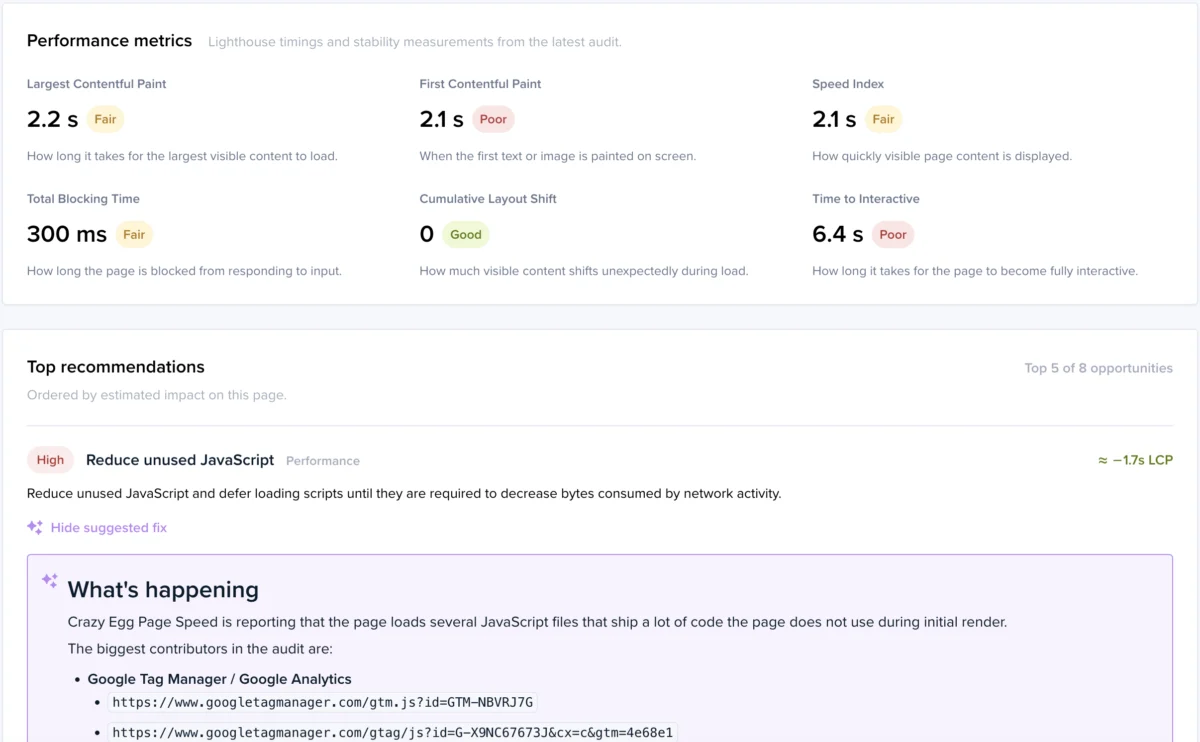
The launch of Page Speed Audits comes at a critical juncture for the internet. For years, the industry standard for measuring site performance was focused on simple load times. However, the landscape shifted dramatically with Google’s introduction of Core Web Vitals—a set of specific factors that Google considers important in a webpage’s overall user experience. These include Largest Contentful Paint (LCP), First Input Delay (FID) (now being superseded by Interaction to Next Paint, or INP), and Cumulative Layout Shift (CLS).
Slow-loading websites do more than just frustrate users; they incur significant financial penalties through reduced visibility. Search Engine Optimization (SEO) has long prioritized speed, but a newer frontier, Answer Engine Optimization (AEO), has increased the stakes. As AI-driven search engines and Large Language Models (LLMs) like ChatGPT and Google Gemini crawl the web to provide direct answers to user queries, the speed and "crawlability" of a site determine whether its content is cited as a primary source. A slow site may be bypassed by AI agents that prioritize high-performance domains, effectively silencing a brand in the burgeoning AI search economy.
How Crazy Egg’s Page Speed Audits Function
The newly released Page Speed Audits tool operates on a model of continuous monitoring and automated remediation. Unlike many performance tools that require manual triggers, Crazy Egg’s system scans registered pages daily. This frequency is vital because modern websites are dynamic; new images, third-party scripts, and marketing tags are added constantly, often leading to "performance bloat" that can accumulate unnoticed over time.
The audit process involves a comprehensive scan of every asset on a given page, including:
- Image and Video Assets: Identifying unoptimized media files that contribute to high bandwidth usage.
- Code Bloat: Detecting redundant or unminified CSS and JavaScript that delays the browser’s ability to render the page.
- Server Response Times: Evaluating the efficiency of the hosting environment and data delivery.
- Third-Party Scripts: Analyzing the impact of external plugins and tracking pixels on the "main thread" of the browser.
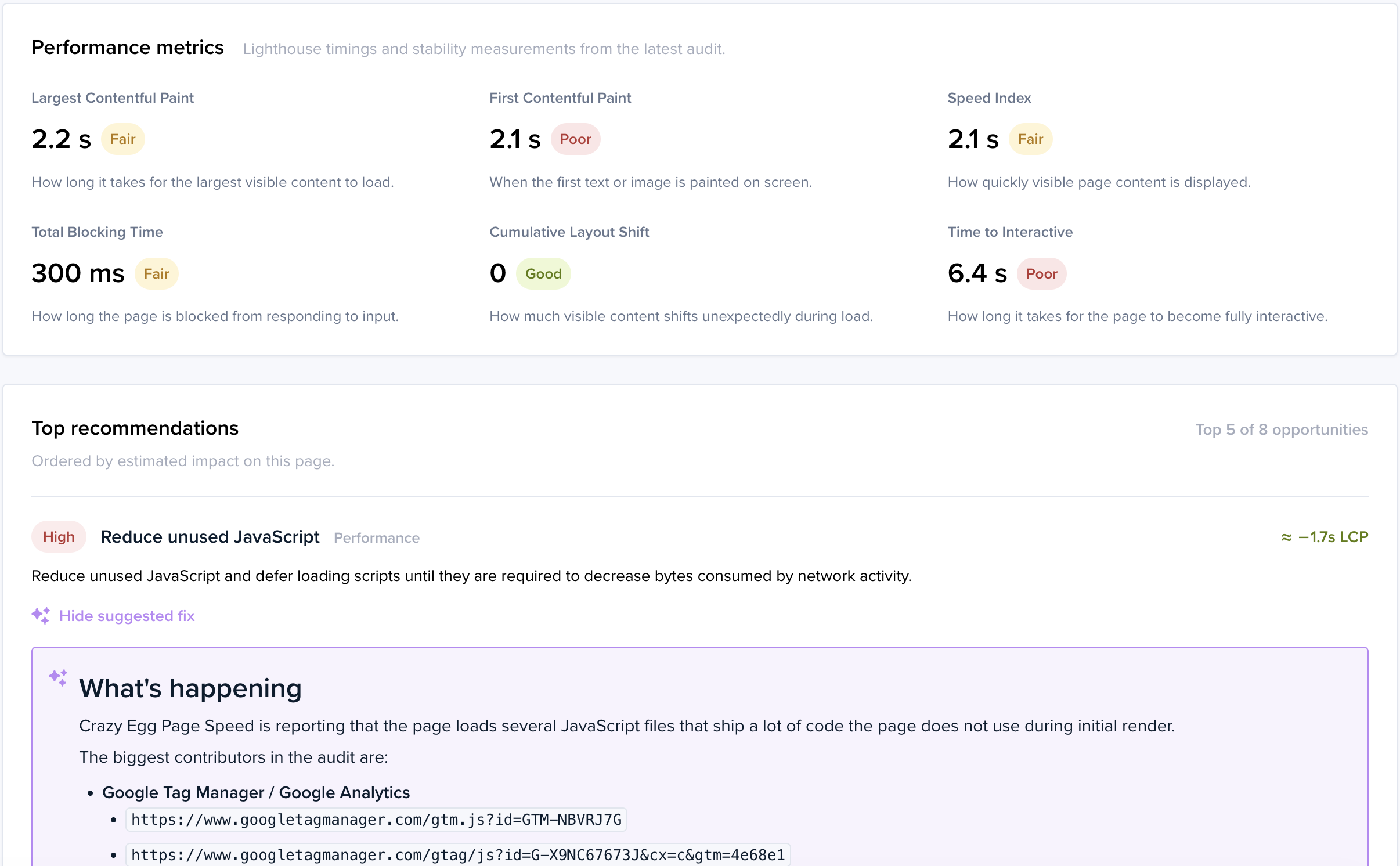
Once the scan is complete, the tool provides a prioritized list of recommendations. The standout feature of this release is the automated code generation. While traditional tools like Google PageSpeed Insights identify problems, they often leave the technical solution to the user’s discretion or require a developer to write the fix. Crazy Egg’s tool generates the specific lines of code required to implement the fix—such as lazy-loading scripts, image compression directives, or minification code—allowing users to enhance their site speed in minutes without deep programming knowledge.
The Business Case for Speed: Supporting Data
The necessity for such a tool is backed by nearly a decade of e-commerce and behavioral data. Research conducted by Akamai and Google has consistently shown that a one-second delay in mobile load times can impact conversion rates by up to 20%. Furthermore, Pinterest reported that reducing wait times by 40% increased search engine traffic and sign-ups by 15%.
From an infrastructure perspective, the cost of "slow" is measurable in bounce rates. According to industry benchmarks, the probability of a bounce increases by 32% as page load time goes from one second to three seconds. By the time a page takes five seconds to load, the probability of a bounce increases by 90%. Crazy Egg’s tool addresses these metrics directly by focusing on the "Critical Request Chain," ensuring that the most important elements of a page load first to keep the user engaged.
Chronology of Crazy Egg’s Market Positioning
Founded in 2005 by Neil Patel and Hiten Shah, Crazy Egg initially revolutionized the digital marketing space by making heatmaps accessible to the masses. Over the last two decades, the company has evolved from a niche visualization tool into a comprehensive CRO suite.
- 2005–2010: Focus on visual analytics (Heatmaps, Scrollmaps, Confetti Reports).
- 2011–2018: Expansion into A/B testing and user recordings, allowing brands to see why users were dropping off.
- 2019–2023: Integration of SEO auditing tools and surveys to provide a 360-degree view of the user journey.
- 2024–2026: Pivot toward automated technical optimization, culminating in the launch of Page Speed Audits.
The introduction of Page Speed Audits represents a shift from observation to intervention. By providing the code to fix the problems it identifies, Crazy Egg is positioning itself as an active participant in a website’s technical health rather than just a reporting platform.
Bridging the Developer-Marketer Divide
One of the primary friction points in modern business is the "implementation gap" between marketing teams and development teams. Marketing teams often identify the need for speed to improve campaign ROI, but developers may have backlogs that delay technical optimizations for weeks or months.
Stephen Ngo, Director of Growth Marketing at Crazy Egg and a veteran of the B2B startup ecosystem (with previous leadership roles at Nira, Paddle, and ProfitWell), highlights the efficiency of the new tool. By offering a "copy-and-paste" solution, the tool empowers marketing managers to take immediate action on performance issues that previously required a dedicated engineering ticket. This streamlined workflow is expected to be particularly beneficial for small to medium-sized enterprises (SMEs) that may not have a full-time web performance engineer on staff.
Accessibility and Implementation
In a move that challenges the traditional SaaS (Software as a Service) model, Crazy Egg has made the Page Speed Audits 100% free. Users are not required to install the Crazy Egg tracking script on their website to utilize the audit feature, a significant departure from standard industry practices where deep auditing is often gated behind a subscription or technical installation.

To utilize the service, users navigate to the "Page Speed" button on the Crazy Egg dashboard and add the URLs they wish to track. The system allows for an unlimited number of URLs, making it a viable solution for large-scale e-commerce sites with thousands of product pages as well as simple landing pages.
Implications for the Future of Web Development
The launch of Page Speed Audits reflects a broader trend toward "No-Code" and "Low-Code" technical SEO. As the web becomes more complex, the tools used to manage it must become simpler. The automation of code generation for performance optimization suggests a future where the technical "grunt work" of web maintenance is handled entirely by AI and automated scanners, leaving human creators to focus on content and strategy.
Furthermore, the emphasis on AEO (Answer Engine Optimization) in Crazy Egg’s announcement signals a recognition of the changing search landscape. As AI agents become the primary gatekeepers of information, the technical "fitness" of a website—defined by its speed, structure, and accessibility—will become the most important factor in its survival.
Conclusion and Official Outlook
While Crazy Egg acknowledges that its content is reader-supported and may earn commissions from certain links, the editorial evaluation of the Page Speed Audits tool remains focused on its utility as a free resource. By removing the financial and technical barriers to site optimization, Crazy Egg is addressing a fundamental pain point in the digital economy.
The broader impact of this tool could lead to a faster, more efficient internet. When the tools to fix performance are free and easy to use, the "speed tax" currently paid by slow-loading businesses begins to disappear. For the end-user, this means a more seamless browsing experience; for the business owner, it means higher retention and better visibility in an increasingly competitive, AI-driven marketplace. As web standards continue to evolve, the ability to conduct daily, automated audits will likely transition from a luxury to a baseline requirement for any serious online presence.