
 rifanmuazin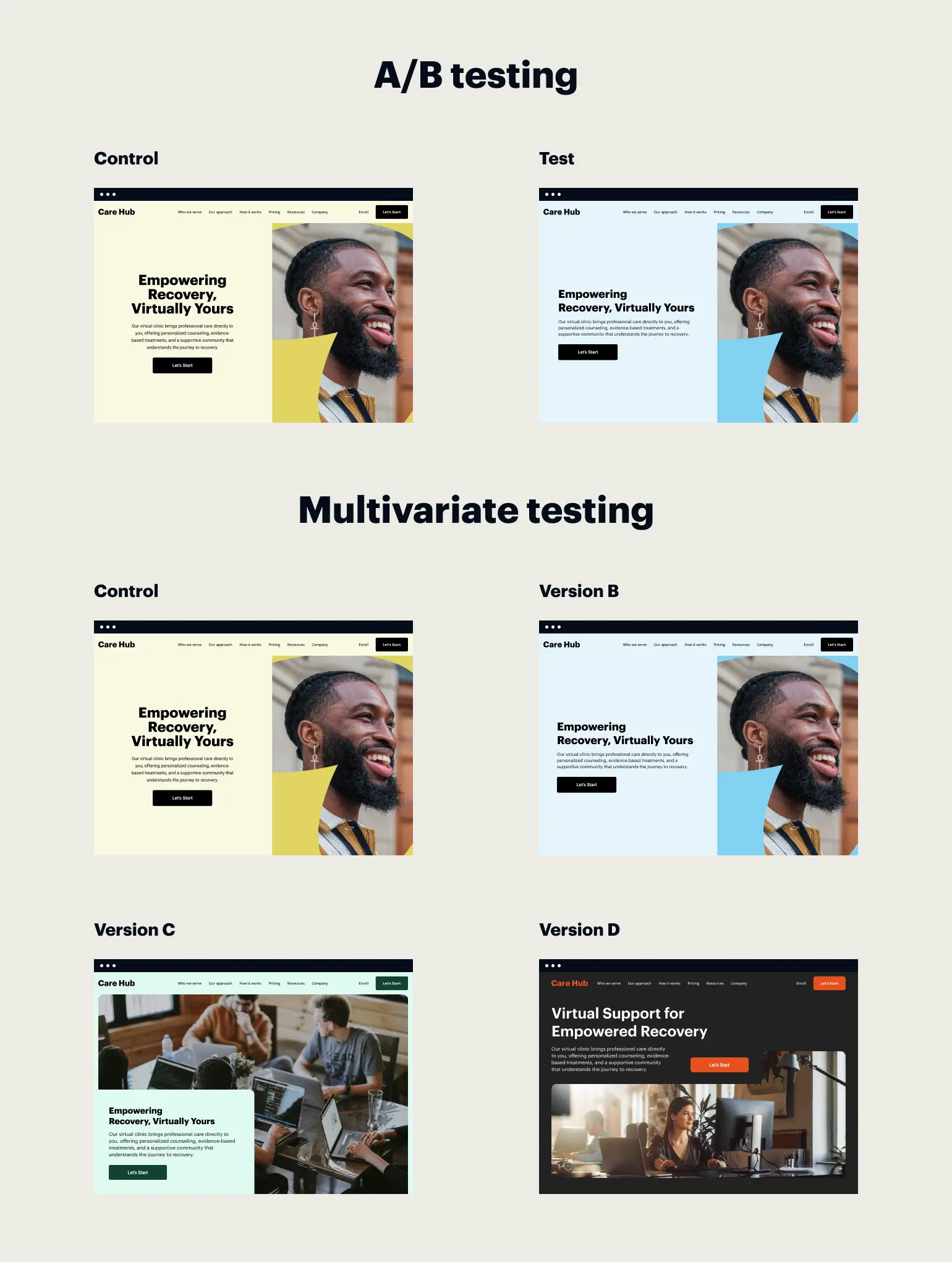
The digital marketing landscape has reached a point of saturation where marginal gains in user engagement can translate into millions of dollars in incremental revenue. At the heart of this competitive environment lies the discipline of experimentation, a scientific approach to identifying the most effective ways to communicate with audiences. While simple split testing has long been the industry standard, the rise of multivariate testing (MVT) has introduced a more sophisticated framework for understanding the complex interplay between various web elements. By allowing marketers to test multiple variables simultaneously, MVT provides a level of granular insight that traditional A/B testing cannot match, though it brings with it significant requirements for traffic and statistical rigor.

The Strategic Shift Toward Data-Driven Experimentation
The history of marketing experimentation can be traced back to the early 20th century, but its digital evolution accelerated in the early 2000s. Google famously conducted one of the most cited examples of A/B testing when it tested 41 different shades of blue for its toolbar links to determine which resulted in the highest click-through rate. However, as web design became more complex and user journeys more fragmented, the limitations of testing a single variable at a time became apparent. This necessitated the adoption of multivariate testing, a method rooted in the design of experiments (DOE) principles originally developed for industrial and agricultural research.
Today, the Conversion Rate Optimization (CRO) market is projected to continue its rapid growth, as brands move away from "gut-feeling" design toward evidence-based iterations. In this context, multivariate testing serves as the high-resolution microscope of the marketing world, revealing not just which individual elements perform best, but how they interact with one another to influence the final conversion decision.
Defining Multivariate Testing: Beyond the Single Variable
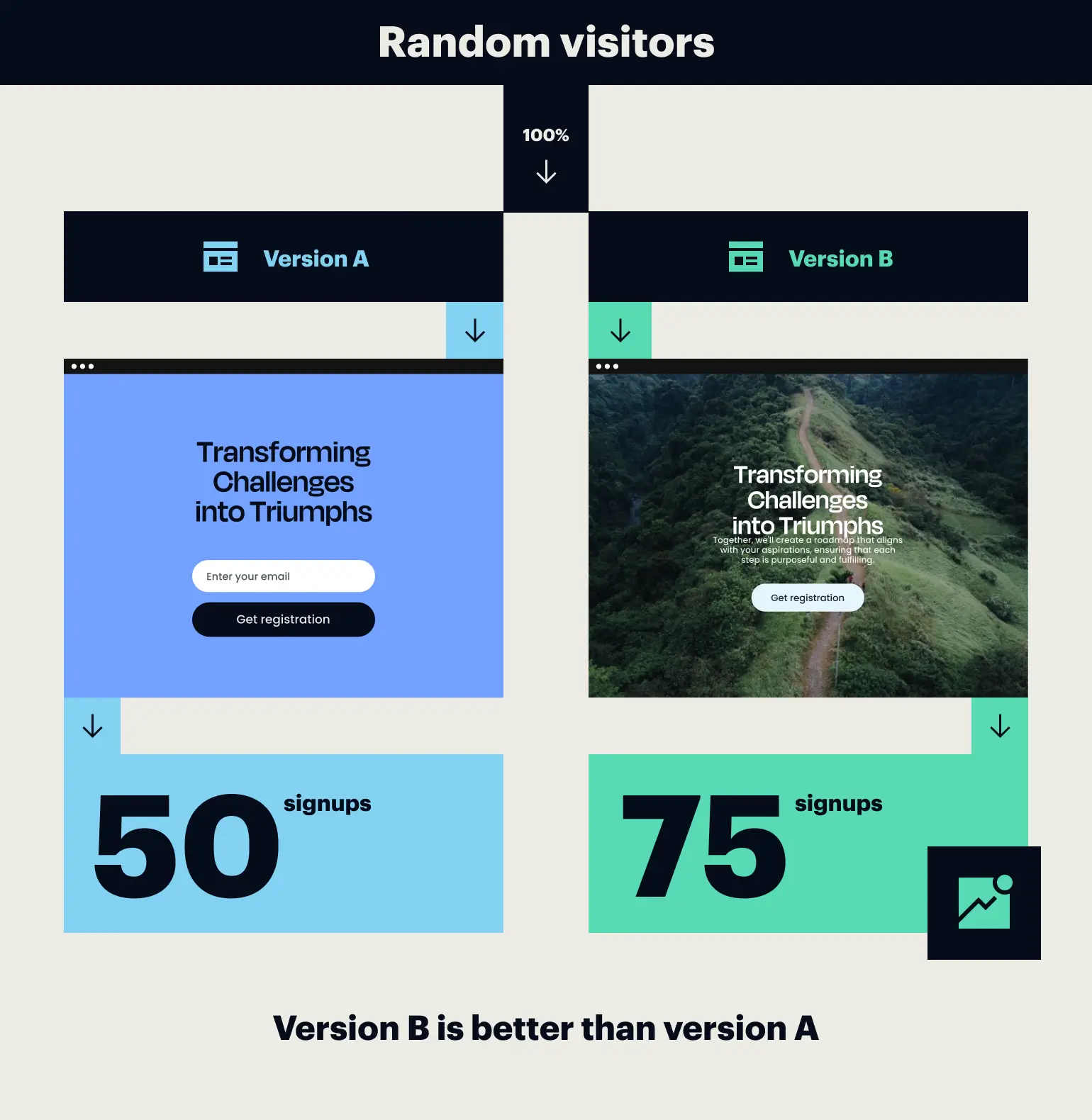
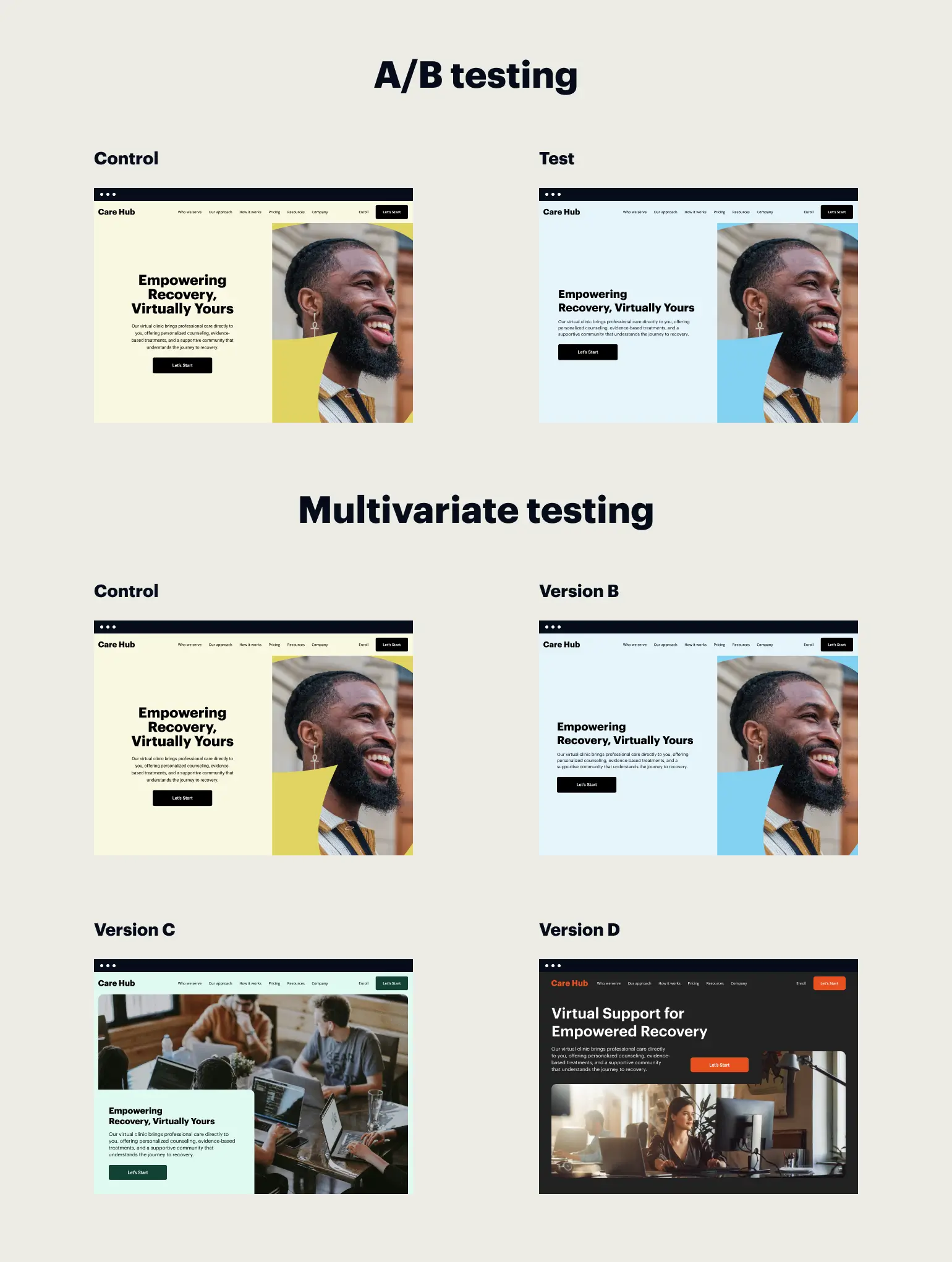
Multivariate testing is a technique wherein multiple variables on a single web page are modified, and all possible combinations of those variables are tested against one another. Unlike A/B testing, which might compare Headline A against Headline B, an MVT experiment might simultaneously test three different headlines, two hero images, and two different call-to-action (CTA) button colors.
The primary objective of MVT is to determine which combination of these elements yields the highest conversion rate. This approach is particularly valuable for optimizing complex landing pages, product pages, and checkout flows where the synergy between elements is just as important as the elements themselves. For example, a specific "Buy Now" button color might perform exceptionally well when paired with a professional product photo but fail when paired with a lifestyle image. MVT is the only methodology capable of identifying these interaction effects.
Core Elements Subject to Multivariate Analysis
- Headlines and Sub-headers: Testing tone, length, and value propositions.
- Visual Assets: Comparing static images, videos, and graphics.
- Call-to-Action (CTA) Buttons: Analyzing the impact of color, placement, size, and copy.
- Form Fields: Determining the optimal number of fields and their layout.
- Social Proof Elements: Testing the placement and type of testimonials or trust badges.
- Navigation Menus: Evaluating the effect of different menu structures on user flow.
The Mathematical Framework: The MVT Formula
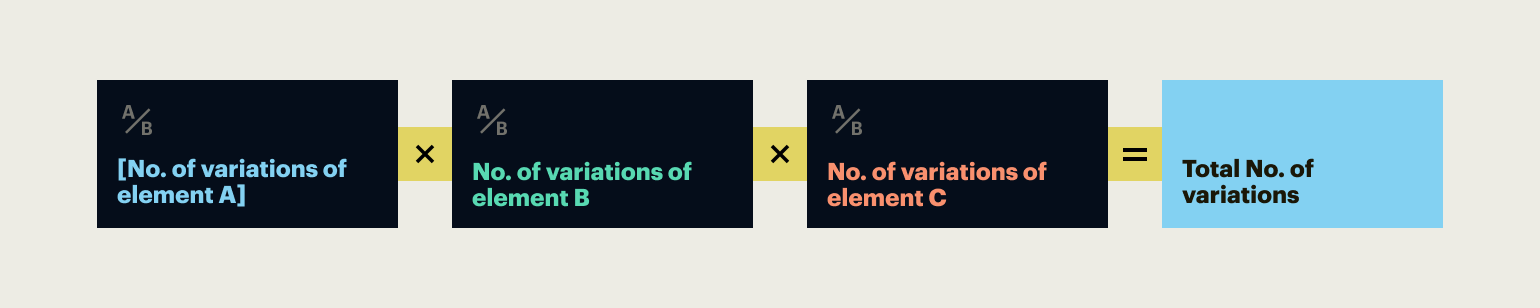
To understand the complexity of a multivariate test, one must look at the mathematical combinations involved. The total number of variations in a full factorial MVT is calculated by multiplying the number of versions for each element.
The formula is expressed as:
[Variations of Element A] × [Variations of Element B] × [Variations of Element C] … = Total Combinations

For instance, if a marketer decides to test:
- 3 Headlines
- 2 Hero Images
- 2 CTA Colors
The resulting test would involve 12 distinct versions of the page (3 x 2 x 2). If they added a fourth variable, such as two different background colors, the number of versions would jump to 24. This exponential growth in variations is the primary reason why MVT requires significantly higher traffic volumes than A/B testing to achieve statistical significance.
Methodological Approaches: Full Factorial vs. Fractional Factorial
There are three primary ways to execute multivariate tests, each with its own trade-offs regarding accuracy and speed:
- Full Factorial Testing: This is the most common and robust method. It tests every possible combination of variables. It provides the most comprehensive data on interaction effects but requires the largest sample size.
- Fractional Factorial Testing: This method tests only a subset of the possible combinations. It uses statistical models to "fill in the gaps" and predict how the untested combinations would have performed. This is useful for sites with lower traffic, though it carries a higher risk of missing subtle interaction effects.
- Taguchi Method: Originally used in manufacturing, this highly technical approach aims to reduce the number of experiments required to find the optimal setup. While efficient, it is rarely used in standard digital marketing due to its complexity and the specialized statistical knowledge required to interpret the results.
Comparative Analysis: Multivariate vs. A/B Testing
While often discussed as competing methodologies, MVT and A/B testing are complementary tools in a marketer’s arsenal. Choosing the right one depends on the specific goals of the experiment and the resources available.

A/B Testing (Split Testing)
- Complexity: Low.
- Speed: High. Results are typically achieved much faster.
- Traffic Requirements: Low to moderate.
- Best Use Case: Radical changes (testing two completely different page designs) or isolating the impact of a single major change.
- Limitations: Cannot identify interaction effects between different elements.
Multivariate Testing (MVT)
- Complexity: High. Requires careful planning and technical setup.
- Speed: Slow. Can take weeks or months to reach statistical significance.
- Traffic Requirements: Very high. Each variation needs enough visitors to prove a result.
- Best Use Case: Fine-tuning an existing page where multiple elements need optimization simultaneously.
- Limitations: High risk of "false positives" if the sample size is insufficient.
Real-World Applications and Case Studies
The efficacy of these testing methods is best illustrated through industry examples. Two notable cases—AliveCor and Groove—demonstrate how structured testing leads to measurable business growth.
AliveCor: The Impact of Micro-Elements
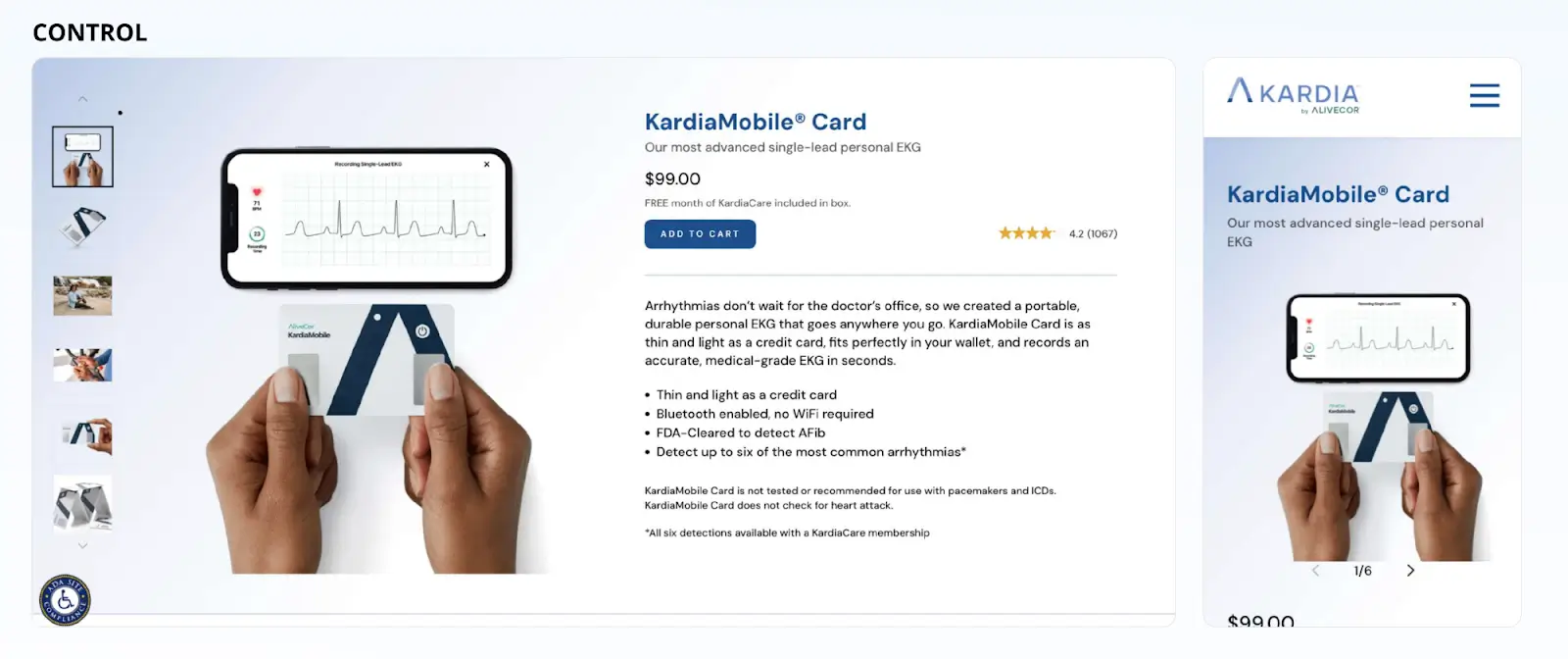
AliveCor, a medical device company, sought to introduce its new KardiaMobile Card without cannibalizing the sales of its existing products. They hypothesized that highlighting the new product with a "New" badge would increase engagement. By running a test across both desktop and mobile platforms, they compared different badge sizes and placements. The results were definitive: the inclusion of the "New" badge led to a 25.17% increase in conversion rates and a 29.58% increase in revenue per user. This case highlights how even small visual cues, when validated through testing, can have a massive impact on the bottom line.

Groove: The "Copy-First" Redesign
Groove, a customer support platform, faced a stagnation in landing page conversions, which were hovering around 2.3%. Instead of tweaking minor elements, they opted for a radical redesign, moving to a "copy-first" approach that emphasized benefits over features. Through extensive testing of headlines and narrative structures, they were able to nearly double their conversion rate to 4.3%. This example showcases the power of testing entire page layouts and messaging strategies to find the optimal user experience.
Strategic Implications and Implementation Challenges
Despite the clear benefits of multivariate testing, organizations must navigate several challenges to implement it successfully. The most significant barrier is the "Traffic Tax." Because MVT splits traffic among many variations, a site with 10,000 monthly visitors might be able to run an A/B test in a week, but a 12-variation MVT could take months to provide a reliable answer.
Furthermore, there is the risk of "interference." If a marketer runs multiple MVT tests across different parts of a website simultaneously, the results of one test might influence the other, leading to skewed data. Therefore, large-scale experimentation requires a centralized "Testing Center of Excellence" or a highly coordinated strategy to ensure data integrity.
Steps to Executing a Successful MVT
- Identify the Goal: Define exactly what metric you are trying to move (e.g., sign-ups, sales, time on page).
- Develop a Hypothesis: State clearly what you believe will happen (e.g., "Changing the CTA to green and the headline to ‘Save Time’ will increase clicks").
- Select Variables: Choose elements that are likely to have a high impact. Avoid testing "noise" elements that don’t influence behavior.
- Ensure Sufficient Traffic: Use a sample size calculator to ensure your site can support the number of variations planned.
- Analyze Interaction Effects: Look beyond the "winning" version to understand why certain combinations worked better than others.
The Future: AI and Automated Experimentation
The next frontier of multivariate testing lies in Artificial Intelligence and Machine Learning. Traditional MVT is a "stop and start" process: you run a test, find a winner, and implement it. AI-driven testing, often referred to as "Multi-Armed Bandit" testing, allows for continuous optimization. In this model, an algorithm automatically shifts traffic toward the better-performing variations in real-time, minimizing the "cost" of showing users a sub-optimal page version during the testing period.

As tools like Instapage and other optimization platforms integrate more advanced A/B and MVT capabilities, the barrier to entry for sophisticated experimentation continues to lower. However, the fundamental principle remains the same: the most successful brands are those that replace assumptions with data.
Conclusion
Multivariate testing represents the pinnacle of digital marketing precision. While it requires more traffic, more time, and more technical expertise than simple A/B testing, the depth of insight it provides is unparalleled. By uncovering the hidden relationships between headlines, images, and buttons, MVT allows businesses to build highly optimized digital experiences that resonate with their specific audience. In an era where customer acquisition costs are rising, the ability to maximize the value of every visitor through scientific testing is no longer a luxury—it is a strategic necessity for any data-driven enterprise.








