
 rifanmuazin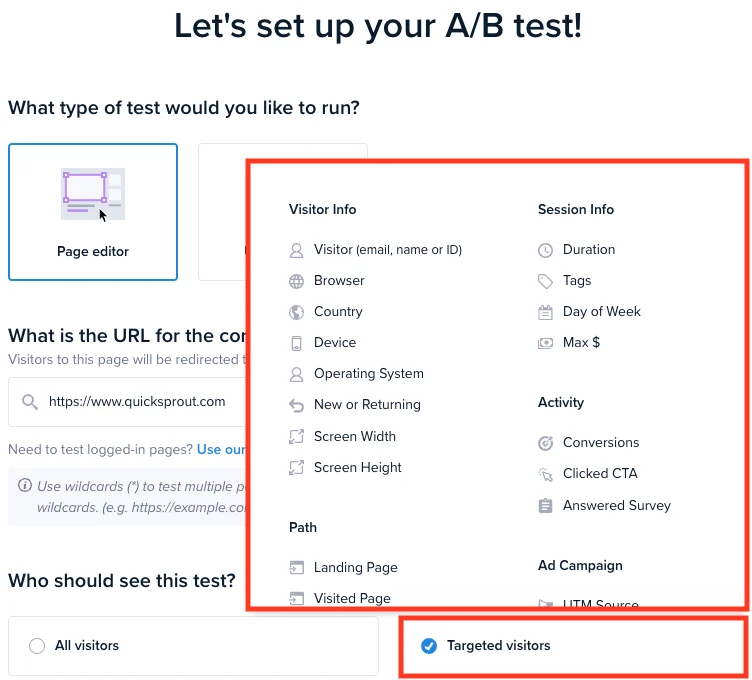
In a move that signals a significant evolution for the conversion rate optimization (CRO) industry, Crazy Egg has officially launched an advanced suite of audience targeting features for its A/B testing platform. This update allows digital marketers and website owners to segment their experiments with unprecedented precision, moving beyond “one-size-fits-all” testing to focus on specific demographics, behaviors, and acquisition channels. By enabling targeting by device type, geographic location, and specific ad campaigns, the platform aims to provide businesses with the tools necessary to deliver hyper-personalized user experiences that drive higher conversion rates and lower customer acquisition costs.
The release marks a pivotal moment for Crazy Egg, a company that originally rose to prominence as a pioneer in heatmap and scroll-map visualization. With the introduction of these granular targeting capabilities, the company is positioning itself as a comprehensive optimization suite capable of competing with high-end enterprise solutions. The update is designed to address the growing complexity of the digital landscape, where user behavior varies wildly between mobile and desktop environments, and where global brands must navigate the cultural and logistical nuances of different international markets.
The Evolution of Conversion Rate Optimization
To understand the significance of this update, it is necessary to look at the trajectory of the CRO industry. For years, A/B testing was often a broad-brush endeavor. Marketers would test a red button against a green button for all visitors, regardless of whether that visitor was browsing on an iPhone in London or a desktop computer in Tokyo. However, as data collection has become more sophisticated, the limitations of broad testing have become apparent.
Industry data suggests that personalized web experiences can lead to a conversion lift of 20% or more. Furthermore, with the recent sunsetting of Google Optimize—formerly a staple for small to medium-sized businesses—there has been a vacuum in the market for accessible yet powerful testing tools. Crazy Egg’s new targeting options appear strategically timed to capture this displaced user base, offering a bridge between basic testing and the expensive, complex logic found in enterprise-level platforms.
Strategic Breakdown of New Targeting Capabilities
The new features allow users to filter their A/B tests based on several key criteria. These segments represent the most critical variables in modern digital marketing:
1. Device-Specific Targeting
Mobile traffic now accounts for over 50% of global web traffic, yet conversion rates on mobile devices often lag significantly behind desktop. By targeting tests specifically to mobile or desktop users, brands can solve device-specific friction points. For instance, a checkout process that works flawlessly on a 27-inch monitor may be cumbersome on a 6-inch touchscreen. Crazy Egg’s update allows developers to test streamlined mobile interfaces without affecting the desktop experience.
2. Geographic and Country-Based Segmentation
Global e-commerce requires localized strategies. Cultural preferences for layout, color theory, and even payment methods vary by region. With country-based targeting, a company can test different promotional offers for users in the United States versus those in the United Kingdom or India. This is particularly relevant for managing shipping expectations and currency displays, which are major factors in cart abandonment.
3. Ad Campaign and UTM Parameter Integration
One of the most powerful aspects of the new update is the ability to align landing page variants with specific ad campaigns. Using UTM parameters, marketers can ensure that a visitor who clicks on a “Black Friday Sale” ad sees a version of the website that emphasizes those specific discounts. This “message match” is crucial for maintaining a consistent user journey and maximizing the Return on Ad Spend (ROAS).
4. Funnel Stage and Visitor Behavior
The platform now enables personalization based on where a visitor is in the conversion funnel. New visitors might require more educational content and trust signals, whereas returning visitors might be more responsive to direct calls-to-action or loyalty incentives. Targeting tests based on these segments allows for a more nuanced approach to lead nurturing.
Implementation and Technical Workflow
The rollout of these features has been designed with a focus on ease of use, a hallmark of the Crazy Egg brand. The workflow follows a logical progression that integrates into existing marketing stacks. To launch a targeted experiment, users first select their testing method: either the Page Editor (for making visual changes directly to a page) or a URL Redirect (for testing two entirely different landing pages).
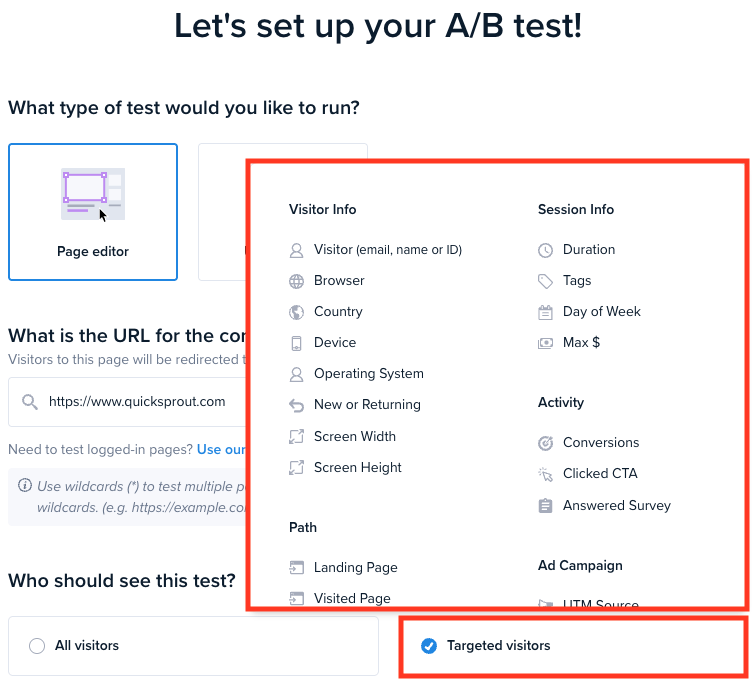
Once the variants are created, the new targeting interface appears, allowing the user to toggle specific audience segments. This eliminates the need for complex coding or the manual implementation of scripts for each segment. Early adopters of the tool have reported that the setup time for a segmented test is now comparable to that of a standard test, significantly lowering the barrier to entry for advanced optimization.
Chronology of Product Development
Crazy Egg’s transition into a full-scale optimization platform has been a multi-year journey. Founded in 2005 by Hiten Shah and Neil Patel, the company initially focused on “Snapshots”—visual representations of where users clicked.
- 2005–2010: Focus on Heatmaps, Scrollmaps, and Confetti reports.
- 2011–2017: Expansion into user recordings and basic session tracking.
- 2018–2022: Introduction of a native A/B testing tool, allowing users to act on the insights gained from heatmaps.
- 2023–2024: Integration of AI-driven insights and automated summaries.
- 2025–2026: The launch of granular audience targeting by device, geography, and campaign, marking the move into advanced personalization.
This timeline reflects a broader trend in the software-as-a-service (SaaS) world, where “point solutions” (tools that do one thing well) are evolving into “platforms” (tools that handle an entire workflow).
Industry Reaction and Economic Implications
While official statements from competitors have been reserved, industry analysts suggest that Crazy Egg’s move puts pressure on other players in the mid-market space. By offering features previously reserved for “Pro” or “Enterprise” tiers of other software, Crazy Egg is effectively democratizing high-level CRO.
Growth marketing experts have noted that the ability to target by ad campaign is particularly vital in an era of rising privacy restrictions. As third-party cookies are phased out, first-party data and on-site personalization become the primary levers for growth. “The ability to segment A/B tests is no longer a luxury; it is a requirement for any business spending money on paid acquisition,” says one senior growth lead at a B2B SaaS firm. “If you are sending the same traffic to the same page regardless of the source, you are essentially wasting a portion of your budget.”
From an economic perspective, the implications are clear: improved targeting leads to higher efficiency. For a business with a $10,000 monthly ad spend, a 5% increase in conversion rate due to better personalization results in significant annual savings or revenue growth.
Analysis of Future Impacts
The introduction of these features is likely a precursor to even deeper machine learning integrations. As Crazy Egg collects more data on which segments respond best to specific design patterns, the potential for “automated personalization” grows. We may soon see a landscape where the platform suggests specific targeting parameters based on historical visitor data.
Furthermore, this update addresses the “average user” fallacy. In traditional A/B testing, a variant might be declared a “loser” because it performed poorly overall, even if it performed exceptionally well with a high-value segment (such as mobile users from a specific campaign). By allowing for segmented analysis, Crazy Egg prevents marketers from discarding valuable insights that are hidden within the aggregate data.
Conclusion and Availability
The new targeting options are currently available across various Crazy Egg subscription tiers, with the most advanced options reserved for Plus and Pro plans. The company has indicated that it will continue to refine these segments based on user feedback, with potential future additions including browser-based targeting and time-of-day segmentation.
For the modern digital marketer, the message is clear: the era of the generic web experience is ending. As tools like Crazy Egg make advanced targeting accessible to the masses, the competitive advantage will shift to those who can best understand and cater to the specific needs of their diverse audience segments. This update is not merely a feature release; it is a reflection of a more mature, data-driven approach to the internet, where every click is understood in its full context.








