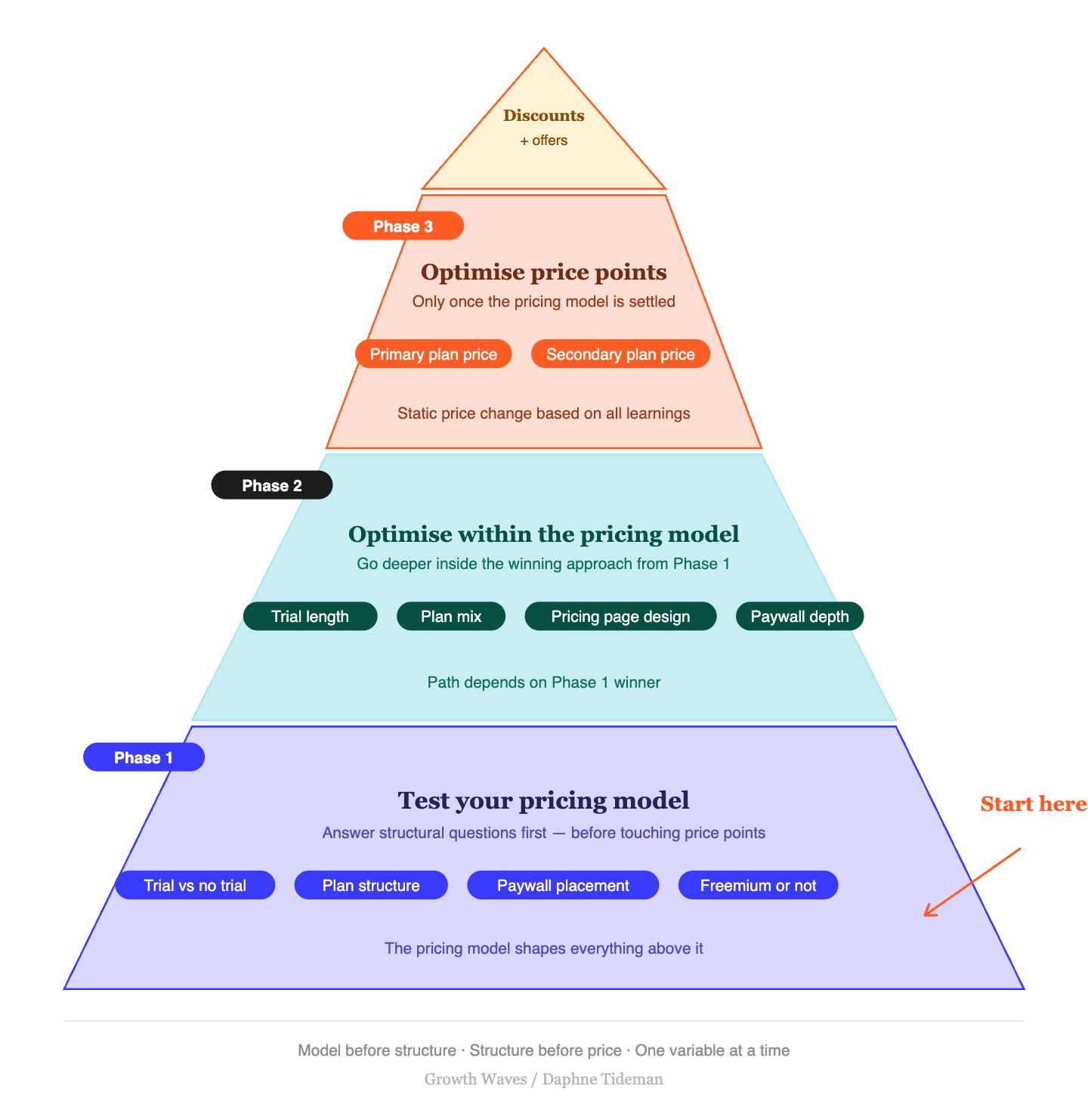
In the rapidly evolving landscape of Software as a Service (SaaS) and mobile subscription applications, the methodology behind pricing strategy is undergoing a fundamental shift. For years, growth teams have operated under the assumption that the primary lever for increasing revenue is the price point itself—the specific dollar amount charged to a customer. However, recent industry audits and market analysis suggest that this "top-down" approach is fundamentally flawed. Experts in the field, including growth strategist Daphne Tideman, argue that pricing decisions must follow a rigorous, hierarchical structure, often visualized as a pyramid. When companies attempt to optimize their pricing by starting at the peak—adjusting numbers or testing discounts—without securing the foundation, they often encounter flat results, misleading data, and long-term churn.
The current economic climate has placed unprecedented pressure on subscription models. As "subscription fatigue" sets in among consumers and businesses alike, the margin for error in pricing has narrowed. Investors are no longer prioritizing growth at any cost; instead, the focus has shifted toward sustainable unit economics and Net Revenue Retention (NRR). Within this context, the "Four-Layer Pricing Test Model" emerges not merely as a suggestion for A/B testing, but as a diagnostic framework for corporate survival. By working the pyramid from the bottom up, companies can ensure that their revenue model aligns with the actual value delivered to the user.

Layer 1: The Value Metric as the Bedrock of Monetization
The foundation of any successful pricing strategy is the value metric. This is defined as the specific unit of consumption or utility that determines how much a customer pays. Common examples include "per seat" for collaboration tools, "per gigabyte" for cloud storage, or "per transaction" for fintech platforms. While many executives view the value metric as a minor packaging detail, it is, in fact, the single most consequential decision in the product lifecycle.
The primary objective of a value metric is to ensure that the cost scales in proportion to the value the customer receives. If a company selects the wrong metric, it risks creating a "punitive" pricing environment. For instance, many modern AI-driven applications have adopted usage-based pricing to cover the high compute costs associated with Large Language Models (LLMs). While this appears logical on a balance sheet, it can lead to a phenomenon where heavy users—the product’s most loyal advocates—are penalized for their engagement.
Data from qualitative user research frequently highlights a disconnect between dashboard metrics and customer sentiment. A company might see an increase in "top-up" purchases or plan upgrades, suggesting a successful monetization strategy. However, deeper investigation often reveals that users are frustrated, feeling "nickeled and-dimed" for every interaction. This frustration leads to the development of workarounds or, eventually, a transition to a competitor with a more transparent or "fair" value metric. Before testing price points, companies must rigorously test their value metrics: Does charging per user make sense, or should they charge per successful outcome?

Layer 2: Structuring the Offer Through Packaging
Once the value metric is established, the next layer of the pyramid involves packaging—how features and limits are grouped into tiers. This is the stage where "complexity creep" often occurs. As SaaS companies mature, they tend to add features and plans in an ad-hoc manner, resulting in a pricing page that requires significant cognitive effort to navigate.
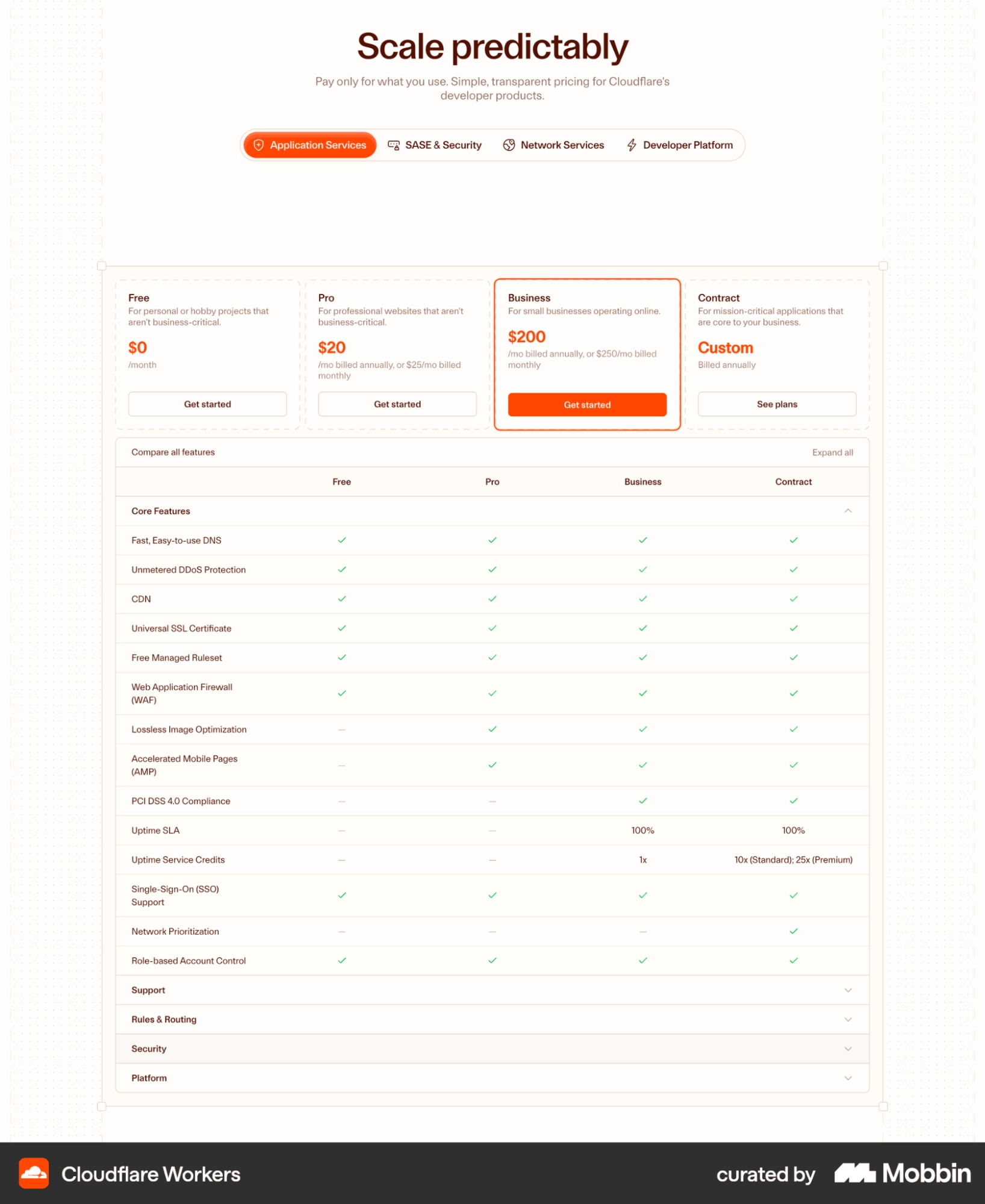
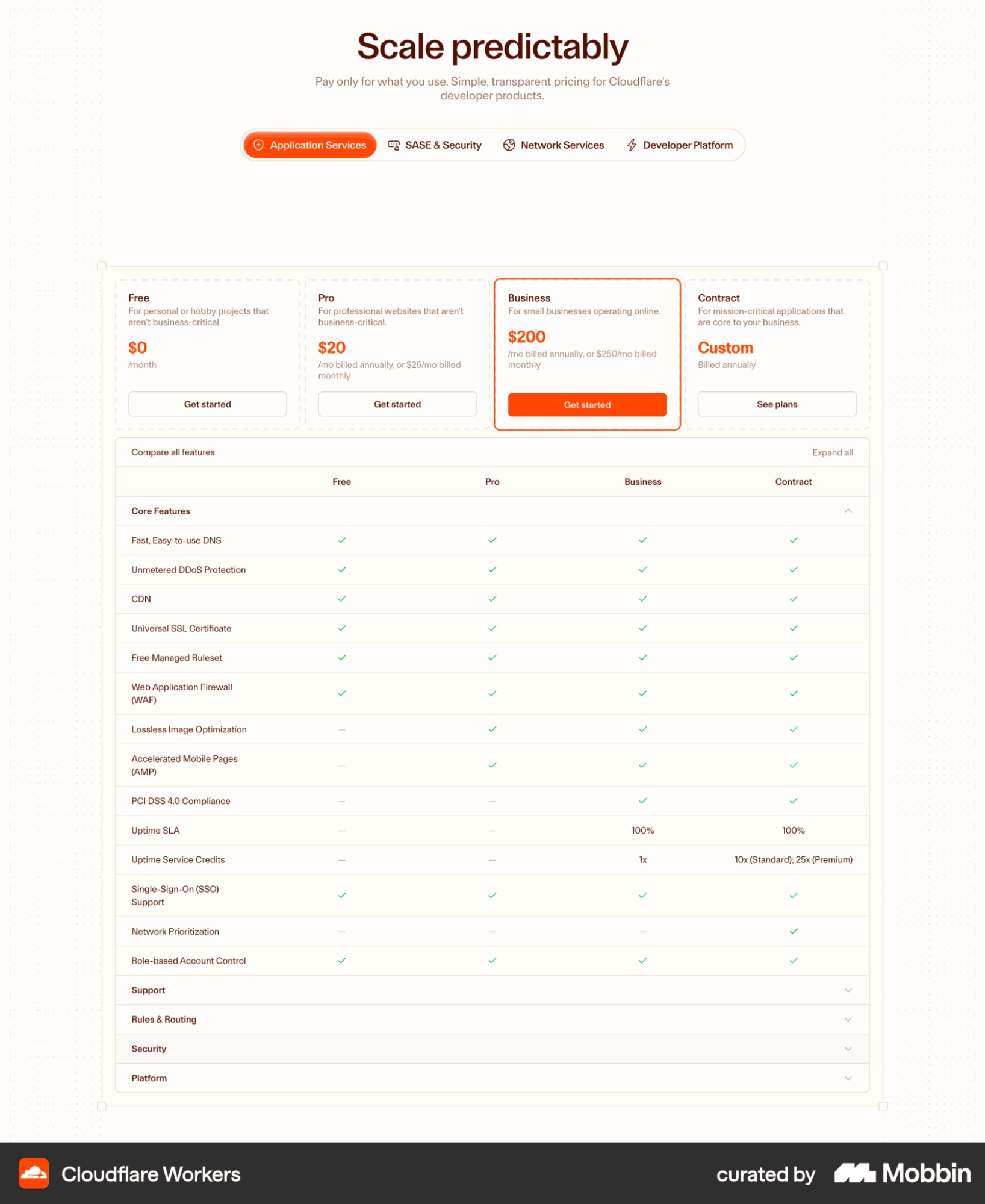
A classic example of packaging failure can be seen in overly complex developer platforms or enterprise tools that present users with a dizzying array of toggles, tiers, and feature lists. When a prospective customer is forced to predict their future usage or perform complex mathematics to determine which plan is right for them, the friction often leads to abandonment. Cognitive load is a silent killer of conversion rates.
Effective packaging research focuses on "pathway alignment." This involves ensuring that each tier corresponds to a specific user persona or stage of company growth. Testing at this level should not focus on the price of the "Pro" plan, but rather on what is included in that plan. Key questions for this layer include:
- Which features are "value-add" versus "table stakes"?
- Does the jump between the "Starter" and "Pro" tiers feel like a natural progression or a forced hurdle?
- Can the user identify their ideal plan within five seconds of landing on the pricing page?
By streamlining the structure and reducing the number of choices to a manageable few, companies can build the trust necessary to move the customer toward a purchase decision.
Layer 3: Determining Price Points and Willingness to Pay
Only after the value metric and packaging are solidified should a company turn its attention to the actual numerical price point. This is the third layer of the pyramid, and it is the area where most teams rely on guesswork rather than empirical data.
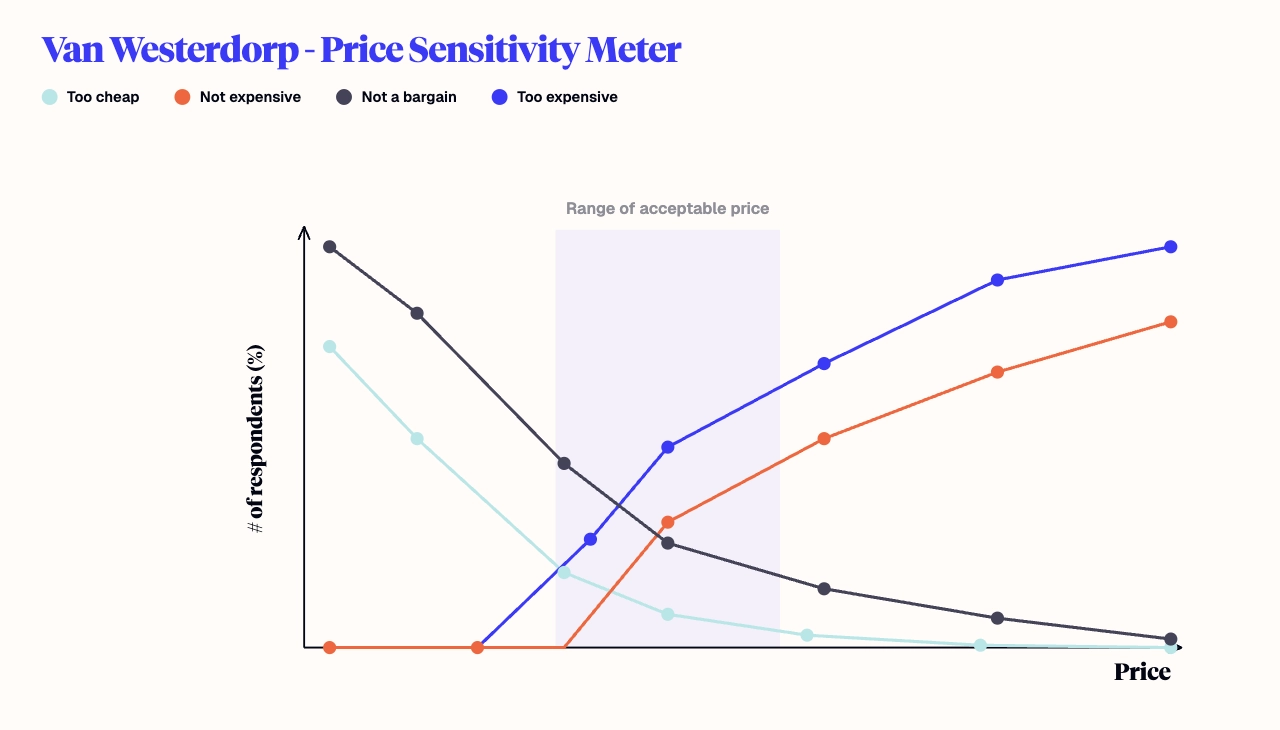
To accurately determine a price point, organizations should utilize established research methodologies such as the Van Westendorp Price Sensitivity Meter or MaxDiff analysis. The Van Westendorp model involves asking potential customers four key questions to identify a "range of acceptable prices":
- At what price would the product be so expensive that you would not consider buying it?
- At what price would the product be so low that you would feel the quality couldn’t be very good?
- At what price would you consider the product starting to get expensive, so that it is not out of the question, but you would have to give some thought to buying it?
- At what price would you consider the product to be a bargain—a great value for the money?
This data allows companies to plot a "Price Sensitivity Monitor" (PSM) and identify the "Optimal Price Point" where the number of potential customers is maximized.
Furthermore, when testing price changes in a live environment, it is critical to maintain "clean" experiments. A common mistake is the "combination test," where a company changes both the price and the trial duration simultaneously. If the test results in a conversion lift, the team cannot distinguish whether the price or the trial length was the driving factor. Such confounded data prevents the organization from building a repeatable "playbook" for growth.
Layer 4: Tactical Optimization and the Psychology of the Paywall
At the very top of the pyramid sits optimization. This layer encompasses the tactical elements of the paywall: anchoring, urgency, framing, and discount presentation. While these are the most frequently discussed "hacks" in growth marketing, they are refinements rather than foundational pillars.
Tactical optimization can certainly drive significant incremental revenue. For example, "anchoring" involves placing a high-priced enterprise plan next to a standard plan to make the latter appear more affordable. Similarly, framing a discount as "Two months free" rather than "17% off" can resonate differently with certain demographics.
However, the efficacy of these tactics is entirely dependent on the layers below them. If the value metric is unfair or the packaging is confusing, no amount of urgency-inducing countdown timers or clever anchoring will result in long-term customer retention. Optimization should be viewed as the "last mile" of the pricing strategy—the process of smoothing the path for a customer who has already recognized the value of the offer.
A Chronological Approach to Pricing Audits
To implement this bottom-up model, companies should follow a structured chronology when reviewing their monetization strategy:

- The Foundation Audit (Months 1-2): Analyze churn data and qualitative feedback to identify "value friction." If users are complaining about costs despite high usage, the value metric is likely the culprit.
- Structural Realignment (Months 3-4): Simplify the tier structure. Remove underutilized features from core plans to reduce "feature bloat" and clarify the value proposition of each tier.
- Willingness-to-Pay Research (Months 5-6): Conduct Van Westendorp or MaxDiff surveys with both current users and non-converting leads to find the "revenue ceiling" and the "value floor."
- Live Price Testing (Months 7-8): Run isolated A/B tests on price points, ensuring no other variables (like trial length or onboarding flow) are altered.
- Paywall Refinement (Ongoing): Continuously iterate on the visual presentation, anchoring, and messaging of the paywall to maximize conversion of the now-solidified pricing model.
Broader Implications for the SaaS Industry
The shift toward a foundational pricing model reflects a broader maturation of the software industry. In the "growth at all costs" era, companies could afford to be sloppy with their pricing foundations because venture capital subsidized the cost of customer acquisition. In the current "efficiency era," however, pricing has become one of the most powerful levers for profitability.
Industry data suggests that a 1% improvement in price optimization can result in an average boost of 11% in operating profit—a far higher return on investment than similar improvements in customer acquisition or variable costs. Yet, despite this, the average SaaS company spends less than ten hours per year on their pricing strategy.
The broader implication is clear: pricing is not a "set it and forget it" marketing task, but a core product function. Companies that treat pricing as a pyramid—building upward from a fair value metric to a refined paywall—will find themselves more resilient to market fluctuations. They will build products where the cost of the service is seen as an investment by the customer, rather than a tax.

Ultimately, when a pricing test comes back "flat," it is rarely because the users are simply "price-sensitive." More often, it is a signal that the pyramid is upside down. By refocusing on the foundation—the value metric and the packaging—businesses can unlock growth that is both scalable and sustainable. In the competitive world of subscriptions, the winner is not necessarily the one with the lowest price, but the one whose price most accurately reflects the value delivered to the user.