The landscape of public relations and corporate communications has undergone a seismic shift in recent years, driven by the rapid evolution of artificial intelligence, the heightening of geopolitical sensitivities, and a new ability to quantify the financial impact of a brand’s standing. Three distinct but interconnected events—the fallout from an AI-generated video involving University of Texas quarterback Arch Manning, a complex geopolitical dispute surrounding a major musical tour, and a landmark study on the monetary value of reputation—illustrate the increasing volatility of the modern communication environment. These cases highlight a fundamental truth for the digital age: in the court of public opinion, the medium of a message is often as critical as the message itself, and the cost of a damaged reputation can now be measured in the billions.
The Arch Manning AI Incident: Lessons in Medium and Accountability
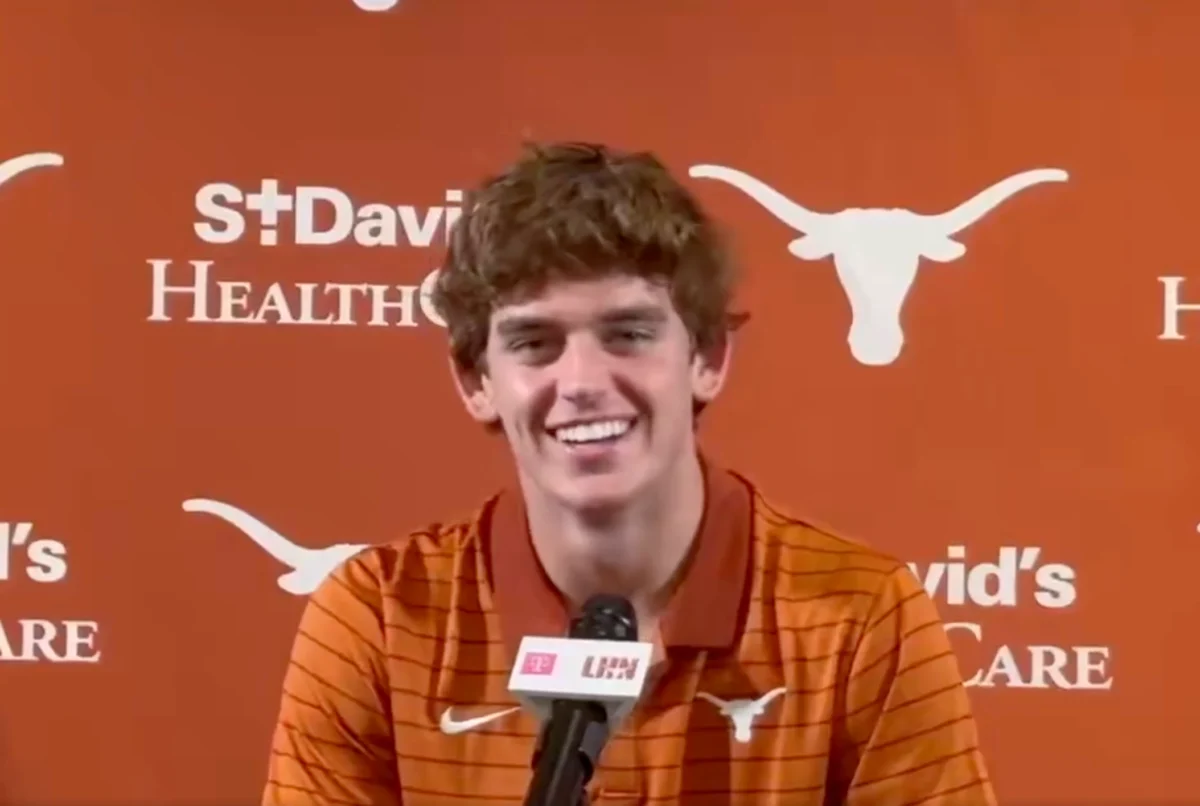
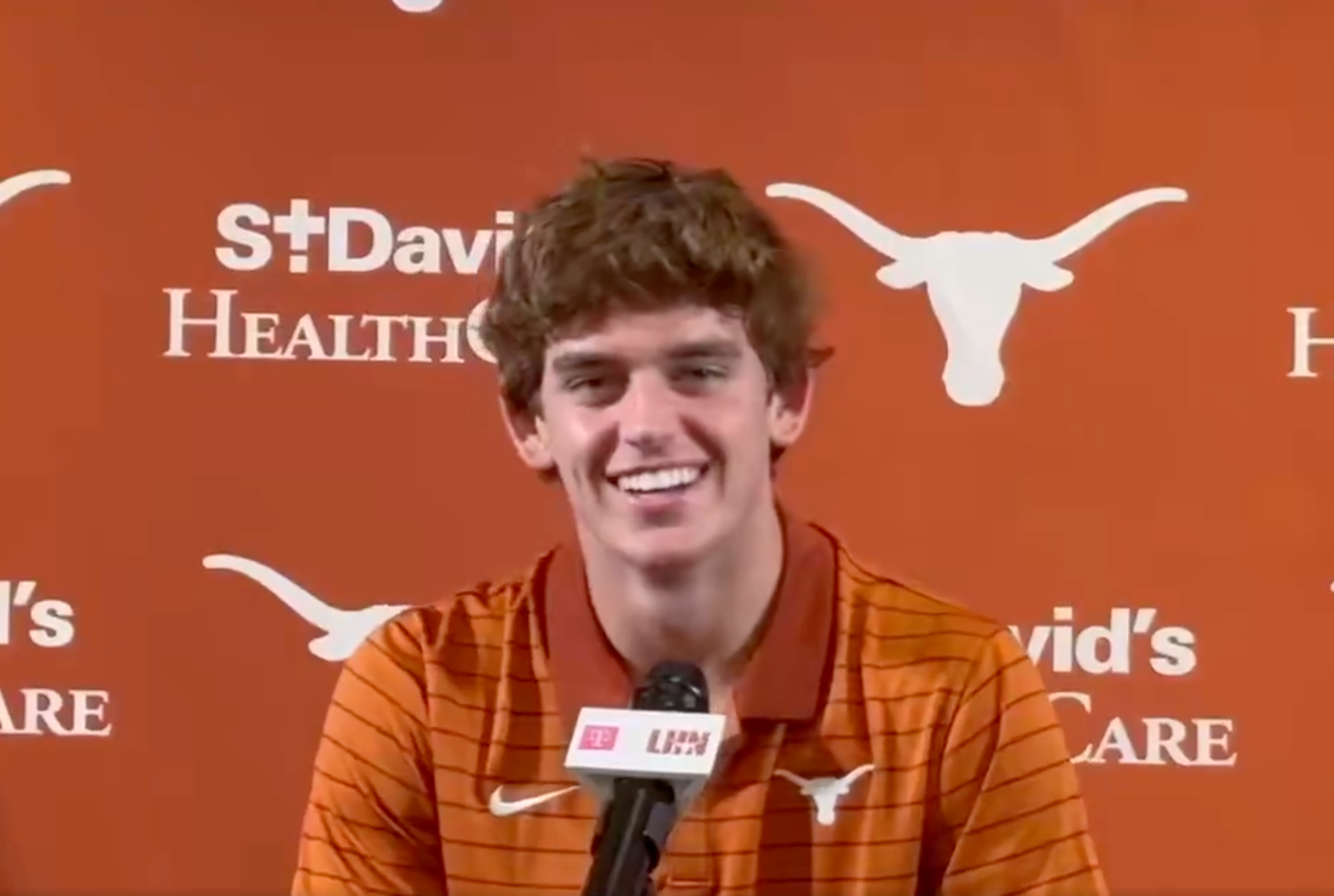
At the University of Texas at Austin, quarterback Arch Manning recently found himself at the center of a controversy that serves as a cautionary tale for the next generation of public figures. Manning, a member of the storied Manning football dynasty and one of the most high-profile student-athletes in the country, inadvertently sparked a backlash during a routine Monday press conference. The incident began when Manning commented on an AI-generated video that had been circulating on social media. The "deepfake" depicted Texas head coach Steve Sarkisian physically striking ESPN sideline reporter Holly Rowe.
The video was created by an anonymous user in the wake of Texas’s narrow 24-23 victory over Ohio State, a game in which Sarkisian had abruptly ended a post-game interview with Rowe. While the actual interaction was merely a standard instance of a coach being in a hurry, the AI-altered version transformed the moment into an act of violence. During the press conference, Manning referred to the video as "hilarious" and asked members of the media if they had seen it. His comments were immediately met with criticism, as observers pointed out that joking about violence against women—even in a digital, fictional context—was deeply inappropriate.
By Tuesday, Manning had shifted into crisis management mode, issuing a formal apology via an Instagram Story. In his statement, Manning admitted his comments were "insensitive" and acknowledged that his words were "hurtful to a lot of people." He specifically addressed Holly Rowe, expressing his respect for her professional work. Rowe subsequently accepted the apology in her own social media post, noting that she had a private conversation with the quarterback and wished to move forward with "respect and kindness."
However, communication experts suggest the incident reveals a deeper issue regarding how public figures handle apologies in the digital age. Eric Yaverbaum, CEO of Ericho Communications, noted that while the apology was swift and specific, the choice of a disappearing medium like an Instagram Story—which vanishes after 24 hours—can make the gesture seem "sheepish." For a public figure like Manning, whose permanent Instagram feed is largely dedicated to lucrative brand deals, the refusal to post a permanent apology suggests a desire to hide the mistake rather than fully own it. This highlights a critical takeaway for PR professionals: the platform chosen for a message often dictates how the public perceives its sincerity.
The Macklemore and Ed Sheeran Dispute: The Myth of Neutrality
While the Manning incident focused on the nuances of digital content, a separate controversy involving rapper Macklemore, pop star Ed Sheeran, and New England Patriots owner Robert Kraft demonstrated how geopolitical tensions can derail even the most successful commercial ventures. The conflict began during Sheeran’s tour stops at MetLife Stadium in early September, where Macklemore served as an opening act. During his performance, Macklemore utilized the stage to make impassioned pro-Palestinian remarks, wearing a keffiyeh and displaying footage of destruction in Gaza while leading the audience in chants.
The reaction was swift and polarized. High-profile figures, including the singer Pink, criticized the performance, arguing that the use of violent imagery in a family-oriented stadium setting was alienating to Jewish fans. The situation escalated when Robert Kraft, a prominent philanthropist and founder of the Foundation to Combat Antisemitism, intervened. Kraft confirmed that he pressured Sheeran and the tour’s promoters to remove Macklemore from future dates, citing a commitment to ensuring that stadiums remain "welcoming environments" free from "hate speech."
The subsequent fallout was extensive. Promoters dropped Macklemore from the remaining eight tour stops, which in turn prompted Sheeran’s other supporting acts—including Finneas and Lukas Graham—to withdraw from the tour in a show of solidarity with Macklemore. Sheeran attempted to maintain a neutral stance, publicly blaming the promoters for the decision, but the attempt at "political agnosticism" backfired.
PR analysts, including Franco CEO Tina Kozak, argue that Sheeran’s situation proves that neutrality is no longer a viable shield once a specific action has been taken. By allowing Macklemore to be removed, Sheeran became associated with that decision in the eyes of the public, regardless of his personal intent. Conversely, Macklemore’s decision to donate his tour earnings to Palestinian relief organizations was viewed as an effective communication strategy because his actions aligned perfectly with his rhetoric. This episode serves as a reminder that in a hyper-polarized world, "not taking a side" is often interpreted as taking one, and the attempt to find a middle ground can sometimes satisfy no one while alienating everyone.
Quantifying the Crisis: The $1.2 Billion Reputation Gap
For years, corporate communications and reputation management were viewed as "soft" assets—valuable, but difficult to measure in concrete financial terms. However, a groundbreaking new study from Augur Intelligence Corp has finally put a dollar figure on the value of a strong reputation during a crisis. The three-year study analyzed 139 corporate crises at 114 publicly traded companies, spanning categories such as product recalls, data breaches, labor strikes, and DEI reversals.
The findings are stark: companies that entered a crisis with a strong reputation lost a median of 8.5% of their value compared to their industry peers. In contrast, companies with a weak pre-crisis reputation saw their value plummet by a median of 20.1%. For a company with a $10 billion market capitalization, this 11.7-point difference represents a staggering $1.2 billion in enterprise value.
The study, led by former Edelman advisor Aidan Ryan, utilized actuarial standards common in the insurance industry to track how reputation moves the needle on stock prices. One of the most significant findings for communicators is the "long tail" of equity damage. The data shows that financial losses often continue to accrue for months after a company has closed its "war room" and returned to business as usual. This suggests that many organizations stop their crisis response far too early, failing to address the underlying erosion of trust that continues to impact their valuation long after the headlines have faded.
Broader Implications for the Communication Industry
The convergence of these three narratives—Manning’s AI blunder, the Macklemore-Sheeran geopolitical fallout, and the Augur reputation study—points toward a more rigorous and high-stakes future for public relations.
First, the Manning incident underscores that AI is no longer a futuristic concern; it is a present reality that can distort truth and create real-world liability for those who engage with it. Communicators must train their clients not only on what to say but on how to navigate a world where digital content is easily manipulated.
Second, the Sheeran-Macklemore dispute highlights the death of "corporate silence." In an era where consumers and stakeholders demand to know the values of the brands and individuals they support, the attempt to remain "apolitical" is increasingly seen as a lack of leadership. Actions, such as removing a performer or donating to a cause, speak louder than any carefully worded press release.
Finally, the Augur study provides PR professionals with the ultimate tool for the boardroom: empirical data. By demonstrating that reputation management is directly tied to billions of dollars in market value, the study elevates the role of the Chief Communications Officer from a tactical support role to a strategic financial necessity.
As technology continues to blur the lines between reality and fabrication, and as global conflicts continue to permeate domestic culture, the ability to build and defend a reputation is no longer just a marketing goal—it is a core component of financial survival. The lessons from this week’s headlines are clear: the cost of a mistake is rising, the window for an effective apology is shrinking, and the value of a trusted name has never been higher.