In an increasingly saturated digital landscape, where the proliferation of AI-generated content threatens to overwhelm audiences, content curation has solidified its position as an indispensable strategy for brands seeking to cut through the noise and maintain relevance. Far from merely resharing information, effective content curation involves the meticulous selection, organization, and presentation of existing high-quality content from external sources, enriched with a brand’s unique perspective and context. This strategic approach is proving vital for businesses aiming to establish thought leadership, foster community engagement, and optimize their content calendars amidst an unprecedented surge in digital output.
The Evolving Landscape of Digital Content and the AI Imperative

The concept of content curation, while not entirely new, has gained significant prominence in recent years, particularly with the explosive growth of social media platforms and the advent of sophisticated artificial intelligence. Historically, curation might have been a simple act of sharing a link or quoting an expert. However, the digital ecosystem of today presents a fundamentally different challenge. Data from 2026 indicates that a substantial portion of the U.S. adult population regularly consumes news and information on social platforms, with 38% relying on Facebook and 35% on YouTube. This widespread reliance on social channels for news and information means audiences are constantly navigating an immense volume of content, much of which is now machine-generated.
The emergence of generative AI tools has dramatically lowered the barrier to content creation, leading to a deluge of articles, posts, and visuals that can often lack depth, nuance, or genuine human insight. In this environment, a brand that acts as a trusted filter, sifting through the abundance to highlight genuinely valuable and relevant information, becomes not just another voice, but an essential guide for its audience. This editorial layer, the "why" behind sharing a piece of content, is what transforms simple aggregation into meaningful curation, providing clarity and fostering trust in an era of information overload.
Strategic Distinctions: Curation Versus Creation

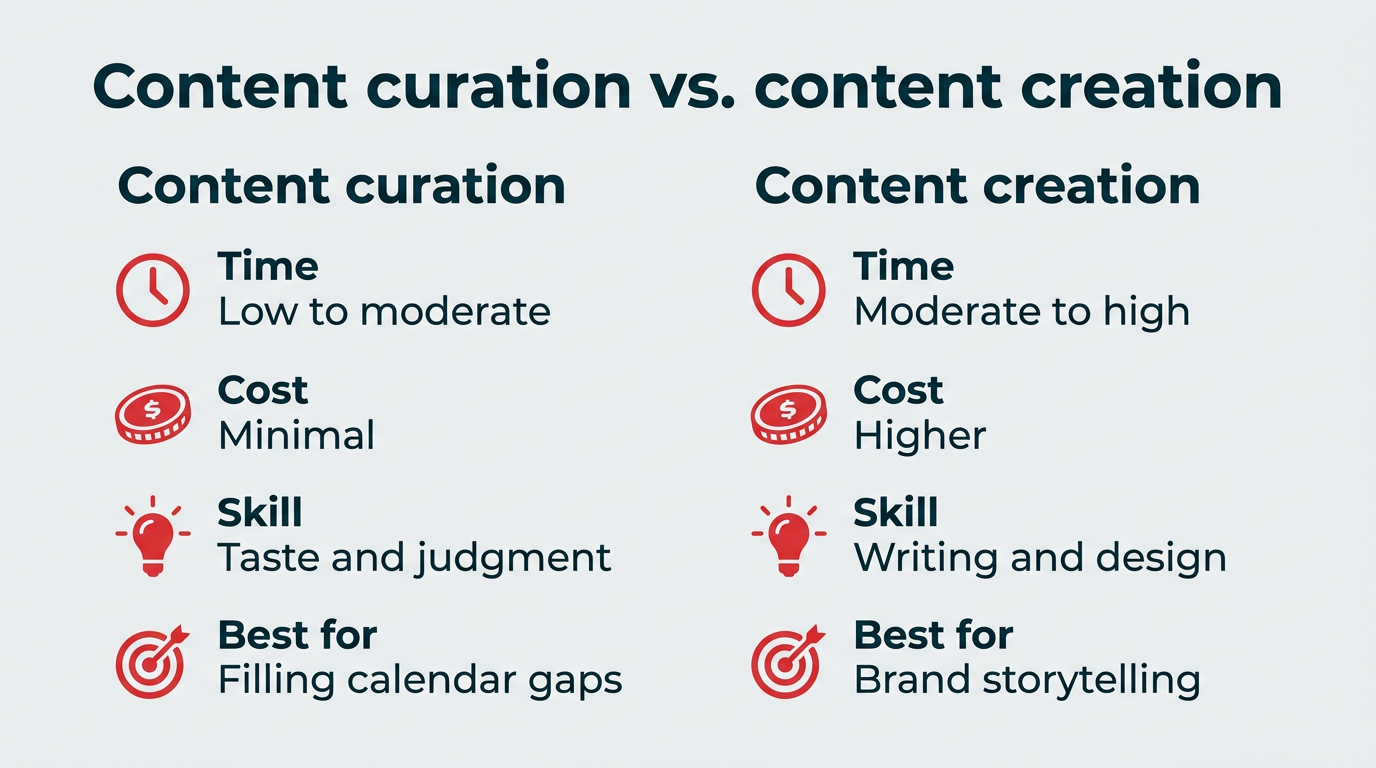
While both content curation and content creation are integral components of a robust digital strategy, they serve distinct purposes and demand different resource allocations. Content creation focuses on producing original material—blogs, videos, infographics, or studies—that articulates a brand’s unique insights, products, or services. It is often resource-intensive, requiring significant investment in writing, design, research, and production. In contrast, content curation is the art of identifying, contextualizing, and sharing existing high-quality content from reliable external sources. Its primary benefits lie in efficiency and strategic positioning.
The two approaches are not mutually exclusive; indeed, the most effective social strategies seamlessly integrate both. Creation allows a brand to tell its own story and directly address its audience with proprietary information, crucial for brand building and product marketing. Curation, on the other hand, keeps the content calendar vibrant, expands the breadth of topics covered, and injects external perspectives, fostering a more dynamic and engaging dialogue. The practical difference often boils down to time and cost: curation typically demands a lower to moderate time investment and minimal cost, relying on keen judgment and context-setting skills, while creation requires moderate to high time and financial outlays for specialized skills like writing, design, and strategic planning.
The Multidimensionality of Content Curation: Five Key Approaches
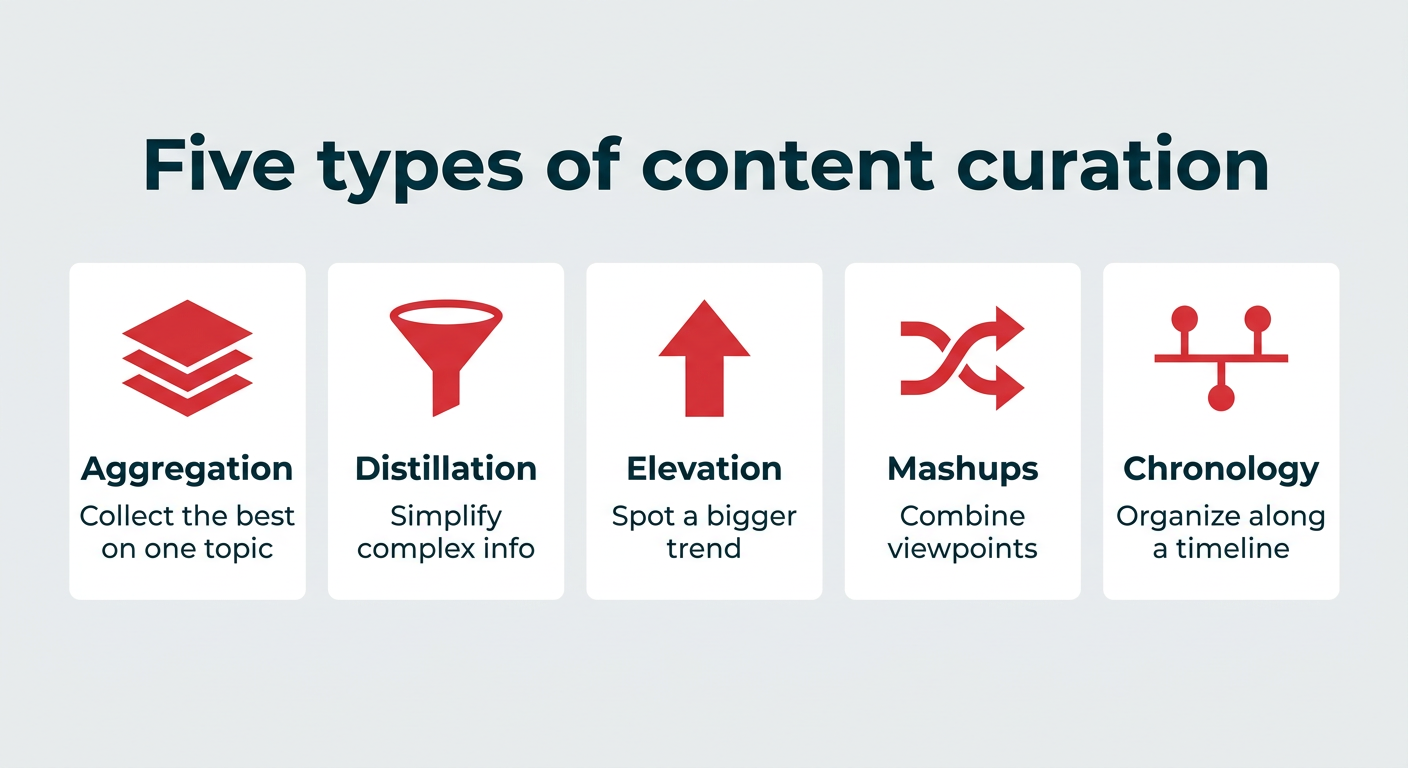
Content curation is not a monolithic activity but rather a spectrum of strategic maneuvers, each designed to achieve specific objectives. Understanding these distinct types enables marketers to apply the most appropriate approach for their goals and audience.
-
Aggregation: This involves collecting the most pertinent content on a specific topic into a single, easily accessible destination. On social media, this often manifests as weekly roundups of industry news, curated link lists, or carousels highlighting essential reads. The value here lies in saving the audience time by centralizing dispersed information.
-
Distillation: This highly valuable form of curation simplifies complex or dense information into easily digestible insights. Transforming a lengthy industry report into a concise infographic or a few key bullet points with critical statistics is an example of distillation. It makes expert-level content accessible to a broader audience.
-
Elevation: Perhaps the most editorial type, elevation involves identifying overarching patterns or emerging trends from seemingly disparate smaller pieces of content or comments. A curator practicing elevation connects these dots, names the larger trend, and then presents the supporting evidence. This positions the brand as a forward-thinker capable of insightful analysis.
-
Mashups: This approach combines diverse or even competing viewpoints on a single subject to create a novel perspective or comprehensive overview. An expert roundup, where several practitioners offer their answers to the same pressing question, exemplifies a mashup, enriching the discussion by showcasing multiple angles.
-
Chronology: Organizing content along a timeline to illustrate the evolution or development of a topic, event, or platform is the essence of chronology. A thread detailing every algorithm update for a social platform over a year, or a series tracing the history of a particular technology, helps audiences understand progression and impact over time.

Strategic Imperatives: Why Content Curation Matters Now More Than Ever
The strategic importance of content curation for social teams cannot be overstated, driven largely by imperatives of reach, efficiency, and brand positioning.
-
Time and Budget Efficiency: In an era of constrained marketing budgets, curation offers a cost-effective alternative to continuous original content production. The ideation, writing, and design phases of original content are resource-intensive, requiring multiple specialists and review cycles. Sharing a valuable external article, however, can take mere minutes. This allows brands to maintain a consistent online presence without exhausting creative resources, ensuring that budget is optimally allocated across a mix of created and curated content.

-
Relationship Building and Amplification: Curation is a powerful tool for fostering professional relationships. By crediting and tagging original creators, brands can initiate conversations, acknowledge expertise, and build goodwill within their industry. This no-strings-attached celebration of others’ work is a fundamental networking strategy, potentially opening doors to collaborations and strengthening industry ties.
-
Diversifying Content Calendars: Audiences crave variety. A content calendar dominated solely by self-promotional or original brand content risks becoming an echo chamber. Curated content introduces fresh perspectives, external voices, and broader industry trends, preventing content fatigue and keeping the feed engaging. It signals that the brand is part of a larger conversation, not just talking to itself.
-
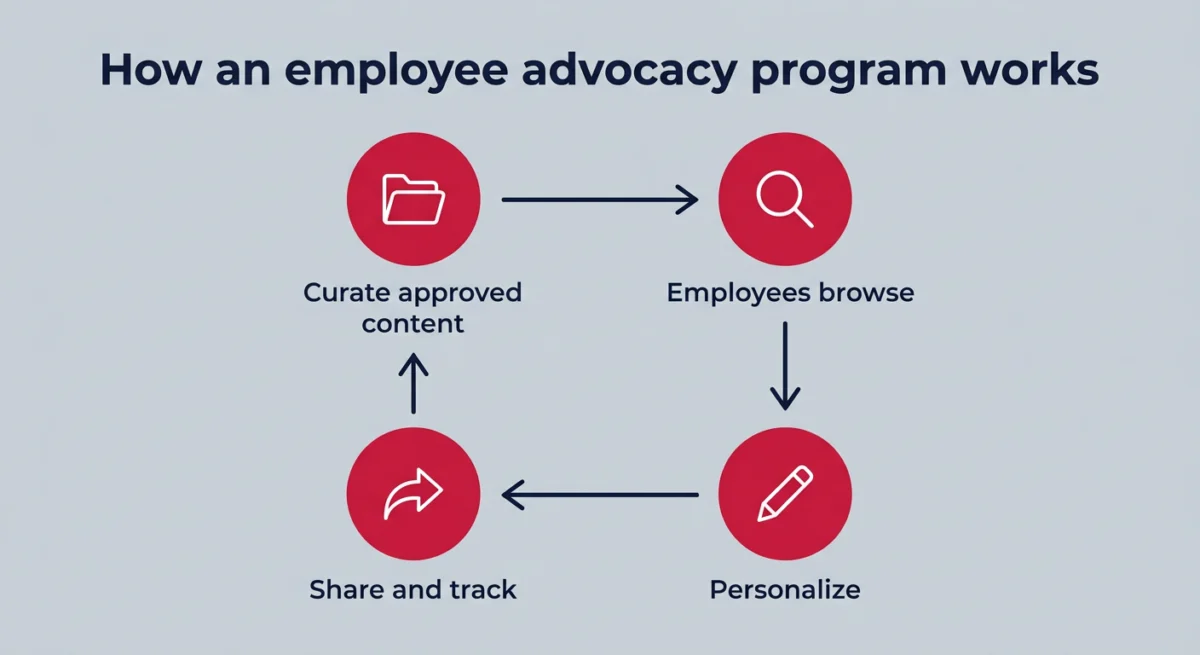
Driving Community Engagement: Sharing diverse opinions and new ideas from other experts sparks dialogue and fosters meaningful connections with the audience. User-generated content (UGC) is particularly effective in this regard. By amplifying content created by their own audience, brands express gratitude, make creators feel valued, and generate authentic, effortless posts. Furthermore, employee advocacy programs can magnify this effect, turning employees into brand champions who readily reshare compelling UGC.

-
Establishing Thought Leadership: While original research is foundational for thought leadership, strategic curation reinforces it. By consistently surfacing the most insightful articles, reports, and analyses from across the industry, a brand demonstrates its deep understanding of sector trends and its commitment to staying informed. This "show, don’t tell" approach subtly positions the brand as an authority without overt self-promotion. For instance, Hootsuite’s annual social media trends research is a prime example of the kind of valuable industry report that, when curated and paired with a brand’s specific interpretation, elevates its thought leadership.
A Methodological Framework: The Seven-Step Curation Workflow
To execute effective content curation consistently, a systematic approach is essential. This involves treating curation not as an ad-hoc activity but as a structured, repeatable process.
-
Define Content Pillars and Audience: The foundational step involves articulating the 3-5 core themes or topics that align with the brand’s expertise and mission. These pillars act as a filter, ensuring that all curated content is relevant and purposeful. Concurrently, a deep understanding of the target audience—their interests, challenges, and preferred content formats—is crucial to ensure curated content resonates and adds value.
-
Set Your Content Mix Ratio: A predefined content mix ratio (e.g., 70% proven, low-risk content; 20% experimental; 10% high-risk, or a 40-60% curation to creation ratio) provides a strategic blueprint. This prevents an inconsistent feed and helps identify content gaps in advance. This ratio should be treated as a hypothesis, subject to adjustment based on performance analytics.
-
Identify High-Quality Sources: The efficacy of curation hinges on the quality of its inputs. Brands must cultivate a robust list of credible sources, including reputable industry publications, analyst reports, specialized newsletters, RSS feeds, and the social profiles of respected thought leaders. Leveraging social listening tools, such as Hootsuite Social OS’s Lumen, is critical for identifying trending conversations and influential sources that resonate with the target audience in real-time. Given that 84% of U.S. adults use YouTube and half use Instagram, sourcing should extend beyond single platforms to encompass a holistic view of the digital landscape.

-
Add Your Own Perspective: Simply resharing content without commentary diminishes its value. The "editorial layer" is paramount. Brands must provide context, explaining why the content is relevant, what key takeaways their audience should note, and how it applies to their specific industry or challenges. This added perspective transforms a simple share into an insightful contribution.
-
Credit the Original Creator: Ethical practice and brand integrity demand full attribution. Always tag and link to the original creator, explicitly acknowledging their work. Plagiarism is detrimental to a brand’s reputation. When compiling content from multiple sources, ensure all contributors are credited transparently.
-
Schedule and Publish Consistently: Consistency is key to maintaining audience engagement. Utilizing a social media management platform allows brands to plan and schedule both original and curated content in advance, ensuring a steady stream of valuable information. Platforms like Hootsuite provide scheduling capabilities and intelligent analytics to determine optimal posting times for maximum reach and engagement across various channels.

-
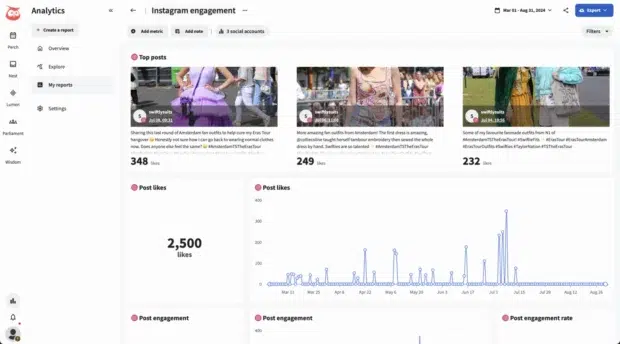
Track Performance and Refine: Curation efforts must be data-driven. Monitoring key metrics—such as reach, engagement rate, click-through rates, shares, comments, and sentiment—for curated posts is essential. Hootsuite Analytics, for instance, consolidates these metrics, allowing for direct comparison between curated and original content. Regular review of this data informs strategic adjustments to the content mix, source list, and posting schedule, ensuring continuous improvement.
AI’s Transformative Role and Enduring Human Judgment
Artificial intelligence is fundamentally reshaping the mechanics of content curation, primarily by accelerating the discovery and initial drafting phases. AI-powered tools can rapidly scan vast quantities of digital content, identify trending topics, cluster relevant information, and even generate first-pass commentary for social shares. This dramatically improves efficiency in identifying potential content worthy of curation. However, the core judgment—the taste, context, and ethical attribution—remains firmly in human hands. AI serves as a powerful assistant, automating the laborious tasks, but the strategic decision-making and the addition of authentic human perspective are irreplaceable. The practical implication for marketers is to embrace AI for volume and efficiency, while reserving the critical tasks of qualitative assessment and contextualization for human oversight.
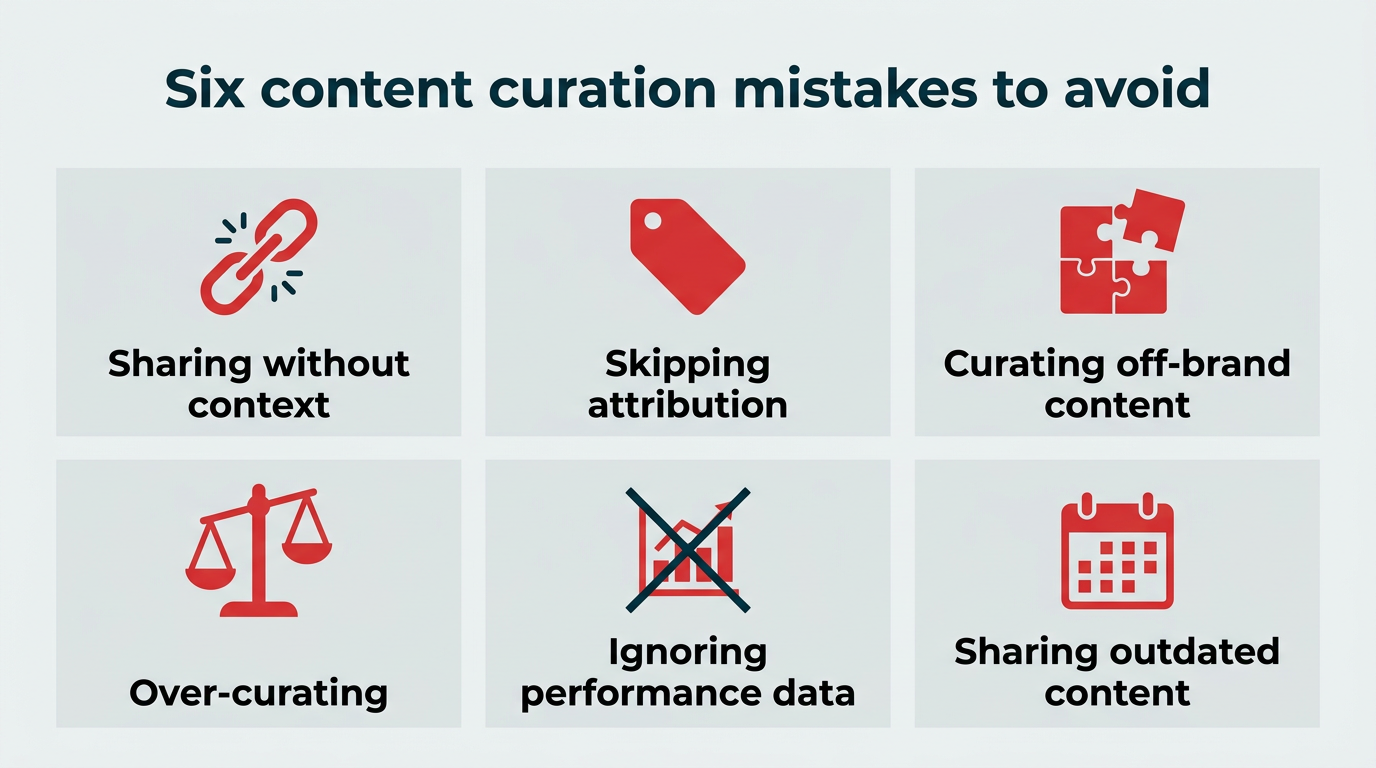
Avoiding Common Pitfalls in Content Curation
Despite its strategic benefits, content curation is susceptible to several common mistakes that can undermine its effectiveness. These often stem from a lack of strategic planning or insufficient attention to detail. Key pitfalls to avoid include:
- Lack of Strategy: Sharing content haphazardly without clear objectives or alignment with content pillars.
- Poor Source Selection: Relying on unreliable, biased, or low-quality sources, which can damage brand credibility.
- No Added Perspective: Simply resharing content without providing unique commentary, context, or analysis, offering little value to the audience.
- Forgetting Attribution: Failing to properly credit the original creator, leading to plagiarism accusations and reputational damage.
- Inconsistent Posting: Sporadic or irregular sharing of curated content, leading to a loss of audience engagement and expectation.
- Ignoring Analytics: Not tracking the performance of curated posts, thereby missing opportunities to refine strategy and optimize for better results.
- Over-curation: Flooding the feed with too much external content, overshadowing original brand messaging.
Conclusion

In an era defined by information overload and the pervasive presence of AI-generated content, content curation has transitioned from a supplementary tactic to a core strategic imperative for brands. By meticulously selecting, contextualizing, and sharing high-quality external content, businesses can efficiently maintain a dynamic online presence, build robust industry relationships, diversify their content offerings, drive meaningful community engagement, and solidify their position as trusted thought leaders. While AI tools are enhancing the efficiency of content discovery, the critical human elements of judgment, ethical attribution, and value-added perspective remain paramount, ensuring that curation continues to be a powerful differentiator in the complex digital landscape of 2026 and beyond.