Automated emails are a powerful engine for e-commerce, demonstrably producing 37% of email-generated sales from merely 2% of the total email volume, according to the Omnisend Ecommerce Report. This stark efficiency underscores email marketing’s unparalleled position as a direct communication channel, a crucial advantage in a digital landscape increasingly dominated by social media platforms and their often-unpredictable algorithms. Unlike rented digital spaces, email marketing offers businesses an owned audience, fostering a direct relationship with opted-in subscribers that is insulated from external platform shifts. This strategic autonomy translates into one of the most profitable digital strategies available, with internal Omnisend data revealing returns as high as $79 for every dollar spent. This guide aims to equip businesses with the knowledge to build engaged subscriber lists, navigate complex data privacy regulations, select optimal sending platforms, and launch targeted campaigns designed to measurably increase e-commerce revenue.
Defining the Modern Email Marketing Landscape
Email marketing, at its core, is a digital strategy leveraging electronic mail to directly engage with subscribers who have explicitly consented to receive communications. Its primary objectives are to promote products, build enduring brand loyalty, and drive conversions. Businesses utilize email for a myriad of purposes, including announcing new product lines, distributing discount codes, promoting events, nurturing customer relationships, and reinforcing brand identity.
The foundational step for any successful email marketing initiative is the creation of a legitimate, opt-in subscriber list. This process is not merely a best practice but a legal requirement, governed by stringent data privacy regulations globally. Common methods for list building include website pop-ups that offer incentives, such as first-time purchase discounts, in exchange for an email address. As proficiency in email marketing strategies grows, businesses can integrate these efforts into broader customer journey frameworks, encompassing lead generation, brand awareness, relationship building, and customer retention.
The Enduring Power of Email Marketing: A Deep Dive into ROI and Strategic Advantages
The benefits of a well-executed email marketing strategy are extensive, ranging from direct communication with an interested audience to exceptional measurability, cost-effectiveness, increased repeat purchases, the efficiency of automation, and complete audience ownership.
In an era where social media algorithms constantly shift, dictating who sees a brand’s content, email marketing provides a stable and direct line of communication to subscribers. This directness, when coupled with intelligent segmentation and personalization, consistently yields high return on investment (ROI). Businesses can leverage internal engagement data to continuously refine and improve their communication strategies, ensuring relevance and maximizing impact. The consistent success observed in automated email sequences, such as abandoned cart reminders and welcome flows, serves as compelling evidence that smart email marketing strategies are a fundamental driver of business growth.
Unpacking the ROI Phenomenon
The financial returns from email marketing are particularly striking. E-commerce businesses consistently report generating between 3600% and 4000% ROI for every dollar spent. For Omnisend users in the United States, this figure can reach an astounding 7900% ROI. To put this into perspective, these returns significantly outperform other popular digital marketing channels: SEO typically drives around 721% ROI, SEM/PPC ads average 24%, Facebook ads 443%, and influencer marketing 689%. This superior performance is largely attributable to email’s inherent cost-effectiveness and the granular trackability of its metrics, including open rates, click-through rates (CTR), conversion rates, and bounce rates, allowing for continuous optimization.
Direct Communication: The Unrivaled Advantage
The trend in email engagement continues upward. Average open rates for e-commerce emails increased from 26.6% in 2024 to 30.7% in 2025, according to the Omnisend Ecommerce Report, making direct communication even more desirable. Possessing a list of individuals who have explicitly consented to receive communications from a specific brand is a luxury in a crowded digital world. This direct access allows businesses to target different contact segments with tailored messages based on their behavior, preferences, and purchase history. Personalization is a proven engagement booster, with data showing that segmented campaigns consistently outperform generic mass emails in both open and conversion rates.
Driving Repeat Purchases and Customer Lifetime Value
Repeat customers, though making up only 21% of shoppers, are disproportionately valuable, generating 44% of total revenue and ordering 300% more frequently than first-time buyers. Email marketing is uniquely positioned to cultivate this segment. Businesses can implement targeted strategies, such as automated sequences that nudge existing customers with personalized product recommendations, restock alerts, exclusive offers, and gratitude emails, encouraging repeat engagement and fostering long-term loyalty.
Automation and Efficiency: Scaling Engagement
Automated emails, triggered by specific customer behaviors, are a cornerstone of modern email marketing efficiency. These emails boast 24% higher open rates, six times more clicks, and 19 times higher conversion rates compared to static campaigns, precisely because they reach individuals when their interest is naturally high. Examples include automated reminders for abandoned carts, welcome series for new subscribers, and follow-up emails for recent buyers, all designed to engage customers at critical points in their journey without manual intervention.

Audience Ownership: Your Uninterrupted Channel
Unlike social media platforms, where average engagement rates for business posts can be as low as 0.45% (Statista data for Instagram), email marketing grants brands complete ownership of their audience. This means no unpredictable algorithms can interfere with message delivery. The reach and visibility of email communications are solely dependent on the brand’s strategy and compliance with regulations, providing a stable and reliable channel for audience engagement and repeat business.
Navigating the Landscape: How Email Marketing Functions and its Key Components
Email marketing operates through three fundamental elements: an opt-in contact list, a reliable sending platform, and a clearly defined objective for each communication.
The Foundation: Building an Opt-in Contact List
Before any emails can be sent, businesses must cultivate a legitimate list of subscribers who have explicitly opted in to receive communications. This is typically achieved through website pop-ups, embedded forms, or checkboxes at the point of checkout. Adherence to data privacy regulations such as the General Data Protection Regulation (GDPR) in the EU/UK, the Controlling the Assault of Non-Solicited Pornography and Marketing (CAN-SPAM) Act in the USA, and Canada’s Anti-Spam Legislation (CASL) is paramount. Attempting to bypass this by purchasing email lists is highly ill-advised. Such lists consist of individuals who have no prior relationship with the brand, leading to low engagement, high spam complaint rates, damage to sender reputation, poor deliverability, and potential legal repercussions from data privacy regulatory bodies.
The Engine: Selecting and Authenticating a Sending Platform
To manage bulk email sends and implement automated sequences, an Email Service Provider (ESP) is essential. Once an ESP is chosen, authenticating the sender email using security protocols like SPF (Sender Policy Framework), DKIM (DomainKeys Identified Mail), and DMARC (Domain-based Message Authentication, Reporting, and Conformance) is a critical step. Most reputable ESPs guide users through this process, often making it a prerequisite for sending emails to ensure deliverability and sender trustworthiness. The selection of an ESP should be a thoughtful process, aligning the platform’s features, scalability, and pricing model with the business’s specific needs rather than simply opting for the most popular choice.
Defining Purpose: Crafting Goal-Oriented Campaigns
Every email message should be crafted with a single, clear objective to maximize its effectiveness. While the ultimate goal is often revenue, the path to achieving it varies significantly across different customer segments and stages of the customer journey. Email marketing strategies can be designed to support broader business objectives such as:
- Lead Generation: Capturing new prospects and nurturing them through the sales funnel.
- Brand Awareness: Increasing recognition and familiarity with the brand.
- Relationship Building: Fostering loyalty and trust with existing customers.
- Retention: Preventing churn and encouraging repeat purchases.
This necessitates a diverse array of email communications, categorized broadly into:
- Campaigns (One-Time Sends): These are typically scheduled messages, such as newsletters, seasonal sales announcements, or company updates, sent to an entire list or specific segments at a predefined time.
- Automations (Triggered Sends): These are sophisticated workflows configured once and automatically delivered based on specific customer behaviors or conditions. Common examples include welcome sequences, abandoned cart reminders, thank-you emails, browse abandonment emails, and win-back flows. Automated emails are particularly effective due to their timeliness and relevance.
Essential Email Campaign Types and Their Strategic Application
A comprehensive email marketing strategy incorporates a variety of campaign types, each serving a distinct purpose in the customer journey:
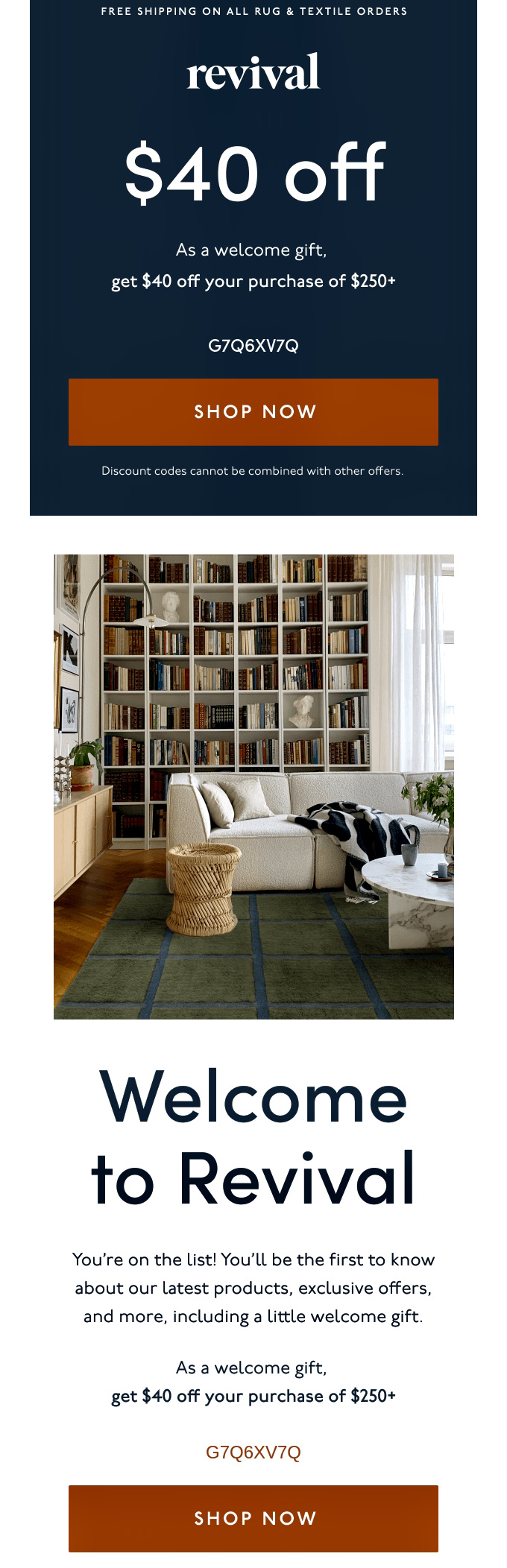
- Welcome Emails: Sent immediately upon subscription, these emails capitalize on peak interest, boasting the highest click-to-conversion rate at 50.98% (Omnisend 2026 report). They introduce the brand, set expectations, and often include an initial offer to encourage a first purchase, as seen in Revival’s friendly tone and clear $40 discount offer.
- Promotional Emails: Designed to highlight discounts, special offers, or limited-time deals, these are effective during holidays like Black Friday or for converting hesitant buyers. GOAT’s Black Friday email, for instance, used the promise of "over $10M in prizes" to drive app downloads and excitement.
- Abandoned Cart Emails: Automated reminders sent to shoppers who have added items to their cart but not completed a purchase. Timely delivery (within one to two hours) is crucial. These emails, alongside welcome flows, drove 76% of automation-generated orders in 2025. They often feature images of the abandoned items, pricing, and a direct link back to the cart.
- Newsletter Emails: Focused on educating, informing, and building loyalty rather than direct sales. They might include behind-the-scenes content, product usage tips, or industry insights, keeping the brand top-of-mind with weekly sends.
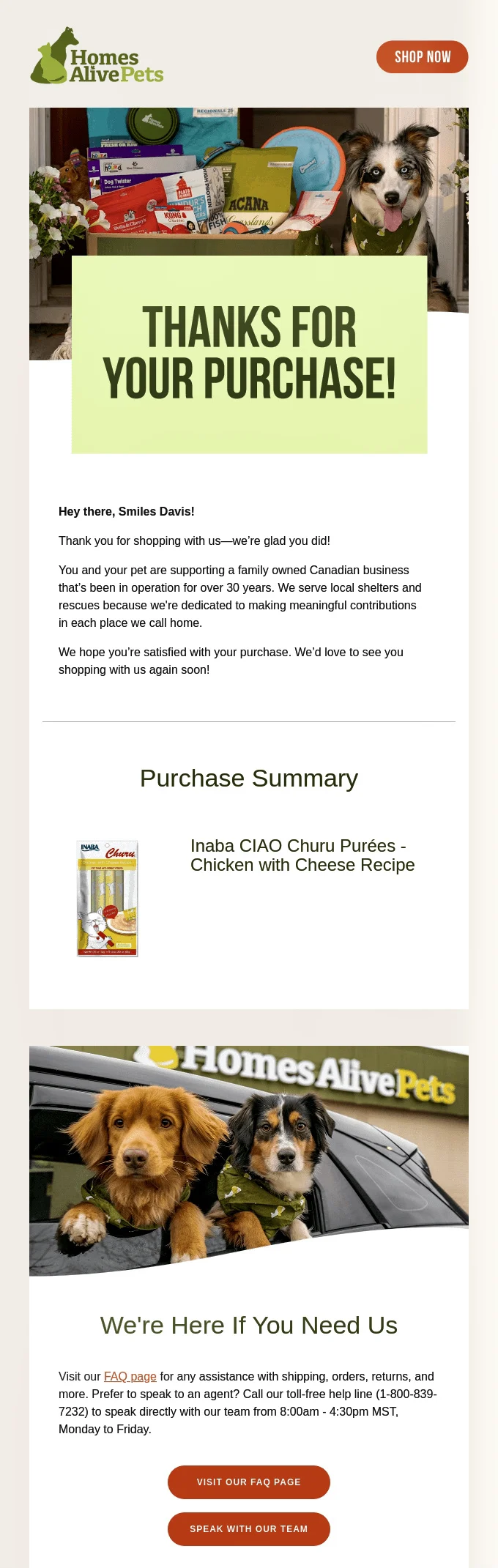
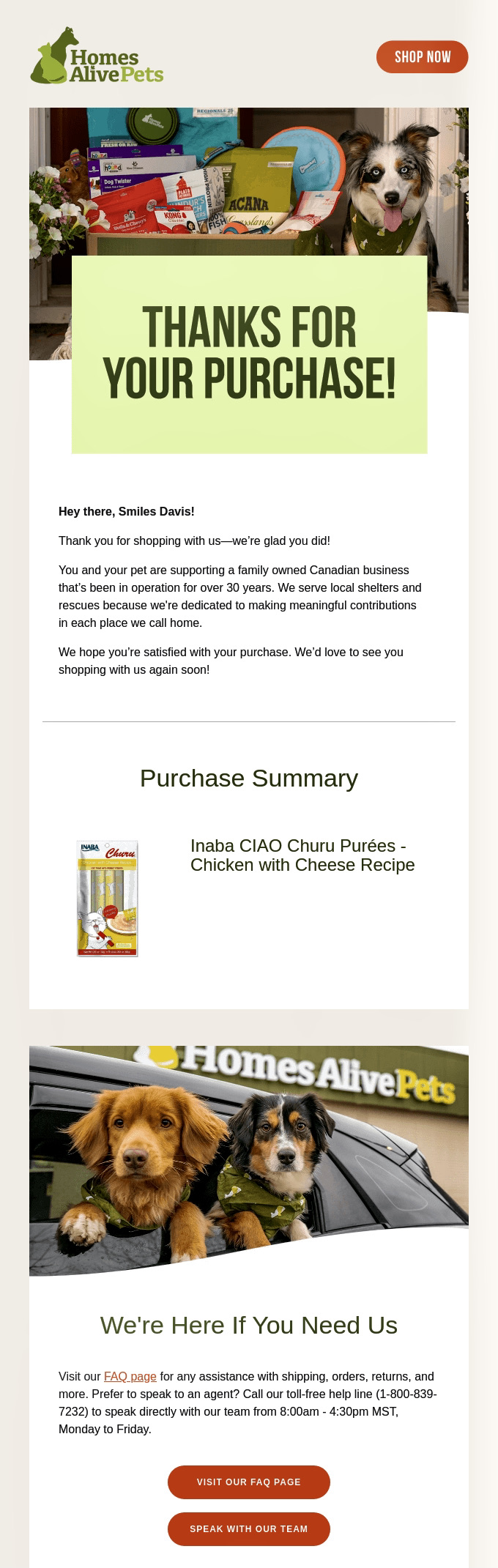
- Post-Purchase and Order Confirmation Emails: Sent immediately after a transaction, these confirm the order, provide shipping details, and reassure customers. Homes Alive Pets’ thank-you email exemplifies this, blending gratitude with essential order information and subtle encouragement for future purchases.
- Re-engagement and Win-Back Emails: Target inactive customers to reignite interest. They often leverage discounts or free shipping to boost opens and conversions. Sourse’s "We’ll give you 25% off to open this email" subject line brilliantly creates curiosity and a sense of urgency.
- Product Launch and Announcement Emails: Used to build anticipation and generate early sales. Providing loyal customers with early access, as Ray-Ban did with its "Preorder now" CTA for new smart glasses, can gauge demand and create exclusivity.
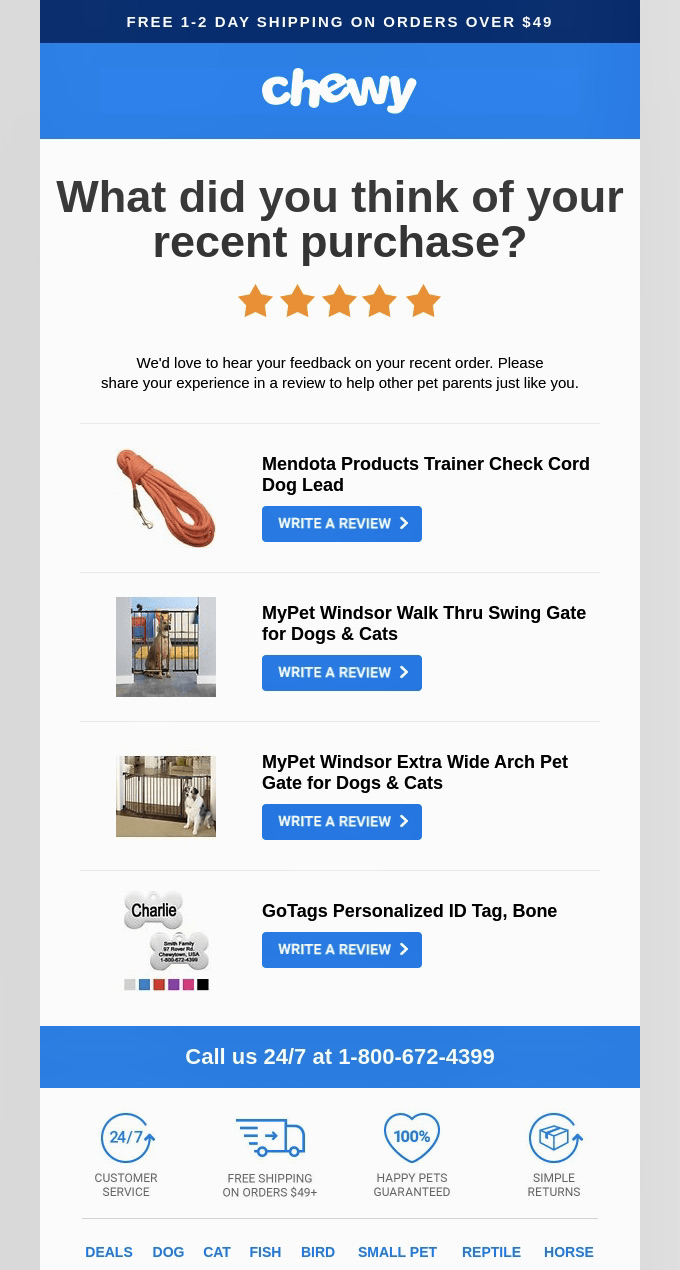
- Feedback and Survey Request Emails: Sent after a customer has had sufficient time to experience a product. These gather valuable insights and build social proof through reviews, as demonstrated by Chewy’s polite and direct request for product feedback.
- Seasonal and Holiday Emails: Capitalize on peak shopping periods by creating a sense of urgency with limited-time deals. Beats’ "Last chance to shop our holiday sale" subject line effectively uses FOMO (Fear Of Missing Out) to drive sales during the holiday season.
Measuring Success: Key Metrics and Evolving Benchmarks for 2026
Accurate measurement is vital for optimizing email marketing performance. While open rates were historically a primary metric, the introduction of Apple Mail Privacy Protection (MPP) in 2021, which pre-loads tracking pixels, has rendered them less reliable. Businesses should now prioritize bottom-funnel metrics that directly correlate with revenue.
Here are the key metrics and their benchmarks for 2026, comparing general industry standards with Omnisend’s e-commerce-specific data:

| Metric | What it measures | How to calculate it | Industry benchmark | Omnisend 2026 benchmark (June 2026) |
|---|---|---|---|---|
| Open rate | Percentage of delivered emails opened | (Opens ÷ Delivered) × 100 | 21% to 39% | Campaigns: 30.7%, Automations: 38% |
| Click-through rate (CTR) | Percentage of delivered emails with at least one click | (Clicks ÷ Delivered) × 100 | 2.1% to 3.7% | 0.74% (May 2026)* |
| Click-to-open rate (CTOR) | Percentage of opened emails that received a click | (Clicks ÷ Opens) × 100 | 10% to 25% | Campaigns: 2.40%, Automations: 11.40%* |
| Click-to-conversion rate | Percentage of clicked emails resulting in a purchase | (Conversions ÷ Clicks) × 100 | 1.5% to 3% | 9% (June 2026)** |
| Bounce rate | Percentage of emails that could not be delivered | (Bounces ÷ Sent) × 100 | 2% | N/A |
| Unsubscribe rate | Percentage of recipients who unsubscribed | (Unsubscribes ÷ Delivered) × 100 | 0.1% to 0.5% | 0.2% (May 2026) |
| Revenue-per-email | Average revenue generated per email sent | Total revenue ÷ Total emails sent | $0.08 to $0.15 | Campaigns: $0.18, Automations: $2.87*** |
- Omnisend’s CTR and CTOR are lower for campaigns because e-commerce promotional emails often prioritize direct sales over general clicks, while automations are highly targeted.
- Omnisend’s click-to-conversion rate is higher as e-commerce emails are predominantly sales-centric.
- Omnisend’s revenue-per-email figures exceed generic averages because automated e-commerce flows strategically target shoppers at their peak readiness to purchase.
The Monetary Value of an Email List
An active, engaged email list is a significant asset. Based on Omnisend’s 2026 E-commerce Report benchmarks ($0.18 revenue per campaign email and $2.87 per automated email), a 1,000-subscriber list can be valued at approximately $1,294 per month, or $15,528 annually. This calculation assumes a standard sending routine: one weekly campaign (4,000 campaign emails per month) and 20% of the list triggering automations (200 automated emails per month).
Projected Monthly Revenue for a 1,000-Subscriber List:
| Monthly Volume | Revenue per Email (Omnisend 2026) | Projected Monthly Revenue | |
|---|---|---|---|
| Campaigns | 4,000 emails | $0.18 | $720 |
| Automations | 200 emails | $2.87 | $574 |
| Total | 4,200 emails | – | $1,294 |
This estimate is influenced by:
- Email Frequency: More targeted emails generally lead to higher revenue.
- Audience Engagement: Highly engaged lists generate significantly more value.
- Automation Strategy: Robust automation workflows unlock higher revenue per email.
Crucially, this valuation applies only to active subscribers; a list of unengaged contacts holds little to no value.
Overcoming Modern Email Marketing Challenges
While highly effective, email marketing presents several challenges that businesses must address for sustained success.
Ensuring Deliverability: The Technical Gatekeepers
A primary challenge is ensuring emails actually land in the subscriber’s inbox, avoiding spam folders or outright blocking. This hinges heavily on sender reputation, which is influenced by factors like IP address reputation, spam complaint rates, bounce rates, and content quality. Adherence to authentication protocols—SPF, DKIM, and DMARC—is critical for verifying sender identity and preventing spoofing, thereby improving deliverability. Most ESPs streamline this setup, often making it mandatory before sending.
Combating Inbox Competition and Email Fatigue
The sheer volume of emails received daily leads to intense inbox competition and can result in "email fatigue," where users ignore or unsubscribe from generic messages. Statistics show that 43% of people unsubscribe due to being emailed too often. To counter this, personalization and segmentation are indispensable. Automated, personalized messages achieve significantly higher open rates (52%), click rates (332%), and conversion rates (2,361%). Segmentation strategies can be based on:
- Purchase behavior (e.g., frequent buyers, first-time buyers)
- Website browsing history (e.g., viewed specific product categories)
- Engagement level (e.g., opened recent emails, clicked specific links)
- Demographics or geographic location
Navigating Data Privacy and Measurement Gaps
The evolving landscape of data privacy, particularly Apple’s Mail Privacy Protection (MPP), has impacted the reliability of open rates as a performance metric. MPP automatically pre-loads tracking pixels, artificially inflating open rates. Consequently, businesses must shift their focus to more definitive bottom-funnel metrics like click-through rates, conversions, direct sales, and revenue per email to accurately assess campaign success.
Managing Escalating Costs and List Hygiene
Most ESPs structure their pricing based on subscriber count or monthly email volume. As a list grows, costs can escalate. It’s crucial for businesses to align their chosen ESP’s pricing model with their business model to maintain ROI. Regular list hygiene, including email marketing audits to identify and remove cold, unengaged contacts, is essential. This practice not only manages costs by preventing payment for inactive subscribers but also improves deliverability and ensures performance metrics reflect true engagement.
Summary of Email Marketing Challenges and Solutions:
| Email Marketing Challenge | Business Impact | Practical Fix |
|---|---|---|
| Authentication & Deliverability | Messages land in spam, lost revenue | Configure SPF, DKIM, DMARC records |
| Inbox Competition | Fatigue, lower clicks, spam complaints | Segment audiences by purchase behavior |
| Privacy Protections | Inaccurate open-rate tracking | Optimize for clicks, orders, and revenue |
| List Scaling Costs | Bloated ESP fees from cold subscribers | Prune inactive addresses regularly |
A Step-by-Step Guide to Launching Effective Email Marketing

For both beginners and experienced marketers, launching an effective email marketing strategy involves a clear sequence of steps focused on capturing, engaging, and analyzing audience behavior.
1. Choosing an Email Marketing Platform
This foundational decision significantly impacts scalability and ROI. Evaluate platforms based on:
- E-commerce Integrations: Seamless synchronization with platforms like Shopify, WooCommerce, or BigCommerce.
- Automation Depth: Sophistication of triggered workflows.
- Segmentation Capabilities: Ability to create highly specific audience segments.
- Deliverability: Reputation and tools to ensure emails reach the inbox.
- Pricing: Transparent and scalable costs aligned with growth.
- Customer Support: Accessibility and quality of assistance.
- Compliance: Built-in features for data privacy adherence.
While popular names are tempting, a thorough research process can prevent costly and time-consuming migrations later. Platforms like Mailchimp offer broad marketing suites suitable for small businesses but may lack e-commerce depth. ActiveCampaign excels with deep conditional logic for B2B lead nurturing but comes at a higher cost. Omnisend, in contrast, is purpose-built for e-commerce, offering native product data sync, cart activity tracking, and purchase history integration, alongside email and SMS in unified workflows. It also provides 24/7 human customer support and sophisticated AI functionalities for audience segmentation, product recommendations, and customer lifetime value forecasting.
2. Adding Your First Sign-Up Form
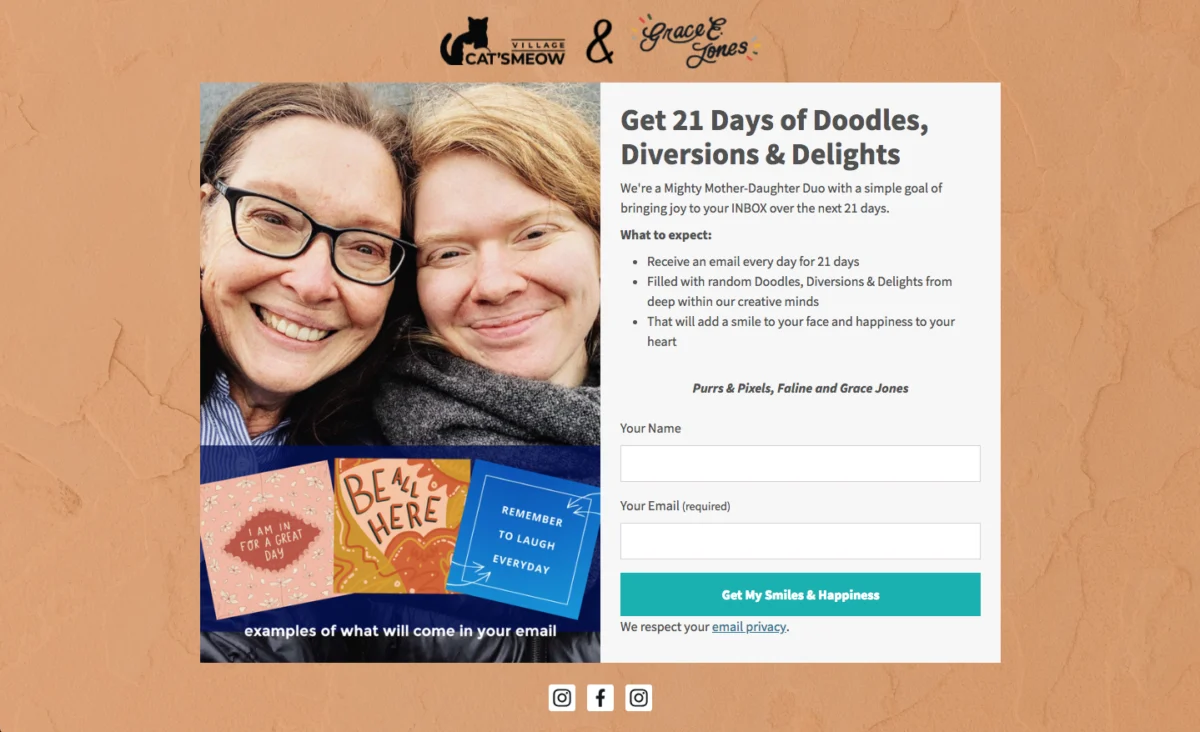
Sign-up forms are the gateway to building your list. They should be prominently displayed and offer clear incentives, such as discounts, exclusive content, or early product access, in exchange for an email address. Common types include:
- Pop-ups: Appear dynamically based on user behavior (e.g., exit intent, time on page).
- Embedded Forms: Static forms integrated into website pages.
- Landing Pages: Dedicated pages for sign-ups, often used for specific campaigns.
- Checkout Checkboxes: An option during the purchase process to join the mailing list.
3. Creating a Welcome Email
Welcome emails are critical for making a strong first impression and boast an impressive 33.79% open rate (Omnisend 2025). They should be sent immediately after subscription when interest is highest. Key elements for an effective welcome email include:
- Personalized Greeting: Address the subscriber by name.
- Brand Introduction: Briefly explain what the brand offers.
- Value Proposition: Reiterate the benefits of being a subscriber.
- Clear Call to Action (CTA): Guide them to their next step (e.g., shop, explore, use discount).
- Brand Consistency: Maintain consistent branding with colors, fonts, and tone.
- Social Proof (Optional): Include links to social media or reviews.
4. Sending Your First Campaign
When launching a manual campaign, focus on a singular objective. Promotional campaigns highlighting best-selling products or limited-time offers are common for initial sends. Maintain strict brand consistency in colors, fonts, logos, and tone of voice. Crucially, always double-check all links and preview the email’s design on both desktop and mobile devices before sending to ensure a flawless experience.

5. Reviewing and Improving
Email marketing is an iterative process. Continuously measure campaign and automation results using bottom-funnel metrics like click-through rates, unsubscribe rates, revenue per email, and conversion rates. While tracking open rates, acknowledge their reduced accuracy due to privacy features like Apple’s MPP. If CTR underperforms, consider A/B testing clearer CTAs or refining audience segmentation to ensure the message resonates with a more niche, receptive group. This continuous cycle of analysis and optimization is key to refining strategies and maximizing ROI.
Legal Frameworks: Ensuring Compliance in Email Marketing
Operating within the bounds of data privacy regulations is not just good practice but a legal imperative, designed to protect consumers from spam and ensure ethical marketing.
- CAN-SPAM Act (USA): Applies to commercial emails sent to U.S. recipients. Requires truthful subject lines, a valid physical postal address, and a clear, easy-to-use unsubscribe option. Violations can incur penalties up to $53,088 per email (FTC, 2026).
- GDPR (EU/UK): Governs data collection and emails sent to EU and UK residents. Mandates explicit opt-in consent (no pre-checked boxes), and grants users the right to access or delete their personal information. Penalties can reach €20 million or 4% of global annual turnover (GDPR, 2026).
- CASL (Canada): Applies to commercial electronic messages sent to or from Canadian residents. Requires opt-in consent, clear sender identification, and accessible unsubscribe mechanisms. Penalties can be up to $10 million for businesses and $1 million for individuals per violation (CRTC, 2026).
- California Consumer Privacy Act (CCPA): Gives California residents rights over their personal data, including the right to opt out of the sale or sharing of their information.
Most reputable email service providers automate consent capture and technical authentication by default, making platform selection critical for ensuring ongoing compliance.
How to Choose an Email Marketing Platform
The right email marketing platform is a long-term strategic partner. Key selection criteria include:
- Integrations: Compatibility with existing e-commerce platforms (Shopify, WooCommerce, BigCommerce).
- Automation: Sophistication and ease of building complex workflows.
- Segmentation: Tools for granular audience targeting.
- Deliverability: Reputation and infrastructure to ensure inbox placement.
- Pricing: Scalability and transparency of costs as your list grows.
- Customer Support: Quality and availability of assistance.
- Compliance Tools: Built-in features to adhere to privacy regulations.
Best Platforms for Different Businesses and Their Trade-Offs:
| Platform | Best For | What it Gives You | Trade-Off |
|---|---|---|---|
| Mailchimp | Local small businesses seeking multiple marketing tools | Broad marketing suite beyond email, familiar interface | Shallower e-commerce depth compared to specialized tools |
| ActiveCampaign | B2B teams with long sales cycles and CRM needs | Deep conditional logic for multi-stage lead nurturing | Higher cost, requires more setup to realize full value |
| Omnisend | E-commerce stores on Shopify, WooCommerce, BigCommerce | Native sync of product data, cart activity, purchase history; email and SMS in one workflow | Primarily built for e-commerce, less suited for B2B or service businesses |
Omnisend further distinguishes itself with award-winning 24/7 human customer support (including for free plan users) and advanced AI functionality. Omnisend AI assists in building audience segments with simple prompts, generates product recommendations, performs RFM (Recency, Frequency, Monetary) analysis, and forecasts customer lifetime value. Its MCP (Marketing Campaign Performance) integration allows users to query store performance within ChatGPT or Claude, integrating insights directly into existing workflows without constant tab switching. The success of brands like Flextail, which generated $235,000 in attributed sales from an Omnisend welcome automation flow, underscores the value of an e-commerce-focused platform.
Conclusion: Start Your First Email Marketing Campaign
Email marketing remains one of the most effective and affordable channels for connecting with audiences, nurturing leads, and driving revenue. By leveraging the right tools and implementing strategic campaigns, businesses can significantly increase conversions, foster lasting customer relationships, and gain invaluable insights to continuously optimize their marketing efforts. In a dynamic digital environment, the ownership and direct communication afforded by email marketing represent a crucial strategic advantage for sustained business growth.