In an increasingly saturated media landscape, the challenge of conceiving and executing public relations campaigns that genuinely cut through the noise is more acute than ever. PR professionals constantly grapple with the twin pressures of generating novel, impactful ideas and confidently predicting their success in a volatile public sphere. The traditional reliance on intuition and creative brainstorming, while valuable, is proving insufficient in an era defined by instantaneous information dissemination and data-driven insights. The strategic imperative for modern PR lies in a rigorous, two-step methodology that integrates comprehensive research with a nuanced understanding of content themes, emotional triggers, and optimal presentation formats. This approach, heavily reliant on sophisticated content analysis tools and a keen eye for human psychology, transforms campaign development from an art of guesswork into a science of predictable impact.
The Evolution of PR Strategy: From Intuition to Analytics
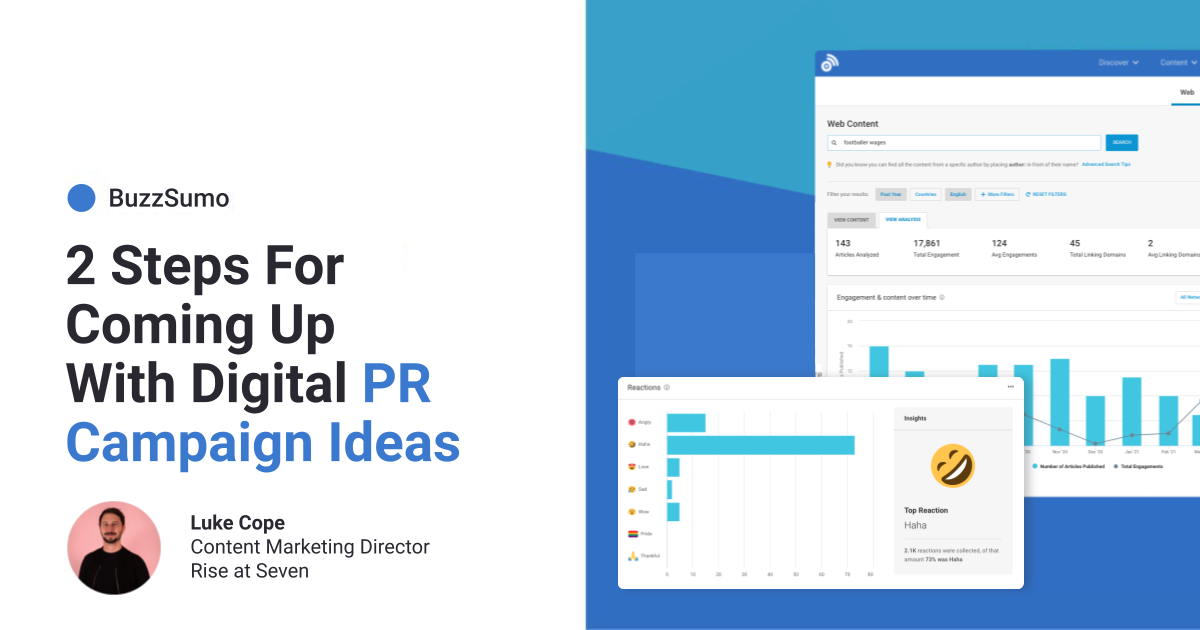
Public relations, historically rooted in media relations and reputation management, has undergone a profound transformation over the past two decades. The advent of the internet, followed by social media and advanced analytics, has reshaped how organizations communicate with their publics. What was once primarily a function of cultivating relationships with journalists and crafting compelling narratives has expanded to encompass content marketing, search engine optimization (SEO), and direct audience engagement across myriad digital platforms. This shift has necessitated a move away from purely subjective campaign ideation towards a more analytical and evidence-based framework. Early PR efforts often relied on the "big idea" generated in a boardroom, with success measured by clip counts and anecdotal feedback. Today, the focus is on measurable outcomes: media coverage, inbound links, social engagement, website traffic, and ultimately, conversions and brand equity. Tools like BuzzSumo’s Content Analysis Report exemplify this evolution, providing PR strategists with granular data on content performance, audience engagement, and prevailing sentiment, thereby offering a robust foundation for predicting campaign efficacy. This analytical shift not only de-risks campaign investments but also empowers PR teams to articulate their strategies with a level of confidence previously unattainable.
Foundation First: Unearthing Resonant Themes and Emotional Drivers
The initial, and arguably most critical, phase of developing a successful PR campaign involves deep dives into content themes and the underlying emotions they evoke. This stage is not about immediate campaign concepts but about understanding the fertile ground from which impactful ideas can spring.
The Core Challenge of Idea Generation
Generating top-tier campaign ideas consistently is a formidable task. It requires not only creativity but also a significant investment of time and the courage to advocate for an idea that carries inherent risk. However, this risk can be substantially mitigated by grounding the ideation process in thorough research. The objective is to identify themes that possess two key characteristics: consistent discussion within relevant media circles and consistent sharing and linking by target audiences. For PR professionals, success in this context primarily means securing high-quality media coverage and valuable backlinks, with social engagement serving as a crucial secondary performance indicator (KPI). This foundational research alleviates the pressure to conjure a concrete campaign idea prematurely; instead, it guides the exploration towards proven areas of interest.
Strategic Research as the Bedrock
The process begins by leveraging content analysis tools. Taking a client or brand that sells honeymoon packages as an illustrative example, the initial research would naturally center on "Honeymoons." However, a truly insightful analysis branches out, exploring related, yet distinct, themes such as "Engagement rings," "Wedding planning," "Romantic getaways," or even broader concepts like "Travel trends" or "Luxury experiences." This methodical expansion continues until the themes become too far removed from the core offering, ensuring relevance while maximizing the scope for discovery. By analyzing the volume of articles published over time for each theme, PR professionals can gauge the overall interest and saturation, pinpointing areas of opportunity or emerging trends. For instance, a consistent upward trend in "Wedding planning" content, coupled with high engagement, signals a robust theme for potential campaigns.
Beyond Keywords: Tapping into Emotional Resonance
Crucially, this research extends beyond mere topic identification to uncover the emotional undercurrents driving content consumption and sharing. Why do people engage with certain articles? What feelings do they elicit? The ability to tap into universal emotions is often the secret sauce for viral content and widespread media pickup. Content analysis tools provide insights into the dominant emotions expressed in discussions surrounding particular themes (e.g., joy, sadness, anger, anticipation, surprise). Understanding these emotional responses allows strategists to tailor campaign narratives and angles that resonate deeply with audiences and journalists alike.
Case Study: The "World Without Light Pollution" Campaign
Consider a campaign centered around the environmental theme of light pollution. The product theme for this particular client might be "Star maps," a niche with limited standalone campaign potential. Branching out, researchers might identify "Supermoons" and "Night sky" as secondary themes, both demonstrating high social engagement. However, "Light pollution" emerges as a particularly potent theme, not only consistently discussed but also experiencing a surge in relevance due to contemporary events such such as the proliferation of SpaceX satellites contributing to atmospheric light and broader public awareness around environmental issues spurred by the COVID-19 pandemic. This confluence of sustained interest and timely relevance signaled an opportune moment for a campaign launch.
Analyzing public reactions to articles on light pollution revealed two dominant emotional responses: sadness at the loss of natural night skies and a sense of "wow" or wonder at the beauty that could be restored. This emotional insight became paramount in shaping the campaign. The team understood that the campaign needed to be highly visual to evoke the "wow" factor and conceptually powerful enough to make people contemplate a world without light pollution. The resulting campaign, showcasing digitally re-imagined city skylines free from light pollution, directly addressed these emotional anchors, leading to significant media pickup and public discussion on an often-overlooked environmental issue.
Case Study: The "Footballer Car Cost Calculator" Campaign
Another illustrative example involved a client in the private number plates sector. While "Private number plates" offered some humorous content, it lacked the broad appeal for a major campaign. Expanding the scope led to "Celebrity cars" and, more specifically, "Footballers cars" as highly engaging secondary themes. A deeper dive into the comments sections of articles about footballers’ luxury vehicles revealed a potent mix of emotions: frustration, envy, and a competitive spirit. Readers often compared their own financial realities to the extravagant lifestyles depicted, frequently expressing annoyance at the perceived excess. This insight sparked the idea for an interactive "Footballer Car Cost Calculator."
The calculator allowed users to input their own salary and instantly see how many years it would take them to afford a footballer’s car. This literal comparison amplified the existing emotional responses of competitiveness and indignation, transforming a passive reading experience into a highly engaging and shareable tool. This campaign not only generated substantial links but also tapped into a powerful societal narrative about wealth disparity and aspirational lifestyles. Successfully leveraging themes that consistently provoke strong, identifiable emotions significantly increases a campaign’s likelihood of widespread media adoption and public resonance.
Mastering Presentation: Format, Depth, and Multi-Angle Appeal
Once a robust theme and its emotional drivers are identified, the next critical step is to determine the optimal format for the campaign and to imbue it with sufficient depth and multiple outreach angles. A brilliant idea can fall flat if presented poorly or if its potential is not fully realized.
The Critical Role of Format Selection
The chosen format must be intrinsically linked to the campaign idea and its desired impact. For instance, the "world without light pollution" campaign would have been significantly diminished as a simple blog post. Its inherent "wow" factor demanded a visual and interactive presentation. The use of a simple slider code, allowing users to toggle between "before" (light-polluted) and "after" (pristine night sky) versions of cityscapes, transformed static images into an engaging, immersive experience. This interactivity was crucial for conveying the campaign’s emotional weight and visual appeal. Similarly, a complex data set might be best presented as an interactive infographic, while a controversial opinion might be suited for a thought-leadership article or a survey-backed report.
Interactivity and Visual Impact
Interactive elements, such as calculators, quizzes, or dynamic visualizations, significantly enhance user engagement and shareability. They invite the audience to actively participate rather than passively consume, thereby deepening their connection to the content. Visual impact, whether through stunning imagery, compelling infographics, or short-form video, is equally vital in capturing attention in a fast-paced digital environment. A well-chosen visual can communicate complex ideas instantly and trigger emotional responses far more effectively than text alone.
Expanding Reach: Adding Layers of Depth and Diverse Angles
Beyond the primary format, the depth of content and the availability of multiple angles are paramount for sustained media coverage. A single, strong angle might secure initial coverage, but a campaign rich with diverse data points, regional breakdowns, historical context, or future projections offers journalists a buffet of story opportunities. For the light pollution campaign, while the primary angle of "85% of Americans have never seen the Milky Way" was powerful, additional depth was added by incorporating data from the Bortle scale, illustrating how the most light-polluted cities (Bortle 10) could appear as pristine as Bortle 1 locations. Furthermore, expanding the campaign’s scope from a national to a global issue, given the universal nature of light pollution, provided numerous additional angles for international media outreach.
Case Study: "Touch the Germs" Campaign
Another exemplary campaign that mastered both format and depth was the "Touch the Germs" initiative. While it could have been a simple graphic or data list, the team went significantly further, developing an interactive microscope function that allowed users to visualize the unseen world of bacteria on everyday objects. This format was not merely informative; it was startlingly immersive, creating a profound "ick" factor that commanded attention. The campaign’s depth was further enhanced by detailed data on germ prevalence and potential health implications. The resulting media coverage was extensive, not only securing a high volume of links but also prompting a direct comment from the Mayor of London, underscoring the campaign’s ability to spark significant public and political discourse. The format, in this instance, perfectly justified the ambitious scale of the underlying idea.
Analysis: "Who Owns All the Space Junk?" – The Unfulfilled Potential
Conversely, the "Who Owns All the Space Junk?" campaign by Aira, while conceptually strong and visually appealing, serves as a valuable lesson in maximizing potential. The visualization of space debris by country was effective, addressing a pertinent and growing global issue. However, given the vastness of the theme, there was an opportunity for even greater depth. The campaign could have explored questions such as the types of space junk, its evolution from the 1960s to the present, or projections for future accumulation. Adding interactive timelines, detailed infographics on debris classifications, or even simulations of potential collision scenarios would have significantly amplified its impact and provided journalists with an even richer array of angles, extending its longevity and reach. The problem of space junk, with its implications for satellite communication, national security, and future space exploration, offers myriad avenues for in-depth exploration that could resonate across diverse media segments.
Simplicity as a Strength: "iPods Visualized as Vinyl"
Not all effective formats demand high technical complexity. Mark Johnstone’s "iPods Visualized as Vinyl" campaign demonstrated the power of elegant simplicity. This visual campaign, which reimagined iconic iPods as classic vinyl records, leveraged nostalgia and a clever juxtaposition of old and new media formats. The simplicity of the visual concept belied its profound ability to spark conversation and garner media attention, proving that a strong idea, presented clearly and thoughtfully, can be immensely successful without elaborate interactive features. The format here was simply a series of striking images that spoke volumes.
Optimizing Outreach and Securing Stakeholder Buy-in
The strategic approach to PR campaign development extends beyond ideation and execution to encompass intelligent outreach and internal stakeholder management.
Intelligent Seeding: Leveraging Research for Targeted Outreach
The initial research phase, which identifies consistently engaging themes and publishers, offers a dual benefit. Not only does it inform campaign ideation, but it also provides a ready-made list of relevant journalists and media outlets for targeted outreach. By exporting lists of journalists who have previously covered the campaign’s subject matter, PR professionals can significantly enhance the relevance and effectiveness of their pitches. This precision targeting, facilitated by tools like BuzzSumo’s outreach features, ensures that pitches land in the inboxes of journalists most likely to be interested, drastically improving response rates and media pickup. Industry studies on journalist pitching consistently highlight relevance as a paramount factor in securing coverage.
De-risking Ideas: Data-Backed Confidence for Approval
One of the most significant benefits of this research-driven methodology is its ability to depoliticize and de-risk the internal approval process for campaign ideas. Ideas are inherently subjective, often leading to disagreements among stakeholders. However, by presenting comprehensive research on theme engagement, emotional resonance, and successful formats, PR professionals can provide objective evidence to support their proposed campaigns. Packaging the findings from the first stage of research – demonstrating why a particular theme is consistently discussed and shared, and what emotions it evokes – transforms a subjective "good idea" into an objectively justifiable strategic initiative. This data-backed confidence fosters internal alignment and secures crucial buy-in from clients and senior management, streamlining the path from concept to execution. Tools that allow for quick reporting on engagement and emotion across multiple themes and publishers are invaluable in this context.
The Future of PR: Strategic Imperatives in a Dynamic Landscape
The landscape of public relations will continue to evolve, driven by technological advancements and shifting audience behaviors. However, the fundamental principles of identifying compelling narratives, understanding human psychology, and presenting information in engaging formats will remain constant. The integration of advanced analytics, machine learning, and artificial intelligence is poised to further refine content analysis, predict emotional responses with greater accuracy, and personalize outreach efforts. Yet, these tools will always serve to augment, not replace, human creativity and strategic thinking. The enduring success of PR lies in the synthesis of scientific rigor and artistic ingenuity.
Conclusion: The Synthesis of Science and Art in Modern PR
Developing successful PR campaigns in the contemporary media environment demands a disciplined, two-step process that marries analytical research with creative execution. By systematically exploring content themes for consistent engagement and emotional resonance, PR professionals can uncover fertile ground for impactful ideas. Subsequently, by meticulously selecting the optimal format and infusing campaigns with rich depth and diverse angles, they can maximize media appeal and audience engagement. This strategic framework, underpinned by robust data analysis, not only enhances the probability of securing valuable media coverage and social traction but also instills confidence in the ideation and approval processes. The most effective PR campaigns are no longer born purely from intuition; they are meticulously engineered through a synthesis of science and art, delivering measurable impact and enduring brand value. Professionals seeking to validate their PR campaign ideas and gain a competitive edge are encouraged to explore advanced content analysis platforms, such as BuzzSumo’s Content Analysis Report, which offer free trials to experience this transformative methodology firsthand.