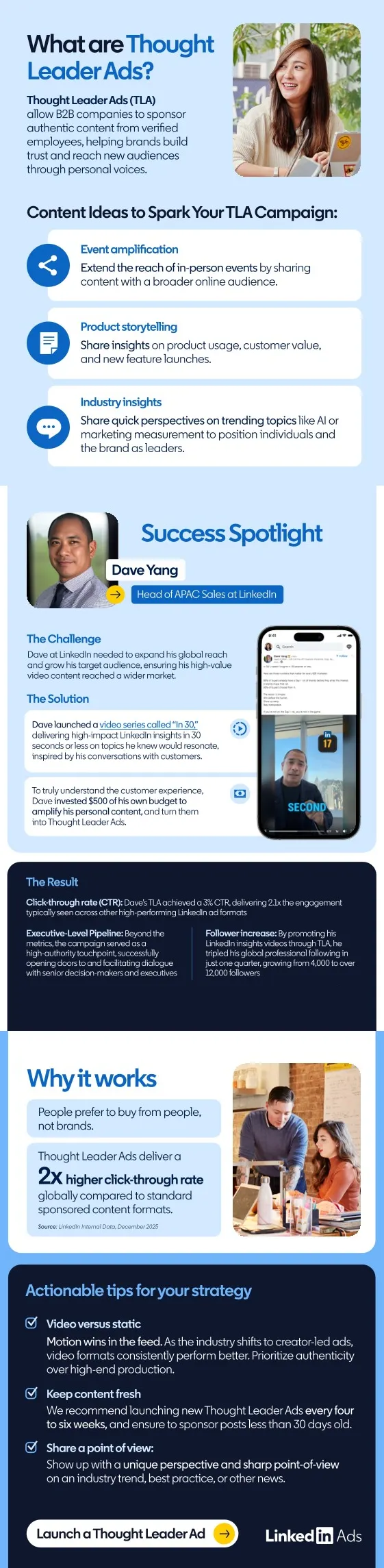
LinkedIn, the world’s largest professional networking platform, has recently issued comprehensive guidance aimed at helping brands optimize their use of Thought Leader Ads. This strategic initiative is designed to empower companies to more effectively reinforce their brand messaging, cultivate deeper engagement, and ultimately drive superior responses from their target audiences. The tips come as LinkedIn continues to evolve its advertising offerings, recognizing the increasing demand for authentic content and credible endorsements in the business-to-business (B2B) marketing landscape.
Thought Leader Ads on LinkedIn represent a sophisticated mechanism for brands to boost user-generated content (UGC), transforming organic praise and insightful commentary from their audience into powerful promotional assets. This capability allows businesses to amplify positive sentiment and expert opinions that originate from individual users, rather than solely relying on direct brand messaging. This approach leverages the inherent trust individuals place in peer recommendations and independent voices.
Notably, LinkedIn has outlined significant future expansions for the Thought Leader Ads framework. In March 2025, the platform plans to broaden the scope of Thought Leader Ads to include posts from any user, moving beyond the current limitation of only employees. This represents a pivotal shift, allowing brands to tap into a wider pool of advocates, including customers, partners, industry influencers, and even general users who spontaneously praise a brand or share valuable insights relevant to its domain. This will be followed in August 2025 by the addition of Thought Leader Ads specifically tailored for events, enabling promoters to amplify content related to webinars, conferences, and virtual summits through the voices of speakers, attendees, or relevant industry commentators. These upcoming features underscore LinkedIn’s commitment to enhancing the authenticity and reach of sponsored content on its platform, providing marketers with a robust toolkit for engagement.
The option to leverage individual endorsement to influence potential customers is not merely an intuitive marketing tactic but is firmly rooted in compelling data. LinkedIn itself has previously highlighted research, including a collaborative report with Edelman, indicating that a significant 71% of decision-makers perceive thought leadership content as substantially more effective than conventional advertising approaches. This statistic alone provides a powerful rationale for the strategic deployment of Thought Leader Ads, positioning them as a critical component of a modern B2B marketing strategy. Furthermore, B2B marketers actively utilizing this format have reported seeing engagement rates that are 1.6 times higher with Thought Leader Ads compared to standard single-image promotions. This enhanced engagement translates directly into increased visibility, improved brand recall, and a stronger foundation for lead generation and conversion.
The Strategic Imperative of Thought Leadership in B2B Marketing
In today’s highly competitive and increasingly complex B2B environment, the role of thought leadership has never been more critical. Traditional advertising, often characterized by overt sales messages, faces growing skepticism and ad fatigue among discerning professional audiences. Decision-makers, particularly those in senior roles, are actively seeking credible information, deep insights, and solutions to their business challenges, rather than simple product pitches. This is where thought leadership steps in, establishing a company or individual as an authoritative voice, a trusted advisor, and a source of valuable knowledge within their industry.
Thought leadership content typically includes research reports, whitepapers, analytical articles, insightful commentary on industry trends, and strategic advice. Its primary goal is not to sell directly, but to educate, inform, and inspire, thereby building trust and demonstrating expertise. This long-term strategy cultivates brand loyalty and positions the brand as a reliable partner. The effectiveness of thought leadership stems from its ability to:
- Build Credibility and Trust: When a brand consistently provides valuable insights, it earns the trust of its audience.
- Influence Purchase Decisions: As evidenced by LinkedIn’s own research, decision-makers are heavily swayed by well-articulated thought leadership.
- Enhance Brand Reputation: It elevates a brand’s standing within its industry, making it synonymous with innovation and expertise.
- Generate High-Quality Leads: Professionals seeking solutions often turn to thought leaders, resulting in more qualified leads.
- Differentiate from Competitors: In crowded markets, unique perspectives and deep expertise can be a powerful differentiator.
LinkedIn, as the preeminent professional networking platform, naturally serves as a fertile ground for the dissemination and amplification of thought leadership. Its user base comprises professionals, decision-makers, and industry leaders actively engaged in business-related content consumption. This makes it an ideal environment for brands to showcase their expertise and connect with relevant audiences.
A Chronology of LinkedIn’s Thought Leader Ad Evolution
The journey of Thought Leader Ads on LinkedIn reflects the platform’s strategic response to evolving marketing needs and the growing influence of individual voices. While the exact inception date of the initial concept can be traced through various ad product iterations, the formalization and significant expansion of what we now recognize as Thought Leader Ads marks a calculated move.
Initially, LinkedIn’s sponsored content options primarily focused on direct brand posts. However, recognizing the burgeoning power of authentic voices and the diminishing returns of purely corporate messaging, the platform began to explore ways to leverage individual credibility. The earliest iterations likely focused on allowing companies to amplify content from their own employees, effectively turning their workforce into brand ambassadors. This was a controlled environment, where companies could select internal experts whose posts resonated with their brand message.
The strategic vision for Thought Leader Ads began to crystallize with key announcements:
- Early Focus on Employee Content: Prior to the major expansions, brands could effectively use paid promotion to boost content created by their employees. This harnessed internal expertise and provided a more human face to corporate communications.
- March 2025 – Expansion to Any User’s Post: This upcoming enhancement represents a significant liberalization of the Thought Leader Ads framework. By allowing brands to sponsor any organic post from any user, LinkedIn is empowering companies to capitalize on external validation and authentic community engagement. Imagine a satisfied customer sharing a positive experience, an industry analyst praising a new product, or a partner highlighting a successful collaboration – these can all become powerful ad assets. This expansion will democratize access to influential content, moving beyond the confines of internal stakeholders and opening up a vast ecosystem of potential advocates. It allows brands to leverage genuine social proof and third-party endorsements at scale, making their message more trustworthy and impactful.
- August 2025 – Dedicated Ads for Events: Following the broader user post expansion, LinkedIn will introduce Thought Leader Ads specifically designed for events. This feature will be particularly valuable for event organizers, marketers, and speakers. It will enable them to amplify key messages, speaker highlights, attendee testimonials, or pre-event buzz through sponsored posts. For instance, a quote from a keynote speaker, a poll about an upcoming webinar topic, or a testimonial from a past attendee could be promoted to drive registrations and engagement. This specialized ad format acknowledges the unique marketing challenges and opportunities associated with professional events, providing a tailored solution to maximize reach and attendance.
These planned expansions indicate a clear strategic direction from LinkedIn: to further integrate organic content amplification into its paid advertising offerings, providing marketers with more nuanced and effective tools to connect with their audiences.
Leveraging LinkedIn’s Guidance: Maximizing Impact with Future Thought Leader Ads
While the original article links to LinkedIn’s tips without detailing them, based on best practices for thought leadership, sponsored content, and LinkedIn’s platform capabilities, a comprehensive set of strategies can be inferred to maximize the impact of these advanced ad formats. These tips are crucial for marketers to prepare for the upcoming capabilities and leverage them effectively:
-
Strategic Content Identification and Curation:
- Identify Authentic Advocates: Brands should actively monitor LinkedIn for posts that genuinely align with their values, products, or services. This includes positive reviews, insightful industry commentary, or endorsements from reputable individuals. Focus on content that comes from credible sources within your target audience or industry.
- Content Quality and Relevance: Not all user-generated content is created equal. Prioritize posts that are well-articulated, provide real value, solve a problem, or offer unique perspectives. The content should resonate deeply with the target audience and clearly, even if implicitly, connect to the brand’s offerings or expertise.
- Diversity of Voices: Amplify content from a range of individuals – customers, industry experts, partners, and even thought leaders who mention your brand in a positive light. A diverse set of voices adds to the credibility and broad appeal.
-
Crafting Compelling Ad Copy and Context:
- Maintain Authenticity: While promoting, it’s crucial to preserve the original voice and authenticity of the user’s post. The ad wrapper should complement, not overshadow, the organic content.
- Add Strategic Value: The accompanying ad copy should provide context, highlight the key takeaway, and include a clear call to action (CTA). This might involve linking to a relevant whitepaper, a product page, or an event registration.
- Transparency: Clearly indicate that the post is sponsored. LinkedIn’s platform typically handles this, but ensuring transparency builds trust.
-
Precision Targeting and Audience Segmentation:
- Leverage LinkedIn’s Robust Targeting: LinkedIn’s advertising platform is renowned for its detailed targeting capabilities. Marketers should utilize firmographic data (company size, industry, job title), demographic data, and behavioral insights (groups joined, content engaged with) to ensure the sponsored thought leadership reaches the most relevant decision-makers and professionals.
- Lookalike Audiences: Once successful audiences are identified, create lookalike audiences to expand reach to new, but similarly qualified, professionals.
- Retargeting: Use Thought Leader Ads to retarget individuals who have previously engaged with your brand’s content or visited your website, reinforcing your message with trusted endorsements.
-
Measuring and Optimizing Performance:
- Define Clear KPIs: Establish key performance indicators (KPIs) beyond just engagement, such as click-through rates (CTR), lead generation, website visits, and ultimately, conversion rates.
- A/B Testing: Continuously test different user posts, ad copies, and targeting parameters to identify what resonates most effectively with your audience.
- Iterative Approach: Analyze performance data regularly and adjust campaigns based on insights. Optimize for content that drives the highest engagement and conversions.
- Attribution Tracking: Ensure proper attribution models are in place to understand the full impact of Thought Leader Ads on the customer journey.
-
Ethical Considerations and Brand Safety:
- Obtain Permissions: Always ensure appropriate permissions are obtained from individuals whose posts are being amplified, even if LinkedIn’s platform facilitates this.
- Brand Alignment: Verify that the content being amplified aligns perfectly with brand values and messaging. Avoid promoting content that could be misconstrued or is off-brand.
- Transparency and Disclosure: Uphold the highest standards of transparency. While LinkedIn labels sponsored content, brands should also be mindful of the ethical implications of amplifying external voices.
Industry Perspectives and Broader Implications
Industry analysts and B2B marketing strategists generally view LinkedIn’s continued investment in Thought Leader Ads as a highly strategic and necessary evolution. "This move by LinkedIn solidifies its position as a critical platform for B2B marketers seeking authentic engagement," comments a hypothetical industry analyst, Dr. Eleanor Vance, specializing in digital advertising. "By allowing brands to amplify genuine user sentiment, they’re tapping into a powerful form of social proof that traditional ads simply can’t replicate. It democratizes the amplification of influence, enabling even smaller businesses to leverage compelling content without needing massive budgets for direct influencer campaigns."
The implications for the broader B2B marketing landscape are significant:
- Accelerated Shift Towards Authenticity: This feature further underscores and accelerates the industry-wide shift towards more authentic, transparent, and credible marketing practices. Brands that prioritize genuine connection over overt sales pitches will thrive.
- Integrated Content Strategy: Marketers must now think even more holistically about their content strategy, blurring the lines between organic and paid efforts. User-generated content becomes a valuable asset not just for organic reach but also for paid amplification.
- Empowerment of the Individual Voice: The feature recognizes and empowers the impact of individual professionals and their networks. Peer recommendations and credible individual insights are increasingly influencing purchasing decisions.
- Competitive Advantage: Companies that skillfully identify, curate, and amplify relevant thought leadership and user-generated content will gain a distinct competitive advantage in building trust, establishing authority, and driving conversions.
- Reinforcement of LinkedIn’s Platform Value: By continuously innovating its ad products to align with evolving marketing trends, LinkedIn strengthens its position as the indispensable platform for B2B professionals and advertisers alike. It offers a unique ecosystem where professional content, networking, and targeted advertising converge seamlessly.
Challenges and Considerations
While the benefits are clear, the expansion of Thought Leader Ads also presents certain challenges and considerations for marketers:
- Maintaining Genuineness: The primary challenge will be to maintain the perceived authenticity of the amplified content. If not handled carefully, overly aggressive promotion of user posts could diminish their organic feel.
- Content Vetting and Control: Brands must implement robust processes for vetting the content they choose to amplify. Ensuring that the content is accurate, appropriate, and aligns with brand guidelines is crucial to prevent reputational damage.
- Potential for "Pay-to-Play" Perception: While the feature offers significant value, there’s a risk that some users might perceive it as another "pay-to-play" mechanism, potentially leading to skepticism about the genuine nature of amplified posts. Transparency and ethical use will be paramount.
- Measuring ROI: Accurately measuring the return on investment (ROI) for Thought Leader Ads, especially in complex B2B sales cycles, will require sophisticated analytics and attribution models.
In conclusion, LinkedIn’s strategic emphasis on Thought Leader Ads, coupled with its upcoming expansions, signals a transformative period for B2B marketing. By providing marketers with enhanced tools to amplify authentic, third-party endorsements and valuable insights, LinkedIn is equipping brands to build stronger connections, cultivate deeper trust, and drive more meaningful engagement. The future of B2B advertising on LinkedIn lies in this powerful blend of authenticity and strategic amplification, positioning companies for unparalleled credibility and impact in the professional sphere.