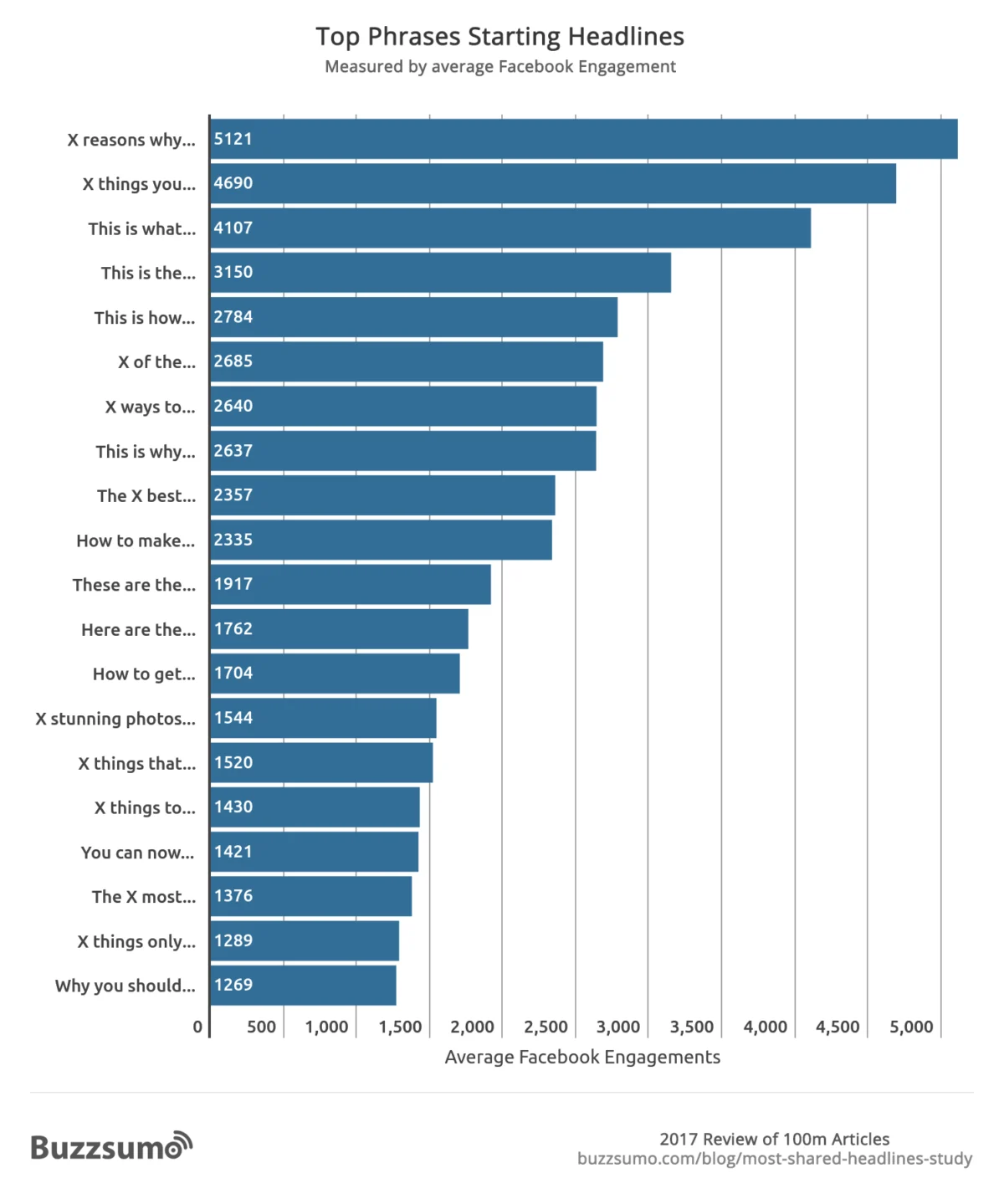
The digital content ecosystem is a constantly evolving battleground for attention, where a headline is far more than a mere title; it serves as a critical gateway, a concise promise, and often the sole point of connection with an audience. In an era defined by information overload, algorithmic gatekeepers, and increasingly discerning readers, crafting headlines that resonate has become an art backed by science. BuzzSumo, a leading content marketing analytics platform, has once again delved into its vast index, analyzing an unprecedented 100 million headlines to uncover the latest trends in what captures audience attention on platforms like Facebook and Twitter. This comprehensive study, building upon Steve Rayson’s seminal 2017 research, not only identifies the most effective headline strategies of 2019-2020 but also illuminates the profound transformations that have reshaped content consumption over the past half-decade.
The Evolving Landscape of Digital Content and Headlines
The journey to understanding modern headline efficacy begins with a look back at the landscape of 2017. BuzzSumo’s initial study, which also analyzed 100 million articles, revealed a distinct set of tactics that drove engagement on Facebook. Emotional triggers were paramount, with phrases like "will make you," "melt your heart," "shock you," and "make you cry" dominating the most shared headlines. Content designed to evoke curiosity or voyeurism, such as "are freaking out" or "what happened when," also performed exceptionally well. Quizzes (e.g., "can we guess," "only X in") and tribal headlines (e.g., "things only [group] will understand") fostered a sense of belonging and challenge, encouraging widespread sharing. Longer headlines, averaging 15 words and 95 characters, were the optimal length for driving engagement.
However, a pivotal shift occurred in May 2017 when Facebook announced its intention to demote "headlines that exaggerate the details of a story with sensational language" and those that "withhold information" – effectively targeting clickbait. This marked the beginning of a significant algorithmic evolution that would fundamentally alter content strategy. Further refinements followed, with Facebook prioritizing "trustworthy news sources" from January 2018 and later boosting "original and authoritative news reporting" in June 2020. These changes, coupled with a staggering 64% increase in online content published since 2016, created a hyper-competitive environment where only the most relevant and value-driven headlines could cut through the noise.
Key Findings from the Latest BuzzSumo Analysis (2019-2020)
The latest BuzzSumo research, encompassing headlines from 2019 and 2020, reveals a stark departure from the strategies of 2017. The findings underscore a clear demand for specificity, direct value, and a more refined approach to capturing audience interest.
Optimal Headline Length and Specificity: Contrary to outdated advice advocating for brevity, the study found that the ideal headline length for top-performing content on Facebook and Twitter is 11 words and 65 characters. This is a notable reduction from the 15 words and 95 characters observed in 2017, indicating a move towards conciseness without sacrificing descriptive detail. Headlines need to be specific and provide enough information to truly draw readers in, balancing brevity with substance.
The Power of Numbers: Numbers continue to be a powerful element in headlines, offering readers a clear structure and a promise of actionable takeaways. The "magic number" 10 remains the most effective, consistent with previous research. Beyond 10, single-digit numbers from three to ten consistently drive the most engagement on social media. Interestingly, the preference for odd or even numbers appears balanced, with both appearing in the top five most shared headlines. However, larger numbers and longer listicles, which were popular in the past, now seem to be less appealing, reinforcing the audience’s desire for quicker, more digestible insights.
The Demise of Emotional and Tribal Clickbait: One of the most striking revelations is the dramatic decline in overtly emotional, sensational, quiz-based, and tribal headlines. Phrases that once guaranteed engagement, such as "will make you" (which generated 1.7 million shares for its top headline in 2017), now yield significantly lower results (e.g., 143,000 shares for its top headline in 2019-2020). Similarly, quiz formats like "can we guess" or identity-driven "only X in" phrases are rarely seen among the top performers. This shift is a direct consequence of algorithmic maturity and audience preference for more substantive content over sensationalism.
Rise of New Themes in Engagement: The study categorized top headline trigrams (three-word phrases) into eight main themes, revealing what truly resonates with today’s audiences:
- Instructional Content Reigns: This category emerged as a dominant force, particularly on Facebook. Phrases like "you need to," "need to know," and "what to do" evoke a sense of urgency and provide a clear promise of value. These headlines tap into the reader’s fear of missing out (FOMO) and a desire for essential, concise information. For example, "Everything you need to know about washing your hands to protect against coronavirus (COVID-19)" (unicef.org, 2.2M shares) exemplifies this trend.
- Strategic Hyperbole: While overt emotionalism has faded, a refined form of hyperbole still works. Phrases such as "one of the most" or "of the best" succeed when they genuinely reference exceptional content or events, steering clear of baseless sensationalism. An example includes "Why Your Older Sister Is One of the Most Important People in Your Life" (brightside.me, 2.1M shares).
- Curiosity and Guidance: Headlines that promise to reveal, explain, or analyze something continue to engage. Declarative statements like "here are the" and "X reasons why," alongside tutorial-based "How to" guides, satisfy an audience’s thirst for knowledge and practical solutions. "Museum Asks People To Recreate Paintings With Stuff They Can Find at Home, Here Are The Results" (sadanduseless.com, 3.1M shares) demonstrates this.
- Ranking and Newness: Time-centric phrases like "of the year" (often associated with awards or rankings) and "in X years" (highlighting rarity or novelty) perform strongly. "Joe Biden and Kamala Harris: TIME’s Person of the Year 2020" (cnn.com, 418K shares) is a prime example of the former, while "For the first time in history, U.S. billionaires paid a lower tax rate than the working class" (washingtonpost.com, 1.2M shares) showcases the latter.
Platform-Specific Insights: Facebook vs. Twitter
While some convergence is apparent, significant differences persist in how headlines perform across Facebook and Twitter.
Facebook’s Engagement Drivers: Facebook audiences gravitate towards instructional content, hyperbole, and themes of ranking and newness. The top phrases "of the year" and "in X years" reflect a strong interest in current events, accolades, and unique occurrences. Phrases ending in "2020" or "2021" performed exceptionally well, likely fueled by the global impact of the pandemic and the desire for timely information. "The" was the most common starting word, followed by words suggesting newness ("new") and guidance ("how").
Twitter’s Distinctive Preferences: Twitter users exhibit a stronger appetite for content focused on "the future of" and research-backed information. Starting words like "study" and "report" indicate a preference for analytical and data-driven insights. The platform’s emphasis on immediacy and current affairs is evident, with a high proportion of top-ending phrases being date-specific (e.g., "2020") or reflecting real-time developments.
Convergence and Divergence: The study notes an increased homogeneity between platforms, with eight of the top 20 headline phrases crossing over between Facebook and Twitter in 2019-2020, compared to just one in 2017. This suggests that certain value-driven and instructional phrases, such as "in the world" or "the power of," are becoming universally effective. However, the sheer scale of engagement differs dramatically: Facebook’s most shared headline phrase garnered 590 times more average shares than Twitter’s, highlighting Facebook’s continued dominance in driving broad content sharing.
The Shifting Publisher Landscape
The algorithmic changes implemented by Facebook since 2017 have profoundly reshaped the publisher landscape. The 2017 study saw a diverse range of publishers, including many known for clickbait. By 2019-2020, the top publishers on Facebook for engaging headlines were overwhelmingly established, trustworthy news organizations like cnn.com, dailymail.co.uk, nbcnews.com, washingtonpost.com, cbsnews.com, and time.com. This reflects Facebook’s deliberate strategy to prioritize authoritative sources and combat misinformation, leading to a more reliable, albeit potentially less sensational, news feed. For content creators, this underscores the importance of building credibility and aligning with trusted information.
Expert Perspectives on Headline Evolution
Industry leaders have weighed in on these transformative findings:
Heidi Cohen, Chief Marketing Officer at Actionable Marketing Guide, highlighted that the research reflects crucial customer behavior changes, including a heightened demand for trusted sources, a focus on immediate needs, and an increased interest in instructional content due to the pandemic. She advises marketers to focus on core marketing basics and continually adapt to evolving customer needs.
Rand Fishkin, Founder of SparkToro, emphasized the value of this data for content creators and marketers, noting that it "confirms some [past strategies], mythbusts others, and illuminates the nuance of what’s really working." He stressed the importance of contrasting past performance with current trends to inform modern content strategies.
Ross Simmonds, Founder of Foundation, found it "fascinating to see that years after BuzzFeed shook up the journalism industry with ‘click friendly’ headlines that they’re now being adopted by the masses." He praised the insight into instructional copy, stating it "showcases the importance of understanding human psychology and the human desire of not missing out on information that is important to our circles."
Brian Dean, Founder of Backlinko, observed the "huge shift from the heyday of Facebook organic, which was all about BuzzFeed-style clickbait," to instructional headlines. He concluded that "today’s Facebook users need to know that the content is going to teach them something new."
Amanda Milligan, Marketing Director at Fractl, connected the "instructional" headline trend to "people’s growing desire to hear and learn from experts." She suggested that such language inherently demonstrates authority, encouraging brands to leverage their expertise to benefit readers.
Implications for Content Creators and Marketers
The findings from BuzzSumo’s extensive analysis offer actionable insights for anyone crafting content in the digital age:
- Prioritize Value and Clarity: Headlines should clearly communicate the value proposition of the content. Instead of vague curiosity gaps, offer explicit promises of learning, instruction, or compelling information.
- Embrace Instruction and Utility: On Facebook especially, instructional phrases that address a reader’s "need to know" or offer direct guidance are highly effective. Content that helps, teaches, or informs is rewarded.
- Be Specific and Detailed, Yet Concise: Aim for the 11-word, 65-character sweet spot. Provide enough detail to pique interest without overwhelming the reader.
- Leverage Numbers Strategically: Numbers, particularly "10" and single digits, remain powerful for listicles and structured content, but avoid overly long lists.
- Tailor for Platforms (with an eye on convergence): While some universal phrases are emerging, understand the distinct preferences of Facebook (instructional, ranking, newness, time-centric) and Twitter (future-focused, research-driven, immediate).
- Build Authority and Trust: The shift in Facebook’s publisher landscape highlights the long-term importance of being a credible source.
- Continuously Test and Analyze: The dynamic nature of algorithms and audience preferences necessitates ongoing testing and analysis of headline performance using tools like BuzzSumo’s Content Analyzer.
Conclusion
The digital content landscape of 2020-2021 is a testament to rapid evolution, driven by sophisticated algorithms and an increasingly informed audience. The BuzzSumo analysis of 100 million headlines provides an invaluable roadmap for navigating this complexity. The era of pure clickbait and sensationalism is largely over, replaced by a demand for headlines that offer clear value, instruction, and trustworthy information. For content creators and marketers, the lesson is clear: adapt or be left behind. By understanding the underlying principles of effective headline writing—specificity, utility, a touch of refined hyperbole, and platform-specific tailoring—one can craft headlines that not only capture attention but genuinely connect with audiences in a meaningful way.
Methodology Overview
BuzzSumo’s research involved analyzing 100 million article headlines published between 2019 and 2020 (for the updated study) and March 1 to May 10, 2017 (for the original study). The analysis focused on three-word phrases (trigrams) that garnered the highest average shares on Facebook and Twitter. To ensure robust findings and prevent popular sites from skewing results, only one headline trigram/phrase example per domain was included. Outliers were further removed by excluding the three most shared examples of each trigram. Engagement was measured by average median shares, providing a more stable and representative metric. This rigorous approach, spearheaded by BuzzSumo’s Co-Founder and CTO Henley Wing Chiu and authored by Content Manager Louise Linehan, provides a data-backed foundation for understanding headline efficacy.