The digital landscape is constantly evolving, with Artificial Intelligence (AI) emerging as a transformative force in nearly every sector, including web development. AI website builders have entered the market with bold promises of creating professional-looking websites in minutes. While the speed of initial generation is indeed remarkable, a comprehensive understanding of the complete journey from conception to a fully optimized, live site reveals a more nuanced timeline than often advertised. This article delves into the realistic expectations, the stages involved, and where human intervention remains indispensable, even with the most advanced AI tools.
The Evolution of Web Development: A Foundation for AI’s Ascent
To appreciate the impact of AI, it’s crucial to understand the historical trajectory of web development. Early websites were hand-coded using HTML, CSS, and later JavaScript, demanding significant technical expertise. The advent of Content Management Systems (CMS) like WordPress, Joomla, and Drupal democratized website creation by offering user-friendly interfaces and robust plugin ecosystems, albeit still requiring a learning curve for setup and customization. Following this, drag-and-drop website builders such as Wix and Squarespace further simplified the process, abstracting away much of the code and enabling visual design.
AI website builders represent the next significant leap. They leverage machine learning and natural language processing to interpret user inputs and generate entire website structures, content drafts, and design elements almost instantaneously. This shift addresses a critical pain point for many small businesses and individuals: the time, cost, and technical barriers traditionally associated with establishing an online presence. The increasing demand for a digital footprint across all sectors, from e-commerce to personal portfolios, has spurred innovation in making website creation more accessible and efficient.
The AI Promise: Accelerating the Initial Setup Phase
At the heart of AI website builders’ appeal is their ability to compress what used to be a laborious, multi-hour, or even multi-day process into mere minutes. Traditionally, building a website from scratch involved a series of decisions and manual tasks:
- Selecting a suitable template from a vast library.
- Configuring page layouts, header, footer, and sidebars.
- Designing navigation menus and sub-menus.
- Choosing fonts, color palettes, and stylistic elements.
- Writing placeholder content for various sections.
- Sourcing and adding stock images or media.
These tasks, while not inherently difficult individually, collectively consumed significant time and mental energy. AI effectively bypasses much of this initial heavy lifting. By asking a few targeted questions about the user’s business, goals, and aesthetic preferences, the AI algorithm can rapidly generate a coherent first draft. This includes a pre-structured site with suggested page layouts, a functional navigation, a design system (fonts, colors, spacing), and even initial content drafts tailored to the described industry.
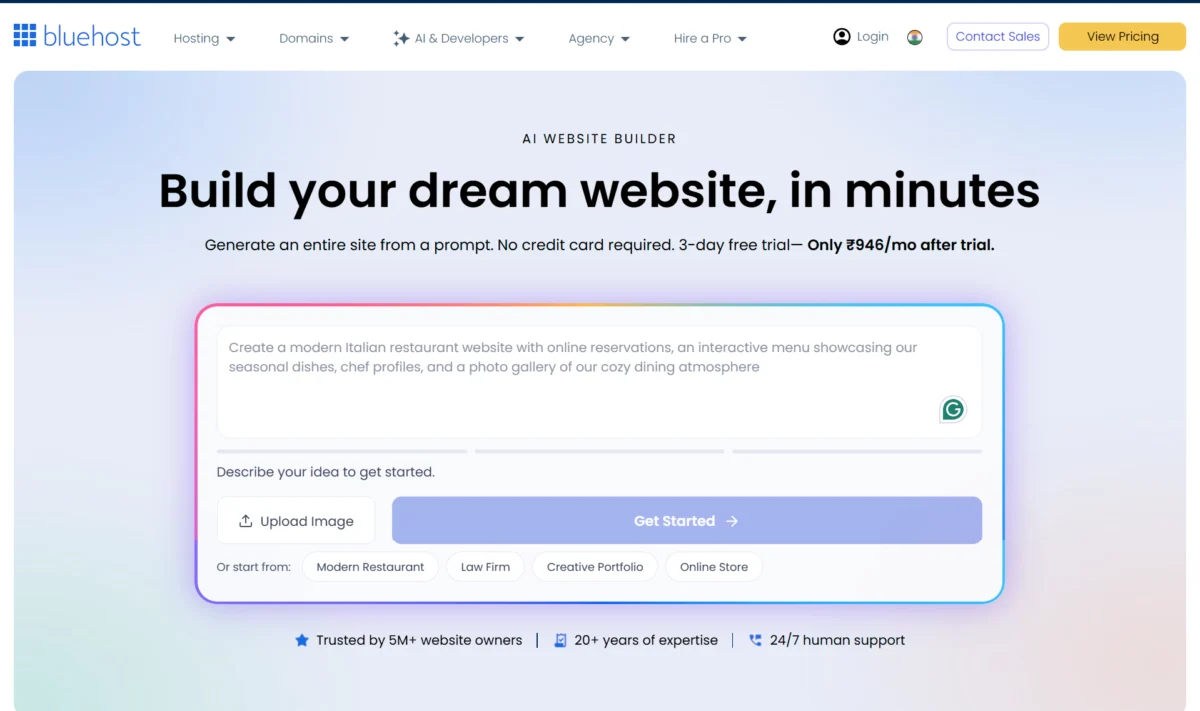
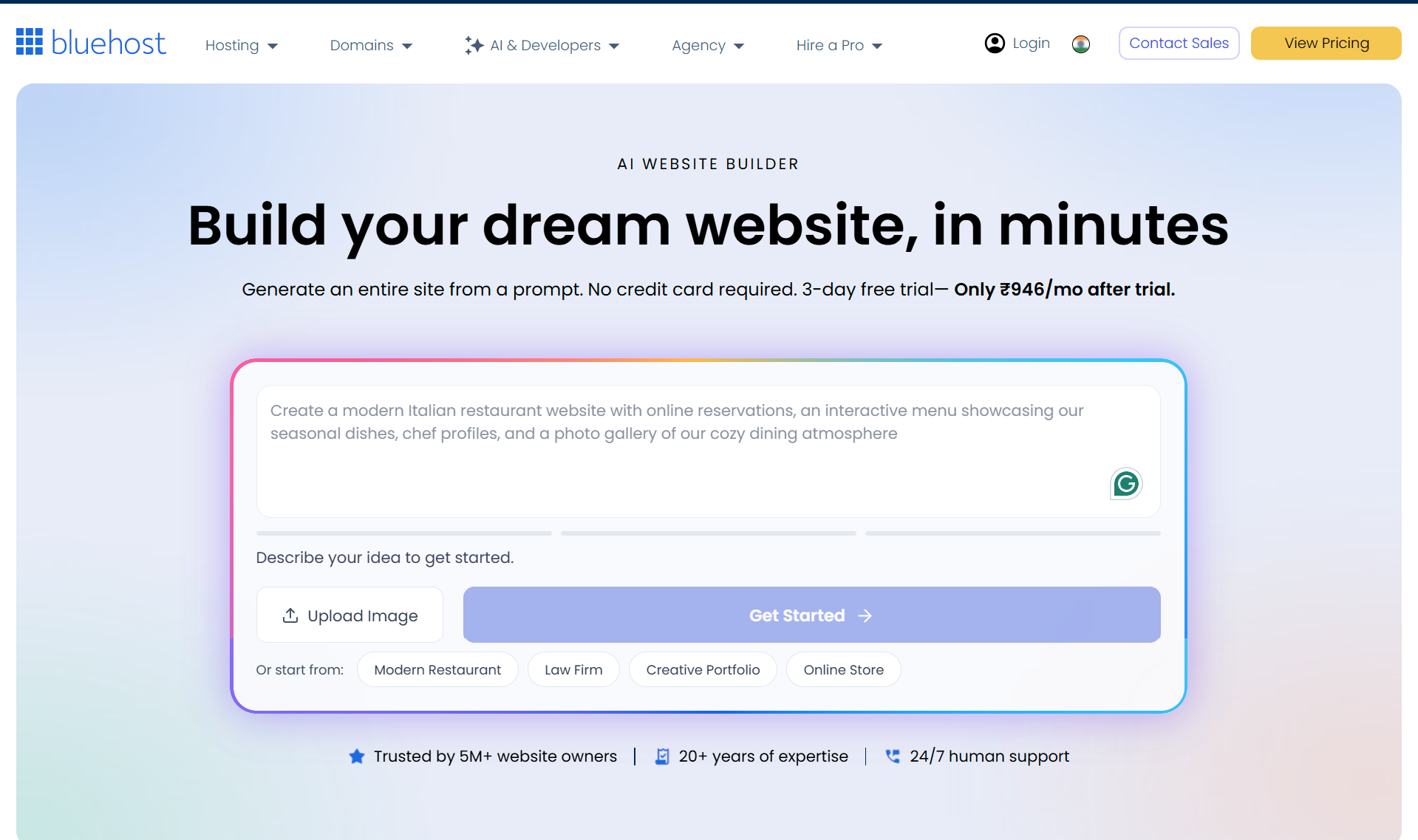
For instance, a practical demonstration using the Bluehost AI Website Builder revealed that after a brief onboarding process where key business information was provided, a complete first draft of a website was generated in approximately three minutes. This generated site included a homepage, contact page, services page, pre-populated sections (testimonials, features), and a responsive design optimized for various devices. This instant scaffolding transforms the starting point from a blank canvas into a nearly complete framework, ready for refinement. A key advantage highlighted is that many AI builders, like Bluehost’s, are built on underlying CMS platforms like WordPress, ensuring that users retain full control and extensibility beyond the AI’s initial output. This means access to the full WordPress dashboard for advanced customization, plugin integration, and deeper content management, preventing users from being locked into a proprietary, simplified editor.
A Realistic Timeline: Deconstructing the Website Creation Journey
While AI dramatically accelerates the initial generation, the full journey to a polished, effective, and live website encompasses several critical stages, each requiring varying degrees of human input. The "minutes" claim primarily applies to the AI generation phase, not the entire process.
Phase 1: Strategic Planning and Pre-AI Preparation (Human-Centric)
Before even interacting with an AI builder, foundational strategic work is essential.
- Define Website Purpose and Goals: Clearly articulate what the website should achieve (e.g., lead generation, sales, information dissemination, portfolio display), identify the target audience, and outline essential features. This clarity guides subsequent AI prompts and human edits. (Estimated Time: 30 minutes to 1 day).
- Market Research: Review competitor websites, analyze industry trends, and identify unique selling propositions. This step helps differentiate the new site and inform content strategy. (Estimated Time: 1 to 3 days, highly recommended).
- Brand Identity & Content Strategy Outline: While AI can draft, having a clear brand voice, key messages, and a preliminary content outline ensures the AI’s output is aligned and subsequent editing is efficient.
- Domain Name Selection: Brainstorming a memorable, relevant, and available domain name is crucial for branding and discoverability. (Estimated Time: 30 minutes to 1 day).
Phase 2: AI Generation and Technical Setup (Accelerated)
This is where AI truly shines in speed.
- AI Website Generation: Inputting business details into the AI builder and allowing it to create the initial website structure, design, and content drafts. (Estimated Time: 3 to 15 minutes).
- Web Hosting Setup: Choosing a hosting provider, creating an account, and configuring basic settings. Many AI builders integrate hosting, simplifying this step. (Estimated Time: 30 minutes to 1 day). A reliable host, often bundled with AI builders, is critical for website performance and uptime.
Phase 3: Human Refinement, Personalization, and Optimization (The Core Effort)
This phase is where the majority of time and strategic effort will be spent, transforming the AI’s draft into a truly effective digital asset.
- Content Editing and Personalization: AI-generated copy provides a starting point, but it must be meticulously reviewed, rewritten, and personalized to reflect the brand’s unique voice, factual accuracy, products, services, and value proposition. This is critical for connecting with the target audience and establishing credibility. Industry experts consistently stress that while AI can draft, authentic brand voice and factual accuracy require human oversight. (Estimated Time: 1 to 7 days, or longer depending on content volume).
- Visual Assets Integration: Replacing placeholder or generic stock images with high-quality, original photography, product shots, or branded graphics significantly enhances authenticity and trustworthiness. (Estimated Time: 1 to 7 days).
- Structural Expansion and Customization: Depending on business needs, additional pages beyond the initial AI draft may be required (e.g., detailed service pages, About Us, FAQs, testimonials, pricing, blog). The AI provides a robust foundation, but specific business logic and content often necessitate further page creation and layout adjustments. (Estimated Time: 1 to 7 days).
- Feature and Functionality Integration: For specialized websites, this is a significant time investment.
- eCommerce Setup: Configuring an online store, adding product listings with variants (size, color), setting up payment gateways, and configuring shipping and tax settings. (Estimated Additional Time: 1 to 5 days for basic setup, several hours to multiple days for products, 1-3 days for payments/shipping).
- Third-Party Tools: Connecting CRMs, email marketing platforms, analytics tools (e.g., Google Analytics, Search Console), booking systems, or live chat. (Estimated Additional Time: A couple of hours to 2 days per integration).
- Multilingual Support: Creating and managing content in multiple languages. (Estimated Additional Time: Several days to weeks).
- Review and Testing: Thoroughly test the website across different devices (desktop, tablet, mobile), browsers, and operating systems. Verify all links, forms, and interactive elements. Check loading speed, mobile responsiveness, and overall user experience. Fix any identified bugs or issues. (Estimated Time: 2 to 8 hours).
- Publishing: Performing final checks, connecting the domain, and making the website publicly available. (Estimated Time: 30 minutes to 2 hours).
Phase 4: Post-Launch Growth and Maintenance (Ongoing Effort)
Launching the website is not the finish line; it’s the starting gun for ongoing efforts.

- Regular Content Publishing: Consistently adding helpful, relevant content (e.g., blog posts, news updates, case studies) keeps the website fresh, engages visitors, and signals activity to search engines.
- Website Updates and Evolution: As the business grows or market conditions change, the website must evolve. This includes updating product/service information, pricing, contact details, and expanding with new landing pages or features.
- Continuous SEO Improvement: Optimizing page titles, meta descriptions, internal linking, headings, and on-page content is an ongoing process. Technical SEO (sitemaps, crawlability, site speed) also requires regular monitoring. SEO specialists emphasize that while AI can generate content, the strategic optimization for search engines and user intent remains a sophisticated human endeavor.
- Performance Monitoring: Utilizing tools like Google Search Console and Google Analytics to track search performance, user behavior, traffic sources, and conversion rates. This data informs future improvements.
- Building AI Presence: As AI-powered search experiences become more prevalent, understanding how a brand is perceived by AI platforms and optimizing for generative AI answers becomes crucial. Tools like Yoast SEO AI+ aim to provide insights into this emerging landscape.
Overall Timeline Summary:
For most individuals or small businesses starting from scratch with an AI website builder, a basic, functional website can realistically be online within 30 to 90 minutes. This assumes a relatively straightforward site with minimal customization beyond the AI’s initial output. However, for a more polished, branded, and optimized website with custom content, unique visuals, additional pages, and SEO improvements, users should anticipate spending anywhere from a few hours to a full day or even several days in refinement. Projects involving complex features like extensive e-commerce or multi-language support will naturally extend this timeline significantly.
Broader Implications and the Future of Web Presence
AI website builders are democratizing online presence, allowing small business owners, freelancers, and individuals to establish a professional digital footprint without extensive technical knowledge or prohibitive costs. This lowers the barrier to entry, fostering greater competition and innovation in various markets. Technology analysts note that AI’s role is shifting from a novelty to a fundamental component in digital infrastructure, enhancing efficiency and accessibility.
However, the "human touch" remains paramount. While AI can handle the mechanics of website construction, human creativity, strategic thinking, empathy for the user experience, and the authentic articulation of a brand’s unique story are irreplaceable. AI provides the canvas and the initial brushstrokes, but the masterpiece still requires the artist’s vision and dedication.
The biggest impact of AI in website creation isn’t that it builds a perfect, launch-ready website in minutes. It’s that it shifts the focus from the tedious, foundational assembly to the more strategic and creative aspects of refinement, personalization, and ongoing optimization. Instead of spending hours building from an empty canvas, users can dedicate their time to crafting compelling messaging, enhancing user experience, and implementing robust SEO strategies—elements that ultimately determine a website’s success and its ability to stand out in a crowded digital world. The journey of building a website with AI is a testament to technological acceleration, but it underscores the enduring value of human ingenuity and sustained effort in the digital realm.