The landscape of American infrastructure is undergoing a seismic shift as the rapid proliferation of artificial intelligence (AI) collides with growing grassroots resistance. What was once a quiet industry of nondescript warehouses powering the internet has transformed into the focal point of a national debate over resource management, environmental stewardship, and the social costs of technological progress. This phenomenon, recently characterized by the Wall Street Journal as an "American rebellion against AI," represents a fundamental breakdown in the traditional relationship between technology developers and the communities that host their physical infrastructure. As public concern regarding the financial and social externalities of AI intensifies, data center projects across the United States are facing unprecedented delays, downsizing, and, in some instances, total cancellation.
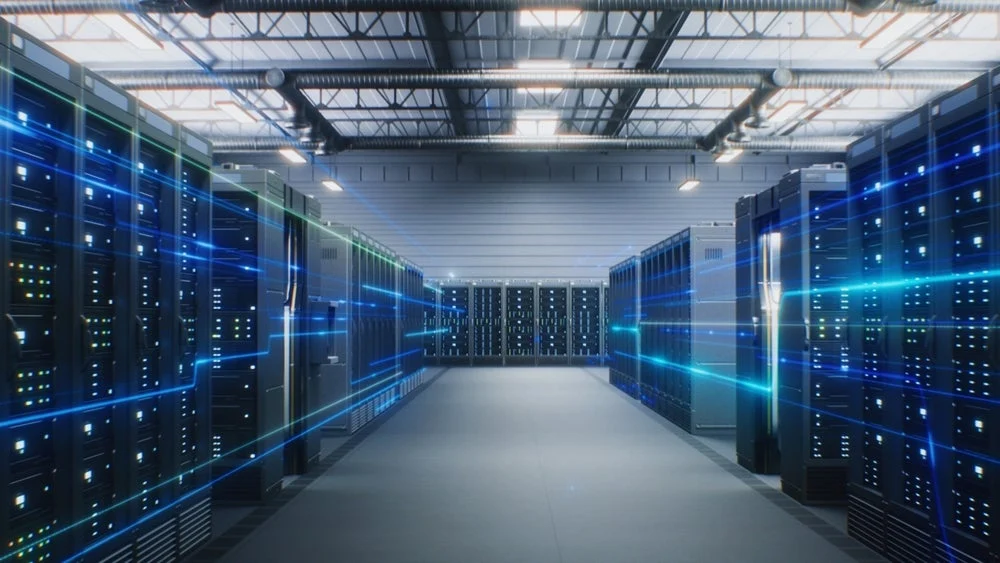
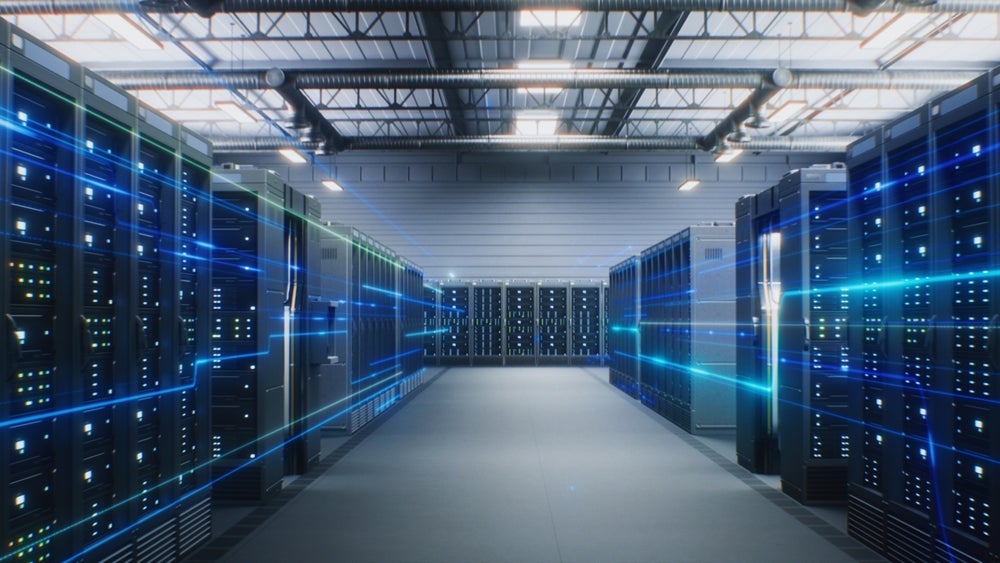
For decades, data centers operated in relative obscurity, providing the backbone for cloud computing, enterprise software, and global financial systems. However, the advent of generative AI has thrust these facilities into the spotlight. Unlike traditional cloud workloads, AI requires significantly more compute density, leading to higher power consumption, increased heat output, and a greater demand for cooling resources. This technological shift has made data centers more visible to the public and more closely associated with concerns about rising utility costs, workforce displacement, and environmental degradation. The industry now faces a complex communications challenge that cannot be resolved through traditional public relations tactics; rather, it requires a fundamental reassessment of how these companies engage with the public.
The Evolution of Public Sentiment: From Cloud to AI
To understand the current "rebellion," it is necessary to examine the chronology of data center development over the last decade. During the 2010s, the expansion of data centers was largely viewed as an economic boon. Local governments competed to attract "hyperscalers"—large-scale providers like Amazon Web Services (AWS), Google, and Microsoft—by offering significant tax incentives. These facilities were seen as clean, quiet neighbors that provided high-tax revenue with minimal impact on local services like schools or traffic.
The turning point occurred around late 2022 and early 2023, coinciding with the public release of advanced large language models (LLMs). As AI became a household topic, the physical requirements to sustain these models became a matter of public record. Communities began to realize that the "cloud" was not an ethereal concept but a massive network of energy-intensive buildings. In Northern Virginia, known as "Data Center Alley," residents began protesting the encroachment of facilities into residential areas and historic sites. In the desert Southwest, particularly in Arizona and Utah, the focus shifted to the millions of gallons of water required daily to cool the servers.
This shift in sentiment has created a "NIMBY" (Not In My Backyard) movement specifically targeted at AI infrastructure. According to industry analysts, local opposition is now cited as one of the primary reasons for project delays, rivaling supply chain issues and power grid constraints. The narrative has moved from "economic opportunity" to "resource extraction," forcing developers to defend their right to operate in ways they never anticipated.
The Data Behind the Demand: Power, Water, and Land
The scale of the infrastructure required for the AI era is reflected in staggering data points. According to a report by Goldman Sachs Research, data center power demand is expected to grow by 160% by 2030. Currently, data centers consume approximately 1% to 2% of global power, but this figure could rise to 3% or 4% by the end of the decade. In the United States, this surge is placing immense pressure on aging power grids. PJM Interconnection, which manages the grid across 13 states including Virginia, has significantly raised its load growth forecasts, primarily due to the concentration of data centers.
The environmental footprint extends to water consumption. A single AI training session can consume thousands of gallons of water for cooling. Microsoft, in its 2023 environmental report, disclosed that its global water consumption spiked by 34% from 2022 to 2023, a rise largely attributed to its AI investments. Google reported a similar 20% increase. While these companies have pledged to become "water positive" by 2030—returning more water to the environment than they consume—local communities are often skeptical of these long-term promises when faced with immediate local shortages.
Furthermore, the land-use requirements for these facilities are expanding. Modern AI data centers are no longer just large buildings; they are massive campuses requiring dedicated substations and, in some cases, on-site power generation. This physical footprint often puts them in direct competition with agricultural land or residential developments, further fueling local animosity.
The Sustainability Paradox: Efficiency vs. Total Demand
The data center industry has long touted its "sustainability" through metrics like Power Usage Effectiveness (PUE), which measures how efficiently a facility uses energy relative to the energy delivered to the computing equipment. Many developers are making serious investments in advanced infrastructure, such as liquid cooling, carbon-free energy procurement, and heat reuse systems. While these innovations are technologically impressive, they often fail to address the core concerns of the public.
The challenge lies in the "Efficiency Paradox," or Jevons Paradox, which suggests that increases in efficiency do not necessarily lead to a reduction in total resource consumption. Instead, they often lead to increased usage because the service becomes cheaper or more effective. In the context of AI, a more efficient data center may allow an operator to perform significantly more computations for the same amount of energy. From an engineering standpoint, this is a success. However, from a community standpoint, the total demand on the local power grid remains high or even increases as the facility expands its capacity.
When companies tell communities that a new facility is "sustainable" or "efficient," but the community sees their own electricity rates rising or water tables dropping, a trust gap emerges. Critics argue that sustainability claims are often used as a shield to deflect from the reality of total resource demand. For communications to be effective, companies must move beyond technical jargon and explain the real-world results of their efficiency measures in terms that matter to local residents.
The Tension of Confidentiality and Transparency
One of the most significant hurdles in bridging the gap between data center operators and the public is the industry’s culture of secrecy. Historically, infrastructure decisions—ranging from cooling techniques to vendor selections and energy strategies—have been treated as closely guarded trade secrets. Developers view their facility designs as competitive advantages that influence deployment speed and operational performance.
However, in an era of heightened public scrutiny, this lack of transparency is increasingly perceived as a lack of accountability. During the Earthlings 2.0 Data Center series at the Data Center Expo, many industry leaders acknowledged that infrastructure choices are strategic assets. This creates a legitimate tension: communities feel they deserve enough information to judge if a project is responsible, while companies require enough confidentiality to protect their business models.
The emerging solution is a model of "educational transparency." This approach suggests that companies do not need to reveal every proprietary design detail to be responsible. Instead, they can provide clear, non-technical explanations of the categories of systems they use, the trade-offs involved in their decisions, and the specific safeguards in place to protect local resources. For instance, explaining why a specific cooling method was chosen over another—and how it impacts local water supplies—can mitigate fears better than a blanket statement about "high-efficiency systems."
Strategic Readiness: The New Mandate for PR and Leadership
The current climate of rebellion suggests that public relations can no longer be a reactive function that begins after a project is announced. For AI data centers to succeed, communications readiness must be integrated into the earliest stages of project planning. By the time a developer seeks zoning approvals or permits, the public narrative is often already set.
Industry experts recommend that PR teams work alongside engineering, legal, and executive leadership well before a project enters the public eye. This cross-functional approach ensures that the rationale behind infrastructure decisions is sound and communicable. It allows companies to identify potential flashpoints—such as noise pollution from cooling fans or the visual impact of high-voltage transmission lines—and address them proactively.
Furthermore, companies must be prepared to offer more than just "jobs" as a community benefit. While data centers provide high-paying technical roles, they do not employ many people relative to their physical size. To counter the "resource extraction" narrative, developers are increasingly looking at broader community investments, such as funding local STEM education, improving public infrastructure, or investing in local renewable energy projects that benefit the entire community, not just the data center.
Broader Implications and the Path Forward
The "American rebellion" against AI infrastructure is not merely a localized PR problem; it is a signal of a broader societal negotiation over the role of technology in everyday life. As AI becomes more integrated into the economy, the physical infrastructure required to support it will continue to expand. If the industry fails to earn and maintain a "social license to operate," the consequences could include a slowing of AI innovation and a fragmented digital economy.
The path forward requires a shift from defensive posturing to genuine community partnership. Data centers are essential to modern life, powering everything from emergency services to global trade. However, their right to exist in a specific community is not guaranteed. The industry must prove that it is not just a consumer of resources but a responsible participant in the local ecosystem.
In conclusion, the rebellion against AI data centers is a call for greater accountability, clearer communication, and a more honest dialogue about the trade-offs of the digital age. Success in the next phase of data center development will not be determined by who has the most advanced chips or the lowest PUE, but by who can most effectively build trust with the people living just outside the facility gates. As the industry moves forward, the ability to explain "the why" and "the how" will be just as important as the ability to build "the what."


 Laily UPN