The digital marketing landscape has reached a critical inflection point where the traditional focus on volume—amassing the highest possible number of website visitors—is being superseded by a more rigorous discipline known as conversion marketing. As customer acquisition costs (CAC) continue to climb across major advertising platforms such as Google Ads and Meta, businesses are shifting their financial and intellectual resources toward optimizing the value of existing traffic. This strategic pivot represents a transition from broad-spectrum awareness campaigns to a data-driven methodology designed to transform passive observers into active participants, leads, and customers.
The Macroeconomic Shift in Digital Acquisition
For much of the last decade, the primary metric of digital success was traffic growth. However, recent market data indicates that the cost-per-click (CPC) for digital advertising has increased significantly, with some industries seeing year-over-year rises of 20% or more. In this high-cost environment, the financial viability of a marketing strategy is no longer determined by the size of the audience, but by the efficiency of the conversion funnel.
Conversion marketing is defined as the strategic practice of optimizing every element of a digital presence to increase the percentage of users who complete a specific, desired action. Unlike traffic acquisition, which focuses on the "top of the funnel," conversion marketing operates at the point of engagement. This approach utilizes Conversion Rate Optimization (CRO) to maximize the Return on Investment (ROI) of every dollar spent on bringing a visitor to a site. The mathematical reality is stark: a business that doubles its conversion rate from 2% to 4% effectively doubles its revenue without increasing its advertising expenditure, whereas doubling traffic often requires a linear, and often unsustainable, increase in budget.
Defining Conversion Goals and Key Metrics
To implement a successful conversion marketing strategy, organizations must first define what constitutes a "win." These goals are generally categorized into two distinct types: macro-conversions and micro-conversions.
Macro-conversions are the primary objectives that directly impact the bottom line, such as a completed e-commerce purchase, a signed service contract, or a paid subscription. Micro-conversions, conversely, are the smaller steps that indicate a visitor is moving through the buyer’s journey. These may include signing up for a newsletter, downloading a white paper, or spending a specific amount of time on a high-value product page.
The core metric of this discipline is the conversion rate, calculated by dividing the number of successful conversions by the total number of visitors and multiplying by 100. Industry benchmarks vary widely; while a standard e-commerce site might see a conversion rate of 2% to 3%, a high-performing business-to-business (B2B) landing page might achieve 10% or higher. Experts suggest that rather than chasing external benchmarks, companies should focus on longitudinal improvement—measuring their current performance against historical data to ensure consistent growth.
The Psychology of User Action: Value and Trust
At its core, conversion marketing is an exercise in applied behavioral psychology. A visitor’s decision to convert is the result of a complex internal negotiation between the perceived value of an offer and the perceived friction or risk of the action.

The "Value Proposition" serves as the primary driver of this negotiation. It is the concise statement that explains how a product solves a problem, delivers specific benefits, and tells the customer why they should buy from a particular brand rather than a competitor. Data suggests that visitors form an opinion of a website within 50 milliseconds. Therefore, a value proposition must be instantly understandable. Clarity consistently outperforms "cleverness" in conversion testing; if a user must work to understand the offer, the cognitive load increases, and the likelihood of a bounce rises.
Furthermore, trust signals—often referred to as social proof—act as the digital equivalent of a personal recommendation. In an era of skepticism, consumers look for validation from their peers. High-converting websites utilize specific trust signals, including:
- Detailed customer testimonials that address specific pain points.
- Case studies highlighting measurable results.
- Trust badges and security certifications (e.g., SSL certificates, industry awards).
- Real-time activity notifications (e.g., "15 people are currently viewing this product").
- Platform-verified reviews from third-party sites like G2, Capterra, or Trustpilot.
The Technical Foundations: Usability and Performance
While psychology drives the "why" of conversion, technical usability facilitates the "how." Site design and performance are no longer merely aesthetic concerns; they are functional requirements for conversion.
Page load speed is perhaps the most critical technical factor. Research from various web performance firms indicates that a one-second delay in page load time can lead to a 7% reduction in conversions. For an e-commerce site earning $100,000 per day, a one-second delay could potentially cost the business $2.5 million in lost sales annually.
Mobile responsiveness is another non-negotiable element. With more than 50% of global web traffic originating from mobile devices, a "mobile-first" approach is essential. Friction points that might be minor on a desktop—such as a slightly small button or a long form—become insurmountable obstacles on a smartphone. Simplification of forms is a proven tactic for increasing conversion; data shows that reducing the number of form fields from six to three can increase conversion rates by up to 66%.
High-Impact Tactics and Experimentation
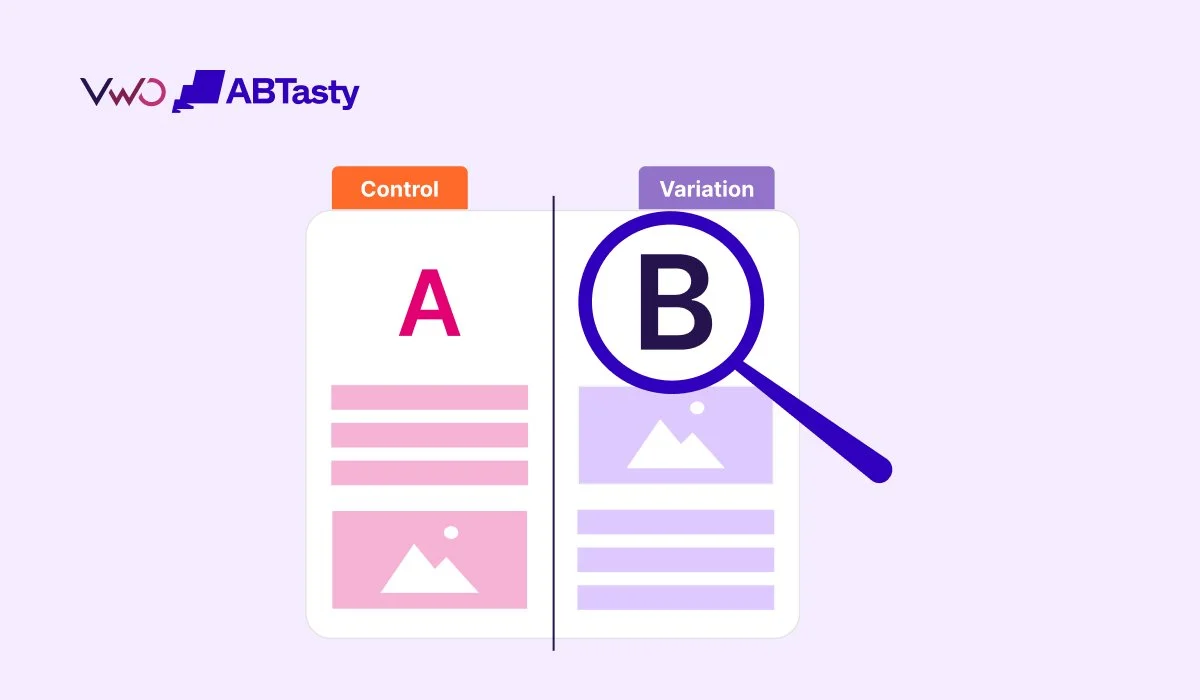
The most successful conversion marketers employ a rigorous cycle of testing and refinement. Central to this is A/B testing, also known as split testing. This methodology involves showing two versions of a webpage to different segments of visitors to determine which performs better.
Standard elements for testing include:
- Headlines: Testing different emotional hooks or value statements.
- Calls to Action (CTAs): Comparing "Buy Now" versus "Get Started Today" or testing different button colors and placements.
- Imagery: Evaluating the impact of human-centric photos versus product-focused graphics.
- Incentives: Measuring the effectiveness of "Free Shipping" versus a "10% Discount."
Advanced conversion marketing also utilizes "smart" elements such as behavioral popups and sticky bars. Unlike the intrusive advertisements of the early internet, modern popups are triggered by specific user behaviors, such as "exit intent" (when a user moves their cursor to close the tab) or scrolling to a certain depth of a page. When these elements offer genuine value—such as a discount code or a relevant resource—they can capture leads that would otherwise have been lost.

Data Integration and Qualitative Analysis
To turn insights into action, marketers must look beyond surface-level analytics. While tools like Google Analytics provide the "what" (e.g., bounce rates, time on page), qualitative tools like heatmaps and session recordings provide the "why."
Heatmaps allow marketers to see exactly where users are clicking and how far they are scrolling. If a heatmap reveals that users are clicking on a non-linked image, it suggests a design flaw that is causing frustration. If session recordings show users repeatedly clicking a button without a response, it indicates a technical bug that is actively killing conversions.
Furthermore, the integration of feedback from sales and customer support teams provides a direct line to the customer’s mindset. Support teams are the first to hear about checkout frustrations, while sales teams are intimately familiar with the common objections that prevent a lead from closing. Mining this internal data allows marketing teams to address concerns proactively on the landing page, thereby removing barriers to conversion before they even arise.
The Broader Impact and Future of Conversion Marketing
As we look toward the future, the role of Artificial Intelligence (AI) in conversion marketing is expanding. AI-driven tools are now capable of "Smart Traffic" routing, which automatically directs visitors to the version of a landing page they are most likely to convert on based on their geographic location, device type, and past behavior. This level of personalization was previously only available to enterprise-level companies with massive data science teams but is now becoming accessible to small and medium-sized businesses.
The integration of conversion marketing into the broader business strategy is essential for long-term sustainability. It bridges the gap between various marketing silos—SEO, PPC, Social Media, and Email—by ensuring that regardless of where the traffic originates, it arrives at an optimized destination.
In summary, conversion marketing is not a one-time project but an ongoing discipline of marginal gains. By focusing on the quality of engagement rather than the quantity of traffic, businesses can build more resilient, profitable, and customer-centric digital ecosystems. In a landscape where every click is a cost, the ability to convert that click into a customer is the ultimate competitive advantage.