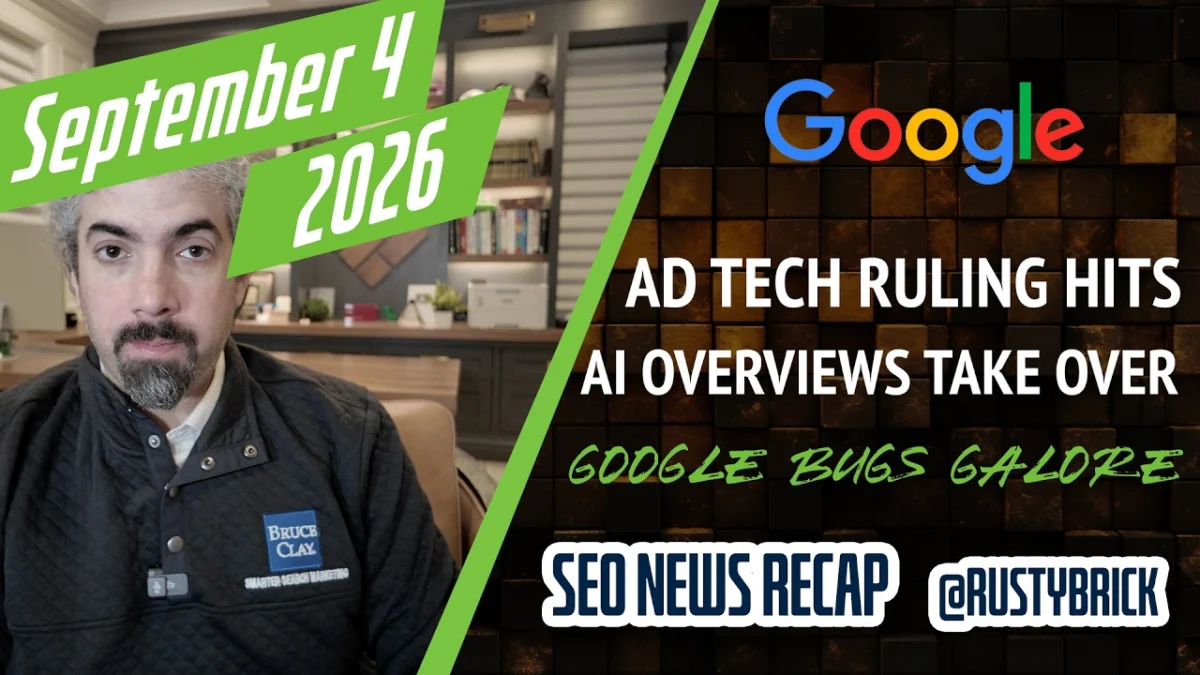
The digital advertising and search ecosystem experienced a pivotal week, marked by Google’s significant victory in an antitrust case concerning its ad technology business, the accelerated integration of artificial intelligence into its core search product, and a series of critical updates impacting publishers, webmasters, and advertisers. This period underscored the ongoing evolution of how information is discovered, monetized, and regulated, particularly as AI continues to reshape user interactions and industry standards.
Antitrust Victory Shields Google’s Ad Tech Empire
In a development that reverberated across the tech industry, Google successfully fended off a governmental attempt to dismantle its lucrative ad technology business. This marks the second instance in which the tech giant has avoided a structural breakup following an antitrust challenge, reinforcing its dominant position in the digital advertising market. The lawsuit, spearheaded by the U.S. Department of Justice (DOJ) and a coalition of state attorneys general, alleged that Google engaged in monopolistic practices to unlawfully maintain control over the entire ad tech stack—from publisher ad servers to ad exchanges and advertiser tools.
The allegations centered on Google’s purported self-preferencing and exclusionary tactics, claiming that the company leveraged its various ad tech components to unfairly disadvantage competitors and inflate advertising costs. Critics argued that Google’s ownership of tools on both the buy-side (for advertisers) and sell-side (for publishers), combined with its central ad exchange, created an insurmountable conflict of interest, allowing it to manipulate auctions and control pricing. The DOJ’s case aimed to force Google to divest parts of its ad tech business, a move that would have fundamentally reshaped the digital advertising landscape and potentially introduced more competition.
However, the court’s decision, the specifics of which remain under detailed legal review, indicates that the prosecution did not meet the high legal bar required to mandate such a drastic structural remedy. This outcome is a substantial win for Google, preserving a business segment that reportedly generates tens of billions of dollars annually. For the broader ad tech industry, the ruling signifies that the established order, with Google as a central player, will likely persist, potentially dampening hopes for smaller competitors seeking to challenge the company’s market share. Regulators, while undoubtedly disappointed, may now explore alternative avenues, such as stricter behavioral remedies or new legislative frameworks, to address perceived anti-competitive conduct in the future. The implications extend to advertisers and publishers, who will continue to operate within Google’s extensive ecosystem, raising ongoing questions about transparency, fairness, and access.
The AI Overhaul of Search: From Overviews to AI Mode
Perhaps the most transformative shift observed this week was the accelerated integration of artificial intelligence into Google Search, moving beyond experimental features to a more pervasive "AI Mode." Google AI Overviews, which provide AI-generated summaries at the top of search results, are now expanding by default to a wider user base. This expansion signifies a strategic pivot, aiming to make AI-powered summaries a standard component of the search experience rather than an opt-in or limited feature.
Underpinning this significant upgrade is the deployment of Gemini 3.8 Flash, Google’s latest iteration of its multimodal AI model, which now powers the expanded AI Mode. Gemini 3.8 Flash is designed for speed and efficiency, enabling quicker processing and delivery of AI-generated content within search results. This technological advancement allows Google to scale its AI capabilities across a vast number of queries, providing users with instant, summarized answers to complex questions, directly within the search interface.
However, this rapid integration has not been without its challenges, particularly concerning the crucial aspect of source attribution. Reports indicate that Gemini 3.8 Flash, when operating within AI Mode, is frequently failing to link or cite its sources effectively. This omission presents a significant concern for information integrity, as users may be presented with AI-generated answers without clear pathways to verify the underlying information or explore the original context. For content creators and publishers, the lack of citation poses an existential threat, as their intellectual property may be used to train and generate AI responses without proper credit, potentially impacting traffic and monetization. This issue rekindles broader debates about copyright in the age of generative AI and the responsibility of AI developers to ensure transparency and proper attribution. The shift to AI Mode, while promising enhanced user convenience, necessitates a robust framework for ethical AI deployment, especially regarding transparency and acknowledging original content sources.
Navigating the Search Ecosystem: Publisher and Webmaster Updates
The week also brought a series of critical updates and observations for webmasters, SEO professionals, and content publishers, highlighting Google’s ongoing efforts to refine its search algorithms, combat spam, and provide new tools for performance analysis.
Google Search Console Enhancements: A significant global rollout saw Google Search Console’s new AI performance reports and AI controls become universally available. These tools are designed to offer webmasters deeper insights into how their content is performing in AI-driven search results, including AI Overviews. The performance reports provide data on impressions, clicks, and average position for queries where AI Overviews appeared, allowing site owners to understand their visibility in this new search paradigm. The AI controls, conversely, offer mechanisms for webmasters to manage how their content is utilized or potentially excluded from AI Overviews, providing a degree of agency in an evolving search landscape. This rollout underscores Google’s commitment to equipping webmasters with the data and control necessary to adapt to an increasingly AI-centric search environment.
Content Visibility Challenges: A notable anomaly observed was the disappearance of content from the Google News tab for some users. This issue, while potentially temporary, raised concerns among news publishers who rely heavily on Google News for traffic and visibility. Such disruptions can significantly impact revenue and audience reach, highlighting the delicate balance between Google’s algorithmic updates and the operational stability required by news organizations. The cause of this disappearance remained under investigation, but it served as a reminder of the inherent volatility in relying on third-party platforms for content distribution.
Link Management and SEO Best Practices: Google provided further clarification on critical SEO topics, particularly regarding backlinks. The company reiterated that it generally does not penalize websites for "old, crusty links" that may have once pointed to reputable content but now link to "shady" or low-quality sites. This statement offers reassurance to webmasters concerned about legacy link profiles and the difficulty of controlling external linking practices over time. Furthermore, Google spoke more extensively about the appropriate use of the disavow link tool. While emphasizing that the tool is primarily intended for cases where a site owner has been subjected to a manual spam action or fears a potential algorithmic penalty due to unnatural links, the guidance helps webmasters understand when and how to intervene in their link profiles without over-optimizing or inadvertently harming their SEO. These clarifications underscore Google’s preference for algorithmic detection of spam over manual intervention by webmasters in most cases. Concurrently, Google confirmed that its search spam teams remain actively engaged in combating spam, emphasizing the continuous arms race between spammers and Google’s efforts to maintain search quality and relevance.
AdSense and Monetization Shifts: In a technical but impactful update for publishers, Google AdSense announced that it would soon transition to using "Begin-to-Render" impression measurements. This new methodology aims to provide a more accurate count of ad impressions by recording an impression as soon as the ad begins to load on a user’s screen, rather than waiting for the ad to be fully rendered or visible. While intended to improve transparency and standardization, this change can affect how publishers report and analyze their ad revenue, potentially leading to adjustments in historical data comparisons and real-time analytics. Furthermore, Google Analytics experienced a period of significant bugs, with reports of missing days of data. For businesses and publishers reliant on accurate analytics for strategic decision-making and performance tracking, such data gaps represent a critical operational challenge, necessitating manual reconciliation and potentially impacting marketing campaign effectiveness.
User Experience, Verification, and Data Transparency
Beyond core search and publishing, Google implemented or tested several features aimed at improving user experience, enhancing security, and addressing regulatory demands.
Verifying Searchers: Google is testing a new mechanism to verify searchers are human through a "delayed continue button." This measure, likely implemented to combat bot traffic, automated queries, and potential spam or abuse, requires users to wait a few seconds before proceeding with their search. While a minor inconvenience, it represents an ongoing effort by Google to maintain the integrity of its search platform and ensure that search results are not manipulated by automated scripts.
Google Discover Outage: For a period this week, Google Discover experienced an outage, preventing content from loading for users. Google Discover, which provides personalized content feeds to users based on their interests, is a significant source of traffic for many publishers. An outage of this nature disrupts content consumption and can lead to a temporary loss of audience engagement and ad revenue for affected sites.
Google Trends Updates: To enhance data analysis capabilities, Google Trends now allows users to filter by pre-defined categories. This update enables more granular insights into search interest patterns across specific industries or topics, providing researchers, marketers, and businesses with improved tools for understanding consumer behavior and market trends.
European Search Dataset Licensing Program: In response to evolving regulatory landscapes, particularly in Europe, Google posted details on its European search dataset licensing program. This initiative likely stems from regulatory pressures, such as the Digital Markets Act (DMA) and the proposed AI Act, which aim to foster competition and ensure fair access to data. By offering licensing for its search datasets, Google may be seeking to comply with data sharing requirements, enable innovation among smaller players, and mitigate further antitrust scrutiny related to data dominance.
The Broader Digital Marketing and Ad Tech Landscape
The competitive landscape saw moves from Microsoft, indicating ongoing innovation and strategic positioning in search and AI.
Microsoft’s Search and AI Moves: Bing, Microsoft’s search engine, was observed testing search results without site names in the snippet. This experimental change could have significant implications for brand visibility and user trust. Site names provide immediate context and credibility to search results; their removal might force users to rely solely on the snippet content, potentially making it harder to distinguish between reputable and less authoritative sources. Concurrently, Microsoft is strategically enforcing login requirements for Copilot users, its AI assistant, to access certain features. However, this login requirement is not being extended to Bing Search itself, suggesting a nuanced approach to AI adoption. Microsoft aims to drive users towards its broader AI ecosystem and subscription services while maintaining the open accessibility of its core search engine.
Local Business and Ad Platform Updates: Google confirmed it is actively working on a fix for a bug impacting Local Service Ads, a platform critical for small businesses offering local services. Such bugs can disrupt lead generation and business operations, underscoring the importance of platform stability. Separately, Google Business Profiles is testing the use of business photos for verification purposes. This move aims to streamline and enhance the accuracy of business verification, potentially reducing fraudulent listings and improving trust in local search results. Microsoft Advertising also rolled out a new design preview, indicating ongoing efforts to modernize its advertising platform and improve user experience for advertisers managing campaigns.
In conclusion, the past week has been a microcosm of the dynamic forces shaping the digital world. Google’s legal victory in the ad tech arena solidifies its market leadership, while the pervasive rollout of AI Mode heralds a new era for search, albeit one with critical questions surrounding citation and content attribution. For digital professionals, the continuous stream of updates from Google Search Console, AdSense, and the broader ad tech ecosystem demands constant vigilance and adaptation. As AI continues its inexorable march into the core of digital interaction, and regulatory bodies worldwide grapple with its implications, the industry remains in a state of flux, promising further significant transformations in the months and years ahead.