For years, the prevailing wisdom in digital marketing has dictated that aesthetically pleasing email designs, complete with rich graphics, intricate layouts, and embedded multimedia, are paramount for capturing audience attention and driving engagement. Thousands of brands have invested heavily in crafting newsletters that resemble digital works of art, all vying for precious real estate in increasingly crowded inboxes. However, a growing body of evidence and industry observation suggests a powerful counter-trend: the strategic deployment of plain-text emails, which, when executed correctly, can significantly outperform their graphically rich counterparts in terms of open rates, click-through rates, and even reply rates. This shift underscores a fundamental re-evaluation of how brands connect with their audiences in a hyper-digital world, prioritizing authenticity and direct communication over elaborate visual spectacle.
The Evolution of Email Marketing: From Novelty to Saturation
Email, initially a rudimentary text-based communication tool, rapidly evolved with the advent of HTML capabilities in the late 1990s and early 2000s. Marketers quickly embraced the potential to brand messages, integrate images, embed videos, and create visually engaging experiences. This period saw the rise of sophisticated email design, with templates becoming increasingly complex to accommodate branding guidelines, promotional banners, and interactive elements. The goal was clear: stand out in the inbox by being visually appealing and memorable.
However, this relentless pursuit of visual grandeur has inadvertently led to a form of digital fatigue. Consumers’ inboxes are now inundated daily with exquisitely designed promotional emails, often from numerous brands they interact with. This saturation has created a landscape where elaborate designs, once a differentiator, have become the norm, making it harder, not easier, to capture genuine attention. Furthermore, the technical complexities of HTML emails can lead to slower loading times, inconsistent rendering across different email clients and devices, and increased likelihood of triggering spam filters, especially if not coded optimally. Mobile browsing, which now accounts for a significant portion of email opens, also presents challenges for complex designs that may not be perfectly responsive.
The Psychological Edge of Simplicity: Why Plain Text Resonates
In this visually noisy environment, plain-text emails offer a refreshing alternative, tapping into a psychological preference for authenticity and directness. Unlike a highly designed newsletter that clearly signals a mass marketing effort, a plain-text email mimics the format of a personal message from an individual. This inherent simplicity triggers a different cognitive response in the recipient:
- Authenticity and Trust: A plain-text email feels more personal, as if it were typed out by a real person rather than generated by an automated system. This fosters a sense of authenticity and builds trust, making the recipient more likely to engage with the content. It bypasses the mental filter often applied to overt advertisements.
- Reduced Cognitive Load: The absence of complex graphics and layouts reduces the cognitive effort required to process the message. Recipients can immediately focus on the text, making the communication more efficient and less overwhelming. In a world of information overload, simplicity is a welcome relief.
- Perceived Exclusivity: Because plain-text emails are less common in marketing streams, receiving one can feel like receiving a special, direct communication, rather than another mass broadcast. This perceived exclusivity can elevate the message’s importance.
- Enhanced Deliverability: Plain-text emails are significantly lighter in file size and contain less code that might be flagged by spam filters. This often results in higher deliverability rates, ensuring the message reaches the intended inbox.
- Superior Mobile Experience: By their very nature, plain-text emails are inherently mobile-responsive. They adapt seamlessly to any screen size without requiring complex coding, guaranteeing a consistent and legible experience across all devices.
- Accessibility: Plain-text emails are more accessible to users with visual impairments who rely on screen readers. The lack of complex visual elements ensures that the content is read out clearly and logically, adhering to universal design principles.
Empirical Evidence: Data Supporting Plain-Text Efficacy
The effectiveness of plain-text emails is not merely anecdotal; it is supported by empirical data from leading marketing platforms. HubSpot, a prominent marketing and sales software provider, conducted extensive A/B tests comparing plain-text emails with their HTML-designed counterparts. Their findings consistently showed that simpler emails achieved superior engagement. In one notable test, a plain-text version of an email garnered an impressive 42% more clicks than the identical email that included a GIF. Furthermore, an email built on an image-heavy HTML template resulted in 51% fewer clicks compared to its plain-text twin.
These statistics are corroborated by numerous other studies and industry reports. While exact figures can vary based on industry, audience, and campaign objectives, the trend is clear: the perceived intimacy and directness of plain-text emails often translate into higher open rates, improved click-through rates, and a greater likelihood of eliciting a direct response from recipients. This data challenges the long-held assumption that more visual complexity equates to better performance, suggesting that context and perceived value play a far greater role.
Defining Plain-Text Emails in the Modern Context
It is important to clarify that "plain-text email" in the modern marketing landscape doesn’t necessarily mean a completely barren message devoid of any formatting. While the core principle is simplicity and a focus on text, modern plain-text emails can still strategically incorporate elements to enhance readability and guide the recipient:
- Links: Hyperlinks are essential for guiding recipients to websites, landing pages, or product pages. These are typically presented as full URLs or subtly embedded in descriptive text.
- Basic Formatting: Some email clients and platforms allow for basic text formatting like bolding, italics, or bullet points, which can be used sparingly to emphasize key information or improve readability without resorting to complex HTML.
- Emojis: Used judiciously, emojis can add a touch of personality and warmth, mimicking informal personal communication, without detracting from the text-focused nature.
- Multipart/Alternative MIME: Technically, many modern email platforms send "multipart/alternative" emails. This means the email contains both an HTML version and a plain-text version. The recipient’s email client then displays the most appropriate version. When marketers talk about "sending a plain-text email," they often refer to consciously designing the plain-text part to be the primary, compelling message, or explicitly choosing a "plain text" editor within their email service provider (ESP) that strips away most HTML styling.
Strategic Application: When and How to Leverage Plain Text
The power of plain-text emails lies in their strategic deployment. They are not a universal replacement for all HTML campaigns but rather a potent tool for specific communication objectives where authenticity and direct engagement are paramount.
1. Automated Workflows:
- Welcome Series: A plain-text message from a founder or CEO welcoming a new subscriber can establish an immediate personal connection.
- Abandoned Cart Reminders: A simple, non-salesy message asking if a customer needs help completing a purchase can feel less intrusive and more helpful than a flashy, product-focused reminder.
- Transactional Emails: Order confirmations, shipping updates, and password resets benefit from plain text’s clarity and reliability, ensuring crucial information is delivered without distraction.
- Re-engagement Campaigns: A direct, personal note asking inactive subscribers for feedback or offering a genuine reason to return can be more effective than a generic promotional offer.
- Customer Milestones: Birthday wishes, anniversary notes, or loyalty program updates can feel more sincere when delivered in a plain-text format.
2. Personalized Communication:
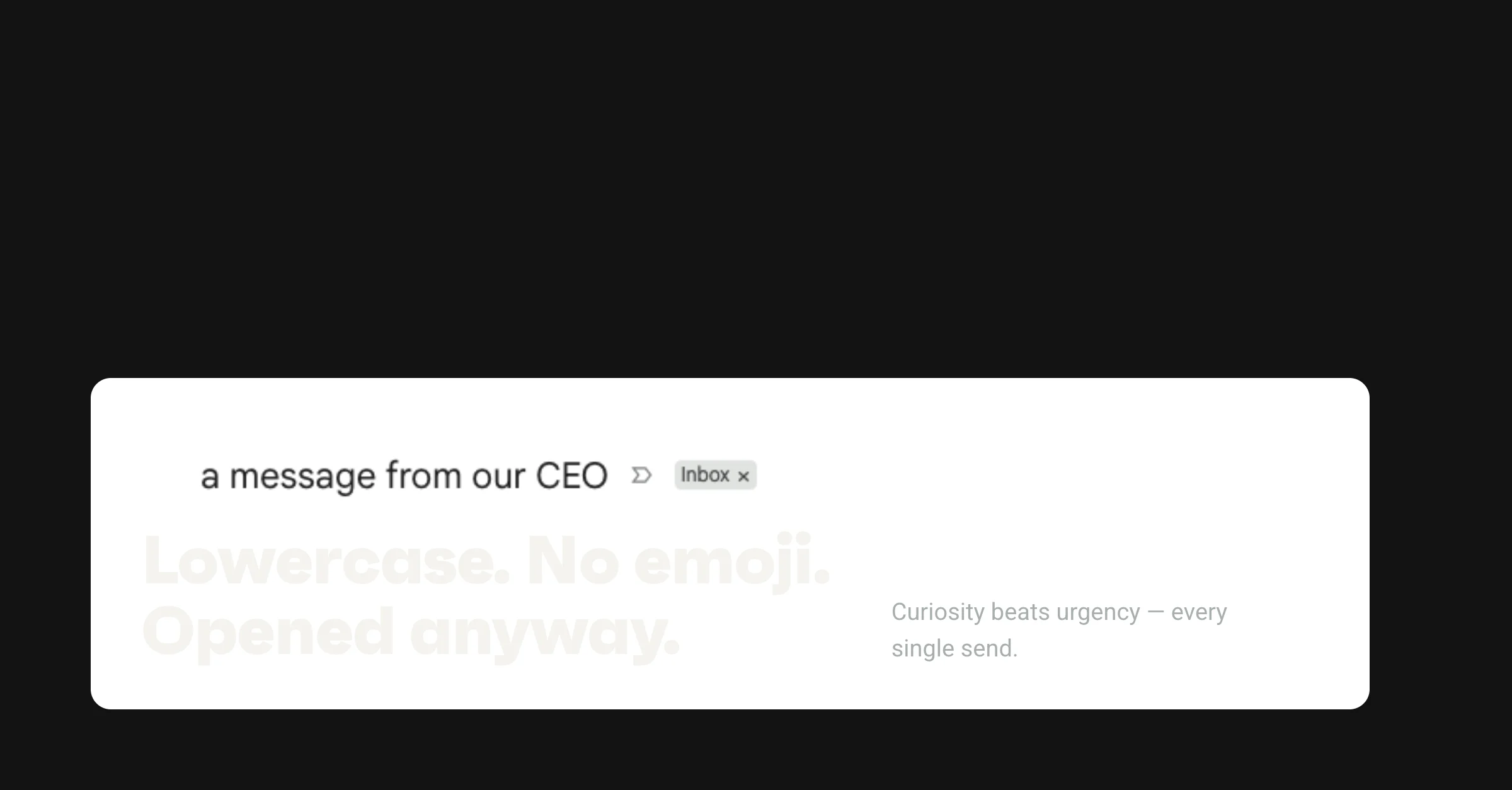
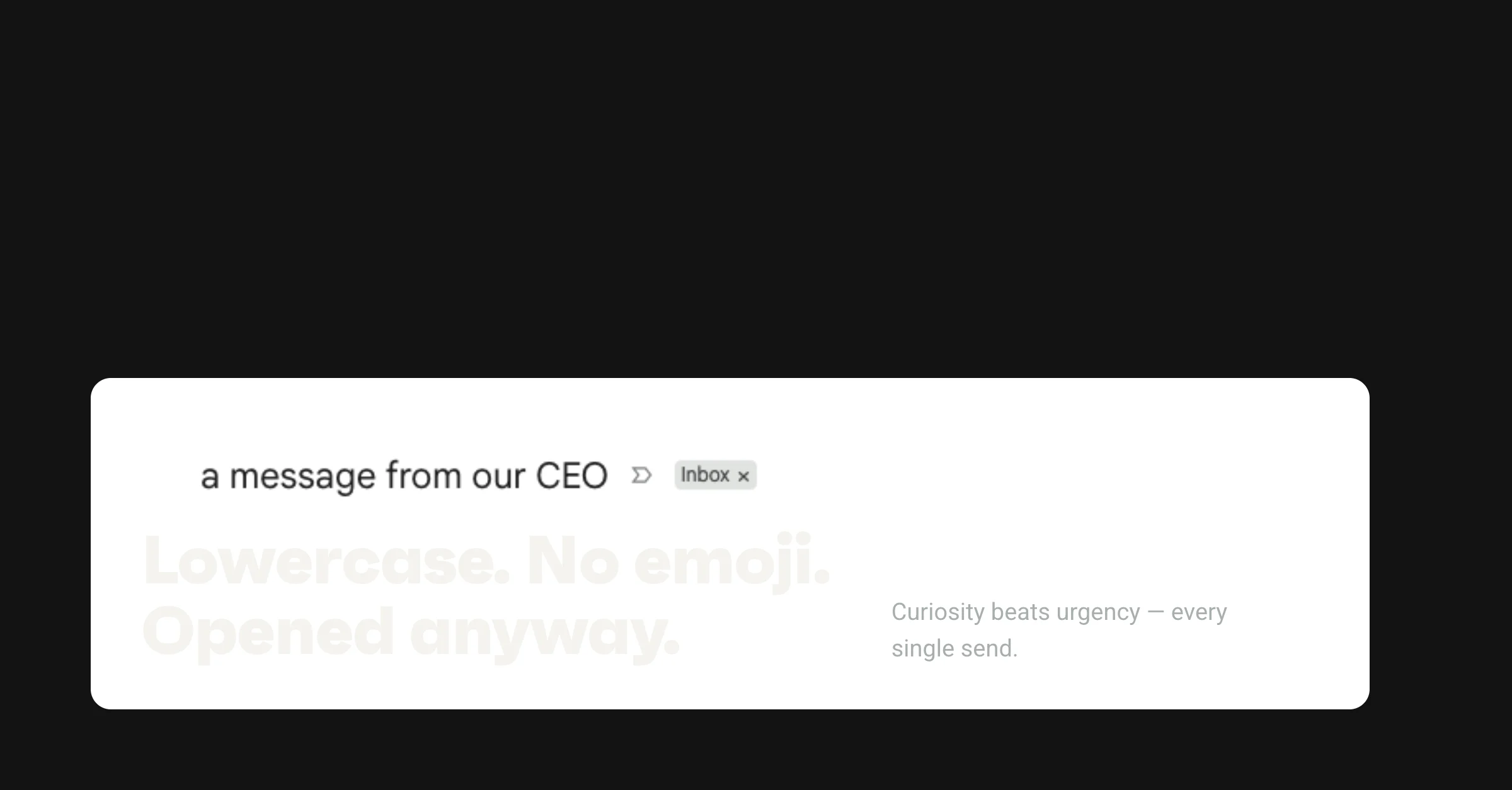
- Messages from Leadership: An email directly from the CEO, founder, or a senior team member regarding company news, vision, or a special announcement carries more weight in plain text. (See image: "A message from CEO" example, where personal attention starts in the subject line).
- Customer Service Follow-ups: A personalized follow-up after a support interaction or a request for feedback feels more genuine in plain text.
- Survey Requests: A direct appeal for input often garners a higher response rate when presented as a personal request.
- Exclusive Offers: For VIP customers or a highly segmented group, a plain-text email detailing a special, limited-time offer can reinforce their valued status.
3. Nurturing Leads and Delivering Value:
- Educational Content: Delivering a curated piece of content, a link to a helpful resource, or a tip in a plain-text email positions the brand as a helpful expert rather than just a salesperson.
- Webinar/Event Reminders: Simple, direct reminders for upcoming events, especially with personalized details, are highly effective.
Pitfalls to Avoid: The "What Not to Do" with Plain Text
While potent, plain-text emails are not foolproof. Their effectiveness hinges on adherence to certain principles. Missteps can quickly negate their advantages, transforming a potentially powerful message into an ineffective or even detrimental one.
- Sending Too Frequently: The unique impact of a plain-text email stems from its distinctiveness. If used excessively, it loses its special quality and becomes just another routine communication, diminishing its perceived authenticity and high ROI. Maintain a careful balance with your overall email cadence.
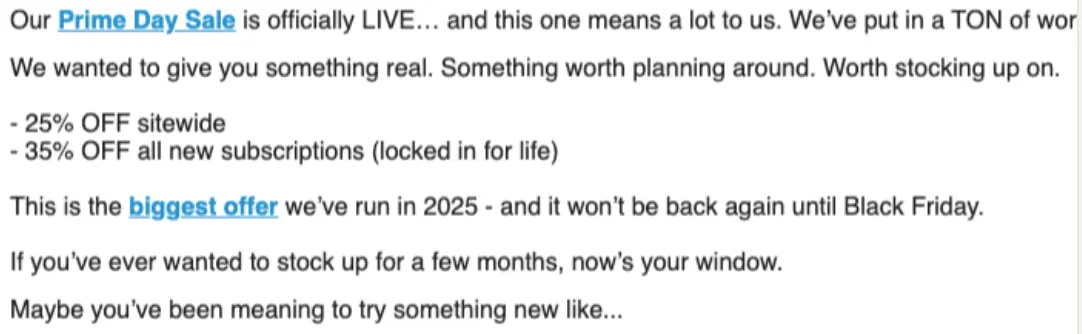
- Being Too Salesy: The core appeal of plain-text emails is their personal, non-promotional feel. If the content is overtly sales-driven, aggressive, or lacks genuine value, it betrays the implied trust. Such emails will read like an unsolicited door-to-door sales pitch, eroding the personal connection they aim to build. The image of a "text-based email that looks personal, but reads like a traditional sales promo" perfectly illustrates this common pitfall.
- Using Aggressive Subject Lines: Subject lines containing spammy phrases like "100% free," "act now," or "risk-free" actively undermine the authenticity of a plain-text email. They not only increase the likelihood of being flagged by spam filters but also immediately turn off recipients who are seeking genuine, personal communication, ruining any chance of building a meaningful relationship.
- Writing Long Essays: Real personal communication is typically concise and to the point. Sending a plain-text email that stretches into five paragraphs and 600 words contradicts the notion of a direct, personal message. It becomes cumbersome and defeats the purpose of reduced cognitive load. Keep it brief, focused, and respectful of the recipient’s time.
- Neglecting a Clear Call to Action (CTA): While plain-text emails should not be overtly salesy, they still need a purpose. A subtle, clear call to action, such as a simple hyperlink with descriptive text, is crucial to guide the recipient to the next step, whether it’s reading an article, watching a video, or making a purchase. A lack of direction can make the email feel incomplete or purposeless.
- Poor Personalization: Generic greetings or irrelevant content, even in a plain-text format, will quickly reveal the automated nature of the email. Ensure that any personalization feels natural and genuinely adds value for the individual recipient.
Crafting Effective Plain-Text Emails: Best Practices
To maximize the impact of plain-text emails, marketers should focus on these key practices:
- Adopt an Authentic Voice: Write as if you are sending an email to a friend or colleague. Use natural language, conversational tone, and avoid corporate jargon.
- Prioritize Conciseness: Get straight to the point. Respect the recipient’s time by delivering your message efficiently.
- Implement a Clear, Subtle CTA: Guide the reader to their next step with a single, clear link, ideally embedded naturally within the text.
- Leverage Personalization Thoughtfully: Use subscriber names and segment content to ensure relevance. The more tailored the message, the stronger the connection.
- Segment Your Audience: Send plain-text emails to specific segments where the message is most relevant and the personal touch will be most appreciated.
- Sender Name and Address: Send from a real person’s name (e.g., "Jane Doe from [Company Name]") and a legitimate email address to reinforce authenticity.
- A/B Testing: Continuously test different plain-text approaches, subject lines, and calls to action to optimize performance for your specific audience.
Implementation Across Platforms
Creating a text-based email in most modern Email Service Providers (ESPs) like Omnisend is remarkably straightforward, typically taking only a few minutes. The process generally involves:
- Navigating to Campaign Creation: Start a new email campaign or automation workflow.
- Choosing the Right Template: Instead of selecting a pre-designed HTML template, opt for a "Plain Text" or "Basic Text" option provided by the platform.
- Crafting Your Message: Focus solely on the text content, ensuring it’s concise, personal, and clear.
- Adding Links: Insert necessary hyperlinks directly into the body of the text.
- Review and Send: Perform a final review to check for typos and ensure the message flows naturally before scheduling or sending.
The simplicity of this creation process further enhances the appeal of plain-text emails, making them an efficient tool for marketers looking to cut through complexity.
Broader Implications for Digital Marketing and Brand Communication
The resurgence of plain-text emails signals a broader shift in the digital marketing landscape towards authenticity, transparency, and genuine connection. In an era increasingly dominated by AI, automation, and visually elaborate campaigns, the human touch becomes a powerful differentiator. Brands that successfully integrate plain-text emails into their strategy demonstrate an understanding that true engagement stems from value and trust, not just aesthetic appeal.
This trend encourages marketers to re-evaluate their communication priorities, balancing the necessity of branding with the power of direct, personal interaction. It suggests that while beautiful design still has its place, particularly for brand building and showcasing products, the most impactful messages might be the simplest ones. The future of email marketing will likely involve a sophisticated blend of both approaches, with plain-text emails serving as a vital tool for fostering deeper relationships and reminding audiences that there are real people behind the brand.
Wrapping Up
Plain-text emails thrive because they emulate genuine human communication, a feeling that is preserved only through judicious and purposeful use. To maximize their effectiveness, keep them concise, assign each a distinct purpose—be it a query in an abandoned cart sequence, a personal note from the founder, or a selfless thank-you—and always send them from a recognizable individual’s name. When strategically interspersed with your more elaborately designed campaigns, these unassuming messages become one of the most powerful means to remind your audience of the authentic human connection underpinning your brand.