The landscape of e-commerce for creators is constantly evolving, with platforms vying to offer the most comprehensive and user-friendly solutions. Among the prominent contenders are Spring (formerly Teespring) and Fourthwall, two platforms that, at first glance, might appear similar but offer distinct functionalities and cater to different creator needs. While both facilitate the sale of merchandise and digital products, a deeper dive reveals significant differences in their scope, flexibility, and long-term scalability. This analysis aims to provide a detailed comparison, examining their features, pricing, store-building capabilities, product offerings, and overall support, to help creators make an informed decision about which platform best aligns with their business goals.
Understanding the Core Offerings: Spring’s Audience-Centric Approach vs. Fourthwall’s Brand-Building Ecosystem
Spring has established itself as a go-to platform for creators seeking a straightforward method to monetize their existing audience through merchandise. Its core strength lies in its simplicity: creators can quickly set up a basic storefront, select from a curated catalog of print-on-demand products, customize them with their designs, and sell them directly. The platform’s seamless integration with social media channels, particularly YouTube and Twitch, makes it an attractive option for those looking to capitalize on their established follower base. This audience-centric approach allows creators to focus on content creation while Spring handles the complexities of production, payment processing, hosting, and customer support for physical goods.
In contrast, Fourthwall positions itself as a more comprehensive e-commerce solution, designed for creators aiming to build a robust brand ecosystem. While it also offers retail-grade print-on-demand merchandise, Fourthwall extends its capabilities to encompass a wider array of revenue streams. Creators can sell digital downloads, manage memberships and subscriptions, and even accept direct donations. The platform provides a highly customizable storefront, allowing for the use of custom domains and offering Merchant of Record (MoR) support, which simplifies tax handling and compliance. Furthermore, Fourthwall integrates a helpful AI shop assistant to streamline operations and offers advanced tools for building a holistic brand experience. This multifaceted approach empowers creators to diversify their income and cultivate deeper relationships with their audience beyond simple merchandise sales.
Navigating the Pricing Structures: Free Tiers and Scalable Costs
A significant advantage for both Spring and Fourthwall is their accessibility through free plans, lowering the barrier to entry for aspiring creators.
Fourthwall’s free plan is notably generous, providing users with a customizable store, the ability to sell both physical and digital products, support for one additional team member, and up to 50 product listings. Crucially, creators do not incur fees on physical product sales, apart from standard payment processing costs. However, a 5% fee is applied to memberships and digital product sales. For creators looking to expand their offerings, Fourthwall also offers a paid plan at $19 per month (or $180 annually). This premium tier eliminates the digital product fee, increases the product limit to 500, allows for unlimited team members, provides $10 in monthly sample credits, and includes premium support.
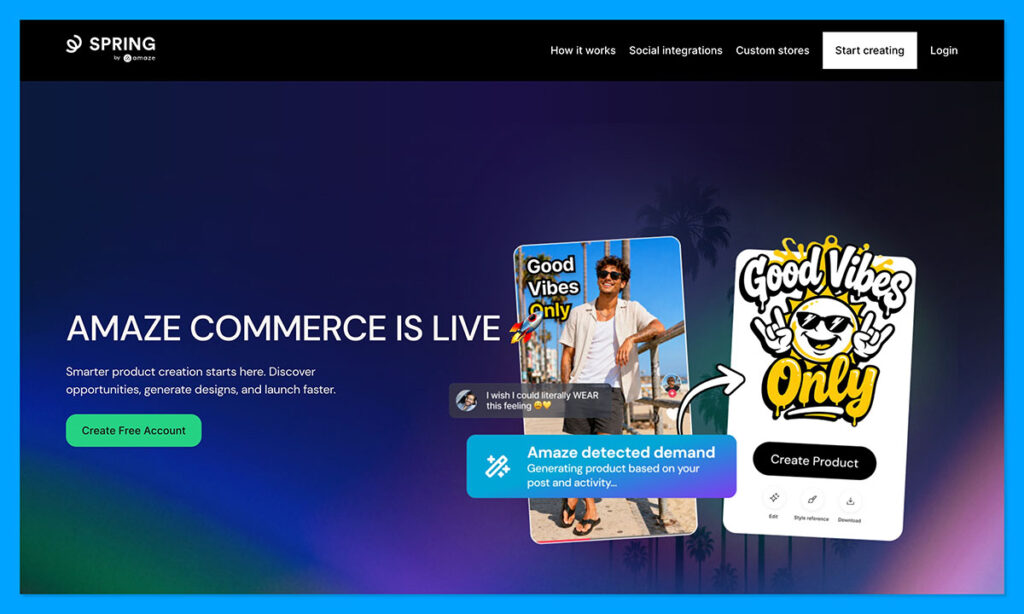
Spring operates with a single, universally free plan. Creators can establish a store and launch products without any upfront costs. The revenue model for physical products involves a base production cost determined by Spring, to which the creator adds their retail price. Profit margins are thus dictated by the creator’s pricing strategy above this base cost. The revenue calculation for digital products on Spring is less straightforward. A 20% charge, plus a $1.70 fee per sale, is applied to each download. This means that for a $10 eBook, a creator would net approximately $6.30, highlighting a potentially lower profit margin for digital offerings compared to Fourthwall’s free tier. While Spring’s base costs for merchandise might be slightly lower, Fourthwall’s higher quality products and more favorable digital product fees often make it a more attractive option for creators focusing on digital sales or a blended business model.

Store Building and Integration Capabilities: Customization vs. Streamlined Setup
The distinction between Fourthwall and Spring becomes particularly apparent when examining their store-building and integration capabilities.
Spring excels in providing a rapid setup for a social storefront. It offers a templated design that creators can personalize with their logo, brand colors, a hero banner, and social media links. A custom domain can also be connected. However, the extent of customization is inherently limited, making it challenging to build a deeply branded or complex online presence. Spring does not include built-in tools for email marketing or blogging, necessitating separate integrations for these crucial aspects of digital marketing. Despite these limitations, Spring offers robust integrations with major social media platforms like YouTube and Twitch, enabling creators to leverage their existing channels effectively.
Fourthwall, on the other hand, provides a far more sophisticated and comprehensive store-building experience. Creators gain extensive control over their storefront, with options for customizing themes, layouts, product collections, and even direct access to HTML and CSS for advanced tweaking. A Storefront API is also available for developers. Beyond its powerful store builder, Fourthwall integrates seamlessly with top social selling channels and also connects with essential marketing tools such as Klaviyo and Mailchimp, facilitating robust email marketing campaigns. The platform also supports content marketing through integrated blogging features. A significant recent addition is the Kit integration, which synchronizes subscriber and buyer data, enabling automated welcome sequences and targeted offers to enhance customer engagement.
Product Diversity and Monetization Streams: Beyond Print-on-Demand
While both platforms offer print-on-demand (POD) services, the breadth of products and monetization strategies varies significantly.
Spring has evolved beyond its initial focus on apparel, now offering a "Digital Launcher" for selling eBooks, filters, audiobooks, and other digital content. Creators can also implement various promotional offers, such as percentage-based discounts, fixed-value promotions, and free shipping, with analytics to track their effectiveness. However, the business model remains largely centered around individual product sales. Options for recurring revenue streams like memberships, self-sourced products, or direct donations are not supported within the Spring ecosystem. This inherent limitation can restrict the long-term growth potential for creators seeking to diversify their income beyond simple merchandise sales.
Fourthwall, by contrast, provides a much more expansive suite of monetization tools. Its print-on-demand catalog is meticulously curated for quality, featuring retail-grade apparel and unique "Signature" collection items designed to appeal to a discerning audience. Beyond POD, creators can sell their own self-sourced physical products, offer digital downloads, and establish paid memberships or subscription tiers. The platform also facilitates direct donations and allows for the creation of gift cards that never expire and are delivered instantly to the customer’s inbox. Furthermore, Fourthwall’s AI assistant, Eli, can assist in expanding product collections by suggesting catalog and price updates and even distributing a single design across multiple POD items. This comprehensive approach allows creators to bundle various offers, such as selling an eBook and its accompanying audiobook simultaneously, and provides multiple avenues for turning one-time buyers into loyal, repeat customers.
Print-on-Demand Quality and Fulfillment: A Tale of Curation and Consistency
A critical aspect for any creator selling physical goods is the quality of the print-on-demand products and the efficiency of fulfillment.
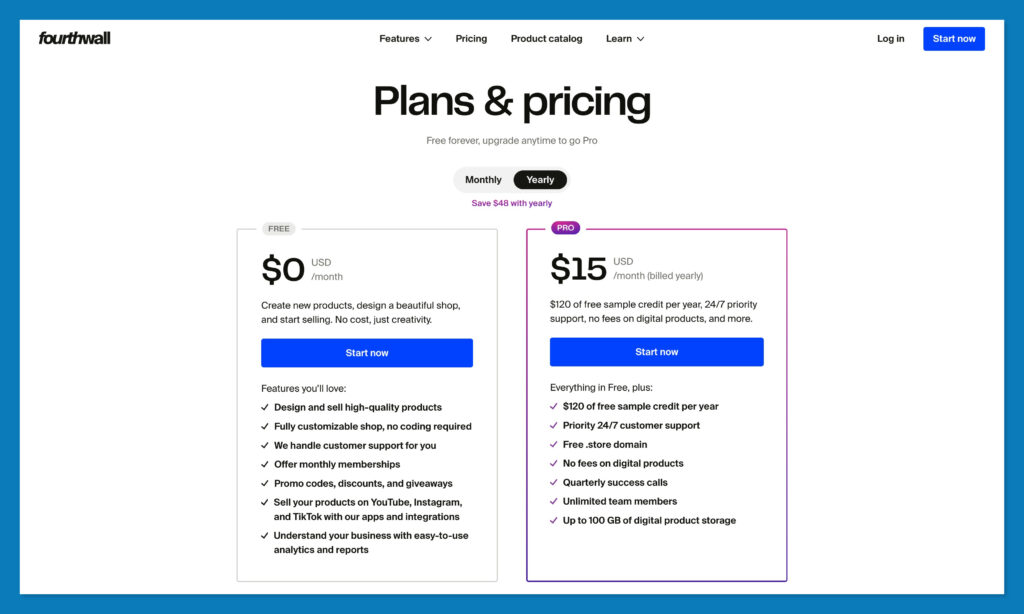
Fourthwall distinguishes itself with a highly curated POD catalog, prioritizing quality and offering items that often surpass industry standards. This includes premium blanks and unique production methods like screen printing, cut-and-sew options, and sublimation, alongside traditional printed and embroidered apparel. While the base cost of some items might be slightly higher, the enhanced quality can justify a premium pricing strategy and lead to greater customer satisfaction.
Spring also boasts a substantial selection of approximately 200 print-on-demand products, primarily in apparel, accessories, and home goods. While some items may be more affordably priced, the overall quality can be variable. The platform predominantly utilizes direct-to-garment printing and screen printing for apparel. While the material quality is generally adequate, the consistency of the printing itself can sometimes be an issue. Spring does offer a valuable option for creators to order samples at base cost, allowing them to personally assess product quality before offering them to their audience.
Regarding shipping, both platforms provide reasonably efficient fulfillment services. Fourthwall partners with fulfillment centers across the EU, UK, Canada, Mexico, Australia, Japan, and the US, with typical delivery times ranging from five to ten days. Spring has partners in the EU, US, Mexico, India, and Australia, though product availability may vary by region. Spring guarantees production and tracking numbers within ten business days, followed by an additional four to seven days for delivery, potentially leading to longer wait times for customers.
Support and Merchant of Record: Shared Responsibilities and Differentiated Assistance
Both Fourthwall and Spring offer robust support systems to assist creators, and critically, both act as Merchant of Record (MoR). This MoR status means they handle tax collection and remittance, a significant administrative burden lifted from the creator’s shoulders. They also manage the fulfillment process for print-on-demand items, further streamlining operations.
Fourthwall enhances its support with Eli, a 24/7 AI dashboard assistant, providing immediate help with operational queries. Upgrading to Fourthwall’s Pro tier unlocks dedicated priority support and access to success calls. Both platforms offer customer support for print-on-demand products, providing replacements or refunds for defective or damaged items. However, neither platform typically handles general returns for customer errors (like incorrect sizing) or change-of-mind decisions, as most products are made to order. Spring’s "Make It Right" policy covers replacements or refunds for reported issues within 30 days, but it does not extend to customer-initiated mistakes.
Recent Developments and Future Trajectories: Innovation and Expansion
Recent updates from both platforms offer insight into their strategic directions and ongoing commitment to creator success.
Spring has been focusing on enhancing the foundational aspects of the creator experience. This includes improvements to listing management, account security through multi-factor authentication, streamlined checkout processes that accommodate various payment methods (including crypto, PayPal, and Apple Pay), and dedicated creator support teams. New features for bulk editing designs, price adjustments, and archiving listings aim to improve workflow efficiency.
Fourthwall, conversely, is heavily investing in building mechanisms for customer retention and brand expansion. The integration of Kit, coupled with the AI assistant, aims to foster repeat business through targeted follow-ups and membership campaigns. Recent additions include custom gift cards, more granular team roles, self-fulfillment reminders, and enhanced analytics for tracking specific metrics like Twitch gifting. Furthermore, Fourthwall has introduced a new Throne integration for community wish lists and fundraising, a designer marketplace for sourcing collaborators, a partnership with Karat for financial management, and continued expansion of its premium "Signature" collection.
Conclusion: Choosing the Right Platform for Your Creator Journey
The choice between Spring and Fourthwall hinges on a creator’s current stage, ambition, and desired business model.
Spring remains an excellent choice for creators who need a quick and easy way to start selling custom merchandise to an established social audience. Its free tier, extensive product selection, and social media integrations make it accessible and user-friendly for those primarily focused on print-on-demand and basic digital products. However, its limitations in customization and its restricted revenue streams may hinder long-term brand scalability.
Fourthwall emerges as the superior platform for creators aspiring to build and own a comprehensive brand. It offers a flexible, all-in-one ecosystem where merchandise sales are just one component of a diversified income strategy. With its robust store builder, extensive product and monetization options (including memberships, digital products, and self-sourced items), advanced integrations, and strong focus on customer engagement, Fourthwall provides the infrastructure for sustainable growth without the need for future platform migrations.
Ultimately, if the goal is to sell a few digital products and basic merchandise to an existing social following with minimal fuss, Spring is a practical solution. For those who envision building a lasting brand with multiple income streams and a high degree of control, Fourthwall presents a more powerful and scalable platform for realizing that vision.