rifanmuazin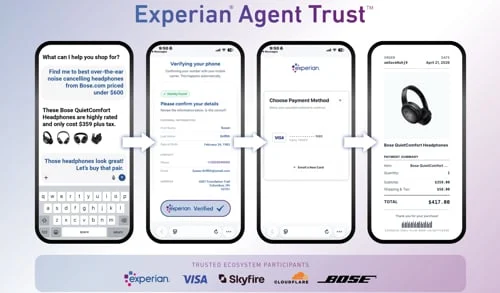
This installment of our weekly rundown of new services for merchants includes updates on supply chain software, livestream shopping, personalization, conversational commerce, product pages, fraud prevention, cross-border shipping, and reputation management. Got an ecommerce product release? Email [email protected].
Expanding Logistics and Supply Chain Capabilities
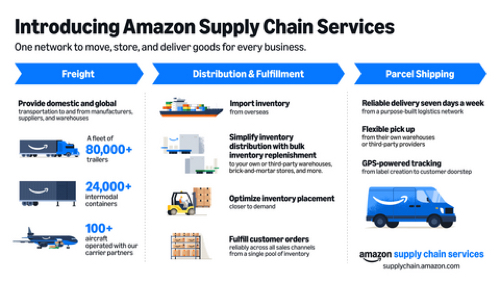
In a significant move poised to reshape the e-commerce logistics sector, Amazon has officially opened its vast supply chain network to all businesses through the launch of Amazon Supply Chain Services. This initiative extends the e-commerce giant’s established freight, distribution, fulfillment, and parcel shipping solutions beyond its own marketplace, making them accessible to any seller, whether they operate on Amazon or not. The new service offers a centralized console for businesses to seamlessly sign up and leverage Amazon’s formidable logistical infrastructure. This network is impressive, boasting an arsenal of 80,000 trailers, 24,000 containers, and 100 aircraft, underscoring Amazon’s commitment to becoming a comprehensive logistics partner for the broader business community. The implications of this expansion are far-reaching, potentially leveling the playing field for smaller businesses by providing access to world-class logistics at competitive rates, and intensifying competition within the third-party logistics (3PL) market. Analysts suggest this move could further solidify Amazon’s dominance in the global supply chain and drive innovation across the industry as competitors are forced to adapt and enhance their own offerings.
Complementing this logistical expansion, Amazon Business has bolstered its offerings by incorporating groceries into its Same-Day Delivery service. This enhancement now makes fresh produce, dairy, baked goods, and frozen items from both national and local brands available for business orders in over 2,300 U.S. cities. This strategic addition aims to cater to the diverse operational needs of businesses, allowing them to procure essential supplies with the same speed and convenience previously reserved for general merchandise. Customers can select delivery windows that align with their business operating hours, ensuring minimal disruption to their daily functions. This move signals a broader trend of e-commerce platforms diversifying their service portfolios to meet the multifaceted demands of a rapidly evolving business environment.

Enhancing Customer Engagement Through AI and Personalization
The integration of artificial intelligence continues to be a dominant theme in the e-commerce technology space, with several new tools designed to elevate customer experiences and streamline operations. Klaviyo, a prominent B2C marketing platform, has introduced Custom Skills for its Customer Agent. This update empowers brands to craft unique customer experiences by building bespoke AI functionalities directly within the Klaviyo ecosystem, which already powers their marketing efforts. Brands can now define AI logic using plain language, create new skills from scratch, modify existing ones, and integrate these capabilities with any system in their tech stack. This level of customization allows for highly tailored customer interactions, moving beyond generic chatbot responses to provide more intelligent and context-aware support. The ability to build AI skills without extensive coding knowledge democratizes advanced customer service capabilities, making them accessible to a wider range of businesses.
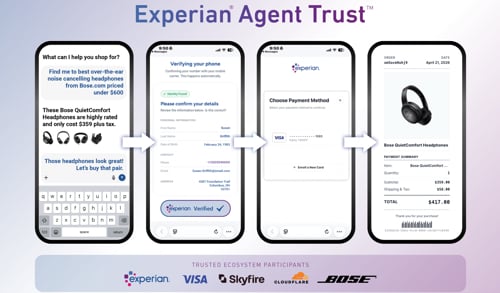
In a similar vein, Experian, a global information services company, has launched Agent Trust, a novel solution designed to underpin secure, AI-driven commerce. Agent Trust establishes a verifiable link between consumers and AI agents, ensuring that transactions initiated by AI are grounded in verified consumer identities. This framework is built within an ecosystem of "agentic commerce contributors," including major players like Visa, Cloudflare, and Skyfire. This development is crucial in building trust and security in an era where AI is increasingly involved in commercial transactions. By providing a robust identity verification layer, Agent Trust aims to mitigate fraud and enhance the overall safety and reliability of AI-powered commerce.
Bloomreach, a leading personalization provider, has also made significant strides by launching Loomi AI for Shopify. This integrated app connects Shopify stores to Bloomreach’s comprehensive suite of marketing and search products, enabling deeply personalized customer journeys by unifying customer, product, and commerce data. Loomi AI leverages advanced AI decisioning to deliver real-time, relevant search results for individual shoppers and personalizes marketing campaigns based on purchase history, browsing behavior, and loyalty status. A key feature is its ability to identify shoppers who may need an incentive to convert and target them with tailored offers, optimizing conversion rates and customer retention. This move highlights the growing importance of hyper-personalization in driving e-commerce success, moving beyond one-size-fits-all marketing to individualized customer engagement.
Furthermore, reAlpha, a real estate technology company, announced that its subsidiary AiChat has launched conversational commerce and ticketing solutions specifically for e-commerce brands. Integrated with Shopify, AiChat connects directly to a merchant’s commerce engine, granting real-time access to product, inventory, and order data within customer interactions. This enables businesses to manage product discovery, customer inquiries, transactions, and post-purchase support through a seamless conversational interface. The ability to access live data ensures that customer service agents, whether human or AI-powered, can provide accurate and timely assistance, enhancing the overall customer experience and operational efficiency.
Adding to the suite of AI-powered tools, MikMak, a commerce intelligence platform, has unveiled MikMak 4.0, an updated real-time commerce intelligence and orchestration platform. This release includes three key new capabilities: "Aura," a predictive engine offering real-time market foresight for sales and media measurement, planning, and optimization; "Mak," an AI assistant that analyzes data to generate strategic insights, including campaign design; and "MCP," which provides AI agents with visibility into real-time commerce data. These enhancements are designed to give brands a more comprehensive and actionable understanding of their e-commerce performance, enabling more agile and data-driven decision-making.
Amazon is also experimenting with AI directly on its product pages, launching an interactive feature called "Join the chat" as part of its "Hear the highlights" initiative. This component allows customers to ask AI hosts questions via text or voice while reviewing product information. The AI host then incorporates these questions into a conversational summary, delivering tailored responses grounded in product details, customer reviews, and publicly available information. This innovative approach aims to provide shoppers with immediate, context-specific answers, potentially reducing the need for extensive browsing or direct customer service contact and enhancing the on-page shopping experience.
Streamlining Product Discovery and Page Optimization
Enhancing the customer journey often begins with the product page itself, and several new tools are emerging to optimize this critical touchpoint. Skailed, an Australian-based programmatic e-commerce and SEO platform, has introduced an automated FAQ tool for product pages. By analyzing product details, Skailed FAQs automatically generate relevant questions and answers, which merchants can then review and edit before publishing. This feature aims to improve search engine visibility and provide customers with immediate answers to common queries, thereby reducing bounce rates and improving conversion. This automated content generation can significantly reduce the manual effort required to maintain comprehensive product information.
For merchants looking to expand their reach and synchronize their online presence, Crosslist has launched a new platform designed to facilitate scaling across multiple marketplaces. This system enables sellers to create a single product listing and distribute it simultaneously across various online marketplaces while maintaining synchronized inventory and pricing. The goal is to significantly reduce manual workload and minimize listing errors, a common pain point for sellers operating across multiple channels. This is particularly relevant in an increasingly fragmented e-commerce landscape where sellers often manage their inventory across platforms like Amazon, eBay, Etsy, and their own websites.
Revolutionizing Livestream and Conversational Commerce
The rise of interactive shopping experiences continues with new integrations and platforms designed to capture the attention of modern consumers. Whatnot, a popular livestream shopping platform and marketplace, has announced its integration with Shopify. This integration allows Shopify merchants to seamlessly sell products on Whatnot through live auctions or "Buy It Now" listings, with orders automatically flowing into their Shopify backend. This eliminates the need for catalog duplication and manual inventory reconciliation across platforms, making it easier for merchants to tap into the growing livestream commerce trend without disrupting their existing operations. This partnership is a testament to the increasing convergence of traditional e-commerce platforms and live, interactive shopping formats.
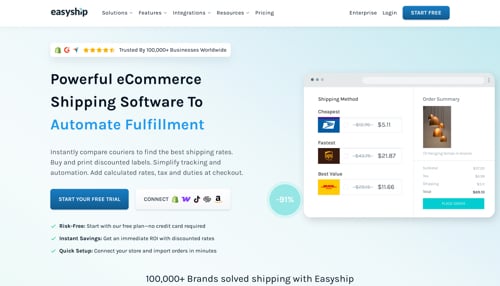
In the realm of conversational commerce, Easyship, a multi-carrier e-commerce shipping software and API platform, has launched its MCP server for cross-border shipping. This innovative feature allows merchants to interact with shipping services using natural language prompts within compatible AI platforms like ChatGPT, Claude, and Gemini. Users can compare rates across multiple carriers, generate shipping labels, track shipments, and pull analytics simply by communicating their needs. This integration represents a significant step towards agentic commerce, where AI agents can directly manage complex logistical tasks, simplifying international shipping for businesses of all sizes.
Strengthening Fraud Prevention and Reputation Management
As e-commerce transactions become more sophisticated, so too do the methods for protecting businesses and consumers. PayPal has introduced Ads ID, an advertising identifier that is grounded in verified commerce relationships. This solution aggregates consented signals derived from browsing behavior across the PayPal and Venmo ecosystems. Partnering with key technology testing entities across commerce, open web, and connected TV environments, including Magnite, PubMatic, Rokt, and Taboola, Ads ID aims to provide a more privacy-conscious and reliable approach to advertising in a world increasingly moving away from third-party cookies. This initiative signals a shift towards identity solutions that prioritize user consent and verifiable commercial activity.
Managing online reputation is also becoming increasingly critical for e-commerce success. AskNicely, an AI-powered customer experience platform, has launched Reputation Manager. This tool is designed to consolidate fragmented customer feedback from various sources, enabling businesses to increase review volume by prompting customers at opportune moments, monitor performance across hundreds of review platforms, and respond to feedback at scale. By connecting survey insights with public reviews, Reputation Manager helps businesses identify trends, understand root causes of customer sentiment, and ultimately leverage feedback for growth and improved visibility.

Strategic Acquisitions and Platform Integrations
The e-commerce technology landscape is also being shaped by significant strategic acquisitions and platform integrations. Adobe has officially completed its acquisition of Semrush, a leading search engine optimization (SEO) platform. This integration aims to combine Adobe’s brand visibility and agentic web solutions, including Experience Manager, LLM Optimizer, Commerce platform, and Brand Concierge, with Semrush’s extensive discoverability intelligence. The union is expected to offer businesses a more holistic suite of tools for managing their online presence, from content creation and website management to search engine optimization and customer engagement. This consolidation signals Adobe’s commitment to providing end-to-end digital experience solutions powered by advanced AI capabilities.
In a move that further integrates product catalogs with emerging AI surfaces, Commerce, the parent company of BigCommerce, has announced the integration of PayPal’s Store Sync into the BigCommerce App Marketplace and Channel Manager. This integration enables BigCommerce merchants to connect their product catalogs, inventory, and order management systems to AI-powered discovery platforms such as Microsoft Copilot, Meta, Perplexity, and others. This connectivity is crucial for ensuring that products are accurately represented and discoverable across the rapidly expanding ecosystem of AI-driven search and shopping interfaces, potentially driving significant new traffic and sales for merchants.
Addressing Cross-Border Challenges and Evolving Marketplaces
Navigating the complexities of international e-commerce remains a key focus for many businesses. Easyship’s launch of its MCP server, as previously mentioned, directly addresses the challenges of cross-border shipping by enabling natural language interaction with shipping services. This makes complex logistical planning more accessible and efficient for merchants engaged in global trade.
The ability to list and manage products across multiple online marketplaces is also crucial for sellers aiming for broader market penetration. Crosslist’s introduction of its multi-marketplace listing and inventory synchronization system directly targets this need. By allowing sellers to create a single product listing that is distributed across various platforms with synchronized inventory and pricing, Crosslist aims to reduce the operational overhead and potential for errors associated with managing an omnichannel presence. This is particularly beneficial for resellers and businesses looking to maximize their exposure on platforms beyond their primary sales channel.
The Broader Impact on the E-commerce Ecosystem
The flurry of new services and integrations announced reflects a dynamic and rapidly evolving e-commerce landscape. The overarching trend is a clear push towards greater automation, intelligence, and personalization, driven by advancements in artificial intelligence and a growing demand for seamless customer experiences.
The expansion of logistics networks, such as Amazon’s Supply Chain Services, promises to democratize access to efficient fulfillment, potentially leveling the playing field for smaller businesses. Simultaneously, the continuous development of AI-powered tools for customer engagement, personalization, and operational efficiency is empowering merchants to build deeper relationships with their customers and optimize their business processes.
The integration of platforms and the development of new identity solutions are addressing critical aspects of online commerce, from fraud prevention to targeted advertising in a privacy-conscious era. As e-commerce continues to mature, these innovations are not just incremental improvements; they represent fundamental shifts in how businesses operate, connect with consumers, and compete in the global digital marketplace. The coming months and years will likely see further consolidation of these technologies and the emergence of even more sophisticated solutions that redefine the boundaries of online retail.