rifanmuazin
For seasoned e-commerce professionals, the integration of a Customer Relationship Management (CRM) system is a critical juncture, capable of either significantly amplifying sales or becoming a time-consuming drain on resources. The ideal CRM consolidates leads, email interactions, and sales data into a unified, functional ecosystem. Conversely, a poorly implemented or ill-suited CRM can lead to fragmented workflows, missed follow-ups, and a general sense of disarray. This analysis benchmarks HubSpot CRM against ActiveCampaign, two prominent platforms in the e-commerce marketing and sales technology landscape, to determine which offers a more robust solution for growing online brands. While both platforms offer compelling features, the comprehensive, integrated nature of HubSpot CRM ultimately positions it as the superior choice for holistic e-commerce growth.
A Snapshot Comparison: HubSpot vs. ActiveCampaign
Before delving into granular details, a comparative overview highlights the core strengths and weaknesses of each platform:
| Feature | HubSpot Marketing Hub | ActiveCampaign |
|---|---|---|
| Setup & Onboarding | Guided onboarding, free CRM ready in minutes, unified workspace | Quick campaign setup, but CRM integration needed for full tracking |
| AI Tools | Breeze AI Agents (Content, Social, Prospecting), AI CPQ, Data Hub Intelligence | Predictive Sending, Content Optimization, Active Intelligence agents |
| Marketing Automation | Full inbound engine – email, ads, SEO, landing pages, workflows | Strong email automation and branching; solid CRM layering |
| Omnichannel Messaging | Email, social, ads, SMS (via integration) | Native email + SMS + WhatsApp + transactional email |
| CRM & Pipeline Management | Native Smart CRM; pipelines capped by plan | Built-in CRM with unlimited pipelines on all plans |
| Reporting & Analytics | Multi-touch attribution, custom dashboards, Data Hub warehouse integration | Campaign-level analytics; excellent for email flows, limited cross-channel view |
| Integrations & Ecosystem | 2,000+ apps; deep two-way data sync (Shopify, Slack, Stripe etc.) | 1,000+ apps; good email integrations, heavier reliance on Zapier |
| Pricing & Cost | Free CRM, tiered hubs (users + features) | Contact-based pricing; cheaper start but scales fast |
| Onboarding & Support | HubSpot Academy, docs, partner network, optional paid migration | Free 1:1 migration (Pro+), good support for email teams |
| Deliverability & Localization | Strong deliverability; web content translation via DeepL | Excellent deliverability; native support for 75 languages |
| Best For | Growing e-commerce or B2B brands needing unified data + automation | Email-driven teams needing fast, powerful flows on a budget |
Core Philosophies: HubSpot’s Integrated Ecosystem vs. ActiveCampaign’s Automation Focus
At their core, HubSpot and ActiveCampaign approach CRM and marketing automation from distinct strategic standpoints. HubSpot Marketing Hub is an integral component of HubSpot’s broader Smart CRM ecosystem. This design philosophy emphasizes seamless integration across all customer-facing operations: email marketing, advertising, sales, customer service, and even direct commerce transactions. The inherent advantage of this architecture lies in its ability to create a unified data flow. When a customer interacts with a marketing touchpoint, such as filling out a form, HubSpot automatically logs the activity, scores the lead based on predefined criteria, and can trigger automated workflows. These workflows might include sending a personalized email, creating a task for a sales representative, or updating the customer’s profile.
The integration of HubSpot’s Breeze AI further enhances this operational efficiency. The AI not only tracks customer behavior but actively assists in leveraging that data for actionable insights. For e-commerce businesses, this translates into a transparent and comprehensive customer journey, from the initial ad click to the final purchase.
ActiveCampaign, on the other hand, operates with a different "energy." It is characterized by its speed, focused functionality, and a clear dedication to empowering marketing professionals, particularly those deeply invested in email marketing automation. The platform excels at rapid campaign deployment and the construction of intricate, personalized automation sequences. Users can typically set up a campaign and implement sophisticated branching logic in under an hour. This agility makes ActiveCampaign particularly adept at time-sensitive marketing tactics such as post-purchase follow-ups, lead nurturing sequences, and time-limited promotional campaigns. Its Predictive Sending and Active Intelligence tools represent significant advancements in optimizing email delivery times and tailoring content, showcasing a strong evolution in its capabilities throughout 2025.
The Onboarding Experience: Ease of Use and Initial Setup
The initial setup and onboarding process for CRM software can be a significant determinant of adoption and ongoing user satisfaction. Some platforms present a steep learning curve, inundating users with complex settings before they can even send their first email. Others offer a more guided, intuitive experience that facilitates a quicker understanding of the system’s functionalities.
HubSpot’s onboarding process is designed to feel less like a traditional setup and more like an integrated expansion of existing business operations. Upon creating a free account, users can connect their e-commerce store, email marketing tools, and advertising platforms. The system then automatically begins consolidating this data. Within a relatively short period, distinct patterns emerge, revealing valuable insights into lead origins, conversion rates of specific website pages, and customer purchasing behaviors. The onboarding steps are practical, allowing users to immediately engage with core functionalities like creating automated workflows or customizing sales pipelines to align with their team’s specific processes.
The platform’s workspace is highly customizable. Users can tailor their dashboards to prioritize metrics most relevant to their business, such as average order value or abandoned cart recovery rates, rather than solely focusing on email engagement metrics. A key advantage is that HubSpot’s various hubs – Marketing, Sales, and Commerce – share a unified data pool, eliminating the need for cumbersome data exports and re-imports between disparate systems.
ActiveCampaign adopts a more streamlined approach to initial setup. Users can typically launch their first campaign within 30 minutes, and its automation builder is recognized for its intuitive design from the outset. However, the platform’s efficiency can diminish when it comes to deeper e-commerce data integration. Mapping store-specific fields or synchronizing historical purchase data can require more trial and error, necessitating careful verification to ensure that automation triggers function as intended.
AI and Automation: A Comparative Analysis
The integration of Artificial Intelligence (AI) and automation capabilities is rapidly becoming a critical differentiator for marketing technology platforms.
HubSpot’s AI features are seamlessly woven into the daily workflow, feeling less like an add-on and more like an inherent part of the platform’s toolkit. When drafting campaign content, AI assistants provide suggestions for optimizing subject lines or condensing paragraphs. The Breeze AI tools are conveniently accessible within the content editor, enabling users to adjust tone or translate messages without leaving the current interface. Similarly, the Social Agent assists in crafting social media posts by recommending optimal timing and wording for audience engagement. Over time, these AI functionalities can evolve to feel like a proactive, learning marketing assistant that adapts to a brand’s unique style.
The foundation of HubSpot’s automation lies in its Data Hub, which provides a singular, comprehensive record of customer interactions. This enables the creation of sophisticated automations, such as a workflow that detects a customer repeatedly viewing a product. The system can then automatically escalate the lead score, assign a follow-up task to the sales team, and initiate a personalized follow-up communication. These processes operate discreetly in the background, allowing marketing teams to concentrate on strategic campaign planning rather than manual data management.
ActiveCampaign’s AI capabilities are more narrowly focused but highly effective within their designated scope. Its Predictive Sending feature analyzes individual contact engagement patterns to determine the optimal time for email delivery. The Predictive Content option dynamically substitutes headlines or calls-to-action based on past performance data. While these AI tools are powerful for email optimization, ActiveCampaign’s automation workflows are particularly lauded for their ease of setup and granular control, especially for email-centric strategies.
The distinction lies in the breadth of application. If a business’s marketing efforts are primarily email-driven, ActiveCampaign offers a swift and comfortable experience. However, for businesses seeking a system that comprehends and orchestrates the entire customer lifecycle—from initial awareness through post-purchase engagement—HubSpot’s automation provides a more expansive and integrated view.
Marketing Automation and Campaign Building: Distinct Approaches
The process of building marketing campaigns reveals the distinct personalities of HubSpot and ActiveCampaign. Both platforms excel at automation, but their methodologies and user experiences differ significantly.
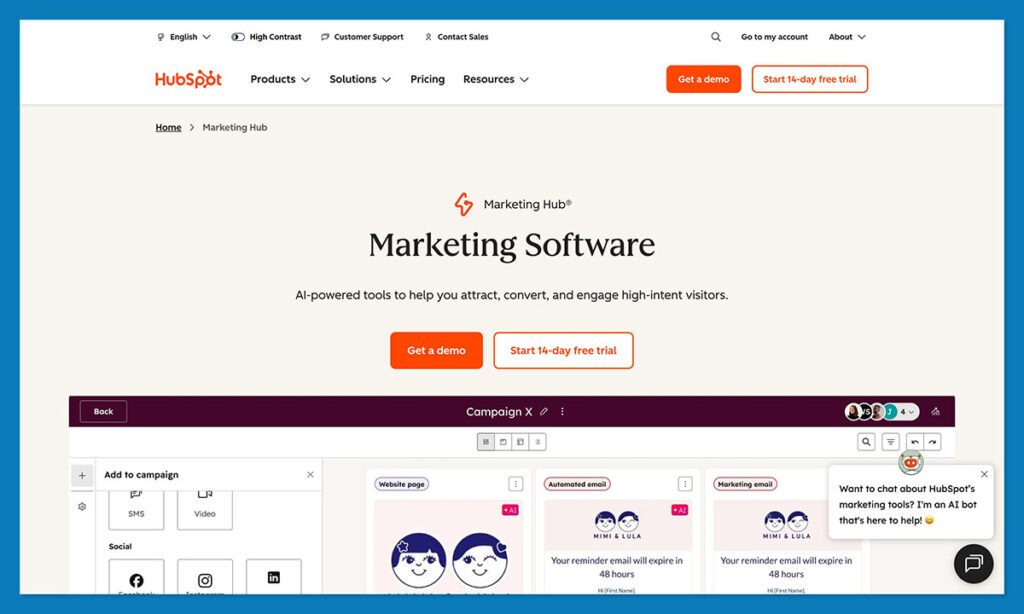
With HubSpot, the campaign-building process feels expansive, encompassing the intricate connections between various marketing touchpoints. For instance, a customer who views a product multiple times but does not complete a purchase can trigger a multi-step automation. This could involve sending a personalized email crafted by Breeze AI, assigning a task to a sales representative for direct outreach, and even initiating a targeted ad campaign on platforms like Facebook if the customer remains unresponsive. The entire sequence can be visualized and managed on a single screen, illustrating the interconnectedness of each step.
The recent enhancements to HubSpot’s Marketing Studio further streamline this process. Instead of toggling between disparate tools, users can visually map out campaign actions by dragging and dropping elements onto a unified canvas. Features like Living Segments ensure that audience lists dynamically update in real-time based on customer behavior, such as purchases, clicks, or unsubscribe requests. Content creation is also simplified, with the Content Hub enabling the rapid development of landing pages and blog posts without the need for external tools or manual tracking code integration.
ActiveCampaign adopts a more concise approach. Its automation builder is renowned for its speed and familiarity, making it an excellent choice for teams prioritizing email marketing. A typical workflow might involve sending a follow-up discount to customers who opened a campaign and clicked a product link, while a softer reminder is sent to those who did not open the email. This visual and intuitive builder is highly effective for single-channel optimization.
However, ActiveCampaign’s primary limitation is its confinement largely within the email channel. For managing advertising campaigns, landing page creation, or SEO reporting, businesses often need to integrate additional software. While this may be acceptable for businesses where email is the dominant marketing channel, HubSpot’s all-in-one solution significantly reduces the need for constant context-switching between various applications, thereby saving valuable time for e-commerce teams.
Sales and CRM Integration: The Data Backbone
The effectiveness of marketing automation is ultimately contingent upon robust sales and CRM integration. As lead volume increases, a system must provide a clear view of not just engagement metrics but also their tangible impact on revenue.
This is where HubSpot demonstrates a distinct advantage. Its Smart CRM is central to the platform’s architecture, appearing to have been designed with this integrated functionality from its inception. A customer’s contact record in HubSpot presents a comprehensive timeline of their interactions, beginning with the initial ad click, through website visits, email engagement, sales deals, and even payment transactions if the Commerce Hub is utilized. This data is updated in real-time, allowing for seamless deal management, task assignment, and pipeline progression without any loss of critical information.
HubSpot also facilitates direct transaction management, enabling users to send quotes and process payments within the same system, a feature that significantly streamlines operational workflows. While pipeline management is tiered according to subscription plans, most e-commerce businesses are unlikely to encounter limitations with the available options.
ActiveCampaign’s CRM functionality, while present, can feel somewhat secondary to its core automation features. It supports basic CRM tasks such as pipeline management, note-taking, and deal tracking. However, achieving a cohesive synchronization with broader e-commerce data, such as full order histories or granular site behavior, often necessitates the implementation of multiple third-party integrations.
Reporting, Analytics, and Data Visualization
The true measure of a CRM’s efficacy often lies in its reporting and analytics capabilities. A well-designed platform offers a clear, insightful view of business performance, while a less effective one can obscure critical data.
HubSpot’s data reporting experience is characterized by its clarity and comprehensiveness. All customer interactions, campaign performance data, and sales deal progression are consolidated into a unified dashboard, minimizing the time spent searching for information. Marketing Hub reports clearly delineate which campaigns have generated revenue, which website pages have achieved high conversion rates, and which emails have driven purchases rather than mere clicks.
The recent updates to HubSpot’s Data Hub, introduced at the INBOUND conference, have further enhanced its analytical power. Direct integrations with platforms like Shopify and Google Ads, as well as data warehouses, ensure that data remains consistently synchronized. Features such as drag-and-drop custom dashboards, multi-touch attribution modeling, and AI-powered trend summaries present data in an easily digestible format, reducing reliance on manual CSV exports.
ActiveCampaign provides robust insights into individual campaign performance, including open rates, click-through rates, and goal completions. However, its ability to connect these metrics directly to sales outcomes or repeat purchase behavior is limited without additional integrations. While the platform is highly valuable for marketers focused predominantly on email data, it does not offer the same holistic view of a customer’s entire journey as HubSpot.
Integrations and Ecosystem: Connecting the Dots
The initial setup phase for any CRM typically involves integrating various business tools, including e-commerce platforms, email services, and advertising networks. Both HubSpot and ActiveCampaign offer extensive integration capabilities, but HubSpot provides a broader and more deeply embedded ecosystem.
HubSpot boasts integrations with over 2,000 applications, including major platforms like Shopify and Slack, which connect with minimal effort. The seamlessness of these integrations is a key differentiator. Rather than feeling like disparate tools are crudely connected, HubSpot’s integrations feel "native." For example, when integrating QuickBooks, invoices automatically appear within the CRM timeline, and connecting Meta Ads allows for automatic conversion tracking linked to specific campaigns. This level of integration creates a cohesive and satisfying user experience.
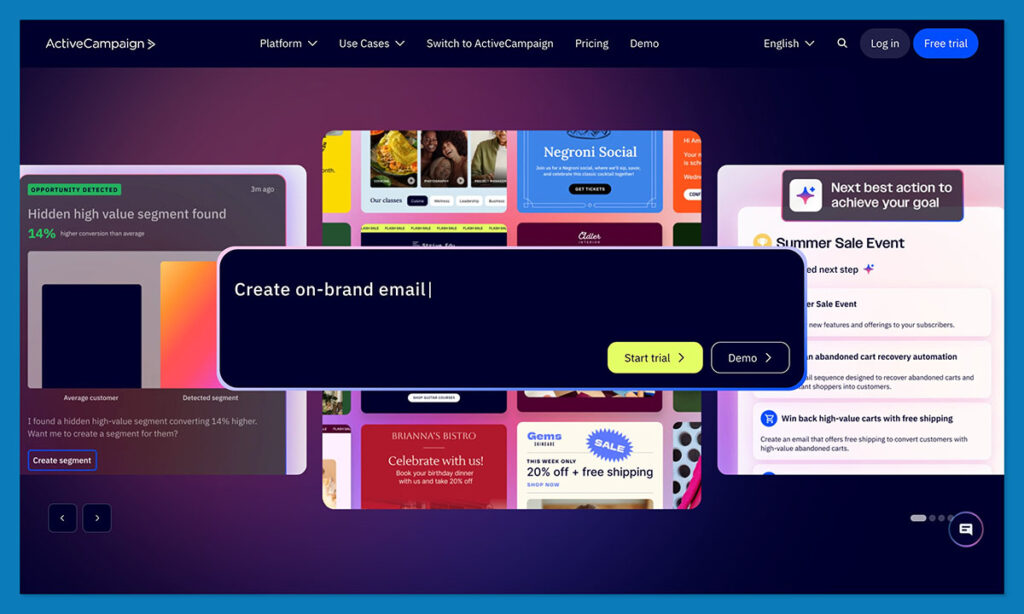
ActiveCampaign offers integrations with approximately 1,000 applications, covering most common e-commerce needs such as Shopify, WooCommerce, and Facebook Ads. However, achieving deeper data synchronization often requires the use of middleware like Zapier or manual field mapping, which, while not overly complex, introduces an additional layer of configuration and potential maintenance. For businesses prioritizing lightweight setups and email-centric automation, ActiveCampaign can suffice. However, for those seeking a unified system that orchestrates their various tools seamlessly, HubSpot’s ecosystem provides a more stable and less labor-intensive solution.
Email and Messaging Performance: Reaching the Customer
Email remains a cornerstone of e-commerce marketing, but modern customer engagement spans multiple channels, including direct messages and text-based communications. An effective platform must intelligently identify the optimal channel and time to reach individual customers.
ActiveCampaign’s heritage in email marketing is evident in its strong deliverability rates. Campaigns are deployed efficiently, consistently reach inboxes, and are less prone to triggering spam filters. The platform manages crucial backend processes such as list cleaning, bounce management, and engagement tracking, contributing to consistently high open rates. In comparative testing, ActiveCampaign has demonstrated a slight edge in inbox placement reliability, particularly for high-volume sending.
Furthermore, ActiveCampaign excels in omnichannel messaging capabilities. Users can send SMS and WhatsApp messages directly from the automation builder. For transactional emails, such as order confirmations and shipping updates, ActiveCampaign integrates seamlessly with dedicated services, ensuring these critical communications are managed separately from marketing campaigns. This is a significant advantage for brands that rely on timely and direct customer communication.
HubSpot, while also delivering excellent email deliverability, focuses on a more sophisticated approach to audience segmentation and targeting. Leveraging the extensive data within its CRM—encompassing purchase history, lead scores, and service interactions—HubSpot enables businesses to segment audiences based on specific behaviors rather than solely on engagement metrics. This often results in more targeted, and therefore more effective, campaigns, leading to higher click-through rates by avoiding broad, indiscriminate outreach.
HubSpot’s messaging channels are also expanding. SMS and WhatsApp can be integrated, and all customer communications are unified within a shared inbox. While not as immediately responsive as ActiveCampaign for direct outbound texts, this integrated approach provides a single, cohesive thread for every customer interaction, benefiting the entire team.
Pricing and Total Cost of Ownership: A Strategic Investment
The pricing models of HubSpot and ActiveCampaign present different entry points and scaling trajectories, influencing the total cost of ownership for e-commerce businesses.
HubSpot offers a genuinely free CRM as its foundational offering. This allows businesses to manage contacts, send basic emails, track deals, and access fundamental reporting without any initial financial outlay. The true investment begins when users opt for paid hubs—Marketing, Sales, or Service. These hubs scale based on the number of users and the depth of features required. For smaller teams, the Starter tiers, priced at approximately $20 per user per month for Sales and slightly more for Marketing, offer significant value. However, to unlock the advanced automation, AI capabilities, and sophisticated reporting that define HubSpot’s strengths, progression to Professional or Enterprise tiers is necessary, which can represent a substantial increase in cost.
While the initial sticker price for higher tiers may seem high, the consolidated nature of HubSpot’s platform often leads to the discontinuation of other software subscriptions. This consolidation can result in overall cost savings when the total cost of ownership is considered over time.
ActiveCampaign employs a contact-based pricing model, which generally offers a lower initial entry cost. Businesses can begin for around $39 per month for up to 2,500 contacts. This model is advantageous for businesses with smaller contact lists. However, as the contact database grows, the subscription costs escalate rapidly. A few thousand additional subscribers can quickly push a business into a higher pricing tier. While ActiveCampaign provides essential marketing automation features, the need for separate tools for landing pages, advanced CRM functionalities, or in-depth analytics means that ancillary costs can accumulate.
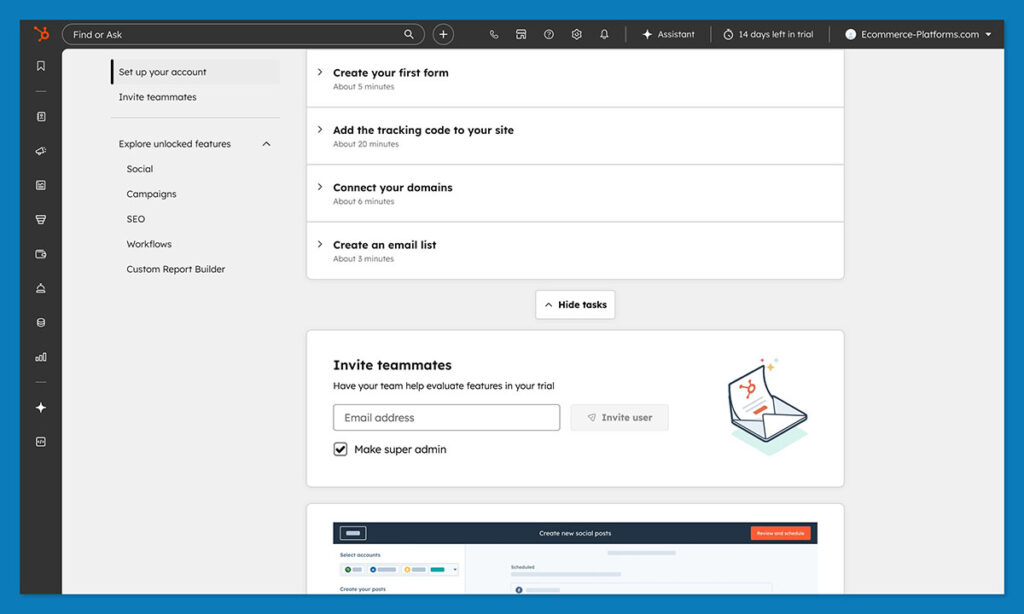
In the long term, investing in a single, comprehensive platform like HubSpot often proves more cost-effective than managing multiple specialized tools. Its pricing structure, while potentially higher upfront for advanced features, aims to replace several disparate subscriptions, leading to greater efficiency and reduced overall expenditure.
Conclusion: HubSpot CRM as the E-commerce Growth Engine
While ActiveCampaign is a formidable tool that excels in email automation and offers a fast, user-friendly experience, HubSpot CRM ultimately emerges as the superior platform for growing e-commerce brands seeking comprehensive, integrated solutions.
ActiveCampaign’s strengths lie in its agility and efficiency for email-driven marketing. Its intuitive automation builder and strong deliverability make it an excellent choice for businesses primarily focused on nurturing leads and executing targeted email sequences. However, its limitations become apparent when integrating sales pipelines, advertising efforts, and more extensive analytical requirements, often necessitating reliance on third-party applications.
HubSpot, conversely, is architected as a central control center for all customer-facing operations. Its Smart CRM acts as the nexus, seamlessly connecting marketing, sales, customer service, and e-commerce functions. This integrated architecture ensures that data flows effortlessly between departments, providing a unified view of the customer journey. The platform’s robust AI capabilities, expansive integration ecosystem, and powerful analytics tools empower businesses to scale efficiently and strategically.
For e-commerce teams aiming to streamline operations, gain deeper customer insights, and foster sustainable growth, HubSpot CRM offers a more holistic and future-proof solution. The ability to manage all aspects of customer engagement within a single, cohesive system not only saves time and reduces complexity but also provides the strategic advantage needed to thrive in today’s competitive online marketplace. The initial investment in HubSpot’s more advanced tiers is often justified by the long-term efficiencies gained and the consolidation of disparate software tools.
Frequently Asked Questions
What is HubSpot’s primary strength for e-commerce?
HubSpot’s core strength for e-commerce lies in its ability to unify marketing, sales, and CRM operations into a single, integrated platform. This allows businesses to gain a holistic view of customer interactions, from initial engagement to post-purchase support, without needing to juggle multiple disconnected tools.
Can HubSpot directly manage e-commerce transactions?
Yes, HubSpot can facilitate e-commerce transactions. It integrates with platforms like Shopify and Stripe, enabling businesses to send quotes, process payments, and automate abandoned cart recovery emails directly within the CRM. This streamlined approach simplifies sales processes and enhances customer experience.
Is HubSpot free to use?
HubSpot offers a robust free CRM that includes contact management, email tools, deal tracking, and basic reporting. The advanced features, such as comprehensive automation, AI capabilities, and in-depth analytics, are available through paid "hubs" (Marketing, Sales, Service, etc.) which can be added as needed.
Which platform offers superior AI capabilities for e-commerce?
The "better" AI depends on specific needs. ActiveCampaign’s AI is highly effective for optimizing email campaigns, focusing on timing and content personalization. HubSpot’s AI is more expansive, assisting across content creation, lead prospecting, sales forecasting, and data analysis, positioning it as a more comprehensive strategic assistant for the entire business.
When is HubSpot a more logical choice than ActiveCampaign for e-commerce?
HubSpot becomes a more compelling choice when a business requires marketing, sales, and CRM functions to operate in a tightly integrated manner. If the primary focus is solely on email campaign execution and automation, ActiveCampaign might be simpler to start with. However, for businesses seeking a unified system that manages the entire customer lifecycle and provides cross-functional data insights, HubSpot offers a more robust and scalable solution.