rifanmuazin
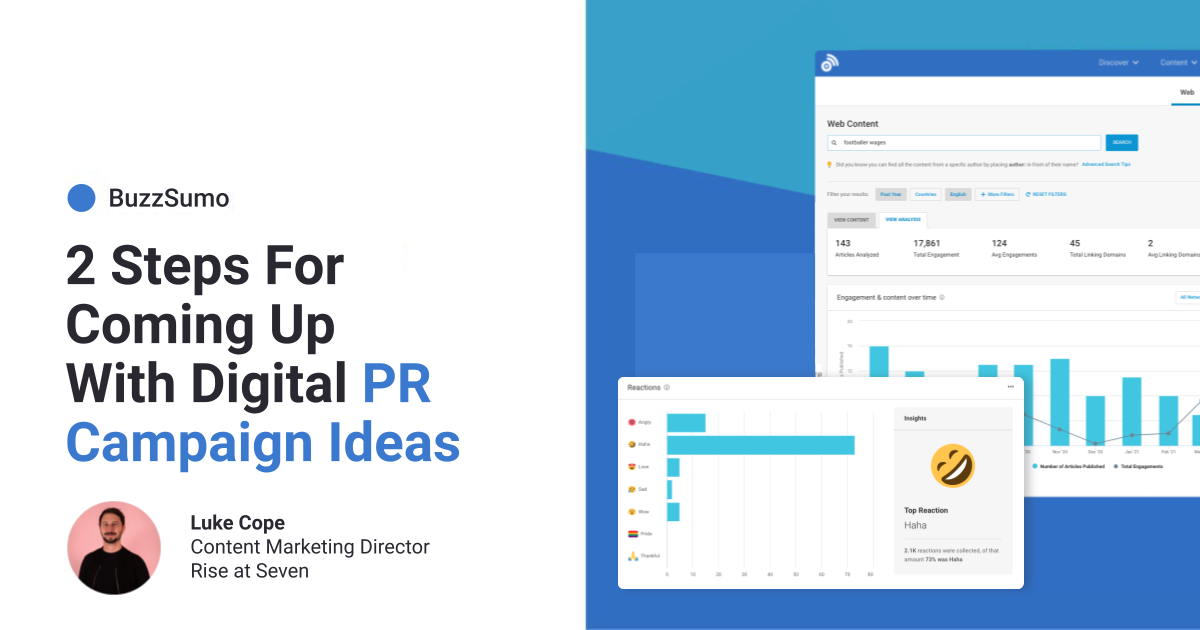
Crafting public relations campaigns that resonate, capture attention, and achieve measurable success is a persistent challenge for marketers and PR professionals. The journey from a nascent idea to a widely recognized and impactful campaign requires more than creative spark; it demands rigorous research, strategic foresight, and the courage to commit. Fortunately, a systematic, data-driven approach can dramatically enhance the probability of a PR campaign not just succeeding, but excelling. This article outlines a comprehensive two-step methodology, heavily leveraging research tools like BuzzSumo and drawing inspiration from successful past campaigns, to consistently generate winning PR initiatives.
The Foundation: Understanding Content Themes and Emotional Resonance
The initial, and arguably most crucial, step in developing a successful PR campaign is to establish a deep understanding of relevant content themes and the emotions they evoke. Campaign success, in this context, is primarily defined by securing media coverage and high-quality backlinks from authoritative websites, with social engagement serving as a vital secondary Key Performance Indicator (KPI). Before a concrete campaign idea even begins to form, professionals must identify topics that consistently generate discussion, shares, and links within their target audience and media landscape.
This phase is not about immediate ideation; it is about systematic discovery. The process begins by utilizing content analysis tools, such as BuzzSumo’s Content Analysis Report. For a client or brand, the starting point is often their core product or service. For instance, a brand selling honeymoon packages would naturally begin its research with "Honeymoons." However, the analysis should not stop there. The scope must expand to related, broader topics that still maintain relevance to the core offering, such as "Engagement rings," "Weddings," or even "Destination travel." This iterative process continues until the themes become too far removed from the brand’s direct interests, ensuring a comprehensive yet focused exploration of the content ecosystem.
The objective is to unearth themes that not only exhibit consistent discussion but also demonstrate high levels of social sharing and linking activity. This data provides a quantitative measure of audience interest and media appetite. Beyond mere popularity, a critical layer of analysis involves understanding the emotional landscape surrounding these themes. How do articles on these topics make readers feel? Are the reactions predominantly positive, negative, surprising, or inspiring? Identifying these underlying emotional currents is paramount, as emotions are powerful drivers of engagement and sharing.
Case Study 1: "A World Without Light Pollution" – Leveraging Environmental Concern and Awe
To illustrate this foundational step, consider a campaign focused on "Star maps." The core product theme, "Star maps," while relevant, might not possess sufficient breadth or inherent virality for a standalone, high-impact PR campaign. Expanding the research, the team might identify secondary themes such as "Supermoons," "Night sky," and critically, "Light pollution." While "Supermoons" and "Night sky" often garner significant social engagement, "Light pollution" presented a unique opportunity.
Content analysis at the time revealed that light pollution was not only consistently discussed but was experiencing a surge in public interest. This was contextualized by significant global events: the launch of SpaceX satellites raised concerns about increasing orbital light pollution, and the broader environmental discourse during the COVID-19 pandemic had brought pollution, in general, into sharp focus. This confluence of factors signaled an opportune moment for a campaign.
Crucially, analysis of reader reactions to existing articles on light pollution indicated two dominant emotions: sadness regarding the loss of natural night skies and a profound "wow factor" when contemplating the beauty of an unpolluted sky. This dual emotional insight became the bedrock of the campaign’s creative direction. It necessitated a highly visual approach to evoke the "wow factor" and compel audiences to consider the stark reality of a world obscured by light. The campaign concept thus evolved: visually depict major cities without light pollution, transforming a scientific issue into a tangible, emotionally resonant experience.
Case Study 2: "Footballer Car Cost Calculator" – Tapping into Envy and Aspiration
Another compelling example involves a client specializing in "Private number plates." While the product itself offered some humorous content angles, it lacked the broad appeal for a major PR push. The research expanded into aspirational lifestyle themes, leading to "Celebrity cars" and, more specifically, "Footballers’ cars." Content analysis confirmed a high volume of articles and significant reader engagement around these topics.
A deeper dive into the comments sections of these articles proved invaluable. It revealed a potent mix of emotions: frustration, envy, and a strong sense of competitiveness. Readers were not merely observing; they were implicitly comparing their own financial realities to the opulent lifestyles of footballers. This insight sparked the campaign idea: a calculator that would allow individuals to literally compare their own earnings to the cost of a footballer’s luxury car, quantifying the disparity and tapping directly into the identified emotional responses. This literal comparison, rooted in data, was designed to evoke a powerful, albeit negative, emotional reaction, driving engagement and shareability.
The consistent thread through both examples is the deliberate, data-backed identification of themes and the emotional triggers associated with them. This systematic approach, informed by content analysis, removes much of the guesswork from ideation, providing a solid foundation for campaigns destined for widespread coverage and engagement.
Strategic Format Selection and Depth Amplification
Having identified compelling themes and their emotional undercurrents, the second critical step involves selecting the most effective format for the campaign and enriching it with strategic depth and multiple outreach angles. A brilliant idea can falter if presented in an unsuitable format. For instance, the "light pollution" campaign, designed to evoke awe, would have been significantly less impactful as a simple blog post. Its visual nature demanded an interactive experience. The use of a "before-and-after" slider, showcasing cities with and without light pollution, transformed passive viewing into an engaging, interactive journey, amplifying the "wow factor."
The chosen format must also allow for significant depth and a multitude of angles, providing PR teams with diverse narratives for outreach. In the light pollution campaign, beyond the striking visuals, supplementary data points were integrated. For example, highlighting that 85% of Americans had never seen the Milky Way provided a powerful primary angle. This was further enriched by incorporating the Bortle scale, a measure of night sky brightness, to compare the most light-polluted cities (Bortle 10) with their hypothetical appearance at Bortle 1. Expanding the scope globally, rather than limiting it to the USA, also broadened its appeal, as light pollution is a universal concern.
Case Study 3: "Touch the Germs" – Interactive Depth for Public Health Impact
Another exemplary campaign, "Touch the Germs" by Staveley Heads, showcased the power of interactive formats and extensive depth. Instead of a basic graphic or data list on germ prevalence, the team developed an interactive piece with a microscope function, allowing users to "explore" and visualize germs in various everyday environments. This immersive format elevated the campaign beyond mere information dissemination, making the abstract concept of microscopic life tangible and impactful. The depth of interaction and scientific detail led to high volumes of links and even garnered direct commentary from public figures, such as the Mayor of London, demonstrating how a well-executed format can amplify an idea’s scale and influence. In a post-pandemic world, such public health-focused, interactive campaigns hold even greater relevance, tapping into heightened societal awareness around hygiene and disease transmission.
Case Study 4: "Who Owns All the Space Junk?" – The Untapped Potential of Depth
Conversely, the "Space Junk" campaign by Aira, while visually engaging and addressing a timely theme, illustrates the potential for even greater depth. The piece effectively visualized the ownership of space debris by country. However, a concept of this magnitude could have been further expanded. Imagine adding layers detailing the types of space junk, a chronological visualization of its accumulation from the 1960s to the present, or even projections of future orbital congestion. These additional dimensions would have provided numerous fresh angles for media outreach, transforming a strong piece into an even more comprehensive and link-worthy resource. This underscores the principle that while a core angle is essential, maximizing the depth of data and narrative possibilities can exponentially increase a campaign’s reach.
Simplicity as a Strategic Choice: "iPods Visualized as Vinyl"
Not all effective formats require complex interactivity. The "iPods Visualized as Vinyl" campaign by Mark Johnstone (formerly of Distilled) exemplifies the power of elegant simplicity. This campaign visually transformed classic iPod models into vinyl records, marrying two iconic eras of music consumption. The genius lay in its straightforward yet evocative visual concept, which resonated deeply with audiences nostalgic for both formats. This campaign’s success proves that sometimes, the best format is one that cleverly recontextualizes familiar elements in an aesthetically pleasing and thought-provoking manner, without needing intricate development.
Revisiting the "Footballer Car Cost Calculator," its depth was not merely in the calculator itself but in the various data-driven angles it offered. Beyond the direct comparison, the campaign could generate headlines like "How many years would it take an average worker to afford [Footballer X’s] car?" or "The most exorbitant footballer car collections revealed." These distinct angles, derived from the core data, provided multiple entry points for journalists, broadening the campaign’s appeal across various media segments, from finance and lifestyle to sports news.
Beyond Ideation: Strategic Implementation and Stakeholder Buy-in
The value of this two-step, data-driven framework extends beyond initial ideation. The comprehensive research conducted in Step 1 forms a robust foundation for the entire campaign lifecycle, particularly for media outreach. By returning to the BuzzSumo research on relevant themes, PR professionals can easily export lists of journalists and publications that have previously covered the campaign’s subject matter. This creates highly targeted seeding lists, dramatically increasing the relevance and effectiveness of pitches. Tools within BuzzSumo allow for saving journalists to projects and exporting their contact details, streamlining the outreach process. Understanding how to craft compelling PR pitches and secure media coverage is further supported by industry studies, such as BuzzSumo’s analysis of 600K journalist interactions, which provides insights into effective pitching strategies.
Moreover, this data-centric approach is invaluable for gaining internal stakeholder buy-in. Ideas are often subjective, leading to internal debates and potential delays. By presenting robust research on trending themes, audience engagement, and emotional resonance, PR professionals can remove much of this subjectivity. Leveraging BuzzSumo’s Content Analysis Report to visually demonstrate the engagement and emotional profile of various themes and publishers offers a powerful, objective argument for the chosen campaign direction, fostering confidence and expediting approval.
Broader Implications for Modern Digital PR
The evolution of digital PR has shifted from an art primarily driven by intuition to a science informed by data. This two-step framework represents a significant advancement in this evolution. By systematically identifying high-performing content themes, understanding the emotional triggers that drive audience engagement, and meticulously crafting campaigns with optimal formats and comprehensive depth, PR teams can achieve higher returns on investment. This translates into increased organic traffic, enhanced brand visibility, and a strengthened reputation through consistent, impactful media coverage. In an increasingly competitive digital landscape, campaigns built on such a strategic foundation are not just more likely to succeed; they are designed for sustained influence and measurable outcomes.
Key Takeaways:
- Research is Paramount: Explore engagement metrics and content consistency across diverse themes to pinpoint viable PR campaign ideas.
- Emotional Connection is Key: Ensure your campaign ideas tap into at least one strong emotion (e.g., awe, empathy, frustration) to maximize resonance and shareability.
- Format Matters: Match your campaign idea to the most effective format. This will vary significantly from concept to concept (e.g., interactive calculators, visual sliders, simple yet clever graphics).
- Create Contrast: Generate emotional responses by juxtaposing realities (e.g., average wages vs. celebrity wealth, polluted skies vs. breathtaking cosmic views).
- Prioritize Depth: Add as much detail and diverse data as possible to your ideas. This generates multiple angles, increasing your chances of securing broad media coverage.
For PR professionals looking to validate and elevate their campaign ideas with data-driven insights, exploring tools like BuzzSumo’s Content Analysis Report offers a powerful starting point for a more strategic and successful approach.


 Nana
Nana
 Laily UPN