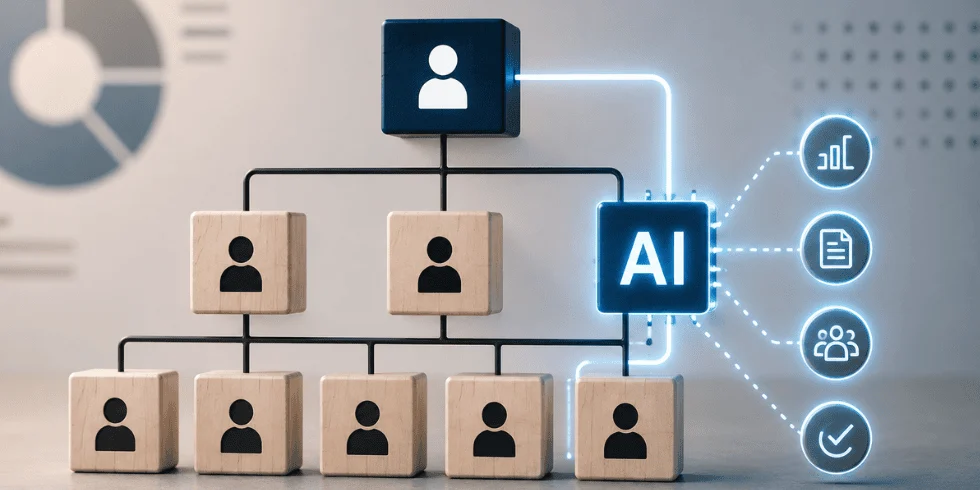
The modern marketing landscape is being fundamentally reshaped by the rapid integration of Artificial Intelligence (AI). However, many marketing organizations continue to operate under structures, workflows, and assumptions established in a pre-AI era. This disconnect is increasingly hindering their ability to adapt and capitalize on the transformative potential of AI. This article delves into the telltale signs that an organization’s current structure may be an impediment to progress and offers insights for Chief Marketing Officers (CMOs) on how to reimagine roles and capabilities to foster a more agile and future-ready marketing department.
By Brenna Lofquist, Senior Consultant at Heinz Marketing
The vast majority of CMOs today did not architect the marketing organizations they now lead. Instead, they typically inherit structures that have evolved organically over time. These teams, reporting lines, processes, and responsibilities were often established incrementally, long before AI became a mainstream consideration. The organizational design frequently reflected the growth trajectory of the company, the emergence of new marketing channels, the adoption of various technologies, and shifting strategic priorities dictated by leadership. While this historical evolution is understandable, it means that these structures were built upon a different set of foundational assumptions about how marketing operates. In previous eras, marketing work unfolded at a more deliberate pace, with teams often highly specialized. Campaigns adhered to relatively predictable processes, and technology was frequently implemented to support individual functions rather than to orchestrate seamless end-to-end workflows.
The advent of AI is fundamentally challenging these long-held assumptions. AI is now capable of automating tasks that once demanded significant human effort, dramatically compressing project timelines, necessitating a recalibration of required skill sets, and blurring the traditional boundaries between distinct marketing functions. Crucially, the mere adoption of AI tools does not automatically translate into enhanced organizational effectiveness. In many instances, the introduction of AI can inadvertently amplify pre-existing inefficiencies and expose the limitations of outdated structures. For example, if a campaign launch requires the sequential involvement of five distinct teams and three separate approval stages, AI might accelerate the work within each individual team. However, the overall campaign launch can still be protracted by weeks due to these inherent workflow bottlenecks.
Therefore, the pertinent question for CMOs is not simply, "How should we restructure marketing for AI?" Rather, it is a more profound inquiry: "Which of the underlying assumptions that shaped our current organizational structure no longer hold true in the age of AI?"
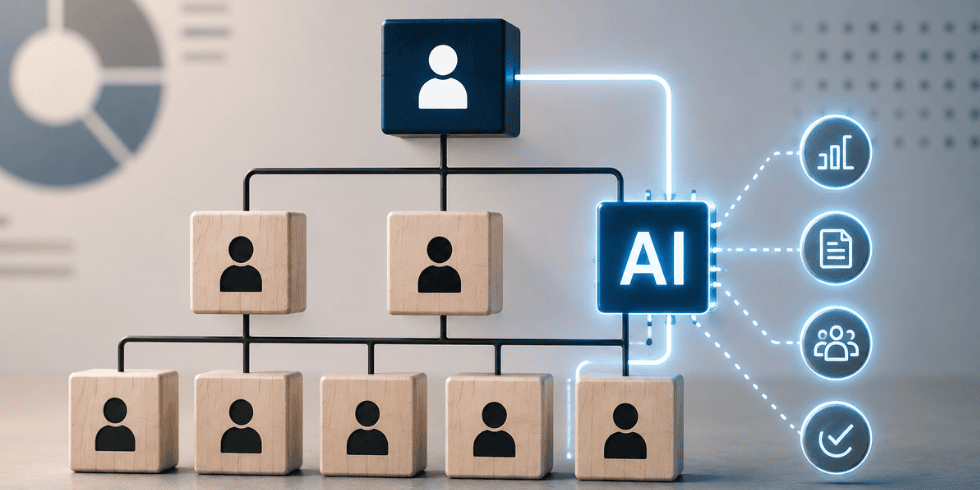
The Legacy of the Traditional Org Chart: A Reflection of Past Marketing Paradigms
The conventional marketing organization was typically designed around a model of functional specialization. Dedicated teams were often responsible for distinct areas such as content creation, demand generation, product marketing, and marketing operations, which managed technology and data. Channels like events, digital marketing, communications, and sales enablement frequently operated with their own defined responsibilities and established processes.
This specialized structure had its rationale. As marketing evolved and became more sophisticated, specialization allowed organizations to cultivate deeper expertise and manage increasingly complex channels effectively. However, the nature of marketing work itself has become significantly less linear. A single campaign, for instance, might now necessitate input from product marketing for audience definition and messaging, content teams for asset development, demand generation for campaign construction, marketing operations for technology and data management, paid media specialists for activation, sales for follow-up, and analytics teams to evaluate performance.
AI introduces a new dimension to this complexity. Certain tasks that were once exclusively the domain of a single function can now be automated, augmented, or shared across multiple functions. This creates a notable disconnect: the organizational chart continues to reflect siloed, functional ownership, while the actual execution of work increasingly transcends these functional boundaries. This does not imply that every organization must abandon functional teams or undertake a complete reorganization centered around AI. However, it underscores the imperative for CMOs to scrutinize their organizational structures when the actual modus operandi of their teams diverges significantly from the formal design. The core issue is often not the organizational chart itself, but rather the widening gap between how the organization is architected and how work is pragmatically accomplished.
Five Critical Indicators That Your Marketing Structure is Stifling Progress
Sign #1: Work Becomes Stalled at Handoffs
If a campaign consistently requires passage through five different teams before its launch, the impediment is likely not the inefficiency of any single team. Instead, the problem may lie in the numerous handoffs between these teams. Each transition point introduces potential delays, opportunities for miscommunication, the need for rework, or conflicts arising from competing priorities. When no single entity or team possesses end-to-end ownership of the workflow, it becomes easy for individuals to focus solely on their specific component, while overall campaign outcomes may lack clear accountability.
AI does not automatically resolve this issue. While AI can accelerate content generation, campaign deployment, and data analysis, if the work is still mandated to traverse the same sequential approvals and involve the same sequence of individuals, the overall process may not experience a commensurate increase in speed. The critical question for leaders to consider is: Where does work routinely experience delays waiting for another party’s involvement?
Sign #2: Activity Ownership Abounds, But Outcome Accountability Lacks Clarity
Marketing organizations frequently exhibit clear ownership of discrete activities: one individual might manage campaigns, another oversees content, and a third is responsible for marketing operations. However, the critical question arises: what happens between these defined activities? Who assumes responsibility for the transition from a Marketing Qualified Lead (MQL) to a sales pipeline? Who is accountable for ensuring that content assets effectively contribute to campaign performance? Who owns the comprehensive process that spans from audience insight generation through to campaign activation and subsequent measurement?
These "gray areas" can become particularly problematic as AI streamlines individual tasks. When execution becomes faster, the importance of coordination and strategic decision-making intensifies, rather than diminishes. If accountability ceases upon the completion of a specific activity, the organization risks becoming highly productive in terms of task completion but potentially ineffective in achieving overarching business objectives. Leaders should ask: At what points do responsibility and accountability diverge?
Sign #3: Job Descriptions No Longer Reflect Day-to-Day Realities
AI is fundamentally altering the tasks marketers engage in. A role that previously demanded extensive hours dedicated to research, drafting, analysis, formatting, or manual construction may now involve directing AI-powered activities, reviewing AI-generated outputs, making strategic decisions, and aligning these efforts with broader business goals. However, existing job descriptions may still outline the responsibilities of the "old job." This creates a paradoxical situation where the organization is technically staffed for its past functions rather than its current needs.
This misalignment can also complicate the hiring process. Instead of defining realistic combinations of necessary capabilities, organizations may attempt to find a single individual who can simultaneously embody the roles of strategist, data analyst, AI specialist, technologist, content creator, and campaign operator. This is less a talent shortage and more a fundamental issue with role design. A pertinent self-assessment question is: If every marketing job description were rewritten based solely on what the incumbent actually does today, how significantly would it differ?
Sign #4: AI Implemented Without Workflow Reimagination
This scenario represents one of the most evident warning signs. A team adopts an AI tool for content generation, while another leverages AI for research purposes. Marketing operations integrates AI-driven automation, and individuals begin experimenting with AI agents. While individual productivity may increase, the underlying workflow often remains unchanged. The same approval processes persist, the same handoffs are required, and disparate systems continue to operate in isolation. The same individual might still need to review work before it progresses to the next stage.
In essence, the individual steps of the process have been accelerated without fundamentally altering the process itself. This is not inherently detrimental; AI can certainly deliver meaningful productivity gains without requiring extensive organizational restructuring. However, if the objective is transformational improvement, the critical question becomes: Are we utilizing AI to execute existing tasks more efficiently, or are we leveraging it to fundamentally rethink how the work is accomplished?
Sign #5: Organizational Velocity Trails Market Dynamics
Perhaps the most straightforward test is speed. How long does it take your team to transform an idea into a launched campaign? How many meetings are necessitated? How many individuals must review it? How many systems require updates? How many times is the work passed from one person to another? Now, consider the pace at which your target audience consumes information, shifts priorities, and engages with your competitors. If your organization requires several weeks to respond to market shifts that occur within days, you may be facing an organizational impediment rather than a talent deficit.
Furthermore, simply augmenting headcount is not invariably the solution. The constraint may not be a lack of capacity, but rather the structure through which that capacity must operate.
Re-evaluating the Foundational Assumptions of Your Marketing Organization
The current structure of most marketing organizations is not the product of a singular, grand design. Instead, it is the cumulative outcome of years of incremental decision-making. Each decision, when made, may have been perfectly logical within its contemporary context. The challenge arises when these decisions are not revisited and re-evaluated as the business environment evolves. AI provides CMOs with a compelling impetus to question some of these ingrained assumptions.
Instead of immediately contemplating the existence of a specific role, leaders should pose more fundamental questions:
- What is the core purpose of this role or team within the broader marketing strategy?
- Which specific capabilities are essential for this function to fulfill its purpose?
- How does this role or team contribute to the end-to-end customer journey or marketing campaign lifecycle?
- What are the key outputs and dependencies of this role or team, and how do they align with other parts of the organization?
- In the context of AI’s capabilities, which aspects of this role are becoming more or less critical?
The answers to these questions will not always necessitate the elimination of teams or the consolidation of roles. In many cases, the existing structure may remain appropriate. However, organizations must be able to articulate the rationale behind their current configuration. The ultimate objective is not to create an organization that appears radically different solely because AI is prevalent, but rather to ensure that the structure accurately reflects the current business operations, rather than the operations of five years ago.
Reimagining Roles: Focus on Capabilities, Not Just Titles
As the organizational landscape shifts, so too must the roles within it. AI is increasingly shifting marketers away from hands-on execution and towards directing, evaluating, and applying AI-enabled work. Consequently, some roles may require a broader spectrum of capabilities, while others might become more specialized.
Rather than attempting to recruit an elusive "AI marketer" capable of performing every conceivable task, organizations should focus on a more strategic approach. The critical question becomes: What essential capabilities does the organization truly require, and where should these capabilities be strategically housed? The goal is not to eliminate roles simply because AI can perform certain tasks, but rather to ensure that human expertise is optimally deployed where it generates the most significant value.
The Ultimate Goal: An Adaptable Marketing Organization, Not Necessarily an "AI-First" One
There is no single, universally applicable marketing organizational chart for the AI era. The optimal structure will invariably depend on a multitude of factors, including the company’s size, go-to-market model, marketing maturity, technological infrastructure, and talent pool. What truly matters is the organization’s capacity to adapt as the nature of marketing work evolves.
CMOs do not necessarily need to undertake a complete overhaul of their marketing organizations simply because of AI’s emergence. However, they are compelled to scrutinize the assumptions that have shaped their existing structures and determine whether they still hold relevance. The fundamental question is not, "What should our AI-centric organizational chart look like?" Instead, it is, "Does our current marketing organization still align with the realities of how marketing is conducted today?" If the answer is no, AI may not be the sole driver for redesign, but it may well be the catalyst that makes the imperative for change impossible to ignore.
For organizations seeking to navigate this evolving landscape and understand the necessary adjustments for their marketing departments in the AI era, a complimentary brainstorm session is available. Interested parties can reach out via email to [email protected] to schedule a consultation.